2026-03-14 Post-market Analysis Report
Overall
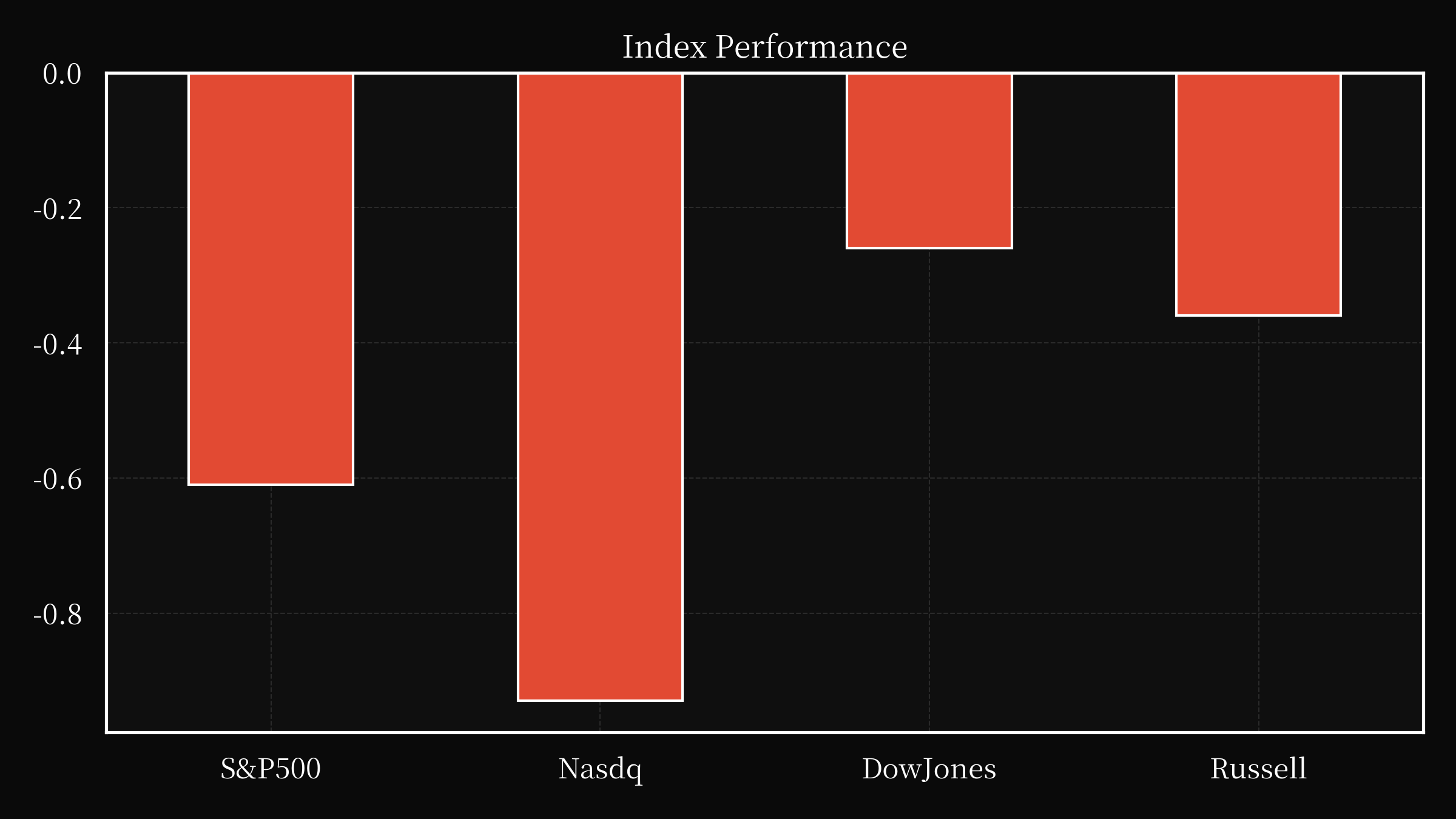
This week’s U.S. stock market narrative was indelibly shaped by the escalation of geopolitical tensions in the Middle East, particularly following the Iran conflict’s intensification and the subsequent disruption of critical oil supply routes. The Strait of Hormuz, a vital chokepoint for global crude oil transportation, became the epicenter of market anxiety as tanker attacks, supply fears, and the specter of prolonged hostilities drove oil prices to volatile highs. Despite the International Energy Agency’s (IEA) announcement of a coordinated release of 400 million barrels from strategic reserves, market participants remained skeptical, perceiving the move as insufficient to offset the immediate supply shock. This skepticism was compounded by the reality that the physical constraints of global oil logistics—particularly the vulnerability of tanker traffic through the Strait—meant that even a temporary disruption could reverberate across commodity and equity markets for weeks. The result was a sharp, sustained rally in crude prices, which in turn fed into broader inflationary pressures and heightened risk aversion among investors.The market’s reaction was immediate and multifaceted. The Dow Jones Industrial Average, S&P 500, and Nasdaq Composite all posted losses for the week, with the Dow falling over 1.2% and the S&P 500 experiencing its third consecutive weekly decline. The S&P 500’s 0.6% drop on Friday underscored the persistent pressure on equities, particularly as investors priced in the likelihood of a protracted conflict and its cascading effects on energy costs, corporate margins, and consumer confidence. The oil sector, naturally, led the charge, with energy stocks experiencing significant swings as traders grappled with the dual threat of supply constraints and the potential for further geopolitical escalation. The broader equity market, however, was not merely a passive observer; it reflected a growing consensus that the conflict’s economic ramifications could extend far beyond the immediate region, impacting global trade flows, inflation trajectories, and central bank policy decisions.A critical dimension of this week’s market dynamics was the evolving interplay between energy markets and macroeconomic indicators. The Commerce Department’s downward revision of Q4 2025 GDP growth from 1.4% to 0.7% highlighted the fragility of the U.S. economic recovery, which had already been hampered by the 43-day government shutdown and lingering supply chain disruptions. This revision, coupled with the University of Michigan’s preliminary consumer sentiment reading of 55.5—a 1.9% decline from February—signaled a broader erosion of confidence in the economy’s resilience. The data suggested that the Iran conflict was not only a supply-side shock but also a psychological one, amplifying fears of stagflation: a scenario where stagnant growth coexists with persistent inflation. Such a scenario would force the Federal Reserve to navigate a delicate balancing act, potentially delaying rate cuts and prolonging the economic drag.The Federal Reserve itself emerged as a central focal point, with a federal judge blocking subpoenas targeting Chair Jerome Powell in a criminal investigation into the Fed’s management of its headquarters renovation. This ruling, which the judge characterized as reflecting an “improper motive” to retaliate against Powell for policy disagreements, underscored the political sensitivities surrounding monetary policy. The legal battle over the scope of congressional oversight of the Fed’s operations added another layer of uncertainty, as investors weighed the implications for the central bank’s independence and its ability to respond to inflationary pressures. Meanwhile, the prospect of Powell’s confirmation as Fed Chair faced renewed delays due to a separate criminal probe into the Fed’s leadership, further complicating the policy landscape. These developments highlighted the growing tension between legislative accountability and the operational autonomy required for effective monetary policy, a dynamic that could influence market expectations for years to come.On the corporate front, the week saw a divergence in performance between sectors, with defensive and technology stocks exhibiting contrasting trajectories. While the broader market grappled with inflationary headwinds, AI-driven companies like Oracle and Nvidia provided a buffer, supported by robust earnings and the enduring demand for digital infrastructure. The University of Michigan’s consumer sentiment data, which showed a sharp decline in March, contrasted with the resilience of certain sectors, such as healthcare and utilities, which benefited from stable demand and regulatory tailwinds. However, the earnings gap between dividend-paying companies and tech firms widened, as the latter continued to outpace peers in profit growth, driven by margin expansion and operational efficiency. This divergence reflected broader shifts in investor priorities, with capital increasingly flowing toward growth-oriented assets despite macroeconomic uncertainties.The market’s reaction to the Iran conflict also illuminated the growing importance of geopolitical risk as a pricing factor. Traders, long accustomed to modeling macroeconomic variables, now incorporated the likelihood of regional conflicts into their scenarios, adjusting portfolios to hedge against supply shocks and currency fluctuations. The VIX, often dubbed the “fear index,” remained elevated, reflecting heightened volatility in equity markets. Meanwhile, the 10-year Treasury yield, which had risen in response to inflation concerns, became a focal point for investors seeking to gauge the Fed’s policy trajectory. The interplay between bond yields, equity valuations, and commodity prices underscored the interconnectedness of global financial markets, where a single event—such as an attack on oil tankers—could trigger a cascade of adjustments across asset classes.Another pivotal theme was the evolving role of corporate earnings in shaping market sentiment. The Commerce Department’s data on core inflation, which rose to start 2026, and the University of Michigan’s consumer sentiment readings highlighted the challenges facing businesses in a high-cost environment. While some sectors, such as energy, benefited from elevated prices, others faced margin compression due to rising input costs and weak demand. The Core Earnings Leaders Index, which outperformed the S&P 500 by 9% in 2025, demonstrated that earnings quality remained a critical differentiator, with companies that adjusted for accounting distortions delivering superior returns. This emphasis on earnings transparency resonated with investors, who increasingly prioritized fundamental analysis over speculative narratives.The week also saw renewed attention to the relationship between inflation, interest rates, and long-term economic growth. The Fed’s dual mandate—price stability and maximum employment—became a battleground for competing economic philosophies, as policymakers debated the appropriate response to persistent inflation and labor market slack. The possibility of a rate cut in 2026, while still speculative, gained traction as the economy’s growth prospects dimmed. This prospect influenced bond markets, with investors adjusting their expectations for future rate decisions and reevaluating the risk-return profile of fixed-income assets. The interplay between monetary policy and fiscal stimulus, particularly in the context of a potential government shutdown, further complicated the outlook, as policymakers weighed the trade-offs between short-term economic support and long-term fiscal sustainability.In summary, this week’s U.S. stock market was defined by a convergence of geopolitical, macroeconomic, and corporate factors that collectively reshaped investor expectations. The Iran conflict’s impact on oil prices and inflationary pressures created a volatile backdrop, while the Federal Reserve’s legal and policy challenges introduced additional uncertainty. The market’s response reflected a nuanced understanding of these dynamics, with investors balancing defensive positioning against growth-oriented bets and recalibrating their views on the Fed’s role in navigating the economic landscape. As the week closed, the interplay between these forces suggested that the path forward would remain fraught with complexity, requiring vigilance and adaptability in an increasingly interconnected global economy. The lessons of this period—particularly the enduring influence of geopolitical risk and the resilience of certain sectors amid macroeconomic headwinds—will likely inform market strategies for months to come.
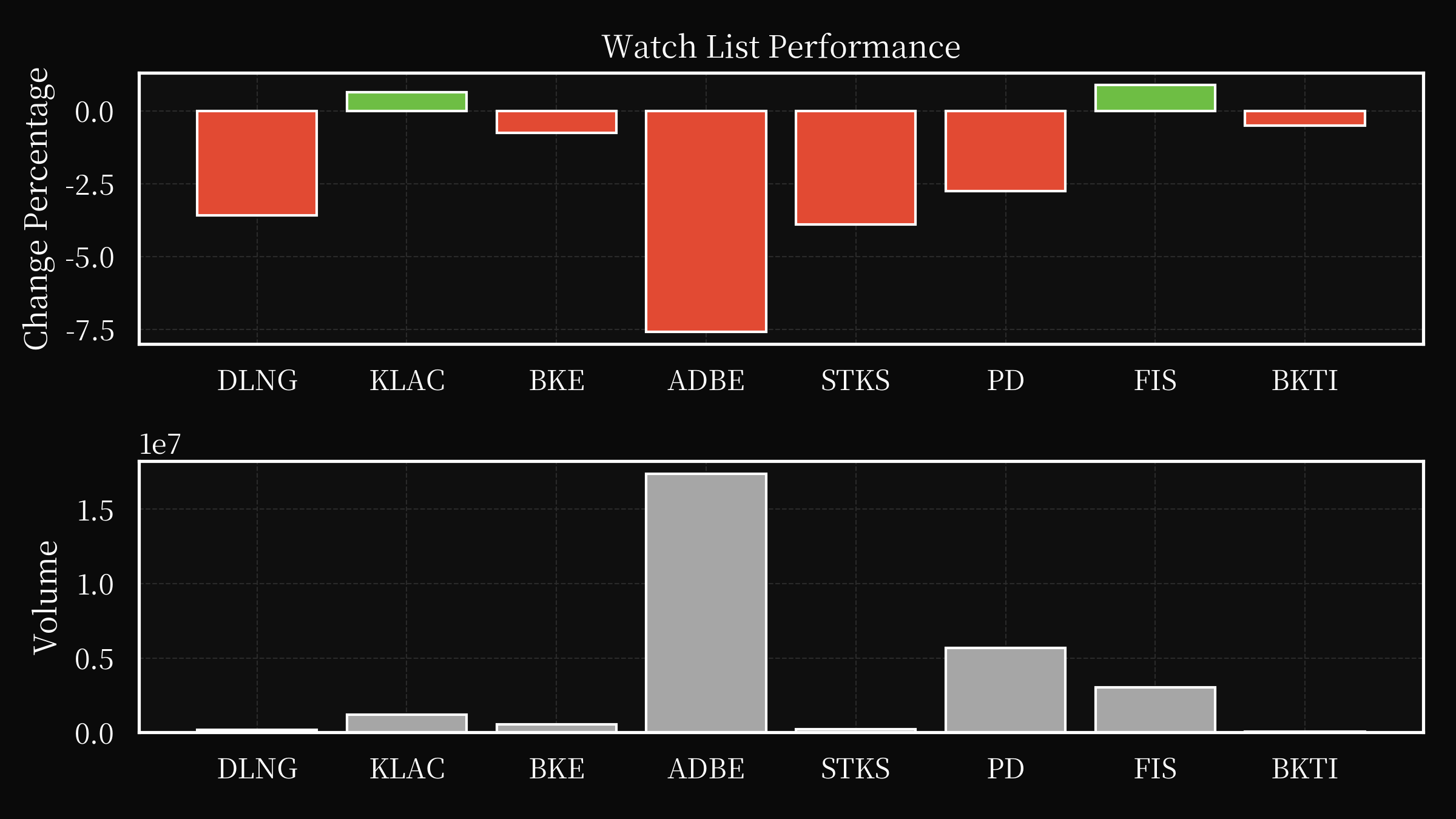
PagerDuty, Inc. (PD) triggered a sharp 12% sell-off in its shares following robust earnings that failed to offset a pessimistic 2027 outlook, while Adobe Inc. (ADBE) also tumbled on leadership uncertainty and analyst skepticism. In contrast, The Buckle, Inc. (BKE) delivered a stunning quarterly report, smashing both EPS and revenue forecasts, bolstering margins and reporting a debt-free balance sheet at $77.98. Fidelity National Information Services (FIS) surged 0.89% amid optimism over its growth trajectory, while BK Technologies (BKTI) posted a solid 0.5% decline but maintained a strong fundamentals narrative. Meanwhile, KLA Corporation (KLAC) rallied 0.64% on strategic momentum in the semiconductor sector, and Dynagas LNG Partners LP (DLNG) saw a modest dip despite its Q4 beat, reflecting nuanced market sentiment. The broader market saw mixed results, with The ONE Group Hospitality (STKS) struggling on revenue headwinds and elevated debt, underscoring sector-specific challenges.