2026-03-19 Post-market Analysis Report
Overall
The U.S. stock market entered the final hours of the week with a tone of cautious apprehension, as investors grappled with a confluence of geopolitical, macroeconomic, and sector-specific developments that collectively cast a shadow over market sentiment. The first day of spring, coinciding with the inaugural “triple-witching” options expiration of the year, marked a period of heightened volatility and strategic positioning among market participants. The convergence of these factors—ranging from the unpredictable dynamics of the Middle East to the Federal Reserve’s tightening stance—has underscored the fragility of recent gains and the growing skepticism regarding the sustainability of economic recovery.
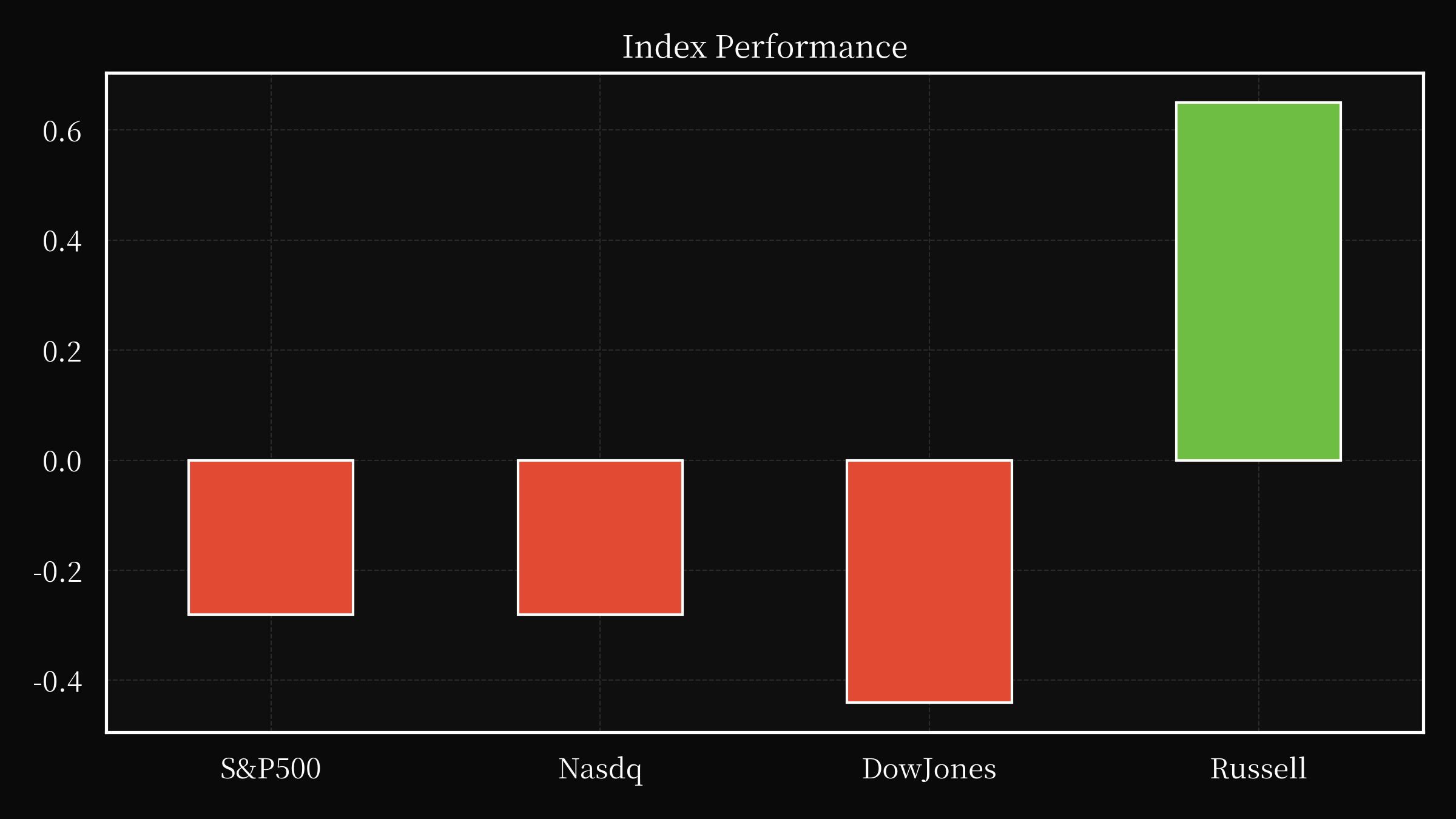
The market’s retreat was most evident in the closing figures of Thursday’s trading session, as the Dow Jones Industrial Average slipped more than 200 points, now trading approximately 8% below its record highs. The Nasdaq Composite and S&P 500 followed suit, slipping 0.28% and 0.27% respectively, closing at 22,090.69 and 6,606.49. These declines reflected a broader retreat from risk assets, as investors sought safety amid a backdrop of rising oil prices, persistent inflation, and mounting uncertainty regarding the trajectory of the Iran conflict. The S&P 500’s performance, in particular, highlighted the vulnerability of growth-oriented indices to shifts in commodity prices and risk appetite, as the rally that had buoyed markets earlier in the year gave way to a more defensive posture.
At the heart of the market’s malaise was the sharp escalation in crude oil prices, driven by the intensifying conflict between the United States and Iran. The war in the Middle East has disrupted global oil supplies, sending energy markets into a frenzy and prompting fears of a prolonged supply shock. Treasury Secretary Scott Bessent’s assertion that the U.S. would not intervene in oil futures markets underscored the administration’s reliance on physical crude supply to mitigate disruptions. However, the reality on the ground—coupled with the specter of further escalation—has placed significant pressure on inflation expectations. The Federal Reserve, already navigating a delicate balance between curbing inflation and supporting economic growth, found itself increasingly constrained by the dual threat of rising energy costs and slowing consumer demand. The result has been a steady erosion of confidence in the prospect of imminent interest rate cuts, with markets now pricing in a much more hawkish monetary policy stance.
The Federal Reserve’s decision to hold interest rates steady, while signaling a continued commitment to combating inflation, has further complicated the outlook for investors. Despite the central bank’s rhetoric emphasizing flexibility, the latest economic projections suggest that rate cuts are unlikely through 2026, as core inflation remains elevated and the specter of recession looms. The Conference Board’s Leading Economic Index, which slipped marginally in March, now stands at 97.5, signaling a potential slowdown in economic momentum. Meanwhile, the U.S. housing market, a key pillar of the economy, has been dealt a severe blow as mortgage rates surged to three-month highs, exacerbating affordability challenges and dampening demand. These developments have contributed to a growing consensus among analysts that the Fed’s dual mandate—maintaining price stability while promoting maximum employment—is increasingly at odds with the realities of a global economy beset by supply shocks and policy uncertainty.
Adding to the market’s woes is the quiet but persistent stress emerging in the private credit sector. Once a bastion of high-yield lending and alternative investment strategies, private credit has become a focal point of concern as rising borrowing costs and tighter credit conditions begin to strain borrowers. The sector’s vulnerability is compounded by the broader macroeconomic environment, where higher interest rates and slowing growth have increased the risk of defaults and downgrades. For investors, this has translated into a more cautious approach, with many retreating from riskier assets in favor of defensive positions. The result is a market that, while not in outright panic, is undeniably on edge, with sentiment shifting rapidly in response to new developments.
The psychological impact of these trends cannot be overstated. The AAII’s weekly sentiment survey revealed a stark decline in bullish sentiment, with only 30.4% of respondents expressing optimism—a figure that has fallen sharply from previous weeks. This shift reflects not only the immediate concerns surrounding inflation and geopolitical risks but also a deeper unease about the durability of the economic recovery. Retail investors, in particular, have become increasingly selective, with many adopting a “buy the dip” strategy that hinges on the assumption that markets will eventually rebound. However, as institutional investors like Barry Knapp have pointed out, this approach risks mispricing the so-called “Trump put”—the historical tendency for markets to rally following political upheavals or leadership changes. Knapp’s skepticism about the Federal Reserve’s ability to cushion a potential economic downturn highlights the growing divide between market participants and policymakers, with many questioning whether the Fed’s current policies are sufficient to avert a deeper crisis.
The bond market, too, has become a barometer of growing anxiety. The recent gapping down of U.S. stock benchmarks has been mirrored by a sharp correction in Treasury yields, with investors increasingly wary of the risks associated with both inflation and a potential economic slowdown. The FOMC’s post-meeting statements, which emphasized the need for vigilance in the face of persistent inflation, have further fueled concerns about the sustainability of the current monetary policy. The implications are profound: as the Fed remains committed to its inflation-fighting mandate, the likelihood of further rate hikes—particularly in the context of a global economic slowdown—has become a pressing issue. This dynamic has created a precarious environment for fixed-income investors, who must now weigh the risks of both rising yields and a potential flight to safety in times of crisis.
Amid this backdrop of uncertainty, certain sectors and companies have emerged as potential bright spots. Firms offering dividends, low valuations, and stable cash flows—such as PagSeguro Digital, First Bancorp, and Essent Group—have attracted attention from investors seeking refuge from the broader market’s volatility. Similarly, the energy sector, while directly impacted by the Iran conflict, has seen a resurgence in interest as oil prices remain elevated. However, the broader implications of the energy shock extend beyond the immediate price of crude; they ripple through the economy, affecting everything from transportation costs to consumer spending. The potential for prolonged conflict or further escalation remains a wild card, with the possibility of triggering a broader economic downturn if supply disruptions persist.
The role of geopolitical developments in shaping market outcomes cannot be overstated. The U.S.-Iran conflict, in particular, has become a focal point of global economic and political discourse. The involvement of other regional actors, the potential for unintended escalation, and the broader implications for global trade and security have all contributed to a climate of heightened risk. As the Federal Reserve and other central banks grapple with the dual challenges of inflation and growth, the outcomes of these geopolitical tensions will play a critical role in determining the trajectory of monetary policy. The recent comments by Kevin O’Leary about the Strait of Hormuz, while speculative, underscore the extent to which investors are contemplating the long-term strategic implications of regional instability.
The interplay between monetary policy and fiscal strategy has also come under scrutiny. Treasury Secretary Doug Burgum’s discussions on energy policy, alongside the Federal Reserve’s focus on physical oil supply, highlight the government’s efforts to mitigate the economic fallout from the conflict. However, these measures are unlikely to fully offset the broader impacts of higher energy costs, which have already begun to strain household budgets and corporate profit margins. The resulting pressure on consumer spending, a key driver of economic growth, has further complicated the Fed’s task of balancing inflation control with the need to support employment. As the unemployment rate remains relatively low, the risk of a labor market slowdown looms large, with implications for both inflation and economic stability.
For investors, the challenge lies in navigating this complex landscape while maintaining a long-term perspective. The current environment demands a nuanced approach, one that accounts for the interdependencies between global events, monetary policy, and sector-specific dynamics. While some analysts remain optimistic about the potential for a rebound—citing the resilience of certain industries and the adaptability of financial markets—the prevailing sentiment is one of caution. The market’s recent performance suggests that the era of easy gains is over, replaced by a period of heightened scrutiny and strategic recalibration.
In conclusion, the U.S. stock market’s current state reflects a confluence of structural and cyclical factors that have reshaped investor expectations and risk appetite. The interplay between geopolitical tensions, monetary policy, and sectoral performance has created a volatile and uncertain environment, where even minor shifts in global events can have outsized impacts. As the week draws to a close, the focus will likely remain on the Federal Reserve’s next moves, the trajectory of oil prices, and the evolving economic data that will shape the narrative for the weeks ahead. For now, investors are advised to adopt a disciplined approach, balancing the pursuit of opportunities with a keen awareness of the risks that define this era of market uncertainty. The path forward is far from clear, but one thing is certain: the lessons of this period will leave an indelible mark on the strategies and philosophies that guide financial decision-making in the years to come.
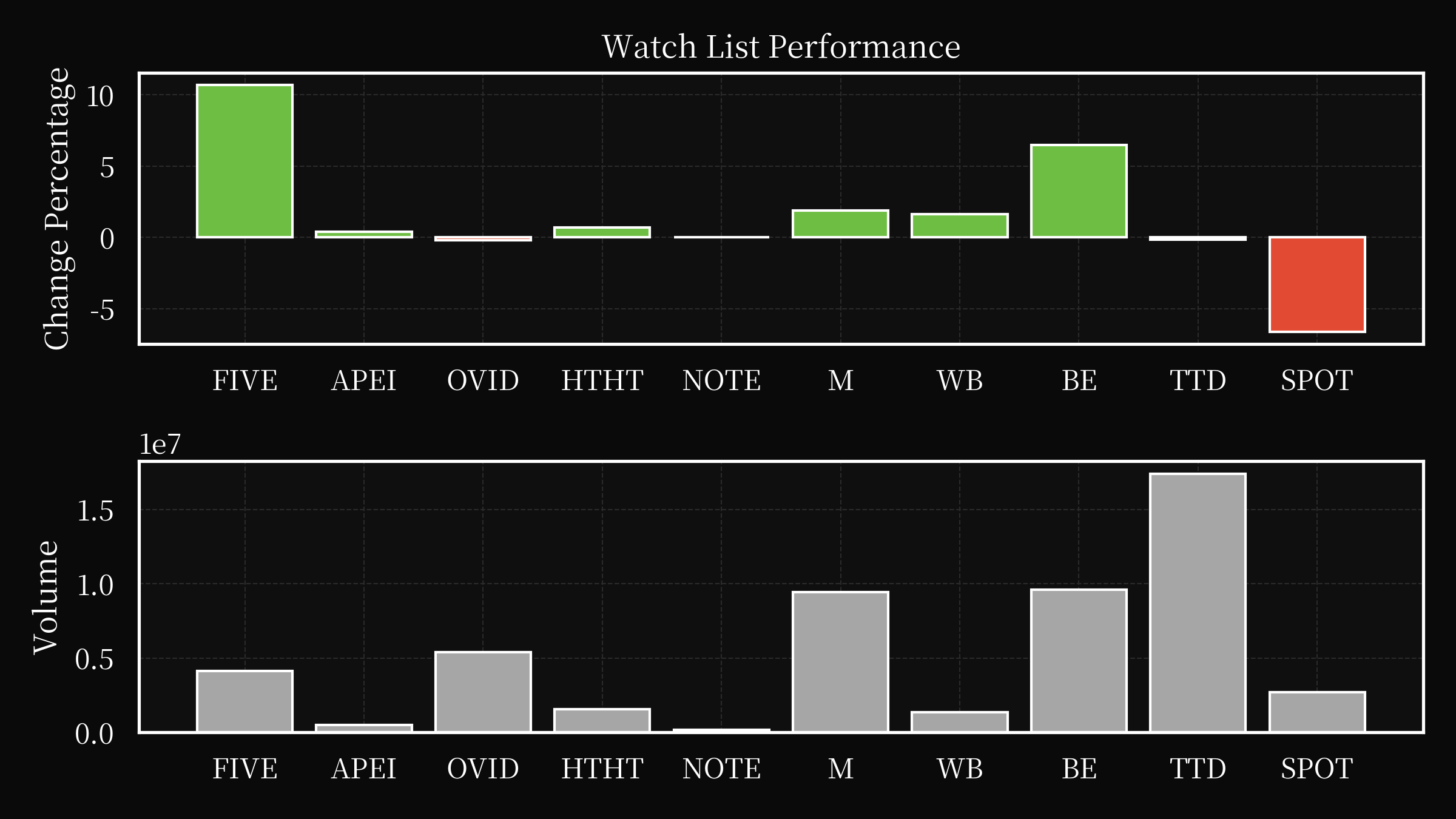
The market opened with dramatic swings, as Five Below, Inc. surged 6% to $235.17 on robust quarterly results and optimistic guidance, while Macy’s, Inc. followed suit with a 6% jump to $18.05, buoyed by strong fourth-quarter earnings despite lingering tariff concerns. Bloom Energy saw a remarkable 14.3% rise to $166.69, driven by a $5 billion Brookfield investment and resilient financials, even as The Trade Desk plunged 7.4% to $23.51 amid major agency exits. Ovid Therapeutics rallied 6.4% to $2.30 on record earnings and revenue growth, while H World Group Limited posted a 6.97% gain to $50.53, reflecting continued investor confidence in its global expansion. Conversely, Weibo Corporation’s shares collapsed 8.2% to $8.64 as revenue disappointments overshadowed its broader growth narrative, and The Trade Desk’s sharp decline underscored the sector’s sensitivity to shifting agency dynamics. Meanwhile, FiscalNote Holdings, Inc. slipped to $0.91 amid mounting debt and liquidity challenges, highlighting divergent fortunes across the market. Spotify, however, defied expectations with a 6.6% uptick to $482.52, as its AI-driven user growth and path to profitability reinforced its “Outperform” rating. Overall, the session was defined by a blend of earnings-driven optimism and volatility stemming from structural market shifts.