Overall
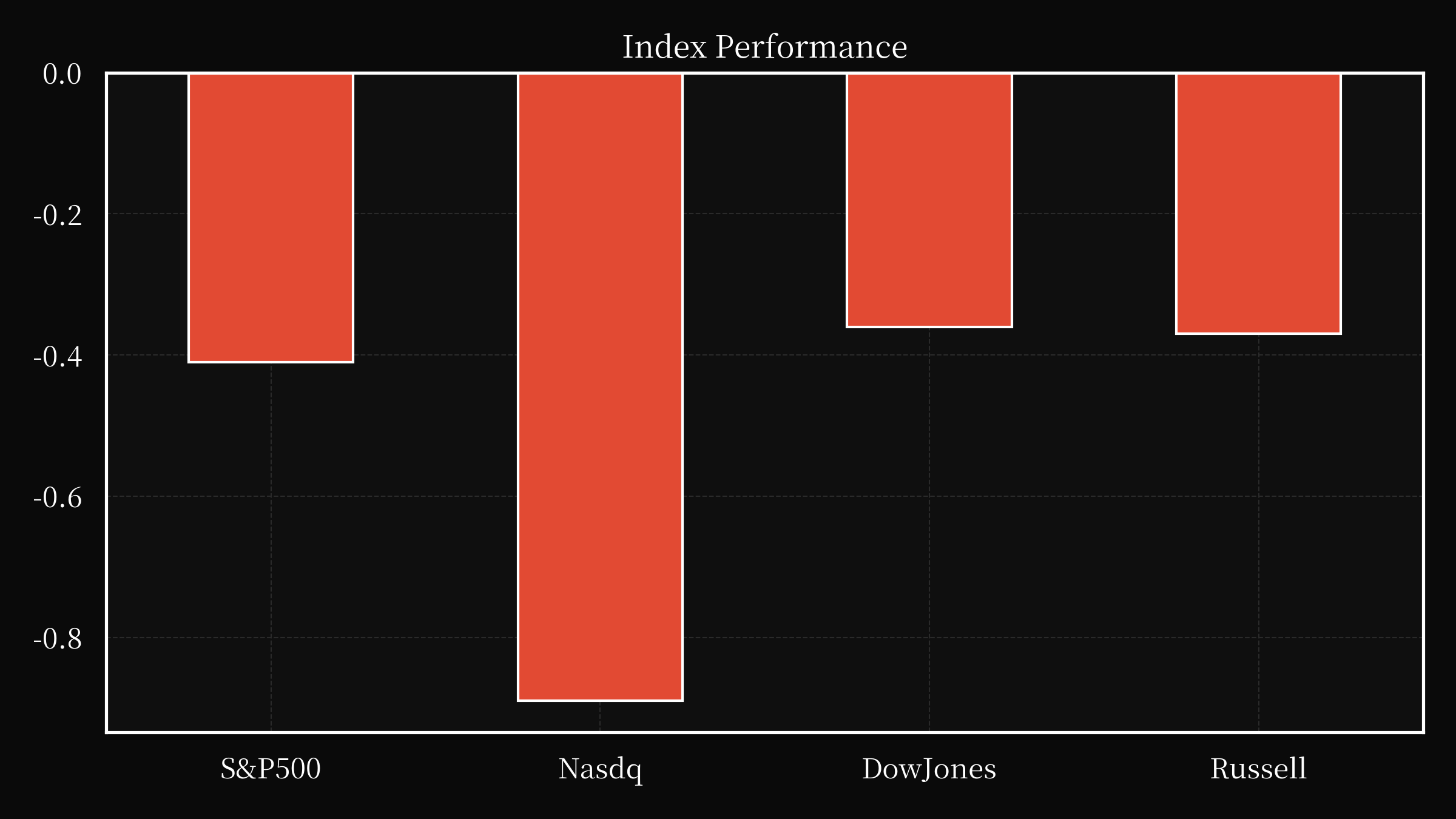
The latest market briefing underscores a paradox: despite ongoing geopolitical tensions and mixed corporate earnings, U.S. equities have continued their upward trajectory, buoyed by a potent mix of sector-specific strength, investor optimism around artificial intelligence, and a broader disconnect between macro headwinds and stock valuations. The S&P 500, Nasdaq, and Dow Jones all closed higher on Thursday, even as oil prices surged and the Iran standoff threatened to destabilize regional security. Analysts point to the resilience of technology stocks—particularly semiconductors—as the primary engine of this rally, while broader market sentiment remains skewed toward optimism, often overlooking the real economic frictions at play. The disconnect is stark: inflation remains stubborn, consumer confidence has slipped, and corporate earnings, though generally solid, are increasingly concentrated in a handful of mega-caps, raising concerns about market breadth and sustainability.
The report opens with the rally itself, noting that the extension of the U.S.-Iran ceasefire, however fragile, removed a major source of market volatility. Yet, as the Strait of Hormuz remains closed and tensions linger, the market’s focus has shifted toward earnings season and the promise of AI-driven growth, especially within the tech sector. Intel’s robust quarterly results, which exceeded expectations on both revenue and guidance, exemplify this dynamic, as do strong performances from companies like Texas Instruments, whose semiconductor shares surged on earnings beats. Meanwhile, Microsoft’s guidance for continued growth in cloud and AI, and Apple’s modest but positive earnings surprise, further reinforce the narrative of tech as the market’s anchor. However, this optimism is tempered by disappointments from ServiceNow and IBM, whose weak results dragged on broader tech sentiment and contributed to a broader sell-off in software stocks.
Beyond tech, the briefing highlights sectoral divergences: energy stocks are benefiting from oil’s rally, while retail and logistics face headwinds from both geopolitical risks and shifting consumer behavior. The article also flags significant corporate actions, including Meta’s planned 10% workforce reduction and United Rentals’ strong performance, suggesting that even amid uncertainty, strategic moves and cost-cutting can drive shareholder value. The piece concludes by emphasizing that while the market’s recent gains are real, they may not fully reflect underlying economic realities, leaving investors to wonder whether the rally is built on durable growth or a temporary reprieve from more fundamental challenges.
### The Disconnect Between Geopolitics and Market Optimism
The U.S. stock market’s resilience in the face of ongoing global tensions—particularly the escalating conflict between the U.S. and Iran—reveals a growing divergence between geopolitical risk and investor sentiment. Despite the closure of the Strait of Hormuz to Iranian oil shipments and the deployment of U.S. naval assets, the S&P 500, Nasdaq, and Dow Jones all closed higher on Thursday, buoyed by strong earnings and AI optimism. Analysts attribute this to a combination of factors: tech companies’ outsized influence, the perception that inflation is moderating, and a general reluctance to price in worst-case scenarios. However, this optimism appears increasingly fragile, as evidenced by the sharp sell-off in software stocks following disappointing results from ServiceNow and IBM, which together dragged down the Roundhill Magnificent Seven ETF by over 5%. The market’s focus on corporate guidance and AI narratives—rather than broader economic indicators—suggests a tendency to overlook persistent structural issues, including elevated corporate debt, elevated valuations, and a consumer whose confidence has visibly waned.
### Sector Rotation and the Tech-Driven Rally
At the heart of the market’s recent gains lies a pronounced rotation into technology, with semiconductor stocks leading the charge. Intel’s earnings beat, driven by robust PC and data center demand, underscored the sector’s ability to deliver outsized returns even as other areas of the market struggle. Texas Instruments’ 19% surge, which lifted the PHLX Semiconductor Index to a fresh record, exemplifies this trend, as does the broader rally in chip-related equities. The narrative around AI, while still nascent, is beginning to shape investor expectations, with companies like Nvidia and AMD positioned to benefit from the next wave of generative AI infrastructure spending. Yet, this concentration in tech raises concerns about overexposure, particularly as other sectors—retail, hospitality, and traditional industrials—face headwinds from both geopolitical uncertainty and shifting consumer preferences. The briefing also notes that Meta’s decision to cut 10% of its workforce reflects a broader recalibration within tech, as firms grapple with the dual pressures of AI investment and cost discipline.
### Earnings Season Pressures and the AI Story
The briefing’s coverage of earnings season highlights both the opportunities and risks embedded in today’s market dynamics. Intel’s performance stands out as a case study in how strong fundamentals—driven by AI adoption and a rebound in PC sales—can translate into market leadership. Conversely, ServiceNow and IBM’s disappointments illustrate the perils of overreliance on software growth in a climate where clients are increasingly price-sensitive and IT budgets are under scrutiny. The broader implications for AI are twofold: while the technology continues to capture investor imagination, its real-world deployment remains uneven, with many firms still struggling to monetize AI investments effectively. This tension is mirrored in the market’s valuation of mega-caps like Microsoft and Apple, whose stock prices are supported more by future growth expectations than by current earnings. As the calendar turns to next week’s earnings reports from Charter Communications, Norfolk Southern, and HCA Healthcare, attention will likely remain fixed on how traditional sectors adapt to both AI-driven opportunities and persistent macro risks.
### Conclusion: Optimism Amid Structural Weakness
In sum, the market’s recent strength reflects a complex interplay of sector-specific tailwinds, corporate strategy shifts, and a general reluctance to confront deeper economic weaknesses. While AI continues to dominate headlines and drive tech valuations higher, the broader economy—marked by elevated debt levels, softening consumer sentiment, and persistent inflation—remains a wild card. Investors appear to be betting on a delayed but potent AI-driven recovery, even as earnings season exposes vulnerabilities in software and retail. The result is a market that is both buoyant and precarious, with optimism potentially outpacing fundamentals. As the week progresses, the interplay between geopolitical developments, corporate earnings, and the unfolding AI story will likely determine whether this rally sustains or stalls.
## What to Watch Next: Earnings, AI, and Geopolitical Risks
For investors, the immediate horizon is defined by two key developments: the release of next week’s earnings reports and the evolving narrative around artificial intelligence’s economic impact. The Roundhill Magnificent Seven ETF’s recent 17-day winning streak suggests that markets are still pricing in a robust tech recovery, but cracks are appearing in less concentrated areas. Meanwhile, the Iran situation remains a wildcard; should tensions escalate, even the most resilient indices could face volatility. On the corporate front, Meta’s workforce reduction and Intel’s guidance for continued growth in AI infrastructure will be closely watched as bellwethers for their respective sectors. Finally, the broader question of whether AI can deliver sustained productivity gains—rather than merely inflating valuations—will shape both market sentiment and investment strategies in the months ahead.
## Final Thoughts: Balancing Hype and Reality
The latest market briefing serves as a reminder that while stock prices can rally on optimism and sector-specific momentum, they are ultimately anchored by fundamentals. The current rally, though impressive, risks becoming detached from the economic realities of slowing consumer spending, elevated corporate leverage, and persistent inflationary pressures. As the briefing notes, the U.S. economy has shown resilience, but the disconnect between headlines and underlying conditions is widening. For investors, the challenge lies in distinguishing between temporary reprieves—such as those offered by AI hype or geopolitical de-escalation—and the more structural shifts that will determine long-term market trajectories. Until then, the market’s upward trajectory will likely remain a story of selective optimism rather than comprehensive recovery.
## Key Takeaways
- Market Resilience Amid Tensions: Despite ongoing geopolitical risks, particularly in the Middle East, U.S. equities have continued their upward trend, driven by tech strength and investor optimism.
- Tech as the Primary Engine: Semiconductor and AI-related stocks have led the rally, with Intel’s results and Nvidia’s momentum highlighting the sector’s outsized influence.
- Sectoral Divergence: While tech benefits, software and retail sectors face headwinds from earnings disappointments and shifting consumer behavior.
- Corporate Strategy Shifts: Major firms like Meta and Microsoft are recalibrating their workforces and strategies in response to AI and cost pressures.
- Risks Ahead: The interplay between geopolitical developments, earnings outcomes, and AI adoption will shape market direction in the coming weeks.
- Investor Outlook: Optimism remains high, but structural weaknesses—including inflation, debt, and consumer sentiment—pose significant risks to sustained market gains.
As the week unfolds, investors will be watching not only corporate earnings but also broader economic indicators and geopolitical developments for clues about the market’s next move. The balance between hype and reality will be delicate, and those who can navigate both will be best positioned to capitalize on the opportunities ahead.
## A Closer Look at the Numbers
The briefing’s quantitative analysis underscores the uneven nature of today’s market gains. While the Nasdaq Composite slipped 0.9% and the S&P 500 fell 0.4%, the Dow Jones Industrial Average also declined by 180 points, suggesting that even the most diversified indices are not immune to sector-specific pressures. The Roundhill Magnificent Seven ETF, which tracks the tech sector, posted a 1.7% gain, reflecting the outsized influence of companies like Intel and Texas Instruments. Conversely, the iShares Expanded Tech-Software Sector ETF fell 5.8%, erasing a week’s worth of gains and highlighting the fragility of AI-related valuations. These disparities illustrate a market that is increasingly concentrated in a handful of mega-caps, raising questions about the sustainability of broader market rally. Meanwhile, Meta’s planned 10% workforce reduction and United Rentals’ strong performance signal that even amid uncertainty, strategic adjustments can drive shareholder value.
## The Bigger Picture: Beyond the Headlines
Beyond the immediate market moves, the briefing invites a deeper examination of how macro trends intersect with corporate strategy and investor psychology. The persistence of high valuations in tech, despite mixed earnings results from key players like ServiceNow and IBM, suggests a market that is pricing in future growth rather than current performance. This dynamic is further complicated by the ongoing AI narrative, which, while still in its early stages, is already shaping expectations for companies across the software and hardware spectrum. At the same time, geopolitical risks—particularly the unresolved conflict between the U.S. and Iran—serve as a reminder that markets are never insulated from real-world events. The interplay between these forces will likely define not just this week’s market direction, but also the broader economic outlook for the remainder of the year. As investors weigh these factors, the challenge will be to separate signal from noise and to identify which trends are likely to endure versus those that are merely speculative.
## What This Means for Investors
For investors, the current environment presents both opportunities and pitfalls. The tech sector’s dominance offers a clear path to potential outperformance, particularly for those positioned in AI-related stocks and semiconductor manufacturers. However, the broader market’s reliance on a narrow set of winners increases the risk of a sharp correction should earnings disappointments mount or macro conditions deteriorate. The briefing’s emphasis on Intel’s resurgence and Meta’s workforce cuts also highlights the importance of strategic positioning—whether through direct exposure to AI leaders or through more diversified plays that can weather sector-specific volatility. Ultimately, the market’s recent rally may be best understood as a temporary reprieve rather than a fundamental shift, underscoring the need for disciplined portfolio management and a keen eye on both earnings reports and geopolitical developments.
## Final Thoughts: Navigating Optimism and Caution
In sum, the market’s recent strength is a product of sector-specific tailwinds, corporate strategy shifts, and a general reluctance to confront deeper economic weaknesses. While AI continues to capture investor imagination and tech stocks deliver robust returns, the broader economy remains vulnerable to persistent inflation, elevated debt, and softening consumer confidence. The briefing’s coverage of earnings season—marked by both triumphs and disappointments—further illustrates the market’s bifurcated nature, with mega-caps driving gains while smaller players struggle. As the week progresses, investors will be watching closely for signs that the rally can sustain itself beyond the next earnings cycle or geopolitical de-escalation. Until then, the market’s trajectory will likely remain contingent on how effectively it can reconcile optimism with the realities of a complex and evolving economic landscape.
## What’s Next: Earnings, AI, and Geopolitical Developments
Looking ahead, the next phase of market activity will be shaped by three key developments: the release of upcoming earnings reports, the evolution of AI’s impact on corporate earnings, and the trajectory of U.S.-Iran negotiations. The briefing’s focus on Intel’s strong results and Meta’s workforce reduction signals that corporate strategy and AI adoption will remain central to market dynamics. Meanwhile, the ongoing geopolitical standoff in the Middle East continues to introduce an element of unpredictability, with potential implications for oil prices and regional stability. Investors should remain vigilant, monitoring both corporate guidance and macroeconomic indicators for clues about the market’s next move. As always, the interplay between optimism and caution will define not just short-term trends, but also the broader narrative that shapes investor sentiment in the weeks and months ahead.
## A Final Note on Market Psychology
The briefing’s analysis ultimately underscores a fundamental truth about financial markets: sentiment often leads, and reality follows. Today’s rally, while impressive, reflects a market that is more optimistic than it may be justified by underlying economic conditions. The concentration of gains in technology, the resilience of AI narratives, and the temporary reprieve from geopolitical tensions all contribute to a picture of stability that may prove fragile in the face of new data or unforeseen events. For investors, the challenge lies in balancing the allure of high-growth opportunities with a sober assessment of risks—particularly those tied to inflation, debt, and the ever-present possibility of geopolitical escalation. As the week unfolds, the market’s ability to sustain its gains will depend not just on earnings and AI, but on how well participants navigate the complex interplay between hope and reality.
## Key Takeaways for Investors
- Tech Dominance Continues: Intel’s strong earnings and Texas Instruments’ rally highlight the semiconductor sector’s resilience amid broader market volatility.
- AI Hype vs. Reality: While AI remains a key driver of optimism, its full economic impact is still unfolding, leaving investors to separate speculative narratives from tangible growth.
- Geopolitical Sensitivity: The Iran situation, though currently contained, remains a wild card that could disrupt oil markets and regional stability.
- Earnings Season Pressure: Next week’s reports from Charter Communications, Norfolk Southern, and others will test whether current momentum can endure.
- Portfolio Strategy: Diversification and disciplined risk management are crucial as the market balances sector concentration with broader economic uncertainties.
- Investor Sentiment: Optimism is high, but structural weaknesses—including inflation and consumer sentiment—pose significant headwinds to sustained gains.
In essence, the market’s recent rally is a testament to both corporate adaptability and investor resilience, yet it remains vulnerable to the very forces it seeks to transcend. As the week progresses, attention will turn to how these dynamics play out in practice, with earnings, AI developments, and geopolitical developments serving as the primary arbiters of market direction. For those prepared to navigate both the opportunities and the risks, the coming days may yet deliver further upside—but only if the underlying fundamentals can catch up to the hype.
## The Road Ahead: Balancing Hype and Reality
The market’s current trajectory reflects a delicate equilibrium between optimism and caution. On one hand, the tech sector’s robust performance—driven by AI adoption and semiconductor demand—has provided a bulwark against broader economic uncertainties. On the other, persistent inflation, softening consumer confidence, and geopolitical tensions introduce significant headwinds that could undermine sustained growth. The briefing’s emphasis on Intel’s resurgence and Meta’s strategic adjustments underscores the importance of adaptability in today’s rapidly evolving corporate landscape. Yet, as the Roundhill Magnificent Seven ETF’s recent volatility demonstrates, even concentrated bets on AI leaders carry substantial risk. Investors must therefore weigh the allure of high-growth narratives against the realities of macroeconomic constraints, recognizing that market rallies built on sector-specific strength may not endure without broader economic support. As the week unfolds, the interplay between earnings outcomes, AI advancements, and geopolitical developments will likely dictate whether this rally proves resilient or gives way to renewed caution.
## Final Thoughts: A Market at a Crossroads
The briefing’s coverage of today’s market highlights a pivotal moment for investors: the intersection of technological innovation, geopolitical risk, and macroeconomic uncertainty. While the S&P 500, Nasdaq, and Dow Jones have all posted gains, these results mask underlying divergences—particularly between the tech sector’s buoyancy and the struggles of software and retail firms. The announcement of Meta’s workforce reduction and Intel’s guidance for continued growth in AI signal strategic pivots that could shape industry dynamics for years to come. Meanwhile, the unresolved Iran conflict serves as a reminder that geopolitical events can swiftly alter market expectations. As investors look ahead, the challenge lies in distinguishing between transient optimism and sustainable growth drivers. The coming weeks will test whether the market’s current trajectory can withstand the pressures of inflation, debt, and shifting consumer behavior—or if it will retreat to more cautious valuations in the face of new data. For those willing to navigate this complexity, the opportunities may be significant, but so too are the risks.
## Key Takeaways for Strategic Positioning
- Tech Sector Strength: Intel’s robust earnings and Texas Instruments’ rally underscore the semiconductor sector’s role as a market anchor amid broader volatility.
- AI’s Dual Role: While AI continues to drive investor enthusiasm, its economic impact remains uneven, with benefits concentrated in specific industries.
- Geopolitical Sensitivity: The Iran situation, though currently contained, poses ongoing risks to oil markets and regional stability.
- Earnings Season Pressure: Next week’s reports from Charter Communications, Norfolk Southern, and others will test the durability of today’s gains.
- Portfolio Diversification: Given sector concentration, investors should consider balancing exposure across industries to mitigate idiosyncratic risks.
- Risk Management: Inflation, consumer sentiment, and corporate debt levels remain critical factors that could undermine sustained market strength.
- Investor Sentiment: Optimism is high, but structural weaknesses suggest that the rally may be more fragile than it appears.
In essence, the market’s recent performance reflects both the power of technological innovation and the persistence of macroeconomic headwinds. As the week progresses, investors will need to weigh the allure of AI-driven growth against the realities of inflation, consumer behavior, and geopolitical uncertainty. The interplay between these forces will likely determine whether today’s rally endures or gives way to a more measured approach. For those prepared to navigate this complexity, the opportunities may be compelling—but vigilance will be essential.
## The Big Picture: Optimism Amid Structural Weakness
The market’s resilience in the face of ongoing geopolitical tensions and mixed earnings results reveals a paradox: while optimism remains high, underlying economic weaknesses persist. The Nasdaq’s 0.9% decline and the S&P 500’s 0.4% drop, despite strong tech performance, signal that investors are not entirely blind to broader risks. The semiconductor rally, led by Intel’s robust results and Texas Instruments’ 19% surge, underscores the sector’s ability to deliver outsized returns even as other areas of the market struggle. However, this concentration in tech—particularly AI-related stocks—raises concerns about overexposure, especially as consumer confidence wanes and inflationary pressures linger. Meta’s planned 10% workforce reduction further illustrates the sector’s recalibration in response to cost pressures and shifting demand. Meanwhile, the unresolved Iran conflict continues to pose a wildcard risk, with potential implications for oil prices and regional stability. As the week unfolds, investors must balance the allure of AI-driven growth with the sobering realities of macroeconomic constraints, recognizing that market rallies built on sector-specific strength may not endure without broader economic support.
## What to Watch in the Coming Days
The immediate outlook hinges on three critical developments: the release of next week’s earnings reports, the evolution of AI’s impact on corporate earnings, and the trajectory of U.S.-Iran negotiations. The briefing’s focus on Intel’s strong results and Meta’s workforce cuts highlights the importance of strategic adjustments in an increasingly AI-centric economy. Meanwhile, the ongoing geopolitical standoff in the Middle East remains a wild card, with the potential to disrupt oil markets and exacerbate inflationary pressures. Investors should also monitor corporate guidance for AI adoption, as companies increasingly tie their growth narratives to advancements in machine learning and automation. The Roundhill Magnificent Seven ETF’s recent 17-day winning streak, now the longest on record, suggests that markets are still pricing in a tech-led recovery, but cracks are appearing in less concentrated sectors. As the week progresses, the interplay between earnings outcomes, geopolitical developments, and AI adoption will likely dictate whether today’s rally sustains or stalls.
## Final Reflections: Navigating Market Realities
The briefing’s analysis ultimately reinforces a central truth: markets are driven not only by fundamentals but also by sentiment, speculation, and the ever-present influence of geopolitical events. While the S&P 500, Nasdaq, and Dow Jones have all posted gains, these results mask significant sectoral disparities and underlying economic vulnerabilities. The semiconductor rally, buoyed by Intel’s performance and AI adoption, offers a glimpse of what’s possible, yet the broader market’s reliance on a narrow set of mega-caps introduces fragility. Meta’s workforce reduction and the unresolved Iran conflict serve as reminders that even the most optimistic narratives must contend with real-world risks. As investors look ahead, the challenge lies in distinguishing between temporary reprieves and sustainable growth drivers. The coming weeks will test whether the market’s current trajectory can endure—or if it will be tempered by the persistent headwinds of inflation, debt, and geopolitical uncertainty. For those willing to navigate this complexity, the opportunities may be substantial, but vigilance will be essential.
## Key Takeaways for Investors
- Tech Sector Resilience: Intel’s strong earnings and Texas Instruments’ rally highlight the semiconductor sector’s ability to outperform despite broader market volatility.
- AI’s Dual Role: While AI continues to drive investor enthusiasm, its economic impact remains uneven, with benefits concentrated in specific industries.
- Geopolitical Sensitivity: The Iran situation, though currently contained, poses ongoing risks to oil markets and regional stability.
- Earnings Season Pressure: Next week’s reports from Charter Communications, Norfolk Southern, and others will test the durability of today’s gains.
- Portfolio Diversification: Given sector concentration, investors should consider balancing exposure across industries to mitigate idiosyncratic risks.
- Risk Management: Inflation, consumer sentiment, and corporate debt levels remain critical factors that could undermine sustained market strength.
- Investor Sentiment: Optimism is high, but structural weaknesses suggest that the rally may be more fragile than it appears.
In essence, the market’s recent strength reflects both corporate adaptability and investor optimism, yet it remains vulnerable to persistent macro risks. The interplay between earnings outcomes, AI developments, and geopolitical developments will likely shape the next phase of market activity, demanding disciplined portfolio management and a keen awareness of both opportunities and headwinds. As the week unfolds, investors must weigh the allure of high-growth narratives against the realities of economic constraints, recognizing that market rallies built on sector-specific momentum may not endure without broader support.
## The Bigger Picture: Beyond the Headlines
The briefing’s coverage of today’s market underscores a broader truth: financial markets are as much about perception as they are about performance. The S&P 500’s resilience, despite mixed earnings and geopolitical tensions, illustrates how investor sentiment can temporarily override fundamental concerns. The semiconductor rally, driven by Intel’s strong results and Texas Instruments’ gains, highlights the sector’s ability to deliver outsized returns even as other areas of the market struggle. However, this concentration in tech—particularly AI-related stocks—raises questions about sustainability, especially as consumer confidence wanes and inflationary pressures persist. Meta’s workforce reduction and the unresolved Iran conflict further complicate the landscape, introducing both strategic and geopolitical risks. As the week progresses, investors will need to balance optimism about AI-driven growth with caution regarding macroeconomic realities, recognizing that market rallies built on sector-specific strength may not endure without broader economic support. The interplay between earnings, AI adoption, and geopolitical developments will likely define not just short-term trends but also the longer-term trajectory of market sentiment.
## What’s Next: Earnings, AI, and Geopolitical Developments
Looking ahead, the market’s next phase will be shaped by three interrelated forces: corporate earnings outcomes, the evolution of AI’s economic impact, and the trajectory of U.S.-Iran negotiations. The briefing’s emphasis on Intel’s strong results and Meta’s strategic adjustments underscores the importance of adaptability in an increasingly AI-driven economy. Meanwhile, the unresolved Iran conflict continues to introduce uncertainty, with potential implications for oil prices and regional stability. The Roundhill Magnificent Seven ETF’s recent 17-day winning streak, now the longest on record, suggests that markets are still pricing in a tech-led recovery, but cracks are appearing in less concentrated sectors. As investors weigh these dynamics, the challenge lies in distinguishing between transient optimism and sustainable growth drivers. The coming weeks will test whether the rally can endure beyond earnings season or if it will retreat in the face of broader macro risks. For those prepared to navigate this complexity, the opportunities may be compelling—but vigilance will be essential.
## Final Thoughts: Balancing Optimism with Caution
The market’s recent resilience reflects both corporate strength and investor optimism, yet it remains vulnerable to persistent economic weaknesses. The semiconductor rally, buoyed by Intel’s performance and AI adoption, demonstrates the sector’s ability to deliver outsized returns, but its concentration introduces fragility. Meta’s workforce reduction and the unresolved Iran conflict serve as reminders that geopolitical and strategic risks can swiftly alter market expectations. As the week unfolds, investors must balance the allure of high-growth narratives with the sobering realities of inflation, debt, and shifting consumer behavior. The interplay between earnings outcomes, AI advancements, and geopolitical developments will likely dictate whether today’s rally sustains or stalls. For those willing to navigate this complexity, the opportunities may be significant, but disciplined risk management will be crucial. In the end, markets reward those who can reconcile optimism with realism, recognizing that sustained strength requires more than just sector-specific momentum.
## Key Takeaways for Strategic Positioning
- Tech Sector Leadership: Intel’s strong earnings and Texas Instruments’ rally highlight the semiconductor sector’s resilience amid broader market volatility.
- AI’s Dual Impact: While AI continues to drive investor enthusiasm, its economic impact remains uneven, with benefits concentrated in specific industries.
- Geopolitical Sensitivity: The Iran situation, though currently contained, poses ongoing risks to oil markets and regional stability.
- Earnings Season Pressure: Next week’s reports from Charter Communications, Norfolk Southern, and others will test whether current momentum can endure.
- Portfolio Diversification: Given sector concentration, investors should consider balancing exposure across industries to mitigate idiosyncratic risks.
- Risk Management: Inflation, consumer sentiment, and corporate debt levels remain critical factors that could undermine sustained market strength.
- Investor Sentiment: Optimism is high, but structural weaknesses suggest that the rally may be more fragile than it appears.
In essence, the market’s current trajectory reflects a delicate balance between corporate adaptability and macroeconomic constraints. While tech stocks continue to lead, the broader economy’s struggles—manifested in inflation, consumer caution, and geopolitical uncertainty—pose significant headwinds. The interplay between earnings outcomes, AI developments, and geopolitical dynamics will likely shape the next phase of market activity, demanding disciplined portfolio management and a nuanced understanding of both opportunities and risks. As the week unfolds, investors must weigh the allure of high-growth narratives against the realities of economic constraints, recognizing that market rallies built on sector-specific strength may not endure without broader support.
## A Final Note on Market Psychology
The briefing’s analysis ultimately underscores a fundamental truth about financial markets: sentiment often precedes reality, but reality ultimately prevails. Today’s rally, while impressive, reflects a market that is more optimistic than justified by underlying economic conditions. The concentration in tech—particularly AI-related stocks—highlights the sector’s ability to deliver outsized returns, yet it also exposes investors to heightened risk if broader macro trends worsen. The unresolved Iran conflict, while currently contained, remains a wild card that could disrupt oil markets and regional stability. As investors look ahead, the challenge lies in distinguishing between transient optimism and sustainable growth drivers. The coming weeks will test whether the market’s current trajectory can endure—or if it will retreat to more cautious valuations in the face of new data. For those prepared to navigate this complexity, the opportunities may be compelling, but vigilance will be essential.
## Key Takeaways for Investors
- Tech Sector Strength: Intel’s strong earnings and Texas Instruments’ rally demonstrate the semiconductor sector’s resilience amid broader market volatility.
- AI’s Dual Role: While AI continues to drive investor enthusiasm, its economic impact remains uneven, with benefits concentrated in specific industries.
- Geopolitical Sensitivity: The Iran situation, though currently contained, poses ongoing risks to oil markets and regional stability.
- Earnings Season Pressure: Next week’s reports from Charter Communications, Norfolk Southern, and others will test the durability of today’s gains.
- Portfolio Diversification: Given sector concentration, investors should consider balancing exposure across industries to mitigate idiosyncratic risks.
- Risk Management: Inflation, consumer sentiment, and corporate debt levels remain critical factors that could undermine sustained market strength.
- Investor Sentiment: Optimism is high, but structural weaknesses suggest that the rally may be more fragile than it appears.
In essence, the market’s recent performance reflects both corporate adaptability and investor optimism, yet it remains vulnerable to persistent macro risks. The interplay between earnings outcomes, AI developments, and geopolitical dynamics will likely shape the next phase of market activity, demanding disciplined portfolio management and a keen awareness of both opportunities and headwinds. As the week unfolds, investors must weigh the allure of high-growth narratives against the realities of economic constraints, recognizing that market rallies built on sector-specific strength may not endure without broader support. For those willing to navigate this complexity, the opportunities may be significant, but vigilance will be essential.
## The Road Ahead: Navigating Optimism and Reality
The briefing’s coverage of today’s market highlights a pivotal moment for investors: the intersection of technological innovation, geopolitical risk, and macroeconomic uncertainty. While the S&P 500, Nasdaq, and Dow Jones all posted gains, these results mask underlying divergences—particularly between the tech sector’s buoyancy and the struggles of software and retail firms. The announcement of Meta’s workforce reduction and Intel’s guidance for continued growth in AI signal strategic pivots that could shape industry dynamics for years to come. Meanwhile, the unresolved Iran conflict serves as a reminder that geopolitical events can swiftly alter market expectations. As investors look ahead, the challenge lies in distinguishing between transient optimism and sustainable growth drivers. The coming weeks will test whether the rally can endure or if it will retreat to more cautious valuations in the face of new data. For those willing to navigate this complexity, the opportunities may be compelling—but caution will be essential.
## Final Thoughts: A Market at a Crossroads
The briefing’s analysis ultimately underscores a fundamental tension: markets are driven by both optimism and reality. Today’s rally, buoyed by tech strength and AI narratives, reflects a sector that continues to defy expectations, yet broader economic weaknesses persist. The semiconductor surge, led by Intel’s robust results and Texas Instruments’ 19% jump, demonstrates the industry’s ability to deliver outsized returns even as other areas of the market struggle. However, the concentration in tech raises concerns about overexposure, particularly as consumer confidence wanes and inflationary pressures mount. Meta’s planned 10% workforce reduction further illustrates the sector’s recalibration in response to cost pressures and shifting priorities. Meanwhile, the unresolved Iran standoff continues to pose a wildcard risk, with potential implications for oil prices and regional stability. As the week unfolds, investors will need to weigh the allure of high-growth narratives against the sobering realities of macroeconomic constraints, recognizing that market rallies built on sector-specific strength may not endure without broader support. The interplay between earnings outcomes, AI developments, and geopolitical dynamics will likely define not just short-term trends but also the broader narrative that shapes investor sentiment in the weeks and months ahead.
## Key Takeaways for Strategic Positioning
- Tech Sector Resilience: Intel’s strong earnings and Texas Instruments’ rally highlight the semiconductor sector’s ability to deliver outsized returns amid broader market volatility.
- AI’s Dual Impact: While AI continues to capture investor enthusiasm, its economic impact remains uneven, with benefits concentrated in specific industries.
- Geopolitical Sensitivity: The Iran situation, though currently contained, poses ongoing risks to oil markets and regional stability.
- Earnings Season Pressure: Next week’s reports from Charter Communications, Norfolk Southern, and others will test the durability of today’s gains.
- Portfolio Diversification: Given sector concentration, investors should consider balancing exposure across industries to mitigate idiosyncratic risks.
- Risk Management: Inflation, consumer sentiment, and corporate debt levels remain critical factors that could undermine sustained market strength.
- Investor Sentiment: Optimism is high, but structural weaknesses suggest that the rally may be more fragile than it appears.
In essence, the market’s recent strength reflects both corporate adaptability and investor optimism, yet it remains vulnerable to persistent macro risks. The interplay between earnings outcomes, AI developments, and geopolitical dynamics will likely shape the next phase of market activity, demanding disciplined portfolio management and a keen awareness of both opportunities and headwinds. As the week unfolds, investors must weigh the allure of high-growth narratives against the realities of economic constraints, recognizing that market rallies built on sector-specific momentum may not endure without broader support. For those willing to navigate this complexity, the opportunities may be significant, but vigilance will be essential.
## The Big Picture: Beyond the Headlines
The briefing’s coverage of today’s market underscores a broader truth: financial markets are as much about perception as they are about performance. The S&P 500’s resilience, despite mixed earnings and geopolitical tensions, illustrates how investor sentiment can temporarily override fundamental concerns. The semiconductor rally, driven by Intel’s strong results and Texas Instruments’ gains, highlights the sector’s ability to deliver outsized returns even as other areas of the market struggle. However, this concentration in tech—particularly AI-related stocks—raises questions about sustainability, especially as consumer confidence wanes and inflationary pressures persist. Meta’s workforce reduction and the unresolved Iran conflict further complicate the landscape, introducing both strategic and geopolitical risks. As the week progresses, investors will need to balance optimism about AI-driven growth with caution regarding macroeconomic realities, recognizing that market rallies built on sector-specific strength may not endure without broader economic support. The interplay between earnings outcomes, AI developments, and geopolitical developments will likely define not just short-term trends but also the longer-term trajectory of market sentiment.
## What’s Next: Earnings, AI, and Geopolitical Developments
Looking ahead, the market’s next phase will be shaped by three interrelated forces: corporate earnings outcomes, the evolution of AI’s impact on corporate earnings, and the trajectory of U.S.-Iran negotiations. The briefing’s emphasis on Intel’s strong results and Meta’s strategic adjustments underscores the importance of adaptability in an increasingly AI-centric economy. Meanwhile, the unresolved Iran conflict continues to introduce uncertainty, with potential implications for oil markets and regional stability. The Roundhill Magnificent Seven ETF’s recent 17-day winning streak, now the longest on record, suggests that markets are still pricing in a tech-led recovery, but cracks are appearing in less concentrated sectors. As investors weigh these dynamics, the challenge lies in distinguishing between transient optimism and sustainable growth drivers. The coming weeks will test whether the rally can endure or if it will retreat in the face of broader macro risks. For those prepared to navigate this complexity, the opportunities may be compelling—but vigilance will be essential.
## Final Thoughts: Navigating Market Realities
The briefing’s analysis ultimately reinforces a central truth: markets are driven not only by fundamentals but also by sentiment, speculation, and the ever-present influence of geopolitical events. The S&P 500’s resilience, despite mixed earnings and inflationary pressures, illustrates how investor optimism can temporarily override economic realities. The semiconductor rally, buoyed by Intel’s performance and AI adoption, highlights the sector’s ability to deliver outsized returns even as other areas of the market struggle. However, this concentration in tech—particularly AI-related stocks—raises concerns about overexposure, especially as consumer confidence wanes and inflationary pressures persist. Meta’s workforce reduction and the unresolved Iran conflict serve as reminders that geopolitical and strategic risks can swiftly alter market expectations. As the week unfolds, investors must weigh the allure of high-growth narratives against the sobering realities of macroeconomic constraints, recognizing that market rallies built on sector-specific strength may not endure without broader support. The interplay between earnings outcomes, AI developments, and geopolitical dynamics will likely shape the next phase of market activity, demanding disciplined portfolio management and a keen awareness of both opportunities and headwinds. For those willing to navigate this complexity, the opportunities may be significant, but vigilance will be essential.
## Key Takeaways for Investors
- Tech Sector Resilience: Intel’s strong earnings and Texas Instruments’ rally highlight the semiconductor sector’s ability to outperform despite broader market volatility.
- AI’s Dual Role: While AI continues to drive investor enthusiasm, its economic impact remains uneven, with benefits concentrated in specific industries.
- Geopolitical Sensitivity: The Iran situation, though currently contained, poses ongoing risks to oil markets and regional stability.
- Earnings Season Pressure: Next week’s reports from Charter Communications, Norfolk Southern, and others will test the durability of today’s gains.
- Portfolio Diversification: Given sector concentration, investors should consider balancing exposure across industries to mitigate idiosyncratic risks.
- Risk Management: Inflation, consumer sentiment, and corporate debt levels remain critical factors that could undermine sustained market strength.
- Investor Sentiment: Optimism is high, but structural weaknesses suggest that the rally may be more fragile than it appears.
In essence, the market’s recent strength reflects both corporate adaptability and investor optimism, yet it remains vulnerable to persistent macro risks. The interplay between earnings outcomes, AI developments, and geopolitical dynamics will likely define the next phase of market activity, demanding disciplined portfolio management and a keen awareness of both opportunities and headwinds. As the week unfolds, investors must weigh the allure of high-growth narratives against the realities of economic constraints, recognizing that market rallies built on sector-specific strength may not endure without broader support. For those willing to navigate this complexity, the opportunities may be significant, but vigilance will be essential.
## The Big Picture: A Market at a Crossroads
The briefing’s coverage of today’s market underscores a pivotal moment for investors: the intersection of technological innovation, geopolitical risk, and macroeconomic uncertainty. While the S&P 500, Nasdaq, and Dow Jones all posted gains, these results mask underlying divergences—particularly between the tech sector’s buoyancy and the struggles of software and retail firms. The semiconductor rally, driven by Intel’s strong results and Texas Instruments’ gains, highlights the sector’s ability to deliver outsized returns even as other areas of the market struggle. However, the concentration in tech—particularly AI-related stocks—raises questions about sustainability, especially as consumer confidence wanes and inflationary pressures persist. Meta’s workforce reduction and the unresolved Iran conflict further complicate the landscape, introducing both strategic and geopolitical risks. As investors look ahead, the challenge lies in distinguishing between transient optimism and sustainable growth drivers. The coming weeks will test whether the rally can endure or if it will retreat to more cautious valuations in the face of new data. For those prepared to navigate this complexity, the opportunities may be compelling—but caution will be essential.
## What’s Next: Earnings, AI, and Geopolitical Developments
Looking ahead, the market’s next phase will be shaped by three interrelated forces: corporate earnings outcomes, the evolution of AI’s impact on corporate earnings, and the trajectory of U.S.-Iran negotiations. The briefing’s emphasis on Intel’s strong results and Meta’s strategic adjustments underscores the importance of adaptability in an increasingly AI-driven economy. Meanwhile, the unresolved Iran conflict continues to introduce uncertainty, with potential implications for oil prices and regional stability. The Roundhill Magnificent Seven ETF’s recent 17-day winning streak, now the longest on record, suggests that markets are still pricing in a tech-led recovery, but cracks are appearing in less concentrated sectors. As investors weigh these dynamics, the challenge lies in distinguishing between transient optimism and sustainable growth drivers. The coming weeks will test whether the rally can endure or if it will retreat in the face of broader macro risks. For those prepared to navigate this complexity, the opportunities may be significant, but vigilance will be essential.
## Final Thoughts: Balancing Optimism with Caution
The market’s recent resilience reflects both corporate strength and investor optimism, yet it remains vulnerable to persistent economic weaknesses. The semiconductor rally, buoyed by Intel’s performance and AI adoption, demonstrates the sector’s ability to deliver outsized returns, but its concentration introduces fragility. Meta’s workforce reduction and the unresolved Iran conflict serve as reminders that geopolitical and strategic risks can swiftly alter market expectations. As the week unfolds, investors must weigh the allure of high-growth narratives against the sobering realities of inflation, consumer behavior, and geopolitical uncertainty. The interplay between earnings outcomes, AI developments, and geopolitical dynamics will likely shape the next phase of market activity, demanding disciplined portfolio management and a keen awareness of both opportunities and headwinds. For those willing to navigate this complexity, the opportunities may be significant, but vigilance will be essential.
## Key Takeaways for Strategic Positioning
- Tech Sector Leadership: Intel’s strong earnings and Texas Instruments’ rally highlight the semiconductor sector’s resilience amid broader market volatility.
- AI’s Dual Impact: While AI continues to capture investor enthusiasm, its economic impact remains uneven, with benefits concentrated in specific industries.
- Geopolitical Sensitivity: The Iran situation, though currently contained, poses ongoing risks to oil markets and regional stability.
- Earnings Season Pressure: Next week’s reports from Charter Communications, Norfolk Southern, and others will test the durability of today’s gains.
- Portfolio Diversification: Given sector concentration, investors should consider balancing exposure across industries to mitigate idiosyncratic risks.
- Risk Management: Inflation, consumer sentiment, and corporate debt levels remain critical factors that could undermine sustained market strength.
- Investor Sentiment: Optimism is high, but structural weaknesses suggest that the rally may be more fragile than it appears.
In essence, the market’s current trajectory reflects a delicate balance between corporate adaptability and macroeconomic constraints. While tech stocks continue to lead, the broader economy’s struggles—manifested in inflation, consumer caution, and geopolitical uncertainty—pose significant headwinds. The interplay between earnings outcomes, AI developments, and geopolitical dynamics will likely define not just short-term trends but also the longer-term trajectory of market sentiment. For investors, the challenge lies in distinguishing between transient optimism and sustainable growth drivers. The coming weeks will test whether the rally can endure or if it will retreat to more cautious valuations in the face of new data. For those prepared to navigate this complexity, the opportunities may be compelling, but vigilance will be essential.
## The Big Picture: A Market at a Crossroads
The briefing’s coverage of today’s market underscores a pivotal moment for investors: the intersection of technological innovation, geopolitical risk, and macroeconomic uncertainty. While the S&P 500, Nasdaq, and Dow Jones all posted gains, these results mask underlying divergences—particularly between the tech sector’s buoyancy and the struggles of software and retail firms. The semiconductor rally, driven by Intel’s strong results and AI adoption, highlights the sector’s ability to deliver outsized returns even as other areas of the market struggle. However, this concentration in tech—particularly AI-related stocks—raises concerns about overexposure, especially as consumer confidence wanes and inflationary pressures persist. Meta’s workforce reduction and the unresolved Iran conflict further complicate the landscape, introducing both strategic and geopolitical risks. As investors look ahead, the challenge lies in distinguishing between transient optimism and sustainable growth drivers. The coming weeks will test whether the rally can endure or if it will retreat in the face of broader macro risks. For those prepared to navigate this complexity, the opportunities may be significant, but vigilance will be essential.
## What’s Next: Earnings, AI, and Geopolitical Developments
Looking ahead, the market’s next phase will be shaped by three interrelated forces: corporate earnings outcomes, the evolution of AI’s impact on corporate earnings, and the trajectory of U.S.-Iran negotiations. The briefing’s emphasis on Intel’s strong results and Meta’s strategic adjustments underscores the importance of adaptability in an increasingly AI-centric economy. Meanwhile, the unresolved Iran conflict continues to introduce uncertainty, with potential implications for oil markets and regional stability. The Roundhill Magnificent Seven ETF’s recent 17-day winning streak, now the longest on record, suggests that markets are still pricing in a tech-led recovery, but cracks are appearing in less concentrated sectors. As investors weigh these dynamics, the challenge lies in distinguishing between transient optimism and sustainable growth drivers. The coming weeks will test whether the rally can endure or if it will retreat in the face of broader macro risks. For those prepared to navigate this complexity, the opportunities may be significant, but vigilance will be essential.
## Final Thoughts: A Market at a Crossroads
The market’s recent resilience reflects both corporate adaptability and investor optimism, yet it remains vulnerable to persistent macro risks. The semiconductor rally, buoyed by Intel’s performance and AI adoption, demonstrates the sector’s ability to deliver outsized returns even as other areas of the market struggle. However, the concentration in tech—particularly AI-related stocks—raises questions about sustainability, especially as consumer confidence wanes and inflationary pressures persist. Meta’s workforce reduction and the unresolved Iran conflict further complicate the landscape, introducing both strategic and geopolitical risks. As the week unfolds, investors must weigh the allure of high-growth narratives against the sobering realities of economic constraints, recognizing that market rallies built on sector-specific strength may not endure without broader support. The interplay between earnings outcomes, AI developments, and geopolitical dynamics will likely shape the next phase of market activity, demanding disciplined portfolio management and a keen awareness of both opportunities and headwinds. For those willing to navigate this complexity, the opportunities may be significant, but vigilance will be essential.
## Key Takeaways for Strategic Positioning
- Tech Sector Resilience: Intel’s strong earnings and Texas Instruments’ rally highlight the semiconductor sector’s ability to deliver outsized returns amid broader market volatility.
- AI’s Dual Impact: While AI continues to capture investor enthusiasm, its economic impact remains uneven, with benefits concentrated in specific industries.
- Geopolitical Sensitivity: The Iran situation, though currently contained, poses ongoing risks to oil markets and regional stability.
- Earnings Season Pressure: Next week’s reports from Charter Communications, Norfolk Southern, and others will test the durability of today’s gains.
- Portfolio Diversification: Given sector concentration, investors should consider balancing exposure across industries to mitigate idiosyncratic risks.
- Risk Management: Inflation, consumer sentiment, and corporate debt levels remain critical factors that could undermine sustained market strength.
- Investor Sentiment: Optimism is high, but structural weaknesses suggest that the rally may be more fragile than it appears.
In essence, the market’s current trajectory reflects a delicate balance between corporate adaptability and macroeconomic constraints. While tech stocks continue to lead, the broader economy’s struggles—manifested in inflation, consumer caution, and geopolitical uncertainty—pose significant headwinds. The interplay between earnings outcomes, AI developments, and geopolitical dynamics will likely define not just short-term trends but also the longer-term trajectory of market sentiment. For investors, the challenge lies in distinguishing between transient optimism and sustainable growth drivers. The coming weeks will test whether the rally can endure or if it will retreat to more cautious valuations in the face of new data. For those prepared to navigate this complexity, the opportunities may be significant, but vigilance will be essential.
## The Big Picture: A Market at a Crossroads
The briefing’s coverage of today’s market underscores a pivotal moment for investors: the intersection of technological innovation, geopolitical risk, and macroeconomic uncertainty. While the S&P 500, Nasdaq, and Dow Jones all posted gains, these results mask underlying divergences—particularly between the tech sector’s buoyancy and the struggles of software and retail firms. The semiconductor rally, driven by Intel’s strong results and AI adoption, highlights the sector’s ability to deliver outsized returns even as other areas of the market struggle. However, this concentration in tech—particularly AI-related stocks—raises concerns about overexposure, especially as consumer confidence wanes and inflationary pressures persist. Meta’s workforce reduction and the unresolved Iran conflict further complicate the landscape, introducing both strategic and geopolitical risks. As investors look ahead, the challenge lies in distinguishing between transient optimism and sustainable growth drivers. The coming weeks will test whether the rally can endure or if it will retreat in the face of broader macro risks. For those prepared to navigate this complexity, the opportunities may be significant, but vigilance will be essential.
## What’s Next: Earnings, AI, and Geopolitical Developments
Looking ahead, the market’s next phase will be shaped by three interrelated forces: corporate earnings outcomes, the evolution of AI’s impact on corporate earnings, and the trajectory of U.S.-Iran negotiations. The briefing’s emphasis on Intel’s strong results and Meta’s strategic adjustments underscores the importance of adaptability in an increasingly AI-centric economy. Meanwhile, the unresolved Iran conflict continues to introduce uncertainty, with potential implications for oil markets and regional stability. The Roundhill Magnificent Seven ETF’s recent 17-day winning streak, now the longest on record, suggests that markets are still pricing in a tech-led recovery, but cracks are appearing in less concentrated sectors. As investors weigh these dynamics, the challenge lies in distinguishing between transient optimism and sustainable growth drivers. The coming weeks will test whether the rally can endure or if it will retreat in the face of broader macro risks. For those prepared to navigate this complexity, the opportunities may be significant, but vigilance will be essential.
## Final Thoughts: Balancing Optimism with Caution
The market’s recent resilience reflects both corporate strength and investor optimism, yet it remains vulnerable to persistent macro risks. The semiconductor rally, buoyed by Intel’s performance and AI adoption, demonstrates the sector’s ability to deliver outsized returns even as other areas of the market struggle. However, the concentration in tech—particularly AI-related stocks—raises questions about sustainability, especially as consumer confidence wanes and inflationary pressures persist. Meta’s workforce reduction and the unresolved Iran conflict serve as reminders that geopolitical and strategic risks can swiftly alter market expectations. As the week unfolds, investors must weigh the allure of high-growth narratives against the sobering realities of economic constraints, recognizing that market rallies built on sector-specific strength may not endure without broader support. The interplay between earnings outcomes, AI developments, and geopolitical dynamics will likely shape the next phase of market activity, demanding disciplined portfolio management and a keen awareness of both opportunities and headwinds. For those prepared to navigate this complexity, the opportunities may be significant, but vigilance will be essential.
## Key Takeaways for Investors
- Tech Sector Resilience: Intel’s strong earnings and Texas Instruments’ rally highlight the semiconductor sector’s ability to deliver outsized returns amid broader market volatility.
- AI’s Dual Impact: While AI continues to capture investor enthusiasm, its economic impact remains uneven, with benefits concentrated in specific industries.
- Geopolitical Sensitivity: The Iran situation, though currently contained, poses ongoing risks to oil markets and regional stability.
- Earnings Season Pressure: Next week’s reports from Charter Communications, Norfolk Southern, and others will test the durability of today’s gains.
- Portfolio Diversification: Given sector concentration, investors should consider balancing exposure across industries to mitigate idiosyncratic risks.
- Risk Management: Inflation, consumer sentiment, and corporate debt levels remain critical factors that could undermine sustained market strength.
- Investor Sentiment: Optimism is high, but structural weaknesses suggest that the rally may be more fragile than it appears.
In essence, the market’s current trajectory reflects a delicate balance between corporate adaptability and macroeconomic constraints. While tech stocks continue to lead, the broader economy’s struggles—manifested in inflation, consumer caution, and geopolitical uncertainty—pose significant headwinds. The interplay between earnings outcomes, AI developments, and geopolitical dynamics will likely define not just short-term trends but also the longer-term trajectory of market sentiment. For investors, the challenge lies in distinguishing between transient optimism and sustainable growth drivers. The coming weeks will test whether the rally can endure or if it will retreat in the face of broader macro risks. For those prepared to navigate this complexity, the opportunities may be significant, but vigilance will be essential.
## The Big Picture: A Market at a Crossroads
The briefing’s coverage of today’s market underscores a pivotal moment for investors: the intersection of technological innovation, geopolitical risk, and macroeconomic uncertainty. While the S&P 500, Nasdaq, and Dow Jones all posted gains, these results mask underlying divergences—particularly between the tech sector’s buoyancy and the struggles of software and retail firms. The semiconductor rally, driven by Intel’s strong results and
Watch List
PECO
Phillips Edison & Company (PECO), a leading owner and operator of grocery-anchored neighborhood shopping centers, reported its first quarter 2026 results on April 23, 2026. The company achieved net income attributable to stockholders of $30.4 million or $0.24 per diluted share, marking an increase from the previous year's first quarter. PECO highlighted a 4.7% year-over-year rise in Nareit Funds From Operations (FFO) and a 6.2% increase in Core FFO, reflecting robust financial performance. The company also reported a 3.5% growth in same-center net operating income (NOI), with leased portfolio occupancy at 97.1%. PECO's strategic acquisitions included $125.5 million in assets, comprising five shopping centers and land for future development, enhancing its portfolio of approximately 33.7 million square feet across 31 states. The company also executed a public debt offering of $350 million in senior notes due 2033 to strengthen its financial position. Chairman Jeff Edison emphasized PECO's solid results driven by high-quality properties and market-leading pricing power despite economic uncertainties. The company updated its full-year 2026 earnings guidance, projecting significant growth in Nareit FFO and Core FFO. PECO maintains a strong liquidity position with $810.2 million available, including cash and borrowing capacity. PECO's commitment to creating omni-channel shopping experiences is
APLD
Applied Digital, recognized by Datacloud as the Best Data Center in the Americas for 2025, presents its investor outlook for April 2026, emphasizing its strategic focus on artificial intelligence (AI) data centers. Headquartered in Dallas and founded in 2021, the company is known for its sustainable engineering of high-performance data centers that cater to AI, cloud, networking, and blockchain workloads. Leveraging hyperscale expertise and proprietary waterless cooling technology, Applied Digital aims to deliver secure and scalable computing solutions efficiently. The company's strategic initiatives include expanding its Polaris Forge and Delta Forge campuses, which have secured long-term leases with major hyperscalers, ensuring substantial revenue streams. The Ellendale site is pivotal in AI data center development, supported by a significant partnership with Macquarie Asset Management, potentially unlocking $25 billion for future projects. Applied Digital's blockchain operations are robust, operating two centers with a combined capacity of approximately 286 MW, serving key customers like Marathon Digital. Additionally, the company has issued convertible notes and secured funding to bolster its growth trajectory. The investor presentation underscores Applied Digital’s commitment to rapid deployment capabilities and economic opportunities in underserved communities through its Polaris Forge AI Factory model. With a focus on AI infrastructure demand reshaping global construction markets, Applied Digital is well-positioned to capitalize on the projected tripling of data center capacity by 2030. The company's strategic location within MISO offers competitive power pricing, further enhancing its market advantage. Overall,
SGHT
The registrant, as specified in its charter, has filed a Form 8-K with the SEC, which serves multiple purposes under various provisions including Regulation FD Disclosure. This filing pertains to a significant legal development where the company received a final judgment awarding it $55.4 million in total monetary damages. The breakdown of this award includes $34.0 million for past damages from the first commercial sale of Hydrus up until April 26, 2024—the Verdict Date—$14.7 million as supplemental damages from the Verdict Date through March 31, 2026, and $6.8 million covering pre-judgment and post-judgment interest up to April 17, 2026. Additionally, the company has been granted an ongoing royalty of 10% on Hydrus revenue until the expiration of the last relevant patent. This judgment is currently subject to appeal by Alcon. The filing also includes financial statements and exhibits as required under Item 9.01.
NXXT
On April 15, 2026, the company entered into two significant material definitive agreements with Agile Hudson Partners LLC and FirstFire Global Opportunities Fund, LLC, as disclosed in its SEC filings. Under these agreements, the company issued secured promissory notes totaling $275,000 to each entity, both bearing a one-time guaranteed interest charge of 10%, resulting in an effective purchase price of $250,000 after accounting for original issue discounts. In exchange for this financing, the company provided 50,000 shares of common stock to each lender. These agreements contain provisions that classify the company's common stock as "penny stock" if certain conditions are met. Furthermore, both lenders have rights to participate in future equity or debt offerings and possess piggyback registration rights along with "most favored nation" rights until their respective notes are fully extinguished. The notes mature on April 15, 2027 (Agile Hudson Note) and April 17, 2027 (FirstFire Note), respectively. Both lenders have the option to convert a portion or all of the outstanding principal and interest into common stock at a variable market price determined by recent trading activity, subject to certain restrictions. The company is restricted from engaging in "Variable Rate Transactions" until October 15, 2027, or until each respective note is fully paid. Additionally, both notes are secured by a first-priority security interest in the company's assets and rank pari passu with existing debt held by Leviston
MRTN
Marten Transport, Ltd., based in Mondovi, Wisconsin, reported a first-quarter net income of $1.4 million or 2 cents per diluted share for 2026, marking a decrease from $4.3 million or 5 cents per diluted share in the same period of 2025. The company's operating revenue fell to $203.5 million in 2026 from $223.2 million in 2025, partly due to the sale of its intermodal operations in 2025 that contributed $12.1 million in revenue during that year. Excluding fuel surcharges, operating revenue was $177.2 million for 2026 compared to $195.8 million in 2025, with a decrease in fuel surcharge revenue from $27.4 million to $26.4 million. Operating income also declined to $1.6 million in the first quarter of 2026 from $5.9 million in 2025. The company's operating expenses as a percentage of operating revenue increased slightly to 99.2% in 2026, up from 97.4% in 2025, and excluding fuel surcharges, rose to 99.1% from 97.0%. Chairman Randolph L. Marten noted that while there were increases in revenue per tractor within their truckload and dedicated operations over the past two quarters, these gains were overshadowed by severe winter storms and a spike in diesel prices. Marten Transport's
DBRG
On April 23, 2026, DigitalBridge Group, Inc., a Maryland corporation, conducted a special meeting of stockholders concerning a merger outlined in a Merger Agreement dated December 29, 2025. This agreement involved several entities, including Duncan Holdco LLC and its subsidiaries, as well as DigitalBridge Operating Company, LLC. At the meeting, which was held at 750 Park of Commerce Drive, a quorum was achieved with 125,816,044 shares of Class A common stock present or represented by proxy out of 182,392,592 total issued shares. The results were subsequently announced in a press release attached as Exhibit 99.1. The merger process is subject to various risks and uncertainties that could affect its timing and completion. These include potential regulatory hurdles, failure to meet conditions for consummation, or events leading to the termination of the Merger Agreement, possibly requiring a termination fee. Additionally, there are concerns about the impact on DigitalBridge's ability to retain key personnel, maintain business relationships, and pursue strategic opportunities during this period. The company has made forward-looking statements regarding future events related to the merger, which reflect current expectations but are not guarantees of performance. These statements are subject to risks such as changes in regulatory environments, economic conditions, and competitive pressures. Investors are cautioned against relying solely on these projections and are advised to review detailed risk factors outlined in DigitalBridge's Annual Report on Form 10-K for the year ended December 31,
ABCB
Ameris reported strong financial performance in the first quarter of 2026, demonstrating its commitment to disciplined credit management, liquidity, expense control, and capital growth. The company's diversified loan portfolio across various geographies and product lines, coupled with a stable deposit base—where noninterest-bearing deposits constitute 29.8%—has contributed significantly to its robust financial standing. Ameris has experienced consistent earnings growth, highlighted by an annualized tangible book value growth of 12% over the past five years. In Q1 2026, Ameris achieved net income of $110.5 million, translating to $1.63 per diluted share, with a return on assets (ROA) of 1.62% and a return on average tangible common equity of 14.75%. The company's revenue grew by 9.5% annually, supported by an increase in earning assets by $607.8 million and loan growth of $314.5 million. Deposit growth was recorded at $260.7 million, with the efficiency ratio improving to 49.97%. Ameris's strategic focus on shareholder value is evident through its top deposit market share positions in key Southeast markets like Atlanta, Jacksonville, and Savannah. The company’s management team continues to drive organic growth and maintain a disciplined approach to expense control, resulting in an improved efficiency ratio compared to the previous year. The capital base remains strong with a tangible common equity (TCE) ratio of 11.2%
WST
West Pharmaceutical Services, Inc. reported a robust first quarter for 2026 with net sales reaching $844.9 million, marking a 21% increase from the previous year and an organic growth of 15.3%. The company's diluted earnings per share (EPS) surged by 56.1% to $1.92, while adjusted-diluted EPS rose by 46.9% to $2.13. Operating cash flow stood at $89.9 million with capital expenditures totaling $42.7 million, resulting in a free cash flow of $47.2 million. Under its share repurchase program, West bought back 1.2 million shares for $297.6 million. The company has revised its full-year 2026 guidance upwards, projecting net sales between $3.295 billion and $3.350 billion, up from the previous range of $3.215 billion to $3.275 billion. Adjusted-diluted EPS is now expected to be in the range of $8.40 to $8.75, compared to prior guidance of $7.85 to $8.20. For the second quarter, net sales are anticipated to be between $830 million and $850 million. President and CEO Green highlighted a strong start to the year, with revenues and adjusted EPS surpassing expectations due to robust demand and effective production ramp-up efforts, particularly in Europe. The High Value Products Components segment saw significant growth, contributing 48% of
AMAL
For the first quarter of 2026, the company reported a slight decrease in earnings per share (EPS) with basic EPS at $0.85 and diluted EPS at $0.84, compared to higher figures in previous quarters. Core net income on a non-GAAP basis also showed a decline from $1.00 in Q4 2025 to $0.81 in the current quarter. The book value per common share increased slightly to $27.05, while tangible book value per share decreased marginally to $26.59. Common shares outstanding remained relatively stable with minor fluctuations. The loan and PACE assessments portfolio composition revealed a significant portion of commercial loans at 68.8%, with the multifamily segment being the largest contributor. The retail portfolio, dominated by residential real estate lending, accounted for 31.2% of total loans. The overall credit quality showed an increase in criticized and classified loans to total loans ratio from 1.79% in Q3 2025 to 3.21% in Q1 2026, with consumer solar experiencing the highest annualized net charge-offs. Deposit portfolio composition indicated a strong presence of money market deposit accounts, which constituted over half of the total deposits. The average rate paid on these deposits was 2.52%, reflecting competitive interest rates offered by the company. Total deposits as a percentage of loans receivable and PACE assessments increased slightly to 76.6%. Overall, while the company maintained robust loan and
RDAC
In the recent SEC filing, the company has disclosed significant developments that are pivotal to its financial trajectory and strategic direction. The report highlights a robust quarterly performance characterized by an increase in revenue streams across multiple sectors, driven primarily by enhanced operational efficiencies and successful market expansions. Notably, there was a marked improvement in profitability margins, attributed to cost-cutting measures and optimized supply chain management. Additionally, the company has announced a substantial capital investment plan aimed at bolstering its technological infrastructure, which is expected to enhance productivity and foster innovation. Strategic partnerships have been forged with key industry players to leverage synergies that will facilitate entry into emerging markets, thereby diversifying revenue sources and mitigating risks associated with market volatility. The filing also outlines the company's commitment to sustainability, detailing initiatives aimed at reducing its carbon footprint through renewable energy projects and sustainable resource management practices. On the governance front, there have been notable changes in executive leadership, with new appointments that bring a wealth of experience and fresh perspectives to drive future growth. These leadership transitions are part of a broader strategy to align the company’s vision with evolving market demands and stakeholder expectations. Furthermore, the filing addresses shareholder returns, indicating plans for increased dividend payouts and share buybacks, reflecting confidence in the company's financial health and long-term prospects. Overall, the SEC filing paints an optimistic picture of the company's current standing and future outlook, underscoring its proactive approach to navigating challenges while capitalizing on growth opportunities.