Overall
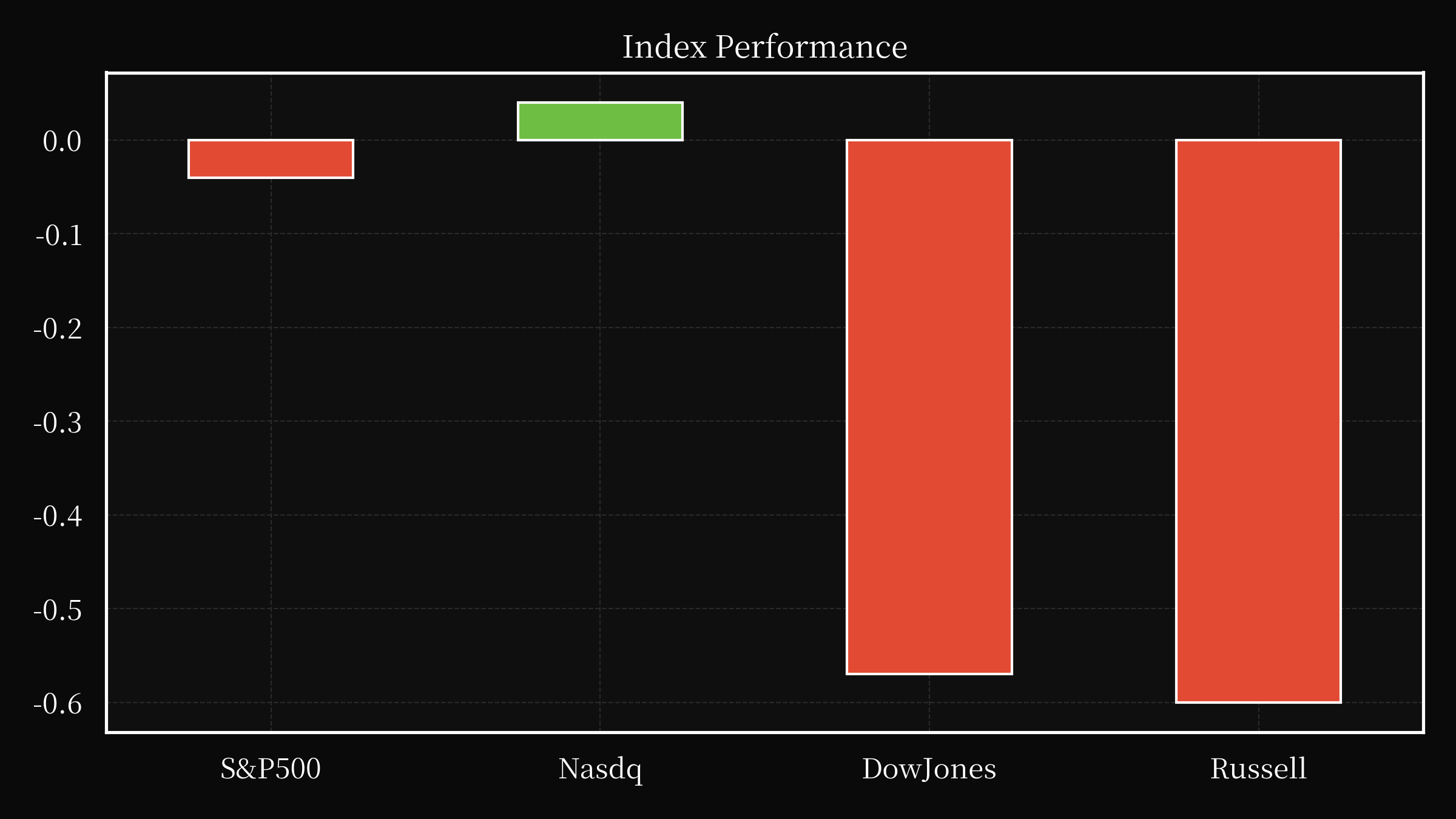
The Federal Reserve’s final meeting under Jerome Powell’s leadership concluded with an unexpectedly fractured consensus, as four of the 12 voting members dissented from the decision to maintain interest rates at current levels. This division underscored deeper disagreements over the trajectory of monetary policy, particularly as the central bank grapples with the implications of the ongoing U.S.-Iran conflict and the broader economic fallout from the war. Powell’s announcement that he would remain on the Fed’s Board of Governors beyond his chairmanship—citing concerns over legal challenges from the Trump administration—marked a symbolic and strategic move to insulate the institution from political pressures. The dissenters, including Fed Presidents Beth Hammack, Neel Kashkari, and Lorie Logan, opposed the inclusion of language suggesting a future rate cut, reflecting a cautious stance amid uncertainty. This split highlighted the tension between those prioritizing inflation control and those advocating for a more accommodative approach to support economic growth. The Fed’s decision to hold rates steady, while avoiding explicit commitments to future easing, signaled a delicate balancing act between stabilizing markets and addressing inflationary risks.
The market reaction to the Fed’s stance was muted, with the S&P 500 and Nasdaq showing minimal movement, while the Dow Jones Industrial Average declined slightly. This lack of immediate volatility contrasted with the broader economic backdrop, where the U.S. economy’s resilience and the Federal Reserve’s role in managing inflation remained central to investor sentiment. The Fed’s focus on data dependency, as emphasized in its statement, underscored the challenge of navigating a landscape where inflationary pressures persist despite recent cooling trends. The central bank’s reluctance to signal a clear path for rate cuts, even as some officials hinted at potential future adjustments, reflected a cautious approach to avoid undermining its credibility. This ambiguity left markets wary, as investors weighed the implications of a prolonged period of high rates against the risk of a slowdown in economic activity.
The divergence within the Fed also highlighted the evolving dynamics of monetary policy in the post-pandemic era, where traditional frameworks faced new challenges from supply chain disruptions, geopolitical tensions, and shifting labor market conditions. The absence of a unified consensus on the appropriate policy stance revealed the complexity of managing an economy in transition, with policymakers torn between addressing inflation and preventing a recession. The Fed’s emphasis on “data dependence” allowed for flexibility but also introduced uncertainty, as market participants sought clarity on the central bank’s priorities. This ambiguity was further compounded by external factors, such as the U.S.-Iran conflict, which introduced additional risks to global energy markets and inflationary pressures. The interplay between domestic policy and international events underscored the interconnected nature of modern economic challenges, requiring policymakers to navigate a multifaceted landscape with limited predictability.
Beyond the Fed’s internal divisions, the broader market environment was shaped by the performance of major corporations and the release of key economic indicators. The tech sector, a cornerstone of market growth, saw mixed results as companies like Meta Platforms and Amazon reported earnings that either exceeded or fell short of expectations. Meta’s struggles, driven by higher capital expenditures and a revised capex forecast, illustrated the challenges of sustaining growth in a sector increasingly reliant on artificial intelligence and infrastructure investments. Conversely, Alphabet and Microsoft demonstrated resilience, with strong revenue performance and strategic adjustments to AI spending. These outcomes highlighted the sector’s dual role as both a driver of innovation and a barometer of economic health, with investor sentiment closely tied to corporate execution and macroeconomic trends.
The release of the Bureau of Economic Analysis’s preliminary GDP data, expected to show a modest rebound, added another layer of complexity to market expectations. While a slight improvement in growth could bolster confidence, the underlying structural challenges—such as labor market tightness and inflationary pressures—remained unresolved. The interplay between these factors and the Fed’s policy decisions would likely shape the trajectory of markets in the coming months. Additionally, the political landscape, including the U.S. government’s approach to the Iran conflict and its implications for energy prices, introduced further uncertainty. The Federal Reserve’s ability to navigate these challenges while maintaining price stability and supporting employment would determine its effectiveness in fulfilling its dual mandate.
The Fed’s internal divisions and the broader economic context underscored the evolving nature of monetary policy in an era of heightened complexity. As policymakers balanced competing priorities, the markets remained attuned to signals of intent, with investors closely monitoring both official statements and the actions of major corporations. The interplay between central bank decisions, corporate performance, and external shocks would continue to define the economic narrative, requiring a nuanced understanding of the forces at play. For investors, the key lay in assessing the alignment between policy actions and macroeconomic realities, while remaining vigilant to the potential for unexpected developments that could reshape market dynamics.
The Federal Reserve’s decision to keep rates steady, despite the dissenting voices, reflected a pragmatic approach to managing a volatile environment. By avoiding explicit commitments to future rate cuts, the Fed preserved its flexibility to respond to emerging data, a strategy that could prove critical in the face of evolving economic conditions. However, this caution also risked prolonging the period of high borrowing costs, which could weigh on sectors reliant on credit and dampen overall growth. The challenge for policymakers was to strike a balance between maintaining price stability and fostering sustainable economic expansion, a task complicated by the lingering effects of the pandemic and the uncertainties of global geopolitics.
In parallel, the performance of major corporations provided insights into the broader economic landscape, with tech firms leading the charge in AI investment and innovation. The sector’s ability to generate robust revenue and manage capital expenditures effectively would be a key determinant of market stability, as investors weighed the long-term implications of AI-driven growth. At the same time, the divergence in earnings results highlighted the uneven nature of corporate recovery, with some companies outperforming expectations while others struggled to adapt to shifting demand patterns. This disparity underscored the importance of sector-specific analysis, as investors sought to identify firms positioned to thrive in a rapidly changing economic environment.
The interplay between monetary policy, corporate performance, and external shocks created a dynamic backdrop for market participants, requiring a multifaceted approach to analysis. The Federal Reserve’s cautious stance, while necessary to avoid premature policy shifts, left markets in a state of uncertainty, with investors awaiting further guidance on the path forward. The coming months would likely see continued scrutiny of economic data, corporate earnings, and geopolitical developments, all of which would influence the trajectory of markets and the effectiveness of monetary policy. For those navigating this complex landscape, the ability to synthesize diverse factors into coherent investment strategies would be paramount, ensuring that decisions were grounded in a thorough understanding of both macroeconomic trends and microeconomic realities.
Watch List
SAN
In the first quarter of 2026, Banco Santander reported a robust financial performance with a record quarterly profit and significant growth across its operations. The bank's revenue increased by 4% year-over-year to €15.1 billion, driven by an impressive addition of 8 million new customers and strong activity levels. This growth was supported by the ONE Transformation initiative, which enhanced efficiency and profitability. The underlying profit for Q1 2026 rose by 12%, reaching €3.6 billion, with a notable improvement in the efficiency ratio and return on tangible equity (RoTE). The bank's net attributable value per share (TNAVps) and cash dividends per share also saw substantial increases of 17% and 19%, respectively. Banco Santander's strategic focus on digital transformation and customer-centric initiatives played a crucial role in driving this performance. The ONE Transformation initiative, leveraging technology and artificial intelligence, contributed to significant efficiency improvements and cost reductions. This was evident across various business segments, including Retail, Openbank, Corporate & Investment Banking (CIB), Wealth Management, and Payments. The bank's balance sheet remained strong, with a CET1 ratio of 14.4%, reflecting robust credit quality and organic capital generation. Banco Santander continued to prioritize disciplined capital allocation, which supported shareholder value creation. Overall, the first quarter of 2026 marked another successful period for Banco Santander, showcasing its ability to deliver consistent growth and profitability while maintaining a solid financial position.
ANIK
Anika Therapeutics reported robust financial results for the first quarter of 2026, showcasing a 13% increase in total company revenue, reaching $29.6 million compared to $26.2 million from the prior year. This growth was propelled by strong performance across both its Commercial and OEM Channels, with revenues rising by 12% and 14%, respectively. The company achieved a gross margin of 64.2%, an improvement of eight percentage points over last year, attributed to enhanced operational execution and favorable product mix. Despite total operating expenses increasing to $24.5 million due to one-time severance costs and investments in operations and R&D, Anika delivered an adjusted EBITDA of $4.3 million, a significant rise from the previous year's $0.1 million. This financial success is part of the company’s strategic transformation aimed at driving profitability and operational efficiency. Steve Griffin, President and CEO, highlighted that these results reflect the early wins from their organizational realignment, with double-digit revenue growth and gross margin expansion leading to improved adjusted EBITDA. Notably, the Commercial Channel saw a 20% increase in Regenerative Solutions, driven by a 35% rise in U.S. procedures for Integrity products. Anika's international OA Pain Management segment grew by 9%, while its ongoing FDA engagements and pipeline developments continue to progress as planned. The company maintained its guidance for total revenue between $114 million and $122.5 million for the year,
FIBK
First Interstate BancSystem, Inc., reported its first quarter 2026 earnings with net income at $60.2 million or $0.61 per diluted share, a decrease from both the previous quarter and year-ago period. The company saw an increase in its net interest margin to 3.41%, up by five basis points from the last quarter and significantly higher than the same period last year. Other borrowed funds were eliminated compared to prior years, reflecting strategic financial management. Net charge-offs decreased substantially to $2.4 million, indicating improved loan quality, while criticized loans also saw a reduction. Despite these positive trends in credit performance, non-performing assets rose by 17.5% due to issues with a single client relationship. Total deposits declined primarily because of branch sales in Arizona and Kansas. The company actively repurchased shares, spending $84 million in the first quarter, adding to previous purchases, under an authorized program totaling $300 million. This activity contributed to a slight decrease in the common equity tier 1 capital ratio. Despite these share buybacks, net interest income saw a decline due to lower loan yields and balances. James A. Reuter, President and CEO, expressed optimism about ongoing improvements in net interest margin and business momentum, supported by a strong commercial pipeline and fixed asset repricing. The board declared a dividend of $0.47 per share for the quarter. Provision for credit losses was recorded at $6.7 million, reflecting cautious yet improved risk management
AREB
On April 10, 2026, American Rebel Holdings entered into a two-year promissory note with an accredited investor for $270,000, which included an original issue discount of $40,500 and guaranteed interest of the same amount. This arrangement resulted in net loan proceeds of $189,000 to be repaid as a lump sum by April 6, 2028. Additionally, a monitoring fee of $10,000 is due on the 150th day post-issuance. Failure to pay this fee within 30 days triggers an acceleration clause, requiring repayment at 105% of the outstanding principal plus any accrued interest and fees. The note allows for prepayment after 150 days with a penalty of 135% of the redeemed principal amount. After 180 days, both parties can agree to convert the principal into restricted shares of Series D Convertible Preferred Stock at $7.50 per share, capped at less than 4.99% of total common stock post-conversion. The Lender has piggy-back registration rights on these shares. Concurrently, American Rebel Holdings issued 2,000 shares of Series E Preferred Stock to Streeterville for 405,000 common shares and later exchanged 120 Series E Preferred shares for 202,702 common shares. Several conversions of Series D Convertible Preferred Stock into common stock occurred in April 2026, with significant share issuances following a settlement agreement with Silverback Capital Corporation. As of April
EQIX
Equinix reported robust first-quarter results for 2026, surpassing expectations with a 12% increase in monthly recurring revenue on an as-reported basis and a record backlog due to the largest annualized gross bookings in its history. The company's stabilized assets' revenues grew by 9%, generating attractive cash-on-cash returns of 26%. CEO Adaire Fox-Martin highlighted double-digit recurring revenue growth, improved margins, and strong demand for AI, cloud, and networking solutions as key drivers behind these results. Financially, Equinix saw a 10% increase in total revenues to $2.444 billion compared to the previous year on an as-reported basis, with net income attributable to common stockholders rising by 21% to $415 million. Adjusted EBITDA reached a record margin of 51%, up 17% from the prior year. The company raised its full-year financial outlook, projecting total revenues between $10.144 and $10.244 billion, reflecting approximately 10-11% growth over the previous year. Equinix's strategic initiatives included launching Equinix Fabric Intelligence™ and the Distributed AI Hub, enhancing its AI ecosystem with top providers. The company also announced a definitive agreement to acquire atNorth, further strengthening its position in the Nordics. These moves underscore Equinix's commitment to expanding digital infrastructure and connectivity solutions globally. Equinix uses non-GAAP financial measures like Adjusted EBITDA and AFFO to provide investors
MAT
Mattel, Inc. reported its first quarter 2026 financial results with a mixed performance compared to the prior year. Net sales increased by 4% as reported and 1% in constant currency, reaching $862 million, driven primarily by an 8% rise in international markets despite a 3% decline in North America. However, gross margin decreased by 450 basis points to 44.9%, with adjusted gross margin also down by the same amount to 45.1%. The company faced higher operating losses, reporting $103 million compared to $53 million previously, and an adjusted operating loss of $70 million versus $8 million last year, attributed to increased advertising costs, lower gross profit, and higher SG&A expenses. Despite these challenges, Mattel achieved a net income of $61 million, reversing a prior loss of $40 million. Earnings per share improved from a loss of $0.12 to $0.20, although adjusted earnings per share remained in the red at $0.20 compared to an adjusted loss of $0.02 last year. This improvement was largely due to a gain from remeasuring Mattel's previously held equity interest in Mattel163. The company made strategic moves by acquiring full ownership of the Mattel163 mobile games studio and repurchasing $200 million of shares, maintaining its 2026 target at $400 million. The digital strategy is progressing with plans for launching two self-published mobile games and a global theatrical
NVNO
On April 29, 2026, EnVeno Medical Corporation announced that it had received FDA approval for its Investigational Device Exemption (IDE) application. This approval authorizes the company to begin a study on its Transcatheter Venous Valve Endoprosthesis (TAVVE), aimed at evaluating the enVVe System in patients with severe deep Chronic Venous Insufficiency. The study will be conducted in two stages, starting later this year. Initially, 10 patients will participate to assess safety over a 30-day period, with results submitted to the FDA for review. These patients will continue to be monitored as a separate cohort throughout the study. The second stage will commence after the initial safety data is reviewed and will enroll 220 patients across up to 40 U.S. clinical sites. This phase involves 165 patients receiving the enVVe valve and 55 in a control group receiving standard care, allowing for comparative analysis of outcomes. The company anticipates being eligible to file for FDA post-marketing approval one year after this second stage begins. As of March 31, 2026, EnVeno Medical reported having approximately $25 million in cash and investments, expected to support operations until the third quarter of 2027. This financial position was highlighted in a press release issued on April 29, 2026, which also announced the favorable FDA decision regarding their IDE application. The company's forward-looking statements, including expectations about the enVVe
LUNG
Pulmonx Corporation reported its first quarter 2026 financial results on April 29, 2026, revealing a worldwide revenue of $20.6 million, marking a 9% decrease from the previous year and a 12% decline on a constant currency basis. U.S. revenues stood at $13.3 million, down by 7%, while international revenues were $7.3 million, reflecting a 12% drop year-over-year and a more significant 21% decrease in constant currency terms. Excluding China, international revenue saw an increase of 22% due to pending registration renewal there. The company achieved a gross margin of 78% for the quarter, up from 73% the previous year. Operating expenses decreased by 6%, totaling $29 million compared to $30.9 million in the same period last year. Despite these improvements, Pulmonx reported a net loss of $13.7 million or $0.33 per share, slightly better than the prior year's loss of $14.4 million or $0.36 per share. Pulmonx also announced refinancing its debt under a new 5-year interest-only credit facility extending to 2031. Glen French, President and CEO, expressed optimism about the company’s refreshed U.S. commercial strategies and international market execution, noting early progress in refocusing their sales organization and advancing clinical programs. The company remains confident in driving revenue growth and achieving strategic priorities for the year.
LII
Lennox International Inc. reported its first-quarter financial results for 2026, showing a mixed performance with revenue increasing by 6% year-over-year to $1.1 billion, driven largely by completed acquisitions. However, GAAP operating income declined by 3% to $164 million, and diluted earnings per share (EPS) decreased by 8% to $3.35. Despite these declines, the company maintained its full-year EPS guidance range of $23.50 to $25.00. CEO Alok Maskara highlighted that the quarter's results were supported by stabilizing end-markets and strategic initiatives such as integrating Duro Dyne and Supco. The company remains focused on productivity measures, supply chain optimization, and pricing actions to mitigate inflationary pressures amid ongoing macro uncertainties. In its Home Comfort Solutions segment, revenue fell by 10%, reflecting continued softness in both one-step and two-step channels, though this was an improvement from the previous quarter's decline. Segment margins were negatively impacted by inflation and unfavorable absorption, despite some positive mix and price contributions. Conversely, the Building Climate Solutions segment experienced robust growth with organic sales up 26% and acquisitions adding another 12%. Segment margins improved significantly due to volume increases, including national account activity, although inventory normalization partially offset these gains. Overall operating cash flow was $16 million compared to a cash usage of $36 million in the prior year, while net capital expenditures rose to $55 million from $25 million
MUSA
Murphy USA Inc., a leading marketer of retail motor fuel products and convenience merchandise, reported robust financial results for the first quarter of 2026. Net income surged to $136.3 million or $7.28 per diluted share, significantly up from $53.2 million or $2.63 per diluted share in Q1 2025. This growth was driven by a substantial increase in total fuel contribution margins, which rose to 35.0 cents per gallon (cpg) compared to 25.4 cpg the previous year. Total retail gallons increased by 2.1%, although same-store sales volumes slightly declined by 0.8%. Merchandise contributions also saw an uptick of 7.3% to $210.2 million, with unit margins improving from 19.6% to 20.0%. The company demonstrated strategic financial management through share repurchases and dividend payments; approximately 169,000 shares were bought back for $70.9 million at an average price of $419.87 per share, while a quarterly cash dividend of $0.63 per share was distributed, totaling $11.7 million in payments. President and CEO Mindy West highlighted the company's resilience amidst market volatility, particularly noting strong retail margins and favorable performance from their fuel supply business during periods of rising prices. Despite restrained consumer spending in discretionary non-nicotine categories, exceptional nicotine product sales contributed to a 7.3% increase in merchandise margin contribution compared