Overall
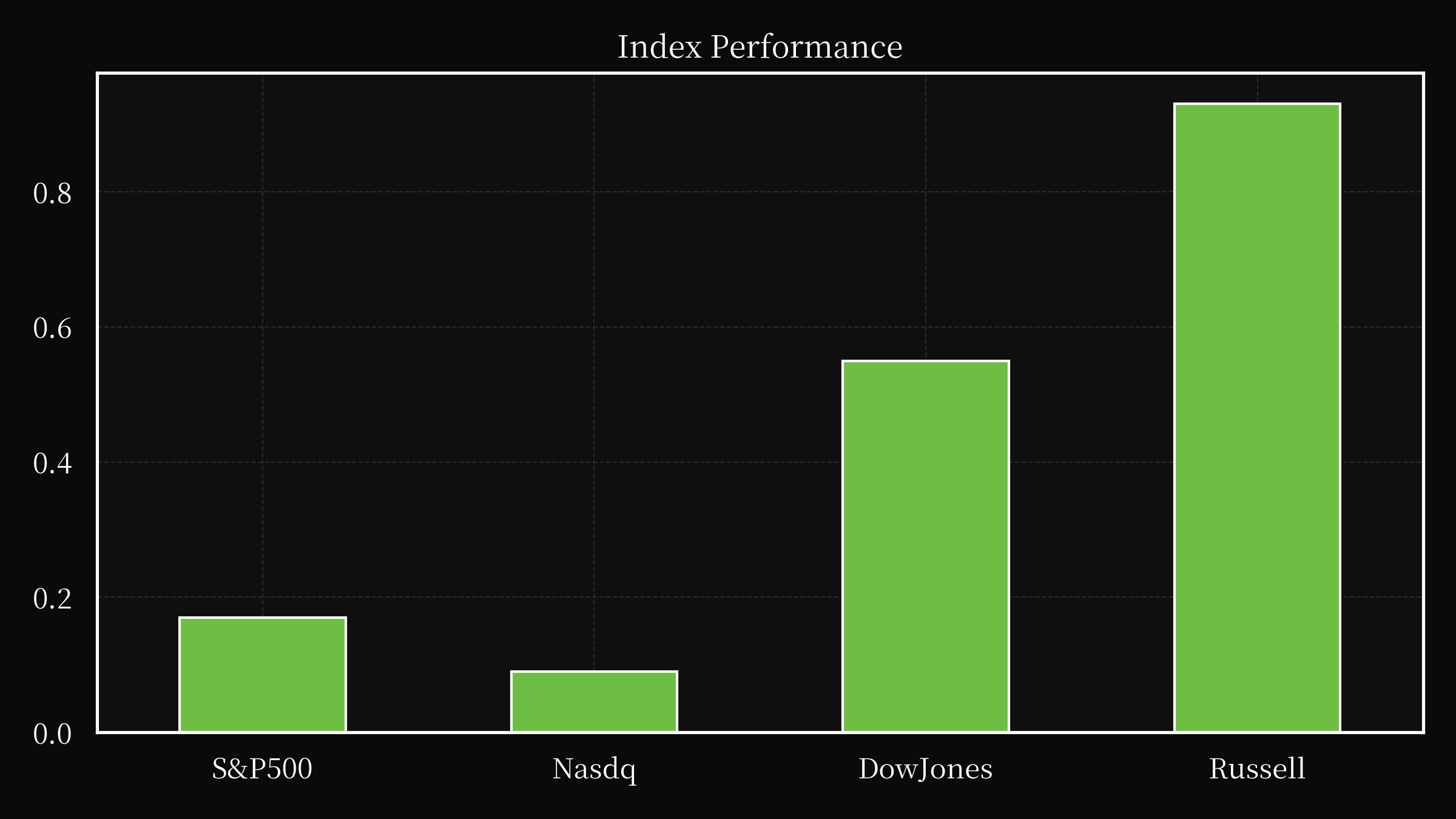
The latest market briefing underscores a complex interplay of macroeconomic pressures and corporate developments that are shaping equity and bond market dynamics. The Federal Reserve’s recent meeting minutes revealed a shift toward a more hawkish stance, with a majority of officials indicating that interest rate hikes remain likely if inflation persists above the 2% target, thereby injecting uncertainty into the policy outlook and strengthening the case for investors to remain vigilant regarding rate-sensitive sectors. At the same time, the S&P 500, Dow Jones, and Nasdaq all posted gains, buoyed by optimism that the Iran conflict may be nearing a resolution, which would alleviate supply-chain and energy-price risks that have weighed on global growth expectations. Despite this, Treasury yields remain elevated, reflecting persistent inflation concerns and the market’s demand for higher returns as a hedge. On the corporate front, Nvidia’s record-breaking first-quarter results—driven by surging demand for AI infrastructure—have reinforced its dominance in the sector, though its stock has already priced in much of the optimism. The company’s aggressive capital allocation, including a sizable dividend increase and plans for a massive stock buyback, signals management confidence but also highlights the challenge of sustaining such growth rates amidst a broader economic slowdown. OpenAI’s imminent IPO filing marks a watershed moment for the AI industry, potentially unlocking further capital inflows and legitimizing the sector’s valuation trajectory, yet regulatory scrutiny and internal governance issues—exemplified by recent legal disputes—pose significant execution risks. Meanwhile, SpaceX’s progress toward a $28.5 billion valuation and its S-1 registration represent a bold bet on the commercialization of space and advanced technologies, though the path to profitability remains fraught with technical and financial uncertainties. Retail stocks such as Target show signs of stabilization as well-managed promotional strategies and improved consumer sentiment drive modest sales gains, but broader macro headwinds, including labor market tightness and inflation, continue to constrain earnings upside. Collectively, these developments suggest a market environment characterized by cautious optimism tempered by structural risks, where selective leadership in AI, space, and technology may outperform, but where policy shifts and geopolitical developments could quickly alter the risk-reward calculus.
### The Macro Backdrop: Policy Uncertainty and Energy Risks
The Federal Reserve’s latest minutes reveal a notable recalibration toward rate-hike readiness, with a majority of policymakers indicating that further tightening is probable should inflation fail to recede toward the 2% target. This shift has bolstered the case for a “higher for longer” monetary regime, increasing the discount rates applied to growth-sensitive equities and amplifying the appeal of value-oriented sectors such as energy and financials. Despite the Fed’s dovish past, the current tone suggests that policymakers are prioritizing price stability over growth concerns, which has implications for both corporate borrowing costs and consumer credit conditions. Concurrently, the geopolitical landscape remains volatile, with the Iran war’s unresolved status keeping oil prices elevated and supply-chain disruptions alive. The Strait of Hormuz, a critical chokepoint for global energy flows, continues to be a flashpoint; any escalation could trigger sharp commodity spikes and renewed inflationary pressures, undermining the recent stabilization in energy markets. Analysts warn that prolonged conflict risks dragging down global GDP growth and exacerbating financial market volatility, particularly for firms with significant exposure to Middle East operations or commodity inputs. The interplay between these macro forces and corporate fundamentals thus demands a nuanced investment approach, balancing growth bets in AI and space with defensive positioning against policy and geopolitical shocks.
### Corporate Highlights: AI, Space, and Retail Resilience
Nvidia’s financial performance remains a standout, with its data center revenue surging 92% year-over-year and adjusted earnings per share jumping to $1.87, far exceeding analyst forecasts. The company’s strategic focus on AI accelerators has paid off as enterprises and governments accelerate investments in generative AI and cloud infrastructure, positioning Nvidia as the de facto leader in the AI hardware stack. Management’s decision to increase the dividend by 2400% and authorize an $80 billion buyback underscores both the strength of cash flows and a commitment to shareholder returns, though it also raises questions about sustainable growth given the competitive landscape. OpenAI’s imminent IPO filing, backed by major asset managers like Blackstone and Hellman & Friedman, signals institutional confidence in the AI sector’s long-term prospects and could catalyze further capital inflows into the industry. The venture’s pivot from a pure-play model to a broader enterprise AI services platform, leveraging partnerships with asset managers to distribute tools across thousands of companies, illustrates the sector’s expanding addressable market beyond tech giants. SpaceX, meanwhile, continues to advance its ambitious commercialization agenda, from Starlink’s expanding user base to its role in advancing agentic AI for enterprise clients. The company’s S-1 filing indicates a readiness to tap public markets at a valuation that could exceed $2 trillion, contingent on successful execution of its satellite and launch businesses. On the retail front, Target’s first-quarter results showed sales growth and margin expansion, reflecting effective pricing discipline and a successful turnaround strategy that has reinvigorated investor sentiment. However, broader retail trends remain mixed, with consumers navigating tighter budgets and inflationary pressures, particularly in discretionary categories.
### Risks and Opportunities Ahead
Several risks loom large on the horizon. First, the Fed’s potential rate hikes could disproportionately impact high-multiple growth stocks, including many in the AI and tech sectors, by widening discount rates and compressing valuations. Second, geopolitical developments related to the Iran conflict or broader Middle East tensions could reignite oil price spikes and supply disruptions, undermining the recent stabilization in energy markets. Third, corporate governance and regulatory challenges, particularly for OpenAI and SpaceX, present execution risks that could affect investor confidence. Finally, labor market tightness and persistent inflation may limit consumer spending growth, constraining earnings momentum across sectors. Opportunities, however, are evident in the AI infrastructure boom, where companies like Nvidia and emerging players such as Anthropic stand to benefit from enterprise adoption. SpaceX’s dual focus on commercial satellite services and AI-driven autonomy offers a unique growth vector, while retail firms like Target that successfully navigate pricing and inventory management may continue to deliver shareholder value. Investors should remain selective, favoring firms with robust balance sheets, clear paths to profitability, and defensible market positions, while maintaining a vigilant stance toward macro and geopolitical developments that could rapidly alter market dynamics.
### Conclusion
In sum, the current market environment is defined by a juxtaposition of technological optimism and persistent macro uncertainty. While AI and space-related leaders like Nvidia and SpaceX are poised to drive returns, their performance will hinge on both technological adoption curves and the broader economic policy framework. The Federal Reserve’s shift toward a hawkish stance, coupled with ongoing geopolitical risks, necessitates a balanced portfolio approach that captures upside in select growth areas while hedging against policy-driven volatility and external shocks. As always, investors should prioritize disciplined capital allocation, rigorous fundamental analysis, and an awareness of how global events—whether in Washington, Tehran, or Moscow—can swiftly reshape market narratives.
Watch List
SUI
Sun Communities Operating Limited Partnership has agreed to sell its UK-based Park Holidays business to Aermont Capital LLP’s affiliate, Panther Bidco Limited, for £768 million (approximately $1.03 billion). This transaction, expected to close in the second half of 2026, is subject to regulatory approval and customary closing conditions. The sale will result in approximately $1.0 to $1.1 billion in non-cash charges for Sun Communities, Inc., likely recorded in the quarters ending June and September 2026, reflecting the difference between the agreed-upon price and the current estimated net asset value. Following the sale, the Company will be subject to a two-year non-solicitation and non-competition agreement regarding Park Holidays’ operations in the UK. The agreement includes provisions for indemnification and insurance to cover potential breaches of warranty. The announcement also highlights several key risks associated with the transaction, including potential disruptions to operations, impacts on business relationships, costs, and uncertainties surrounding the closing timeline. Furthermore, the company is updating its risk factors disclosures to supplement those previously filed, reflecting evolving risks related to economic conditions, market volatility, regulatory changes, and operational challenges.
TTWO
Take-Two Interactive Software, Inc. reported strong financial results for its fiscal year and fourth quarter 2026, exceeding initial guidance. Net bookings reached $1.58 billion for the fourth quarter and $6.72 billion for the full fiscal year, driven by robust recurrent consumer spending, which accounted for 82% and 78% of total bookings and revenue respectively. Grand Theft Auto Online and Grand Theft Auto V continued to be key contributors, alongside titles like Toon Blast and Empires & Puzzles. The company anticipates continued growth with initial outlook for fiscal 2027 projecting net bookings between $8.0 and $8.2 billion, largely fueled by the upcoming release of Grand Theft Auto VI. While GAAP net loss was $59.5 million for the quarter, reflecting a significant decrease from the prior year’s loss, the company highlighted its focus on sustained scale, cash flow generation, and a robust development pipeline. Take-Two also emphasized optimizing live services and capitalizing on new business opportunities. Management anticipates a fiscal year-end 2027 tax rate of 18% and expects share counts to be 189.7 million for GAAP and management reporting diluted net income per share. The company’s Non-GAAP measure, EBITDA, excluding certain non-cash expenses, is viewed as a key metric for assessing operating performance and future trends. Take-Two plans to host a conference call to discuss these results further.
LSPD
Lightspeed Commerce Inc. announced strong financial results for both the fourth quarter and full fiscal year 2026, exceeding initial expectations. Revenue increased by 15% year-over-year to $290.8 million in the fourth quarter and 14% overall for the year, reaching $1.227 billion. This growth was driven by a 24% increase in retail sales in North America and hospitality in Europe, alongside a 19% growth in Gross Transaction Value (GTV) and approximately 3,200 new Customer Locations added. The company reported an Adjusted Free Cash Flow of $18.2 million for the fiscal year, reflecting disciplined execution and a strong balance sheet. Lightspeed’s Board renewed its normal course issuer bid, authorizing the repurchase of up to 10% of its outstanding shares. Key operational highlights included the integration of Faire with Lightspeed Wholesale, the implementation of AI-driven brand recommendations, and an OCR tool for restaurants, alongside continued growth in its retail and hospitality segments. Looking ahead to fiscal 2027, Lightspeed anticipates continued growth, factoring in the divestiture of its Upserve hospitality product line. The company’s CEO, Dax Dasilva, emphasized the success of the company’s transformation and its commitment to investing in key capabilities. CFO Asha Bakshani highlighted the company’s profitability and shareholder value focus, reaffirming its commitment to driving long-term growth. Lightspeed ended the quarter with $453.9 million in cash and cash equivalents, and the company’s board approved the renewal of its normal course issuer bid.
EOG
EOG Resources, Inc. held its 2026 Annual Meeting of Stockholders on May 20, 2026, primarily to elect nine new directors to the Board, all of whom were successfully voted in. Stockholders also overwhelmingly ratified Deloitte & Touche LLP as the company’s independent auditor for the year ending December 31, 2026. Furthermore, a non-binding advisory vote, commonly known as “Say-on-Pay,” regarding the compensation of the company’s named executive officers received strong approval from shareholders. As of March 31, 2026, EOG had already repurchased approximately 59.4 million shares totaling $7.1 billion under a previous authorization, leaving roughly $2.9 billion available. Following the meeting, the Board increased the company’s share repurchase authorization by $10 billion, bringing the total available for repurchase to $20 billion, representing a significant expansion of the company’s capital allocation strategy.
DAVA
Endava announced its third-quarter fiscal year 2026 results, revealing a 8.4% year-on-year revenue decline to £178.5 million, with a 6.4% decline at constant currency. The company attributed this downturn to uneven sector demand, extended deal cycles, and client scrutiny of technology spending. Despite these challenges, Endava is focused on its strategic shift toward AI-native delivery, evidenced by a 15% increase in AI-driven revenue from 5% a year prior. Key initiatives, including collaborations with Mastercard and Tyl by NatWest, are driving this growth. However, the company recognized a significant £364.6 million goodwill impairment due to performance forecasts. Adjusted diluted EPS came in at £0.05, reflecting a positive adjusted profit before tax of £3.2 million. The company’s headcount remained steady at 11,225. Looking ahead, Endava anticipates revenue between £181.0 million and £185.0 million, representing a constant currency decline of between 3.5% and 1.0%, alongside adjusted diluted EPS of £0.09 to £0.13 per share. The company’s guidance reflects a cautious outlook amidst ongoing macroeconomic headwinds, while continuing to prioritize strategic partnerships and its AI-driven transformation.
DRCT
Okay, here’s a breakdown of the provided financial information, organized for clarity and highlighting key aspects: I. Executive Summary * Company: Direct Digital Holdings, Inc. (DDH) – an advertising and marketing platform. * Status: Currently facing significant challenges, including disruption in its sell-side business and substantial doubt about its ability to continue as a going concern. * Financial Situation: The company is operating under a complex structure with multiple debt obligations and significant deferred tax liabilities. II. Key Financial Highlights (as of December 31, 2025 & 2024 – in thousands) | Item | 2025 | 2024 | | -------------------------- | -------- | -------- | | Assets | | | | Total Assets | $18.7 | $20.2 | | Current Assets | $6.7 | $7.3 | | Long-Term Assets | $12.0 | $12.9 | | Liabilities | | | | Total Liabilities | $15.3 | $16.7 | | Current Liabilities | $5.8 | $6.3 | | Long-Term Liabilities | $9.5 | $10.4 | | Equity | | | | Stockholders’ Deficit | $3.4 | $4.6 | | Income Statement | | | | Net Loss | ($27.7) | ($19.9) | | Adjusted EBITDA | ($18.9) | ($16.3) | | Cash Flow | | | | Cash Flow from Operations | ($8.9) | ($8.6) | | Cash Flow from Investing | ($0.1) | ($0.1) | | Cash Flow from Financing | $8.3 | $5.0 | III. Detailed Breakdown of Significant Items * Debt: * Credit Agreement (EWB Bank): A revolving credit facility with a $10
OFIX
Orthofix Medical Inc. has revised its financial outlook following a recent U.S. Food and Drug Administration (FDA) decision to reclassify non-invasive bone growth stimulators and subsequent updates from the Centers for Medicare & Medicaid Services (CMS). The FDA’s action, effective April 16, 2026, has led to revised billing requirements and a projected 10% decrease in average Medicare reimbursement for HCPCS codes related to these stimulators. Consequently, Orthofix is now forecasting full-year 2026 net sales between $838 million and $848 million, with non-GAAP adjusted EBITDA expected to range from $90 million to $93 million. Importantly, the company anticipates a lack of positive free cash flow for the year. These projections represent a significant shift from previous expectations, and Orthofix acknowledges that further changes to Medicare reimbursement rates could necessitate additional adjustments. As a result, the company’s previously established three-year financial targets have been discontinued, and they are actively monitoring and evaluating the ongoing impact of CMS actions on the company’s long-term strategy.
JTAI
Jet.AI Inc. recently issued a press release detailing its financial results for the quarter ending March 31, 2026, alongside other operational highlights, which is attached as Exhibit 99.1 to this Form 8-K filing. This report serves as a forward-looking statement, outlining the company’s expectations and projections, and is subject to various risks including potential difficulties in raising future funding, legal proceedings, and operational challenges. The company’s statements regarding its future performance are not guarantees and should be viewed with caution, considering the inherent uncertainties surrounding its business. Furthermore, the company has finalized amendments to the employment agreements of its key executives, Michael Winston and George Murnane, effective May 18, 2026. These amendments maintain the original terms of their existing agreements, though a full description is provided in Exhibits 10.1 and 10.2, which are incorporated into this Form 8-K filing. Investors are advised to review the full text of these exhibits for comprehensive details.
EHLD
EuroHoldings Ltd. (EHLD), an owner and operator of container carriers and tanker vessels, announced its first-quarter 2026 financial results, reporting total net revenues of $7.6 million and net income of $2.4 million, or $0.84 per share. This represents a significant increase of 166.0% compared to the first quarter of 2025, driven by increased vessel utilization and charter rates, particularly in the product tanker market. Adjusted EBITDA rose threefold to $3.1 million, nearly doubling compared to the previous year’s figures. The company declared a quarterly dividend of $0.14 per share. Notably, EuroHoldings also announced the acquisition of a 49,997 DWT product tanker, the M/T Hellas Fighter, for $39.25 million from a related party, with delivery expected between mid-June and mid-August 2026. This acquisition was approved by an independent committee and will be financed through a combination of own funds and debt. The company’s management highlighted the benefits of shifting into product tankers and the strength of the product tanker market, anticipating continued profitability in the second quarter. Daily vessel operating expenses increased slightly due to inflationary pressures, primarily related to supply costs in the current geopolitical environment. As of March 31, 2026, the company’s outstanding debt stood at $19.6 million, with approximately $6.1 million in cash. The company’s fleet currently consists of two feeder container carriers and the newly acquired product tanker, the M/T Hellas Fighter.
IMMX
Immix Biopharma, Inc. has successfully completed an underwritten offering of 16,778,524 shares of its common stock at $8.94 per share, raising approximately $140.65 million. The proceeds will be used to fund ongoing operations and clinical trials. The offering closed on May 22, 2026, subject to customary conditions. The company’s management highlighted significant progress in its clinical trials, particularly the NEXICART-2 study, where all four MRD-negative relapsed/refractory light chain amyloidosis patients had converted to complete response within one year. Furthermore, data from the NEXICART-2 trial showed a 95% CR rate among the first 20 patients, with rapid normalization of diseased light chains observed. The company plans to initiate a multi-center, randomized, Phase 3 clinical trial of its CAR-T therapy, NXC-201, in newly diagnosed AL amyloidosis patients in the first half of 2027. However, the company cautioned that clinical trial data is subject to risks, including potential differences between interim and final results, and disagreements with regulatory agencies regarding interpretations of data. These forward-looking statements are subject to various risks and uncertainties, including those detailed in the company’s Form 10-K and other filings with the SEC.
IanFV (www.ianfv.com) is the world's first pure-blood, neutral research institution built on LLM (Large Language Models) specifically for individual investors. Founded by a top-tier team with backgrounds from Tsinghua, Harvard, Morgan Stanley, and UBS, we are committed to breaking down high-priced information barriers and providing institutional-grade investment research at affordable prices. Unlike traditional institutions, IanFV does not serve big-money sponsors or inflate market bubbles. Leveraging a proprietary knowledge graph and a fully localized deployment architecture, we achieve a differentiated competitive advantage through light assets and high efficiency. Our research reports refuse to "sell dreams": valuation reports are based on point-in-time intervals rather than reverse-engineered numbers; industry reports focus relentlessly on real trends over the next six to twelve months; and in-depth reports penetrate market bubbles to strike at the core of corporate survival moats—all to ensure investors hold the most authentic research cards in the secondary market.