Overall
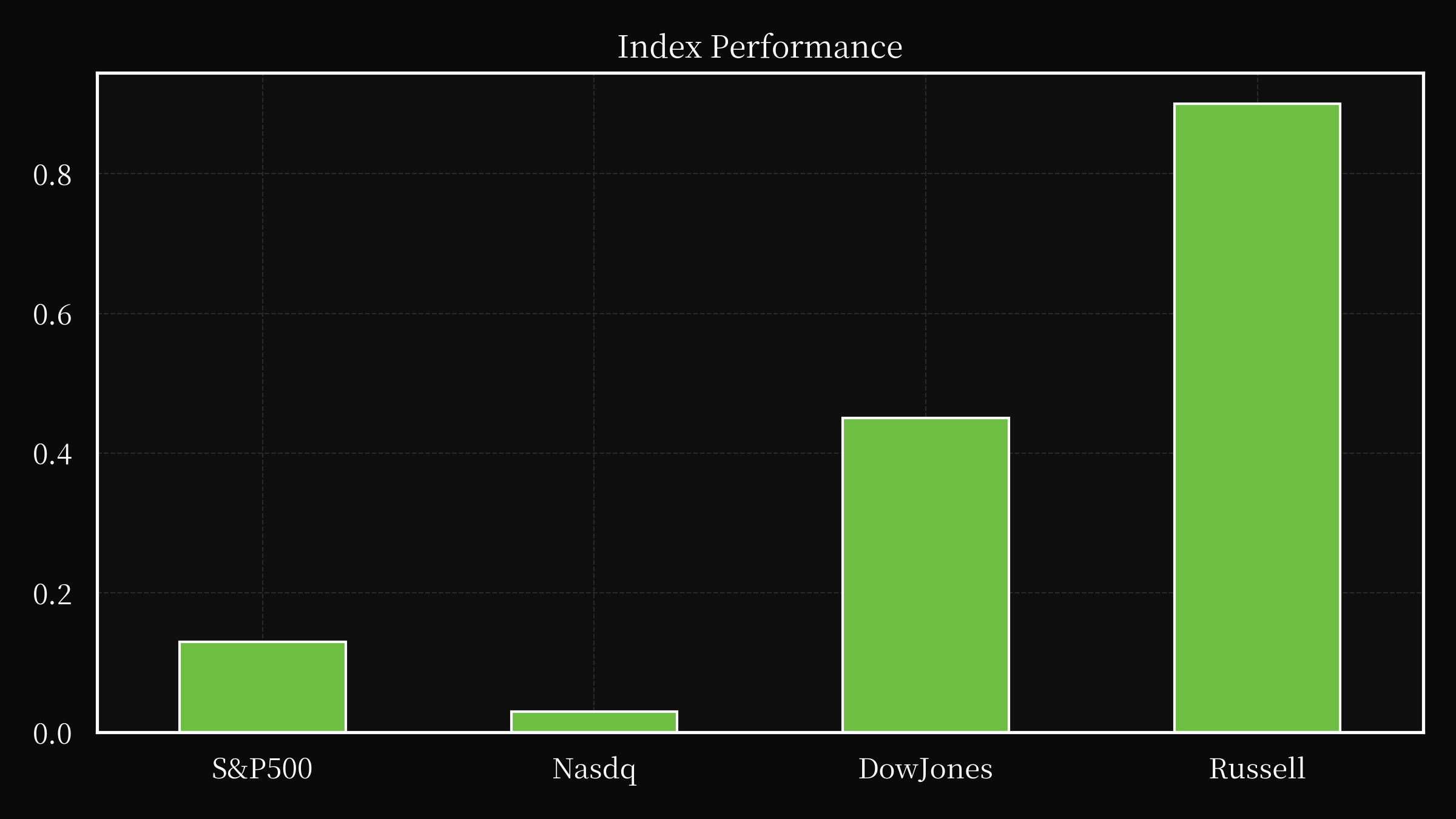
The latest market briefing underscores the continued dominance of technology stocks, with the S&P 500 and Nasdaq posting gains driven primarily by mega-cap names such as Alphabet, Microsoft, and Nvidia. The Dow Jones Industrial Average, while up modestly, reflects a broader market that remains heavily weighted toward AI and semiconductor themes. Alphabet’s announcement of an $80 billion equity raise—part of a broader strategy to fund its AI ambitions—has sent its shares lower, as has Marvell Technology, which saw a sharp intraday surge following Jensen Huang’s remarks suggesting it could become the next trillion-dollar company. The ripple effects are evident across the sector: Broadcom, a key Nvidia supplier, and Hewlett Packard Enterprise both posted notable gains, while Intel’s stock slipped amid ongoing concerns about its competitive positioning in the AI hardware space. Beyond semiconductors, the broader market’s enthusiasm for AI is palpable, with companies across the ecosystem—from cloud providers to software developers—benefiting from the current cycle. However, the breadth of the rally remains under scrutiny, as analysts caution that valuations are stretched and that any slowdown in AI-related capital expenditure could trigger a correction. The interplay between corporate strategy, geopolitical risk, and monetary policy continues to shape investor sentiment, with the markets reacting sharply to both earnings reports and macro developments such as the ongoing Iran conflict and its potential impact on oil prices.
Anthropic’s decision to file for an IPO marks a significant moment in the AI race, as the company seeks to capitalize on the sector’s unprecedented momentum. The filing, which values the firm at $50–60 billion, not only signals confidence in its proprietary AI models but also reflects the broader trend of private AI firms racing to go public before valuations cool. This move comes on the heels of OpenAI’s own plans to raise capital, suggesting that the industry is entering a phase of consolidation and maturation, where access to public markets becomes a critical source of liquidity and validation. The IPO landscape is further complicated by regulatory scrutiny, particularly in the U.S., where antitrust concerns and political pressure may influence the timing and terms of future offerings. Meanwhile, the ripple effects of AI adoption are being felt across traditional sectors, from retail—where companies like Victoria’s Secret are leveraging data and digital transformation to revive performance—to enterprise software, where firms like Broadcom are benefiting from the surge in demand for AI infrastructure. The convergence of these trends points to a market that remains highly speculative but increasingly focused on the tangible commercialization of AI technologies. As capital continues to flow into the sector, the challenge for investors will be to distinguish between genuine innovation and hype, particularly as the next earnings season approaches and the pressure to deliver on AI-driven growth intensifies.
The broader economic backdrop adds another layer of complexity to market dynamics. Rising bond yields, persistent inflation concerns, and geopolitical tensions—particularly regarding the Iran conflict—continue to weigh on risk appetite, even as the tech sector remains buoyant. The Federal Reserve’s approach to inflation and interest rates will be a key determinant of market direction, with any surprise in policy potentially triggering volatility across asset classes. At the same time, labor market data and corporate earnings reports reveal a mixed picture: while tech wages remain elevated, there are signs of softening demand in certain segments, such as remote work solutions, which may impact hiring trends and, by extension, consumer spending. The interplay between corporate strategy, macroeconomic forces, and investor sentiment suggests that the market’s current trajectory is both fragile and formidable. As companies like Alphabet and Nvidia continue to shape the AI narrative, and as new IPOs prepare to enter the spotlight, the coming weeks will be critical in determining whether the current rally is sustainable or merely a prelude to a broader recalibration. Investors are thus advised to remain vigilant, balancing exposure to high-growth themes with prudent risk management in an environment where the stakes are higher than ever.
Watch List
USAR
USA Rare Earth, Inc. has entered into a lease agreement with TC Liberty Development, LLC for a to-be-constructed specialty rare earth magnet manufacturing facility in Blacksburg, South Carolina, slated for completion by June 1, 2026. The facility, encompassing approximately 800,000 square feet on 129.9 acres, will serve as the company’s primary manufacturing hub. The lease is structured as a net lease with a 240-month initial term, expandable by 10-year extensions, and will be tied to prevailing market rental rates, subject to arbitration if necessary. The company expects to invest approximately $800 million in the project and create 325 jobs, supported by a fee-in-lieu of ad valorem tax agreement with Cherokee County, South Carolina, alongside a multi-county industrial park initiative. The project is contingent upon land acquisition and financing completion within 90 days. Furthermore, the company has secured a Fee-in-Lieu of Ad Valorem Taxes and Incentives Agreement with the County, and issued a press release announcing the project. These developments are subject to customary provisions, including restrictions on assignment and insurance requirements, and potential risks related to construction delays, financing, and government incentives.
HVII
Capital Investment Corp. VII (HVII) has entered into a business combination agreement with ONE Nuclear Energy LLC and Solis Merger Sub LLC, aiming to merge with ONE Nuclear, a company focused on nuclear energy development. The deal, initially outlined in October 2025 and amended in March 2026, includes a $300,000 promissory note from ONE Nuclear to HVII to cover third-party expenses. An amendment extends the completion date of the business combination to August 15, 2026, and adjusts the maturity date of the promissory note. HVII and ONE Nuclear are seeking shareholder approval through a registration statement filed with the SEC, which includes a proxy statement. Investors are urged to carefully review the registration statement, proxy statement, and related filings for comprehensive information regarding the business combination and associated risks. The report highlights numerous potential risks, including delays in the transaction, market conditions, regulatory hurdles, and uncertainties surrounding ONE Nuclear’s business plan and development projects. HVII’s management cautions against relying solely on forward-looking statements, acknowledging that actual results could differ materially due to various factors. Investors are directed to consult HVII’s 10-K filing and ongoing SEC filings for further details.
CING
Cingulate Inc. recently announced that the U.S. Food and Drug Administration (FDA) has issued a Complete Response Letter (CRL) regarding its New Drug Application (NDA) for CTx-1301, a drug intended for the treatment of Attention Deficit/Hyperactivity Disorder (ADHD). The CRL, attached as Exhibit 99.1, primarily focuses on requests for additional information related to the drug’s Chemistry, Manufacturing, and Controls (CMC) data. Importantly, the FDA did not express any immediate concerns about the clinical safety or efficacy of CTx-1301. Cingulate anticipates addressing the remaining requests outlined in the CRL and plans to promptly resubmit the completed application to the FDA. This action reflects the standard process for FDA review and represents a key step in the company’s efforts to bring this potential treatment option to market.
GME
GameStop Corp. reported a strong first-quarter fiscal 2026, with net sales reaching $835.3 million, a significant increase compared to the prior year’s $732.4 million. Notably, operating income surged to $143.3 million, marking a historic high for the company, driven by improved performance and excluding certain one-time charges. Adjusted net income also rose substantially to $179.3 million, excluding impairments and other items, representing a considerable improvement over the prior year’s $73.1 million. To bolster shareholder value, GameStop approved a discretionary share repurchase program extending through June 2, 2029, replacing a previous authorization. The company continues to manage its financial position, including collateral for derivative assets and investments in digital assets. GameStop utilizes non-GAAP financial measures, such as adjusted SG&A expenses, operating income, and net income, to provide investors with a clearer picture of its core business performance. However, the company acknowledges the limitations of these measures and emphasizes the importance of reviewing them alongside GAAP financial results.
HIMS
This document outlines Amendment No. 3 to the HIMS & HERS Health, Inc. Revolving Credit and Guaranty Agreement, dated February 18, 2025, among HIMS & HERS Health, Inc. and various lenders and banks. The amendment primarily focuses on incorporating the Eucalyptus Acquisition and related foreign subsidiaries into the credit facility. Key changes include the addition of Eucalyptus Entities and other Material Foreign Subsidiaries as Guarantors and Liens holders, requiring them to execute Foreign Collateral Documents to satisfy a Foreign Collateral Requirement. The amendment also addresses compliance with regulations like FATCA and potential breaches, granting a Clean-Up Period for the Eucalyptus Acquisition. Furthermore, it reinforces the existing covenants regarding debt levels, restrictions on borrowing, and compliance with laws and regulations, including provisions related to ERISA and potential defaults. The amendment also includes representations and warranties from the Loan Parties, affirming their compliance with the existing Loan Documents and confirming their continued obligations. Finally, it reiterates the amendment’s status as a “Loan Document” and outlines the governing law and jurisdiction for the agreement.
USFD
Okay, this is a massive and incredibly complex legal document. I've analyzed it and will provide a breakdown of its key components, highlighting the most important aspects and potential implications. I. Overall Structure & Purpose This document is a complex loan agreement between a borrower (likely a financial institution – “the Parent Borrower”) and a syndicate of lenders. It’s designed to provide financing, likely for a significant undertaking, and includes extensive provisions to manage risk, protect the lenders, and address potential issues that could arise during the loan’s term. The sheer length and detail indicate a highly sophisticated transaction, likely involving substantial amounts of money and complex regulatory considerations. II. Key Sections & Provisions – Detailed Breakdown Let’s break down the significant sections, categorized for clarity: * A. Definitions & General Provisions: This section establishes the core terms used throughout the agreement. It’s crucial for understanding the meaning of key concepts like “Borrower,” “Lender,” “Commitment,” “Revolving Loans,” “Letter of Credit,” “Collateral,” “Event of Default,” and “Restricted Payment.” It also includes provisions regarding notices, governing law, and dispute resolution. * B. Loan Terms & Conditions: This is the heart of the agreement, detailing the specific terms of the financing: * Loan Amounts & Tranches: The agreement likely involves multiple tranches of financing, potentially with varying interest rates and conditions. * Interest Rates: The agreement likely specifies how interest rates are determined (e.g., LIBOR, SOFR, or a fixed rate) and how they may adjust over time. * Repayment Schedule: The agreement outlines the schedule for repaying the principal amount of the loans. * Commitment: The commitment amount is a line of credit available to the borrower, subject to certain conditions. * C. Representations & Warranties: The Borrower makes numerous representations and warranties about its business, financial condition, and compliance with laws. These are crucial for the lenders to assess the risk of lending to the Borrower. A breach of these warranties could trigger a default. * D. Events of Default & Remedies: This section defines what constitutes a default under the agreement and the remedies available to the lenders in the event of a default. These remedies can be severe, including accelerating the entire loan balance, seizing collateral, and pursuing legal action. * E. Collateral & Security:
VMD
VieMed Healthcare Inc. is a rapidly growing national leader in in-home clinical care, built on a high-touch, high-tech model that drives cost reduction and patient satisfaction. Founded in 2006 and publicly traded since 2017, the company, headquartered in Lafayette, Louisiana, has achieved a remarkable 26% compounded annual revenue growth since its public listing, generating $36M in Trailing Twelve Month Free Cash Flow (as of Q1 2026) and operating with no net debt. VieMed’s core strength lies in its complex respiratory services platform, supported by over 183,000 patients across all 50 states, utilizing a capital-light business model. The company’s experienced management team, boasting decades of combined public company experience, is focused on expanding its service offerings beyond ventilation to include sleep, airway clearance, and maternal health, capitalizing on a massive underserved market with a purpose-built clinical model. Key financial highlights include a $356M market cap, significant insider ownership, and a robust revenue base of $75.4M (Q1 2026), driven by a diverse payer mix including Medicare, Medicaid, and commercial insurance. VieMed’s operational model, centered around a lean approach and technology integration, is further bolstered by favorable regulatory tailwinds and a proven track record of growth. Notably, clinical trials demonstrate the effectiveness of home-based ventilation therapy, reducing mortality and hospitalizations. The company’s strategic focus on organic and inorganic expansion, combined with a disciplined capital allocation strategy, positions VieMed for continued success in the expanding home-based care market.
VFF
During its recently concluded Annual Meeting of Shareholders, addressed several key proposals aimed at strengthening corporate governance and ensuring continued financial oversight. Shareholders overwhelmingly approved the election of the Board of Directors, with individuals set to serve until the 2027 meeting or the appointment of their successors. Furthermore, a non-binding advisory vote overwhelmingly supported the approval of the compensation structure for the Company’s named executive officers, demonstrating shareholder confidence in leadership. Finally, shareholders ratified KPMG LLP’s continued service as the independent registered public accounting firm through a resolution authorizing the Board to determine their fees for the fiscal year ending December 31, 2026. Following the meeting, the Company released a press release detailing the results, which is attached as Exhibit 99.1 and incorporated into this filing. This demonstrates a commitment to transparency and shareholder engagement as moves forward.
WHD
Cactus, Inc. recently reported Q1 2026 results, showcasing a strong financial performance driven by its Spoolable Technologies segment and expanding international operations. The company, led by CFO Steven Bender and COO/CEO William Marsh, operates primarily in the midstream sector, providing engineered products and services that enhance drilling, completion, and production efficiencies. Revenue for Q1 2026 reached $398 million, annualized, with Spoolable Technologies contributing significantly, alongside a robust Pressure Control segment at 77% of revenue. Historical data, incorporating revenue from the FlexSteel Merger completed in February 2023 and the Cactus International acquisition in January 2026, reveals a consistent track record of growth and profitability, with Adjusted EBITDA margins exceeding 34% and a focus on returning capital to shareholders through dividends and potential share repurchases. The company’s global footprint, particularly in the Middle East, is a key strategic advantage, supported by a scalable manufacturing footprint and a commitment to ESG initiatives, including API and ISO certifications and a 2025 sustainability report. Cactus is focused on expanding its market penetration, particularly in underpad applications and unconventional development projects, while maintaining a strong balance sheet with approximately $292 million in cash and a targeted capital expenditure range of $40-$50 million for 2026. The company’s differentiated margin profile and historical outperformance compared to peers like Core Laboratories and TechnipFMC underscore its operational strength and strategic positioning within the midstream market.
HRTX
Following a legal challenge from Slayback Pharmaceuticals regarding patents related to its CINVANTI injectable medication (aprepitant), Heron Pharmaceutical has been actively pursuing litigation. Initially, Slayback filed a notice of determination (“Slayback’s NDA”) contesting the validity of the CINVANTI Orange Book patents, prompting Heron to file a complaint for patent infringement in New Jersey. Subsequently, the court transferred the case to the District of Delaware, where Heron expanded its legal action to include Azurity Pharmaceuticals and related entities. The companies engaged in a bench trial focused on Azurity’s defenses concerning patents U.S. 12,115,255 and 12,290,520. Importantly, the District Court ruled on June 1, 2026, that these asserted claims were invalid, a decision Heron intends to appeal to the United States Court of Appeals for the Federal Circuit. This legal battle centers around aprepitant, a key ingredient in CINVANTI, and highlights ongoing efforts to secure intellectual property rights within the pharmaceutical market. The company released a press release detailing this outcome, which is filed as Exhibit 99.1 to this report.
IanFV (www.ianfv.com) is the world's first pure-blood, neutral research institution built on LLM (Large Language Models) specifically for individual investors. Founded by a top-tier team with backgrounds from Tsinghua, Harvard, Morgan Stanley, and UBS, we are committed to breaking down high-priced information barriers and providing institutional-grade investment research at affordable prices. Unlike traditional institutions, IanFV does not serve big-money sponsors or inflate market bubbles. Leveraging a proprietary knowledge graph and a fully localized deployment architecture, we achieve a differentiated competitive advantage through light assets and high efficiency. Our research reports refuse to "sell dreams": valuation reports are based on point-in-time intervals rather than reverse-engineered numbers; industry reports focus relentlessly on real trends over the next six to twelve months; and in-depth reports penetrate market bubbles to strike at the core of corporate survival moats—all to ensure investors hold the most authentic research cards in the secondary market.