Overall
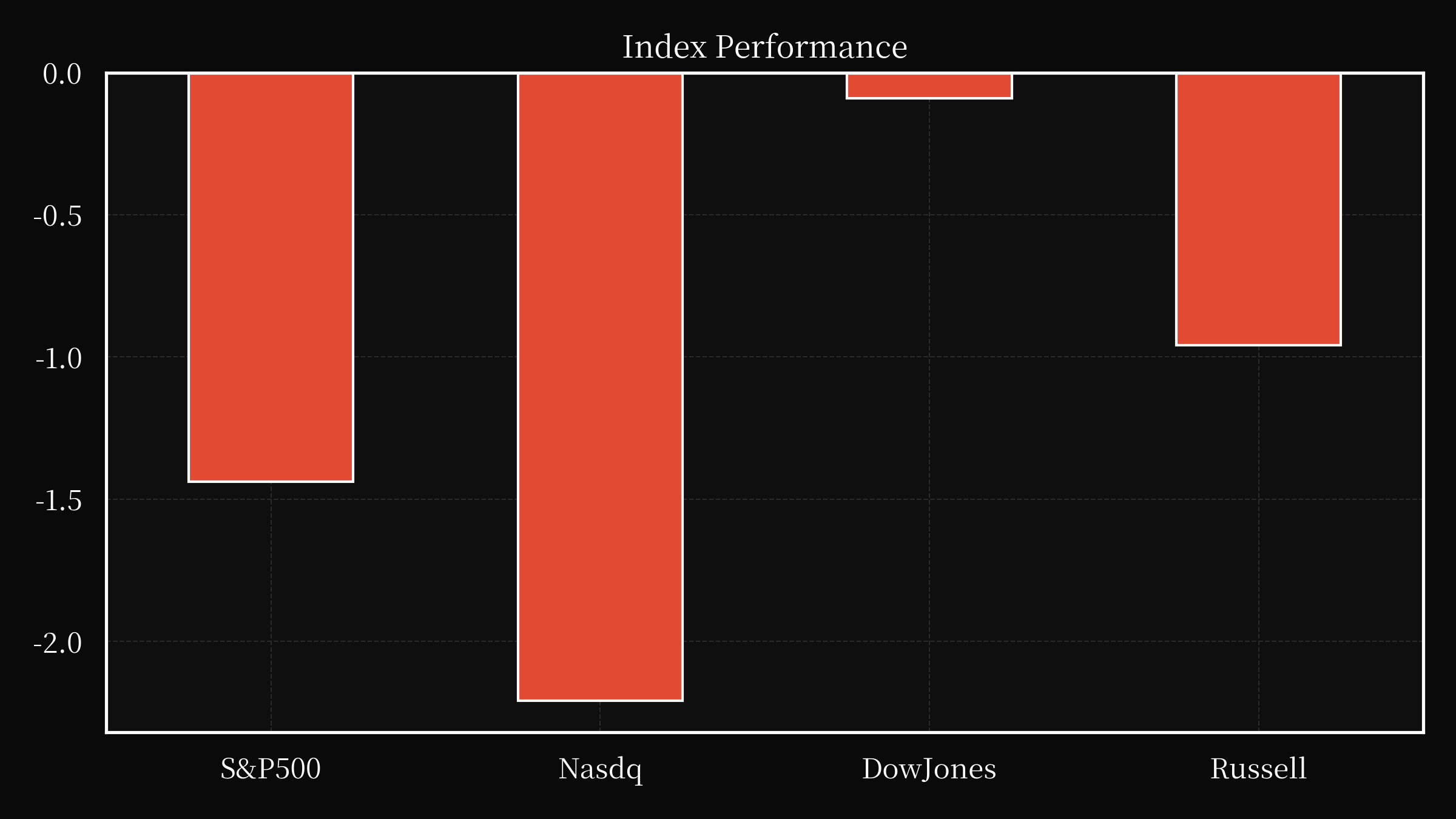
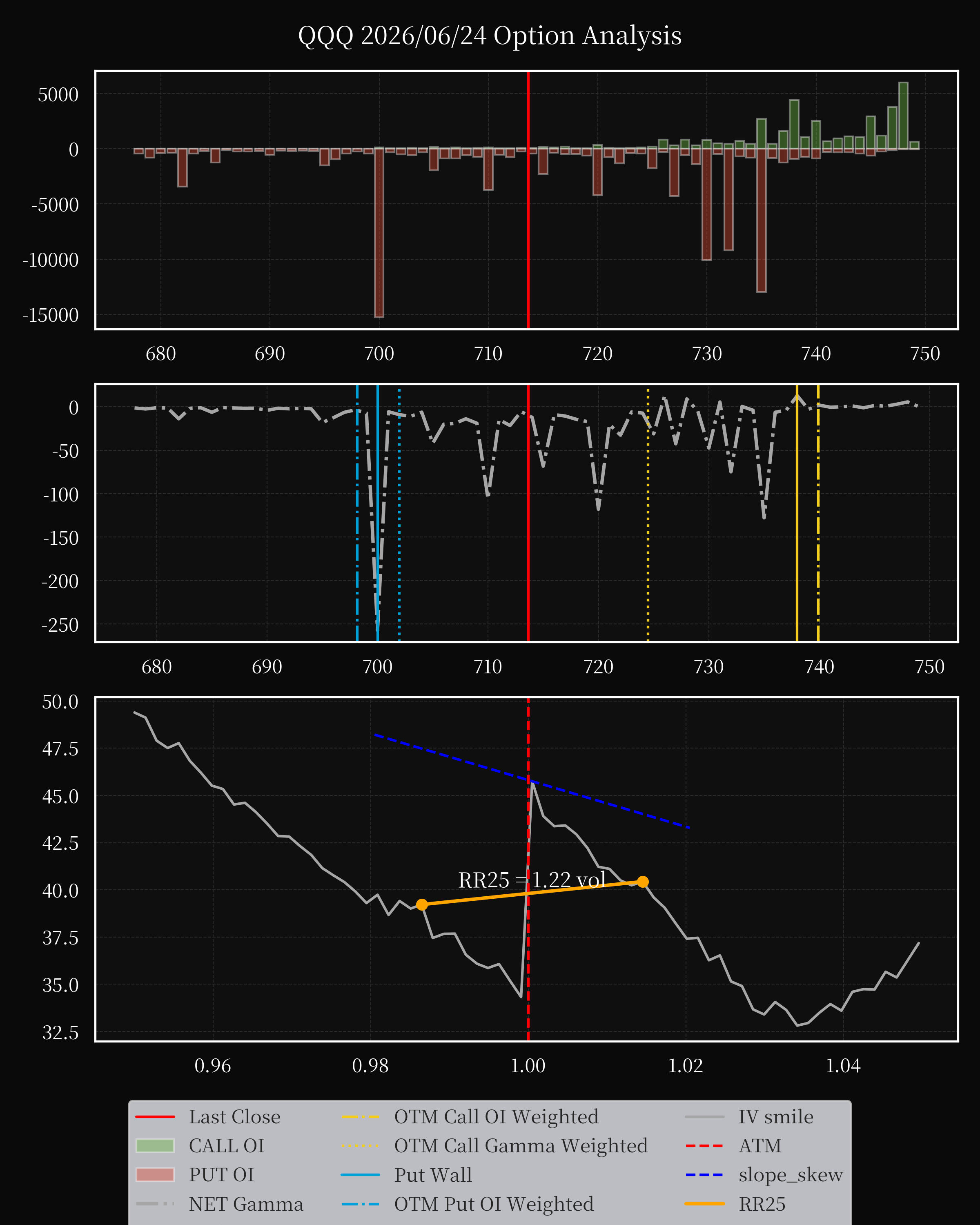
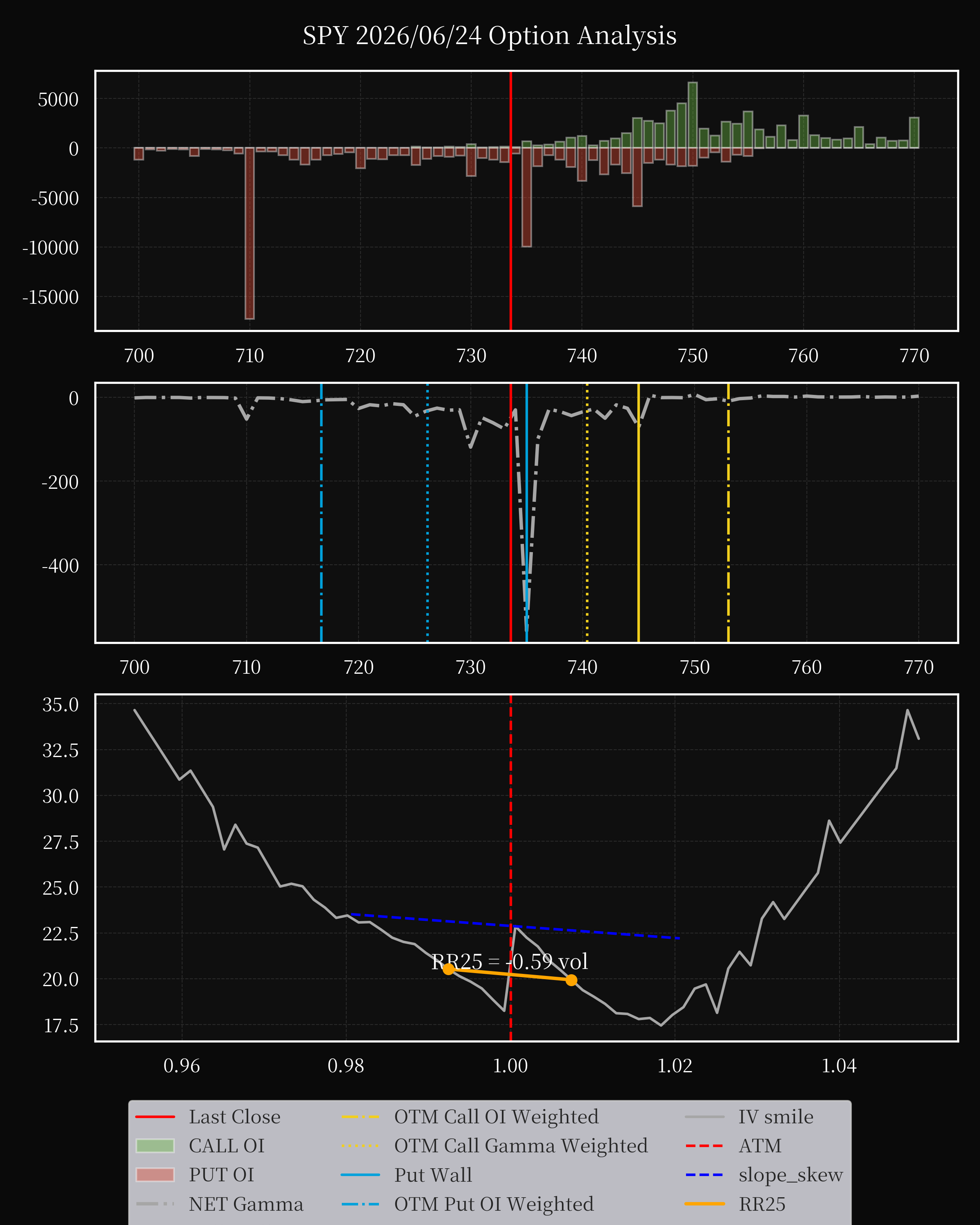
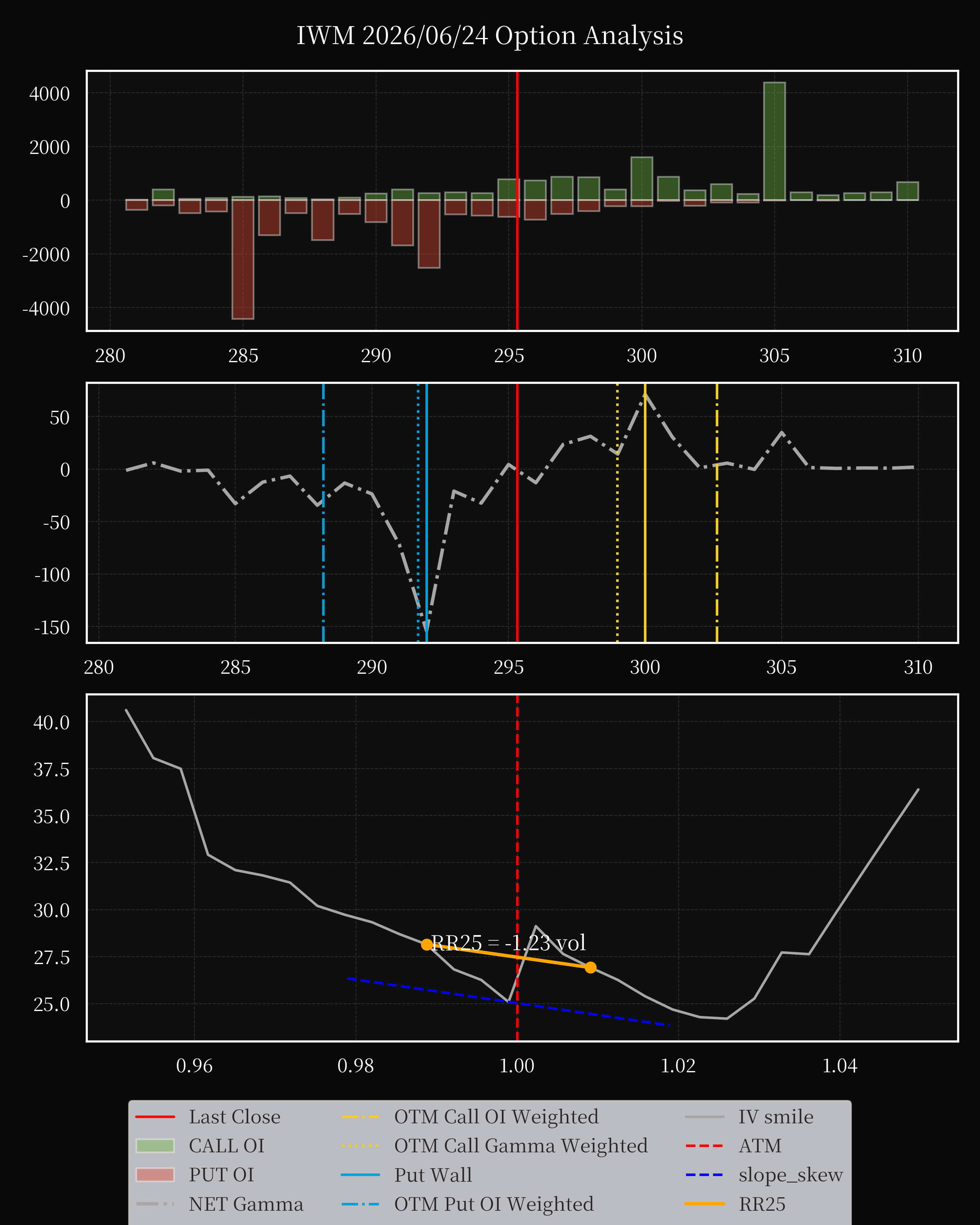
The U.S. equity market experienced a pronounced downturn on Tuesday, with technology stocks leading the decline amid intensifying scrutiny over the sustainability of AI-driven valuations and the broader implications of capital-intensive infrastructure projects. The Nasdaq Composite closed 2.2% lower, while the S&P 500 and Dow Jones Industrial Average also posted losses, reflecting a shift in investor sentiment toward caution as the initial euphoria surrounding AI adoption begins to wane. This correction was not isolated but part of a global selloff, particularly evident in Asian markets where semiconductor giants such as Samsung and SK Hynix reported significant declines, underscoring the interconnectedness of global supply chains and the sensitivity of tech valuations to macroeconomic and sector-specific risks.
The weakness in technology shares was exacerbated by concerns over the financial viability of large-scale data center expansions, a cornerstone of AI development. Companies like Nvidia and AMD, which have benefited from surging demand for specialized hardware, now face questions about whether the projected revenue growth from AI applications can offset the substantial capital expenditures required to maintain competitive edges. Analysts note that while AI continues to generate buzz, the path to monetization remains uneven, with many firms still in the early stages of translating research breakthroughs into scalable products. This dynamic has prompted a reevaluation of growth assumptions, particularly for firms whose valuations have been buoyed by speculative optimism rather than concrete earnings trajectories.
The selloff also highlighted the fragility of market sentiment in the face of macroeconomic headwinds, including inflationary pressures and supply chain disruptions. The S&P 500’s decline was accompanied by a rise in the U.S. 10-year Treasury yield, signaling heightened risk aversion among institutional investors. Additionally, the underperformance of cyclical sectors such as industrials and consumer discretionary stocks suggested a broader rotation away from growth-oriented assets, as investors seek stability amid uncertainty. The interplay between rising borrowing costs and weakening corporate earnings has created a challenging environment for equities, particularly those reliant on long-term capital commitments.
Corporate earnings reports further complicated the outlook, with several major firms posting results that fell short of expectations. Oracle’s announcement of 21,000 layoffs, part of a broader trend among tech companies to streamline operations, reflected the pressure to align costs with evolving revenue models. Similarly, Carnival’s disappointing quarterly results, driven by higher fuel costs and weaker demand in key regions, underscored the vulnerability of industries dependent on volatile input prices. These outcomes reinforced the narrative that while AI and digital transformation remain critical priorities, their execution is fraught with operational and financial complexities that can quickly erode investor confidence.
The broader implications of these developments extend beyond individual stocks, influencing sectoral dynamics and macroeconomic forecasts. The decline in tech valuations has prompted a reassessment of the role of artificial intelligence in driving long-term growth, with some analysts cautioning against overreliance on speculative narratives. At the same time, the selloff has created opportunities for contrarian investors, as undervalued assets in sectors such as semiconductors and cloud infrastructure may offer entry points for those willing to navigate the current volatility. However, the path to recovery remains uncertain, contingent on factors such as regulatory clarity, geopolitical stability, and the pace of technological adoption across industries.
Market participants are also grappling with the evolving relationship between central banks and financial markets, a dynamic that has historically shaped investor behavior. The legacy of the "Greenspan Put," which described the Federal Reserve’s tendency to intervene during crises, continues to inform expectations about policy responses to market stress. However, the current environment, marked by inflationary pressures and a more cautious approach to monetary policy, has introduced new variables into the equation. The interplay between fiscal stimulus, interest rate decisions, and corporate performance will likely determine the trajectory of equity markets in the coming months, as investors balance the potential for innovation-driven growth against the risks of overleveraging and structural imbalances.
In summary, Tuesday’s market movements reflect a complex interplay of technological, economic, and regulatory forces that are reshaping the landscape of equity investing. While the immediate outlook remains volatile, the underlying fundamentals of many companies—particularly those with robust cash flows and clear pathways to AI integration—may provide a foundation for resilience. However, the broader market’s ability to absorb these challenges will depend on the capacity of firms to adapt to shifting conditions and the willingness of investors to distinguish between genuine innovation and speculative hype. The coming weeks will be critical in determining whether the current correction represents a temporary setback or a more profound reckoning with the limits of AI-driven growth.
Watch List
KEQU
Kewaunee Scientific Corporation reported a strong fiscal year 2026, marked by robust revenue growth of 17.3% to $281.99 million, driven by the successful integration of Nu Aire and a significant improvement in its balance sheet. Despite a challenging operating environment, the company achieved pre-tax earnings of $13.73 million and net earnings of $9.62 million, resulting in diluted earnings per share of $3.22. The company strategically renamed its Domestic reportable segment to Lab Products Group (LPG), reflecting its expanded business. LPG sales increased by 19.8% to $214.89 million, contributing significantly to the company’s overall performance. International sales rose by 9.9% to $67.11 million, supported by resilient international business and a strong project backlog. However, the company faced headwinds, particularly in its laboratory construction portion of the business, experiencing volatility in project timelines and higher input costs. The company continued to invest in its Corporate platform to support growth and acquisitions. Working capital improved, with a debt-to-equity ratio reduction. Looking ahead, Kewaunee remains focused on disciplined capital allocation, operational execution, and serving its customers, bolstered by a strong team and a well-positioned product portfolio, including the recently launched Lab Products Group. The company’s order backlog stood at $165.9 million, demonstrating continued demand for its solutions.
LMFA
LM Funding America, Inc. recently announced significant developments reflecting its strategic diversification, as detailed in a press release furnished as Exhibit 99.1. Primarily, the company is expanding its operations into the burgeoning high-performance computing (HPC) and artificial intelligence (AI) infrastructure market. To fuel this expansion, LM Funding America has already placed an initial order for GPU server hardware, slated for deployment at its Oklahoma facility, and is actively marketing its substantial power capacity – currently 26 megawatts – to prospective AI co-location and power hosting clients. This strategic move leverages the company’s existing infrastructure and positions it to capitalize on the growing demand for computing power within the AI and HPC sectors. The company’s announcement underscores a deliberate shift towards a more robust and technologically advanced business model, signaling a commitment to future growth opportunities.
YOU
Okay, here’s a breakdown of the key clauses and provisions within this extensive loan agreement, categorized for clarity: I. Core Agreement & Definitions * Integration: This entire document constitutes the complete agreement between the parties. * Definitions: Crucially, the agreement defines key terms like “Administrative Agent,” “Guarantor,” “LC Sublimit,” “Required Lenders,” “Swap Agreement,” and “Secured Obligations.” These definitions are central to understanding the obligations of each party. II. Loan Structure & Guarantees * Guaranty of Loan Obligations: A significant portion of the agreement revolves around a guarantee provided by the Loan Parties (likely banks) to cover the outstanding loan amounts, interest, and related fees. This guarantee is a cornerstone of the financing. * Guarantor Release: The guarantee is contingent on the full repayment of the loan. Upon full repayment, the guarantor’s obligations are terminated. * Qualified ECP Guarantor (QECG): The agreement includes provisions related to a Qualified ECP Guarantor, which is a specific type of guarantor (likely a financial institution) that provides additional security. It outlines how the QECG’s obligations are handled, including contribution and indemnification rights if the primary guarantors default. * Fraudulent Conveyance/Transfer Protections: The agreement incorporates provisions related to fraudulent conveyance and transfer laws, designed to protect the lenders in case of insolvency or other issues with the borrower. III. Lender Rights & Remedies * Set-Off Rights: Lenders have the right to set off any amounts owed to them against the borrower’s accounts. * Acceleration Rights: The agreement allows lenders to accelerate the loan if a default occurs. * Right to Exercise Remedies: Lenders can exercise any remedies available under applicable law to recover the outstanding debt. * Non-Reliance Clause: The borrower is explicitly not relying on the lenders for advice or support. * No Liability for Default: The lenders are not liable for any losses resulting from the borrower's default. IV. Confidentiality & Consent * Confidentiality: Strict confidentiality obligations are placed on all parties regarding non-public information. * Consent Requirements: Various actions (e.g., assignment of loan participations, changes to the LC Sublimit, amendments
ICLR
ICON plc, a leading clinical research organization, reported first-quarter 2026 results demonstrating continued commercial momentum. Revenue reached $2.034 billion, a 0.9% increase from the prior year’s first quarter, driven by strong gross award activity and a net book-to-bill ratio of 1.42. The company achieved an adjusted EBITDA of $317.7 million, representing 15.6% of revenue, alongside $192.9 million in adjusted diluted earnings per share, excluding various non-GAAP adjustments including amortization, stock-based compensation, and restructuring costs. Backlog increased by 4.0% to $22.7 billion, reflecting ongoing demand for its services. Despite a business mix impacting financial performance, ICON reaffirmed its 2026 full-year guidance, projecting revenue between $7.850 and $8.150 billion and adjusted diluted earnings per share between $10.00 and $11.00. The company’s net debt stood at $2.6 billion with a debt-to-EBITDA ratio of 1.8x. Free cash flow reached $136.2 million, and the company’s cash position increased to $765.2 million. ICON continues to focus on strategic growth initiatives and anticipates incremental progress throughout 2026 and beyond, supported by expanded partnerships and ongoing execution of its strategic plan.
BOLD
Boundless Bio, Inc. has entered into a merger agreement with Serapha Bio, Inc. and a subsidiary, Boulder Merger Sub Corp., to be completed as a tax-qualified merger, subject to shareholder and regulatory approvals. Upon closing, Serapha will become a wholly-owned subsidiary of Boundless Bio, with shareholders of both companies expected to hold approximately 96.31% and 3.69% of the combined entity, respectively. The transaction is intended to provide Serapha’s shareholders with a significant premium and offers Boundless Bio access to Serapha’s technology. At the effective time, outstanding Serapha stock will be converted into warrants for Boundless Bio common stock, with options to purchase Boundless Bio Common Stock with a price above $8.00 being cancelled. Boundless Bio intends to declare a cash dividend up to the amount exceeding its net cash, subject to merger terms. The merger agreement includes customary termination rights and conditions, including shareholder approval, Nasdaq listing compliance, and the absence of adverse legal issues. Following the merger, the board of directors will be comprised of Serapha-appointed members, and Boundless Bio’s executive officers will oversee operations. In connection with the merger, Boundless Bio’s existing employees have entered into support agreements to vote in favor of the transaction. Furthermore, Boundless Bio has announced a workforce reduction of approximately 75% of its employees, anticipating costs of $3-$5 million. The transaction is expected to close in the fourth quarter of 2026, contingent upon these conditions and the filing of a registration statement with the SEC.
TWO
Two Harbors Investment Corp. (TWO) has adjourned its previously announced virtual special meeting regarding the proposed transaction between TWO and CrossCountry Mortgage, LLC (CCM). This adjournment follows a press release issued by TWO on June 23, 2026, announcing the delay. The meeting was intended to secure shareholder approval for the proposed transaction. While the specific reasons for the adjournment aren't detailed in this filing, it highlights potential uncertainties surrounding the completion of the CCM transaction, including the need for approvals and the fulfillment of various closing conditions. This filing also emphasizes the forward-looking nature of information contained within, acknowledging the risks associated with the proposed deal, such as potential disruptions to operations, market price fluctuations, and challenges in retaining key personnel. TWO has filed a definitive proxy statement with the SEC, which contains comprehensive details about the transaction and is crucial for investors to review. Readers are advised to carefully consider the Proxy Statement and other SEC filings, as well as any amendments or supplements, due to the inherent uncertainties involved. Information regarding TWO’s compensation and security ownership is also available in the company’s Form 10-K/A filed on April 27, 2026.
CCL
Carnival Corporation announced record second-quarter 2026 revenues of $537 million, along with record adjusted net income of $569 million and net yields of $6.7 billion, demonstrating strong demand. The company’s customer deposits reached a record $9.0 billion, up over $450 million year-over-year, and bookings for the remainder of 2026 and beyond are at historically high prices, exceeding prior-year levels. CEO Josh Weinstein highlighted the company’s resilience against geopolitical headwinds and increased fuel costs, attributing the results to strong commercial execution and cost efficiency efforts. Carnival achieved diluted earnings per share of $0.39 and adjusted EPS of $0.41, up over 15% compared to the prior year. Gross margins decreased by 3.9% due to higher fuel prices, while record net yields increased by 2.2% in constant currency. Cruise costs per available lower berth day (ALBD) rose by 6.0% due to fuel prices, but adjusted cruise costs excluding fuel were in line with prior year due to cost discipline. Fuel consumption per ALBD improved by 5.6% thanks to investments in efficiency, partially mitigating the fuel price increase. The company’s booked position for the second half of 2026 is higher than last year, driven by strong demand and pricing, particularly for European deployments impacted by the Middle East conflict. Looking ahead, demand for 2027 and beyond remains robust. Carnival expects net yields up approximately 3.2% for 2026, 1.75% in constant currency, and adjusted cruise costs excluding fuel per ALBD up approximately 3.7% with a 2.4% increase in constant currency. The company also announced a $450 million share repurchase program and continued investments in its fleet and destinations, resulting in a net debt-to-EBITDA ratio of 3.1x. Finally, Carnival completed its unified corporate structure and received a credit rating upgrade.
FDX
FedEx Corp. (NYSE: FDX) announced strong fourth-quarter and full-year results, demonstrating year-over-year revenue and earnings growth driven by continued strength in U.S. Domestic and International Priority package yields, cost savings from transformation initiatives, and increased export volume. The company’s profitable growth strategy is gaining momentum across its global industrial network, supported by structural improvements and success in high-value growth markets. Following the successful spin-off of FedEx Freight, FedEx anticipates continued growth while optimizing its network and generating robust free cash flow. During the fourth quarter, consolidated adjusted operating income improved, and capital spending decreased by 6% to $3.8 billion. The spin-off of FedEx Freight was finalized in June 2026, resulting in a $4.1 billion cash dividend payment. Looking ahead to calendar 2026, FedEx projects continued revenue and earnings growth, based on its current economic forecast and fuel price expectations. The company intends to return approximately $2.2 billion to stockholders through a combination of stock repurchases and dividend payments, with a commitment to maintaining its 5% annual dividend increase. FedEx’s financial performance reflects a focus on operational efficiency and strategic initiatives, including the Network 2.0 program and the Europe workforce reduction plan. The company’s forecasts are contingent on stable economic conditions and successful execution of its transformation plans. FedEx remains committed to its carbon-neutral operations goal by 2040 and continues to provide a broad portfolio of transportation and business services worldwide.
IanFV (www.ianfv.com) is the world's first pure-blood, neutral research institution built on LLM (Large Language Models) specifically for individual investors. Founded by a top-tier team with backgrounds from Tsinghua, Harvard, Morgan Stanley, and UBS, we are committed to breaking down high-priced information barriers and providing institutional-grade investment research at affordable prices. Unlike traditional institutions, IanFV does not serve big-money sponsors or inflate market bubbles. Leveraging a proprietary knowledge graph and a fully localized deployment architecture, we achieve a differentiated competitive advantage through light assets and high efficiency. Our research reports refuse to "sell dreams": valuation reports are based on point-in-time intervals rather than reverse-engineered numbers; industry reports focus relentlessly on real trends over the next six to twelve months; and in-depth reports penetrate market bubbles to strike at the core of corporate survival moats—all to ensure investors hold the most authentic research cards in the secondary market.