Overall
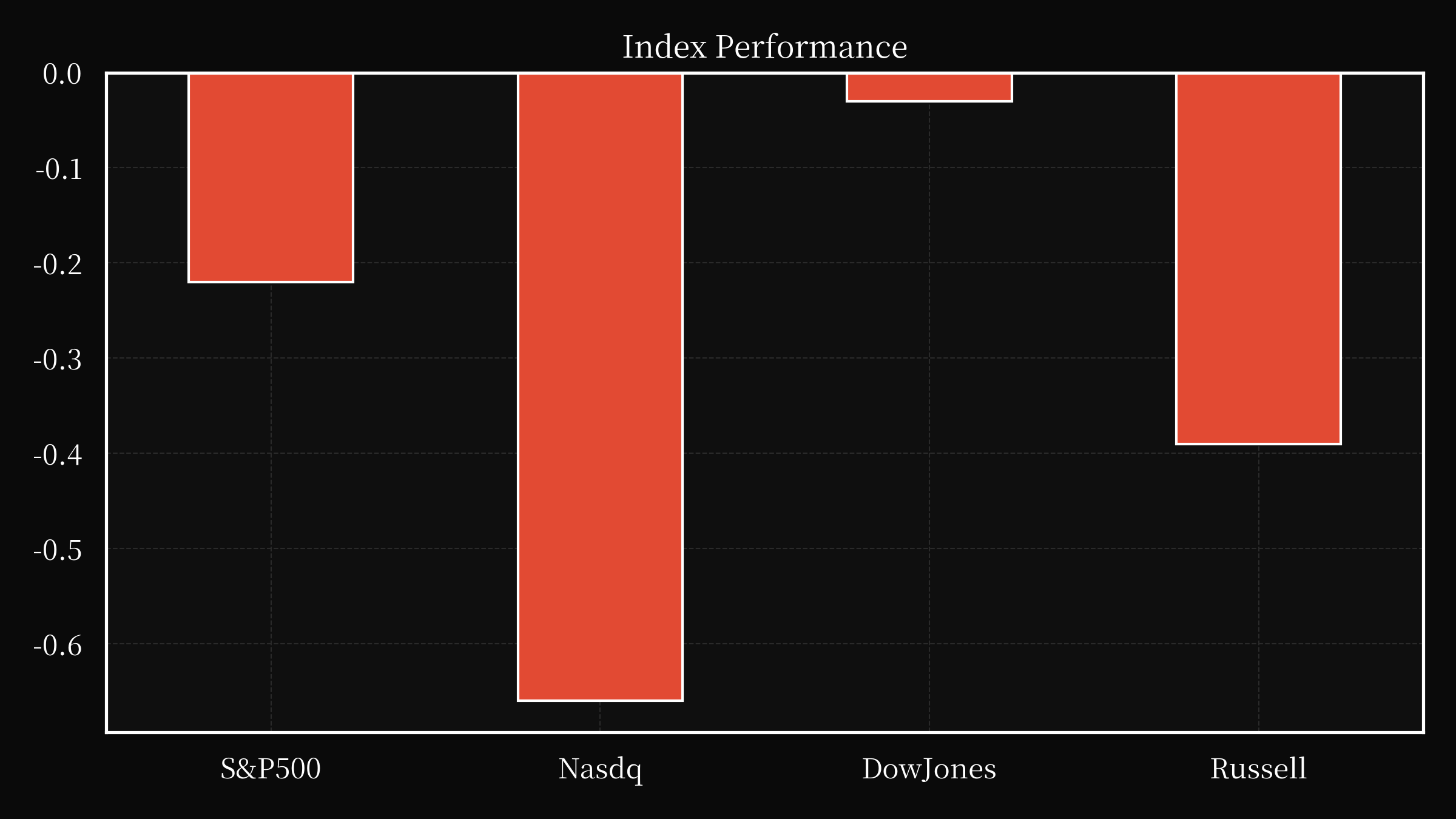
The market’s reaction to recent developments underscores a complex interplay of technological innovation, macroeconomic uncertainty, and sector-specific dynamics. At the forefront is SpaceX’s unveiling of a prototype for an AI-driven handset, a move that signals the convergence of consumer technology and artificial intelligence infrastructure. This development, while still in its early stages, reflects broader industry trends where companies are increasingly embedding AI capabilities into portable devices to enhance user interaction and data processing. The implications for equity markets are twofold: it reinforces investor confidence in SpaceX’s technological trajectory while highlighting the growing importance of AI integration across industries. However, the direct financial impact remains speculative, as the prototype’s functionality and commercial viability are yet to be validated.
The broader AI sector, however, faces a more nuanced landscape. While SpaceX’s initiative garners attention, other players in the AI ecosystem are navigating divergent paths. The recent surge in interest around AI-driven computing power has intensified competition among cloud service providers, with Meta’s foray into this space exemplifying the strategic shifts underway. By developing a cloud infrastructure business focused on AI models and raw computing capacity, Meta aims to challenge established players like Amazon Web Services and Microsoft Azure. This move is part of a larger initiative, Meta Compute, which seeks to monetize excess computational resources generated from its AI research and operations. The potential revenue streams from such a venture could redefine Meta’s role in the tech value chain, but its success hinges on execution, market adoption, and the ability to differentiate from competitors offering similar services.
Concurrently, macroeconomic factors continue to shape market sentiment. The Federal Reserve’s stance on inflation, as articulated by Kevin Warsh, reveals a cautious approach to monetary policy. While Warsh acknowledges that inflationary pressures have eased, he emphasizes the central bank’s commitment to achieving its 2% target. This duality—reduced immediate risks but persistent long-term concerns—creates a volatile environment for investors. The interplay between interest rate expectations and corporate earnings performance will likely dictate the trajectory of equities, particularly in sectors sensitive to borrowing costs. Additionally, the U.S. decision not to renew its trade agreement with Canada and Mexico introduces uncertainty into supply chain dynamics, affecting industries reliant on cross-border logistics. The annual review process, though less disruptive than a full renegotiation, may still trigger renegotiations that alter trade flows and tariff structures, impacting firms across manufacturing, agriculture, and energy.
Sector-specific developments further complicate the market outlook. The decline in semiconductor prices, driven by reduced demand from tech companies, has created a ripple effect across the supply chain. Companies like Applied Materials, which supply materials for chip manufacturing, face headwinds as clients seek cost efficiencies. Conversely, the rise in oil prices, partly attributed to geopolitical tensions in the Middle East, has bolstered energy stocks while straining inflation-sensitive sectors. This dichotomy highlights the challenge of balancing growth and stability, as energy producers benefit from higher prices while consumers and businesses grapple with rising costs. Meanwhile, the performance of consumer staples, exemplified by General Mills’ 8.5% surge following strong quarterly results, underscores the resilience of certain sectors amid broader market volatility. The company’s strategic pricing adjustments and focus on consumer demand have positioned it as a relative safe haven, illustrating how operational agility can offset macroeconomic headwinds.
Political developments also exert influence on market sentiment. The ousting of Representative Diana DeGette in Colorado, replaced by Melat Kiros, signals shifting priorities within the Democratic Party. Kiros’s victory, fueled by anti-incumbent sentiment and concerns over Israel, reflects broader societal tensions that could shape policy agendas. Similarly, Phil Weiser’s triumph in Colorado’s gubernatorial race suggests a preference for pragmatic governance over ideological divides. These political shifts, while localized, may influence regulatory environments and public spending priorities, indirectly affecting industries such as healthcare, education, and infrastructure.
The broader implications of these trends extend beyond individual sectors. The interplay between technological innovation, macroeconomic policy, and geopolitical factors creates a multifaceted landscape where investors must navigate competing risks and opportunities. For instance, the push for AI adoption, while promising long-term growth, introduces short-term volatility as companies adjust to evolving demands. Similarly, the tension between trade policy and global supply chains necessitates a careful evaluation of exposure to international markets. Investors are increasingly required to adopt a holistic perspective, balancing growth-oriented bets with defensive positioning to mitigate downside risks.
In conclusion, the current market environment is characterized by a confluence of technological advancements, macroeconomic uncertainties, and political realignments. The emergence of AI as a transformative force is evident, yet its impact remains uneven across industries. Companies that effectively leverage AI to enhance operational efficiency or product offerings may outperform, while those reliant on traditional models face heightened scrutiny. Simultaneously, central banks and governments must address inflationary pressures and trade dynamics without stifling innovation. For investors, the challenge lies in identifying resilient strategies that capitalize on emerging opportunities while safeguarding against systemic risks. The coming months will likely test the adaptability of portfolios, demanding a nuanced approach to asset allocation and risk management.
Watch List
ATH-PA
Athene Holding Ltd. has reported preliminary estimates for its alternative net investment income for the second quarter ended June 30, 2026, projecting a total of approximately $350 million (pre-tax), representing an estimated 9% annualized return on its alternative investments. This figure includes an anticipated 10% annualized return from a pooled investment vehicle and a 6% return from other alternative investments, including those within retirement services platforms. Notably, these estimates exclude income from non-controlling interests and are used to calculate Spread Related Earnings, a key non-GAAP metric for assessing the company’s financial performance. These preliminary results are being disclosed ahead of Apollo Global Management’s official earnings release scheduled for August 4, 2026. However, it’s crucial to note that Athene has not yet completed its financial closing procedures and anticipates potential adjustments to these figures. Investors are advised to exercise caution and recognize that these preliminary results are subject to change and should not be considered a substitute for audited financial statements or indicative of future performance.
SURG
SurgePays, Inc. has finalized an amendment to its agreement with AT&T Mobility, LLC, significantly altering the terms of their existing wholesale arrangement. The amendment eliminates all remaining minimum spend commitments, previously totaling $50 million over three years, a move anticipated to reduce the Company’s acquisition and monthly subscriber costs through improved wholesale pricing. Furthermore, AT&T has agreed to forgive approximately $10.3 million in previously billed minimum-commitment charges, representing actual usage discrepancies. This forgiveness will directly reduce SurgePays’ accounts payable by the same amount, generating a corresponding gain of roughly $8.5 million in the second quarter of 2026. This gain is expected to positively impact the Company’s net income (or loss) and stockholders’ equity by reversing previously recorded minimum-commitment expenses. This update is being provided in conjunction with other public announcements and forward-looking statements, which acknowledge the inherent risks and uncertainties associated with the Company’s future performance and are subject to change.
FDS
FactSet announced strong third-quarter fiscal 2026 results, driven by continued acceleration in ASV (Annual Subscription Value), expanding product capabilities, and robust client demand. Revenue increased by 6.4% to $622.9 million, with ASV rising to $2,484.3 million, up 7.1% year-over-year. The company’s strong execution and deepening client relationships, particularly with institutional buy-side and wealth management clients, fueled this growth. FactSet’s AI solutions were widely adopted, with 90%+ of the Top 50 clients utilizing four or more AI products. Strategic partnerships with Google Cloud, Finster AI, and TIFIN.AI further bolstered its AI ecosystem. The company also highlighted operational improvements, including a new CFO appointment, commercial excellence initiatives resulting in extended enterprise renewals, and a 6.1% increase in free cash flow to $284.5 million. FactSet returned $243.4 million to shareholders through share repurchases and dividends, marking a 27-year streak of dividend increases. Despite increased compensation costs, the adjusted operating margin remained strong at 34.0%. FactSet reaffirmed its fiscal 2026 outlook, emphasizing its commitment to sustained growth and long-term value creation.
BDC
This document outlines key provisions of a term loan credit agreement governing Belden Inc. and its subsidiaries, aiming to provide financial relief and establish operational guidelines. Primarily, it details circumstances triggering default, including prolonged inability to pay debts, judgments exceeding a threshold, or failure to address material adverse events. The agreement also establishes the Administrative Agent’s role as a mechanical, administrative function, explicitly excluding any fiduciary duty or obligation to invest in the borrower’s operations. Crucially, it addresses potential bankruptcy proceedings, outlining steps the Administrative Agent can take while safeguarding its position. Furthermore, the agreement covers specific actions that could constitute a default, such as ERISA events, control changes, or ongoing breaches of loan terms, emphasizing a 30-day grace period for remediation. Finally, it establishes procedures for collateral management and outlines the Administrative Agent’s authority to act through sub-agents, with exculpatory provisions protecting them from liability unless gross negligence or willful misconduct is proven.
SSTK
Following a key development in its merger with Shutterstock, Getty Images announced on June 30, 2026, that it would terminate the previously agreed-upon merger agreement due to a condition imposed by the U.K. Competition and Markets Authority (CMA). The CMA had required Getty Images to sell its editorial business as a condition for approving the transaction. Getty Images subsequently decided not to pursue the sale and formally terminated the merger agreement, effective July 6, 2026, assuming no material changes would occur. Shutterstock CEO Paul Hennessy stated the company remains confident in its standalone future, emphasizing its strong financial position and strategic focus. This decision underscores the complexities of regulatory approvals in large-scale mergers and highlights Shutterstock’s continued commitment to its independent strategy. Investors are encouraged to review the detailed information statement and proxy statement/prospectus filed with the SEC for a comprehensive understanding of the situation and related risks.
CMPX
Compass Therapeutics is advancing a diversified oncology pipeline focused on bispecific antibodies and novel mechanisms of action, with a primary focus on Tovecimig (CTX-009), a DLL4 x VEGF-A bispecific antibody targeting solid tumors. The company’s strategy centers around leveraging established anti-angiogenic pathways while exploring new targets like CD137 (CTX-471) and PD-1 x VEGF-A (CTX-10726). Currently, Compass is executing a phased approach, with Phase 2/3 trials underway for Tovecimig in biliary tract cancer, utilizing a pivotal study (COMPANION-002) comparing it to paclitaxel, and exploring combinations with other agents like CTX-8371 (PD-1 x PD-L1) and CTX-471. Early data from the COMPANION-002 trial in biliary tract cancer demonstrates a significant improvement in overall response rate (ORR) compared to paclitaxel alone, with a notable reduction in target tumor lesions observed in one patient. Furthermore, Compass is investigating CTX-471, a CD137 agonist, in NCAM-positive tumors, demonstrating promising responses in melanoma and mesothelioma patients. The company is also advancing CTX-10726, a PD-1 x VEGF-A bispecific antibody, in preclinical studies and initiating a Phase 1 dose escalation study in Q1 2026. Compass’s pipeline includes multiple other programs, including CTX-8371 and CTX-471, reflecting a commitment to diverse therapeutic approaches and a robust portfolio with multiple potential inflection points.
GRNQ
Greenpro Capital Corp. has finalized a confidential settlement agreement with Millennium Fine Art Inc. (MFAI) to resolve a dispute stemming from a 2021 NFT-related contract. The agreement, effective as of June 24, 2026, involves Greenpro Capital Corp. paying MFAI $100,000 and surrendering 2,000,000 shares of MFAI’s Class B common stock, effectively eliminating Greenpro’s entire equity stake in the company. This transaction follows Greenpro’s acquisition of these MFAI shares in July 2020 as payment for the sale of a 12.3-kilogram sapphire, representing approximately 5% of MFAI’s outstanding shares and 1% of its voting rights. Importantly, the settlement includes mutual releases, confidentiality clauses, and non-disparagement provisions, with neither party admitting liability. Greenpro’s Board of Directors unanimously approved the agreement, and the full text of the Settlement Agreement is filed as Exhibit 10.1 to this report. This resolution concludes all material claims related to the NFT contract and signifies the end of any significant relationship between the two companies.
FVR
FrontView REIT, Inc. recently released a press statement detailing its performance during the second quarter of 2026, offering investors an update on key areas of the company’s operations. The announcement covered significant investment activity undertaken during the period, alongside a review of recent capital markets engagement. Notably, FrontView REIT has adjusted its net investment guidance, reflecting a revised outlook based on current market conditions and strategic priorities. This update provides stakeholders with a comprehensive overview of the REIT’s activities and demonstrates a proactive approach to navigating the investment landscape. The release underscores FrontView REIT’s commitment to transparency and ongoing communication regarding its financial performance and strategic direction. Investors can access the full details of the press release for a more in-depth understanding of the company’s developments.
AA
Alcoa Corporation announced the entry into an Umbrella Implementation Deed with South32 Limited to acquire its interests in bauxite mines, alumina refineries, and aluminum smelters, subject to specific conditions. This transaction, detailed in exhibits 99.1 and 99.2, is aimed at streamlining Alcoa’s asset portfolio and realizing anticipated synergies. The company acknowledges significant risks associated with the deal, including potential delays in closing, unfavorable economic conditions impacting aluminum demand, competitive pressures, and regulatory changes. These risks also encompass operational challenges like energy costs, raw material volatility, and environmental considerations, including climate change and impoundment structures. Alcoa highlights potential liabilities related to health, safety, and environmental compliance, alongside risks associated with debt, cyber security, labor relations, and integration of strategic alliances. The company’s forward-looking statements regarding the transaction’s expected benefits, financial performance, and strategic initiatives are subject to these uncertainties. Investors are advised to review the Registration Statement filed with the SEC for comprehensive information about the proposed transaction and Alcoa’s associated risks.
RIG
Transocean Ltd. (RIG) has secured a significant contract with Equinor for the use of three of its harsh environment semisubmersible rigs on the Norwegian shelf, totaling over $1 billion in contract backlog over seven rig years. This agreement, stemming from the planned business combination with Valaris, establishes a base day rate exceeding $400,000 (excluding adjustments) for a three-year program focused on the “Cat D” rigs designed for Norwegian winter conditions. The initial program is slated to commence in the first quarter of 2028, continuing the rigs’ current operations, followed by a two-year program starting in the first quarter of 2028 and a two-year program beginning in the second quarter of 2027 after mobilization from Australia. CEO Keelan Adamson highlighted the strength of the Norwegian market and the company’s strong relationship with Equinor. Separately, Transocean and Valaris have addressed regulatory hurdles, including receiving CFIUS approval for their proposed business combination, which is still expected to close in the second half of 2026, subject to shareholder and customary approvals. The companies have also navigated a request for additional information from the Department of Justice (DOJ) regarding the transaction, demonstrating continued cooperation and a projected completion timeline.
IanFV (www.ianfv.com) is the world's first pure-blood, neutral research institution built on LLM (Large Language Models) specifically for individual investors. Founded by a top-tier team with backgrounds from Tsinghua, Harvard, Morgan Stanley, and UBS, we are committed to breaking down high-priced information barriers and providing institutional-grade investment research at affordable prices. Unlike traditional institutions, IanFV does not serve big-money sponsors or inflate market bubbles. Leveraging a proprietary knowledge graph and a fully localized deployment architecture, we achieve a differentiated competitive advantage through light assets and high efficiency. Our research reports refuse to "sell dreams": valuation reports are based on point-in-time intervals rather than reverse-engineered numbers; industry reports focus relentlessly on real trends over the next six to twelve months; and in-depth reports penetrate market bubbles to strike at the core of corporate survival moats—all to ensure investors hold the most authentic research cards in the secondary market.