Overall
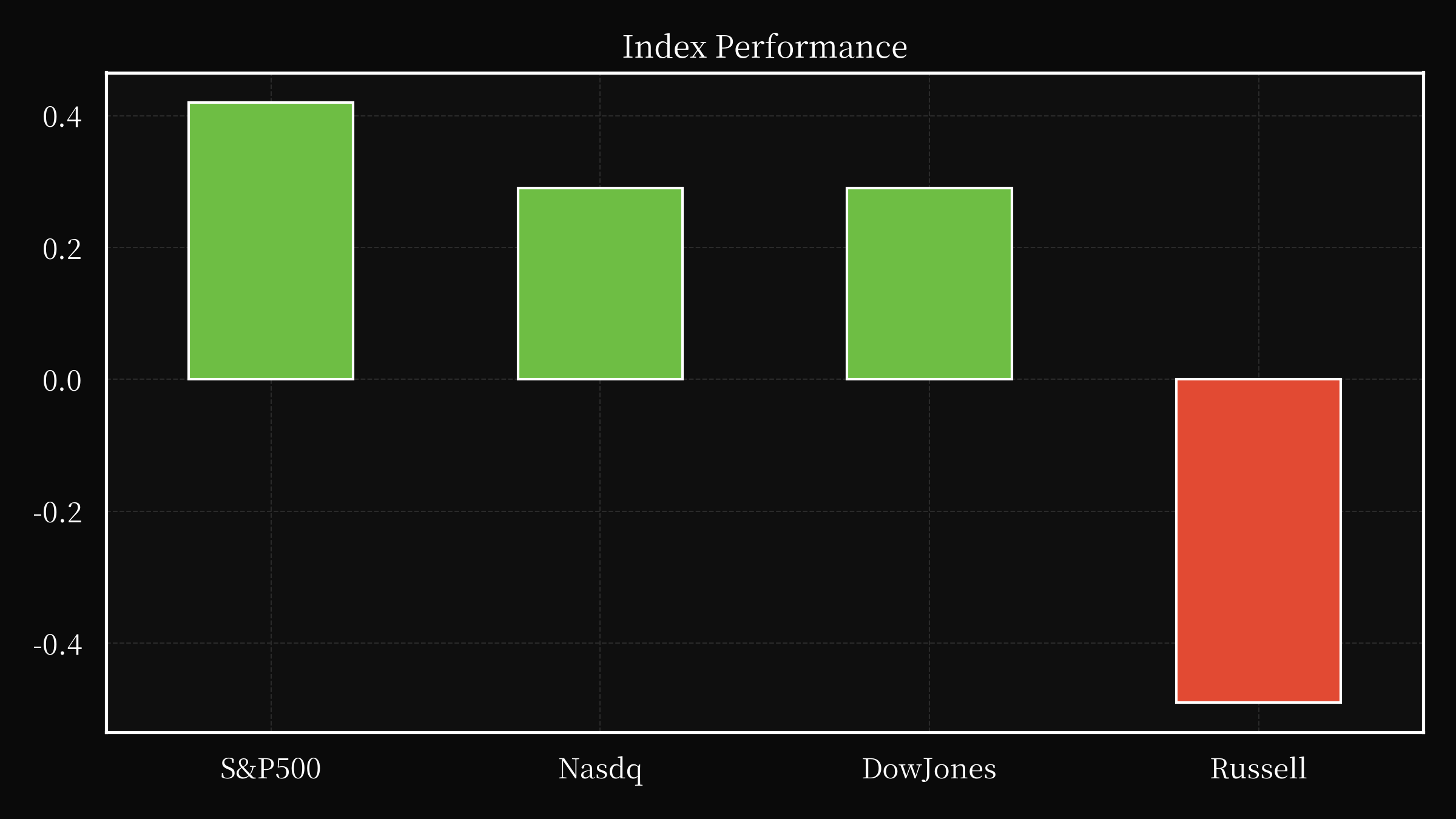
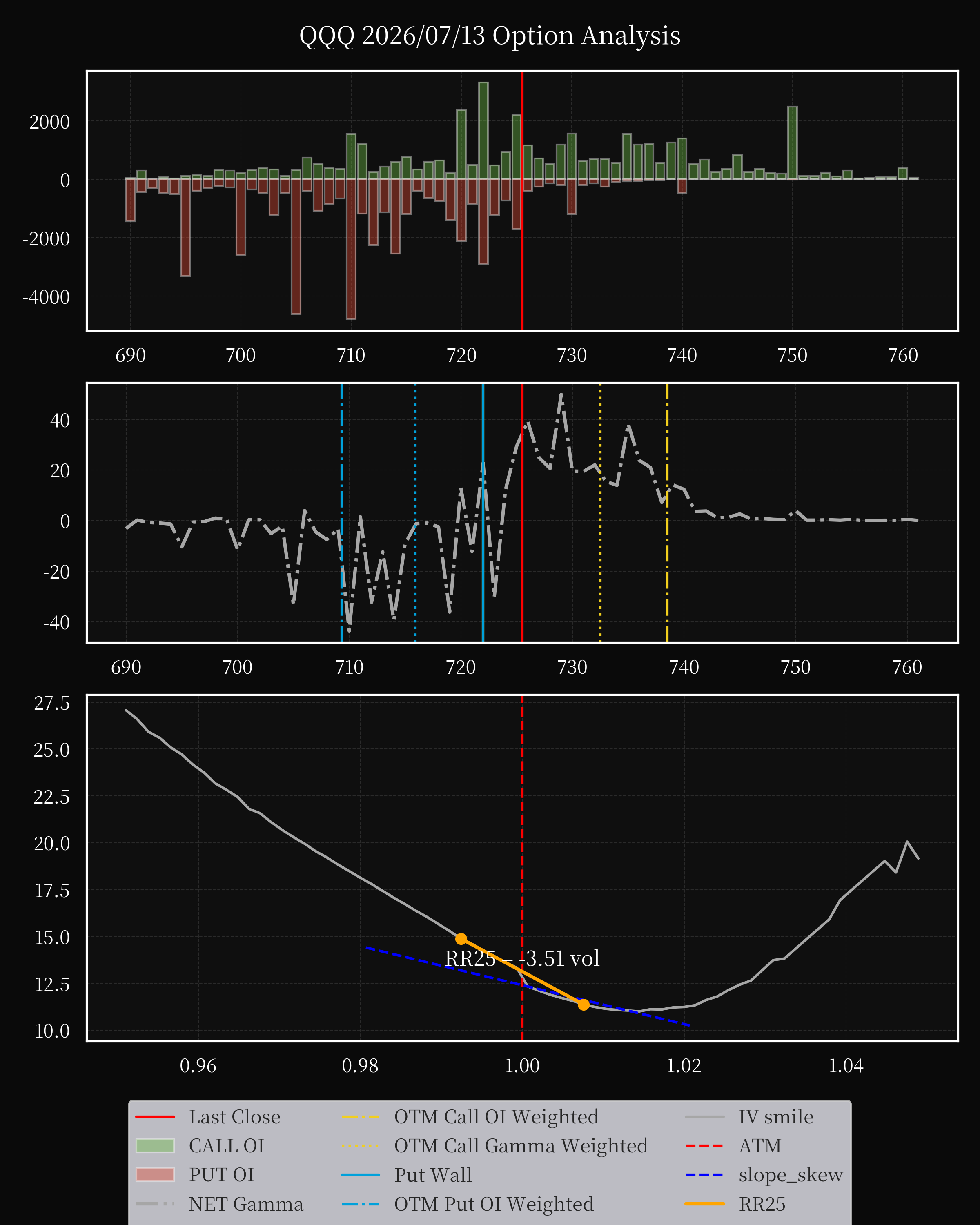
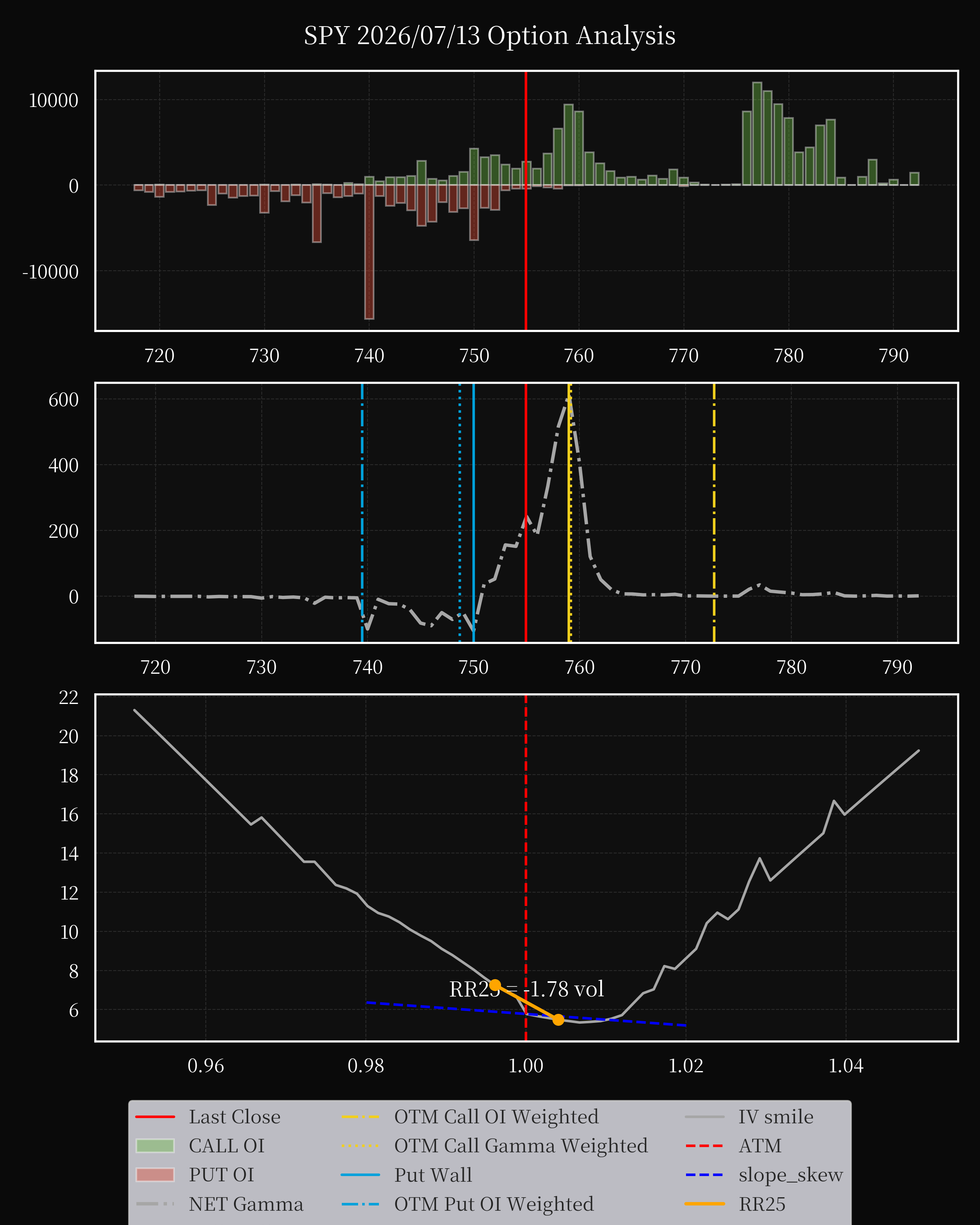
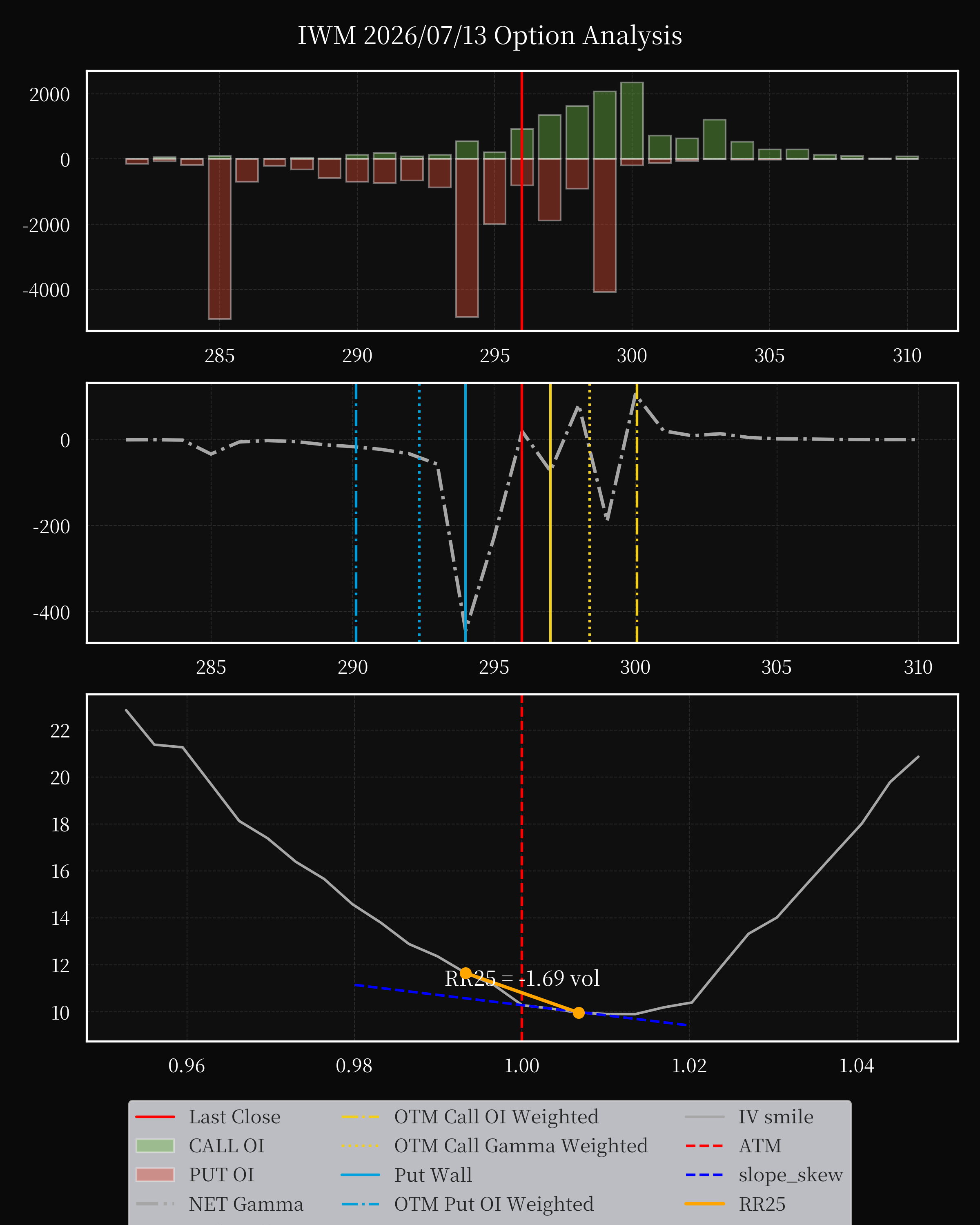
The U.S. equity market closed the week on a cautiously optimistic note, with the S&P 500 and Nasdaq Composite both posting gains that outpaced the Dow Jones Industrial Average despite the latter’s brief resurgence. The Dow added 149 points, or 0.3%, on Friday, closing slightly below its five-session high, while the broader indices benefited from easing geopolitical tensions and improving sentiment around corporate earnings. The S&P 500 rose 0.4% on Friday and 1.2% for the week, and the Nasdaq outperformed with a 1.7% weekly gain, driven largely by technology stocks. The Dow’s performance, however, lagged behind its counterparts, reflecting persistent underperformance relative to the broader market and highlighting ongoing concerns about its composition and sector exposure.
The chip sector, a critical component of global technology supply chains, exhibited mixed dynamics. SK Hynix, the South Korean semiconductor giant, achieved a record-breaking $26.5 billion U.S. share offering, marking the largest such transaction by a foreign company. The deal followed the firm’s successful listing in the U.S., which saw its stock surge 13% from its offering price, underscoring investor confidence in its position within the memory chip market. Despite this, the broader semiconductor index remained flat for the week, reflecting broader sectoral challenges, including inventory adjustments and cyclical demand pressures. The industry’s struggles were compounded by a broader correction in the PHLX Semiconductor index, which fell nearly 9% for the month, signaling caution among investors amid uncertain macroeconomic conditions.
Earnings season began with a focus on major financial institutions, as Bank of America, Citigroup, Goldman Sachs, JPMorgan Chase, and Wells Fargo reported results on Tuesday. These institutions, while navigating a complex landscape of rising interest rates and shifting consumer behavior, delivered mixed outcomes that influenced sectoral performance. Meanwhile, Delta Air Lines’ earnings report revealed a 1.6% decline in shares despite a 20% year-over-year increase in operating revenue, as higher fuel costs eroded profitability. The airline’s results highlighted the sector’s vulnerability to energy price volatility, even as demand for air travel remained resilient.
The U.S. bond market saw a notable shift as SK Hynix’s offering demonstrated continued investor appetite for debt instruments tied to high-growth sectors. The transaction, which exceeded initial expectations, underscored the interplay between corporate strategy and capital markets, with firms leveraging debt to fund innovation and expansion. Concurrently, the Federal Reserve’s beige book and upcoming economic data, including the consumer price index and producer price index, provided critical insights into inflationary pressures and monetary policy trajectories. These indicators, alongside the growing list of economic releases, shaped market expectations for the remainder of the year.
Geopolitical developments further influenced market sentiment, particularly regarding energy and trade dynamics. The resumption of hostilities near the Strait of Hormuz, a vital oil transit route, initially pressured crude prices, though Brent crude settled at $76.01 per barrel by Friday, down 0.4% from the prior week. This volatility underscored the fragility of global energy markets, even as broader economic indicators suggested a gradual stabilization. Meanwhile, the U.S. government’s push to develop a fleet of aircraft for immigration enforcement, coupled with ongoing debates over trade policies, introduced additional layers of uncertainty for investors.
The market’s response to these factors revealed a nuanced interplay between macroeconomic fundamentals and sector-specific developments. While the S&P 500 and Nasdaq benefited from strong earnings and technological innovation, the Dow’s underperformance highlighted structural challenges, including its heavy weighting in traditional industries and limited exposure to high-growth areas. Investors remained vigilant, balancing optimism about corporate resilience with caution over inflationary risks and geopolitical headwinds. As the week concluded, the focus shifted toward upcoming earnings reports, central bank communications, and the evolving landscape of global trade, all of which would shape market trajectories in the coming months.
The interplay between corporate strategy, macroeconomic data, and geopolitical events continued to define market dynamics, with investors recalibrating their positions in response to shifting conditions. The semiconductor sector’s resilience, the bond market’s enduring appeal, and the persistent influence of inflationary pressures all underscored the complexity of navigating today’s financial environment. As the U.S. economy grappled with the dual forces of technological disruption and traditional sectoral challenges, the market’s ability to adapt to these forces would remain a key determinant of its trajectory. The coming weeks would test the durability of recent gains, with earnings reports, policy decisions, and global events poised to exert significant influence on investor sentiment and asset valuations.
The broader implications of these developments extended beyond individual stocks and sectors, influencing perceptions of economic stability and growth prospects. The Federal Reserve’s approach to interest rates, the trajectory of inflation, and the resilience of consumer spending all remained critical variables, with each factor capable of altering market expectations. Additionally, the role of artificial intelligence in shaping future economic growth, as highlighted by recent discussions on the potential for AI-driven innovation, added a layer of speculative optimism to long-term investment strategies. However, the immediate challenges of rising borrowing costs, supply chain disruptions, and geopolitical uncertainties tempered enthusiasm, reinforcing the need for a balanced and evidence-based approach to portfolio management.
In summary, the week’s market activity reflected a market in transition, navigating the tensions between technological progress and traditional economic forces. The performance of key indices, the outcomes of corporate earnings, and the evolving geopolitical landscape all contributed to a complex environment where opportunities and risks coexisted. As investors evaluated these factors, the emphasis on strategic positioning, risk management, and long-term value creation became increasingly evident, shaping the broader narrative of the U.S. stock market’s resilience and adaptability in an uncertain era.
Watch List
BDN
Brandywine Realty Trust has released pro forma financial statements reflecting the recent disposition of a property in Austin, Texas. These statements, prepared as of March 31, 2026, incorporate adjustments to reflect the sale of the 206,000 square foot office building and parking garage to an unaffiliated third party for $151.0 million. The pro forma adjustments eliminate the carrying value of the disposed assets and liabilities, account for the $146.1 million net proceeds received, and present a pro forma gain on sale. Specifically, the adjustments include the elimination of revenue and expenses associated with the property, such as contractual base rent, reimbursable tenant costs, and parking rent, totaling $14.6 million for the three months ended March 31, 2026, and $15.9 million for the year ended December 31, 2025. It’s important to note that these pro forma figures are presented for informational purposes only and do not represent actual results. The company emphasizes that these projections may differ materially from actual results due to unforeseen events. These pro forma statements are supplementary to Brandywine’s historical financial reports filed on Form 10-Q and Form 10-K.
PLMK
Plum Acquisition Corp. IV has amended its business combination agreement with Thermal Resources Holdings Inc., resulting in a reduced merger consideration from $4.5 billion to $3.15 billion and a reduction in potential earnout shares from 100 million to 70 million. Key changes include an extended deadline for antitrust filings to September 30, 2026, an increase in reimbursement for founder shares, an extended closing date to April 30, 2027, and revised financial projections. These amendments were made to address concerns regarding the valuation and timeline of the transaction. Shareholders of Plum IV will now vote on these changes, and a registration statement (Form S-4) will be filed with the SEC to facilitate the offering of shares to the public. Investors are urged to carefully review the full text of the Second Business Combination Agreement, the registration statement, and the proxy statement/prospectus before making any investment decisions, as these documents contain crucial information regarding the transactions and associated risks, including uncertainties related to the completion of the merger, regulatory approvals, and the combined company’s future performance.
VERI
This filing outlines key provisions regarding equity awards offered by the company, primarily focusing on Options, Stock Appreciation Rights (SARs), Restricted Stock Awards (RSAs), and Restricted Stock Units (RSUs). The company retains the flexibility to structure Options, allowing for cash, cashless exercise, or delivery of existing shares, subject to board approval and applicable laws. SARs are capped at an appreciation exceeding the strike price, payable in cash, stock, or a combination thereof. Transferability of Options and SARs is restricted, requiring board approval and prohibiting transfers to financial institutions. Upon termination of continuous service, unvested awards are forfeited, and RSU awards cease to carry voting rights. The company can delegate award administration to officers, subject to limitations on determining fair market value. Importantly, the company is prohibited from repricing awards without shareholder approval. Withholding of taxes is authorized, and the company bears no liability for minimizing tax consequences or advising participants on exercising awards. Several defined terms are also included, such as “Trading Policy,” “Transaction,” “Unvested Non-Exempt Award,” “Vested Non-Exempt Award,” and others, establishing key operational and legal definitions within the context of these equity awards.
AIRT
Air T, Inc. and Ascendiant Capital Markets, LLC have formalized an at-the-market offering agreement to potentially sell up to shares of the company’s common stock. The company confirms it possesses all necessary intellectual property rights crucial for its operations, with no recent infringement notices received, and that these rights are adequately protected. Air T, Inc. maintains comprehensive insurance coverage aligned with industry standards, and has no reason to anticipate difficulties renewing or obtaining similar coverage. Furthermore, the company asserts that no officers, directors, or employees are involved in transactions exceeding $120,000 with the company beyond standard employment terms and benefits. This agreement, outlined in the At-The-Market Offering Agreement, establishes a sales window between and with a minimum market price of $ per share, subject to mutual acceptance and formal execution by both parties.
IMOS
ChipMOS Technologies Inc. announced strong financial results for July and the second quarter of 2026, reporting record monthly and quarterly revenue figures not seen since 2014. The company’s June 2026 revenue surged by 37.2% year-over-year to NT$2,538.4 million (US$79.7 million), and its overall second quarter revenue climbed 28.7% year-over-year to NT$7,383.1 million (US$231.8 million), a 6.5% increase from the first quarter of 2026. ChipMOS attributes this robust performance to sustained demand driven by the ongoing AI-related supply and demand imbalance, coupled with strategic investments in expanding its production footprint. The company is currently utilizing this new capacity to fulfill existing customer orders and meet long-term supply agreements, reflecting the persistent tightness within the semiconductor market and the accelerating pace of demand. These results demonstrate ChipMOS’s ability to capitalize on favorable market conditions and solidify its position within the industry.
CRNX
Crinetics Pharmaceuticals has executed a merger agreement with Vertex Pharmaceuticals and its subsidiary, Clark Merger Sub, Inc., resulting in Crinetics becoming a wholly-owned subsidiary of Vertex. As part of this transaction, key executives, including the CEO, CFO, Chief Scientific Officer, and Chief Commercial Officer, have signed non-compete agreements. These agreements, lasting one year following the merger’s completion, restrict them from engaging in competing businesses within specified territories where Crinetics currently operates. In exchange for these agreements, the executives will receive cash payments of $140,000 for Schilke and Betz, and $30,000 each for Kalofonos. This action is designed to protect Vertex’s investments and strategic interests following the merger. The company anticipates holding a stockholder meeting to seek approval for the transaction and will file relevant documents with the SEC, including a proxy statement, which shareholders are urged to review carefully for comprehensive details regarding the proposed merger and its associated risks.
IDAI
T Stamp Inc. held its deferred 2025 Annual Meeting of Stockholders on July 7, 2026, primarily to elect two Class III directors to serve until the 2028 Annual Meeting and to ratify CBIZ CPAs P.C. as its independent registered public accounting firm for the year ending December 31, 2025. A significant portion of stockholders, representing 51.69% of the shares entitled to vote, participated in the meeting. Following the vote, stockholders overwhelmingly approved all three proposals, including the election of directors and the ratification of CBIZ CPAs P.C. Additionally, the meeting authorized the issuance of common stock purchase warrants, specifically Series A and Series B warrants, allowing for potential future share issuance based on exercise prices of $8.10 per share. The voting results, detailed in a provided table, were finalized and represent the outcome of the meeting’s shareholder decisions.
EQX
Following positive recommendations from leading proxy advisory firms, including Institutional Shareholder Services, the shareholders of Equinox Gold are being encouraged to vote in favor of the proposed business combination with Orla Mining. The deal, unanimously recommended by both Equinox Gold and Orla’s boards, is projected to diversify Equinox Gold’s asset base, enhance production potential, and create North America’s new senior gold producer with 1.1 million ounces of annual production. The combination also aims to accelerate growth objectives and deliver greater value to shareholders through a strengthened financial position, substantial free cash flow, and a diversified portfolio across Canada, the USA, and Mexico. Shareholders can vote by July 20, 2026, with the special meeting scheduled for July 22, 2026, and overseen by Laurel Hill Advisory Group. The strategic rationale behind the merger centers on leveraging complementary assets and creating a more robust and scalable operation, supported by a team of experienced mine builders and operators.
DAL
Delta Air Lines reported a strong June quarter, exceeding guidance driven by robust demand and effective execution, resulting in a double-digit return on invested capital. The company achieved $1.4 billion in pre-tax profit despite absorbing historically high fuel expenses, demonstrating industry-leading performance. Revenue grew by 14% to a record $17.7 billion, fueled by a 12.4% increase in adjusted total unit revenue (TRASM) and double-digit growth in main cabin unit revenue. Delta’s diversified revenue streams, accounting for 61% of total revenue, continued to strengthen, bolstered by significant growth in loyalty programs, MRO revenue, and cargo volumes. Looking ahead, Delta anticipates continued momentum in the September quarter with mid-teens revenue growth and double-digit margins. The company affirmed its full-year guidance of $6.50 to $7.50 in adjusted earnings per share and $3 to $4 billion in free cash flow. Delta further strengthened its financial position through debt paydown and announced a 15% increase to its dividend payment. The airline’s operational performance was highlighted by record on-time arrival and departure rates, alongside a significant improvement in baggage handling at its Atlanta hub. Delta continues to invest in its people, with a 4% pay raise for eligible employees, and remains committed to sustainability, demonstrated through initiatives like finlet aerodynamic devices and expanded partnerships with organizations like the American Red Cross. The company’s strong financial results and strategic initiatives position Delta for continued growth and shareholder value creation.
AIMD
Following a standard process, has announced the dismissal of its independent registered public accounting firm, YCM, effective July 9, 2026. The decision followed the expiration of YCM’s engagement, which had spanned the company’s most recent fiscal year. During YCM’s tenure, the company maintained a cooperative relationship with the firm, with no disagreements arising regarding accounting principles, financial disclosures, or audit scope. Furthermore, there were no “reportable events” as defined by Regulation S-K that prompted a change in auditors. The Company’s Audit Committee engaged a new independent registered public accounting firm to provide audit services moving forward. Importantly, the company’s leadership did not seek input from YCM regarding potential audit opinions, disagreements within Regulation S-K, or any reportable events, indicating a fully autonomous decision-making process regarding its financial reporting.
IanFV (www.ianfv.com) is the world's first pure-blood, neutral research institution built on LLM (Large Language Models) specifically for individual investors. Founded by a top-tier team with backgrounds from Tsinghua, Harvard, Morgan Stanley, and UBS, we are committed to breaking down high-priced information barriers and providing institutional-grade investment research at affordable prices. Unlike traditional institutions, IanFV does not serve big-money sponsors or inflate market bubbles. Leveraging a proprietary knowledge graph and a fully localized deployment architecture, we achieve a differentiated competitive advantage through light assets and high efficiency. Our research reports refuse to "sell dreams": valuation reports are based on point-in-time intervals rather than reverse-engineered numbers; industry reports focus relentlessly on real trends over the next six to twelve months; and in-depth reports penetrate market bubbles to strike at the core of corporate survival moats—all to ensure investors hold the most authentic research cards in the secondary market.