Overall
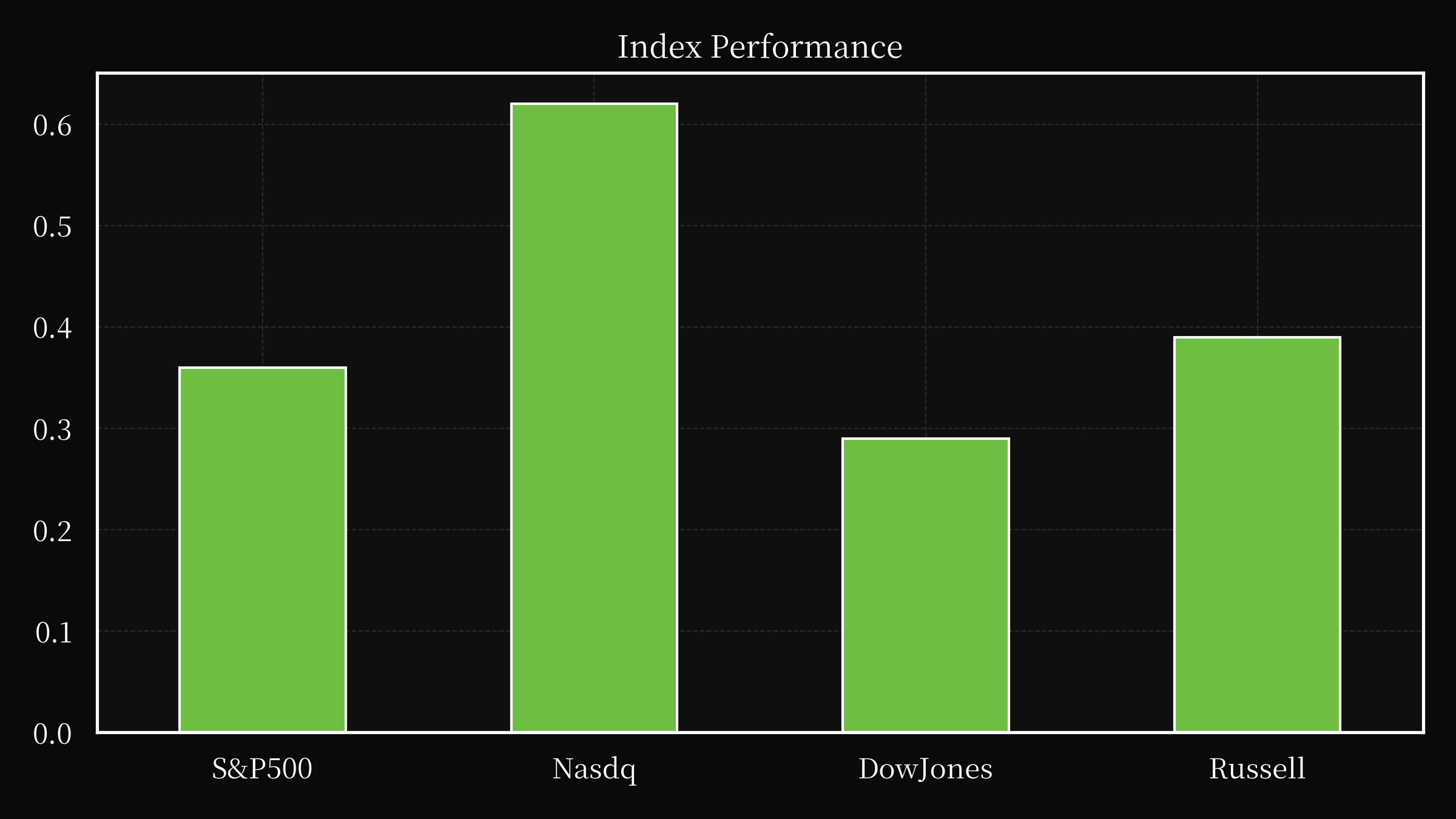
The U.S. equity market closed Tuesday with a blend of optimism and sector-specific volatility, driven by macroeconomic signals, corporate earnings, and evolving technological investment trends. At the core of the rally was BlackRock’s iShares, which surpassed $15 trillion in assets under management, marking a record that buoyed investor sentiment across equity classes. This milestone underscored the firm’s dominance in passive investing and reinforced confidence in long-term capital flows into equities, particularly as global markets recalibrated around shifting monetary policy expectations. The surge in BlackRock’s AUM reflects not only institutional accumulation but also the broader trend of indexation gaining traction as a core component of portfolio construction, with implications for liquidity dynamics and price discovery in both large-cap and mid-cap segments.
Corporate earnings reports further shaped the day’s trajectory, with PayPal’s 17% surge following a reported $53 billion acquisition offer from Stripe and Advent. This transaction, if finalized, would represent one of the largest tech-enabled deals in recent history, signaling consolidation within the payments sector and validating the strategic importance of digital transaction infrastructure amid rising e-commerce adoption. Conversely, Micron’s 8% decline highlighted lingering uncertainty around semiconductor demand cycles, particularly as firms grapple with inventory adjustments and the capital-intensive nature of advanced chip manufacturing. The divergence in performance between PayPal and Micron exemplifies the market’s bifurcation between growth-oriented tech plays and cyclical industrial names, with valuation multiples and earnings visibility acting as key differentiators.
The financial sector delivered robust results, with Morgan Stanley posting a record $6.3 billion in equity trading revenue, driven by heightened volatility and strategic positioning ahead of corporate earnings season. The firm’s outperformance underscored the resilience of investment banking amid mixed macroeconomic signals, as clients sought advisory and capital-raising support during a period of regulatory uncertainty and geopolitical risk. Similarly, Goldman Sachs and Bank of America exceeded expectations, reflecting broader optimism in the banking sector despite concerns about rising interest rates and potential credit deterioration. These results, however, were overshadowed by the stark contrast with lower-performing technology names, where concerns over overvaluation and growth sustainability weighed on valuations.
Geopolitical tensions and macroeconomic data also played a pivotal role in shaping investor sentiment. Treasury yields retreated as inflation data suggested a deceleration in core price pressures, with the Fed’s preferred PCE gauge projected to rise less than 0.2% in June. This outlook bolstered arguments for maintaining a restrictive monetary stance, though market participants remain divided on the timing and pace of rate cuts. Meanwhile, the resumption of strikes in the Middle East and escalating rhetoric between major powers introduced tail risks to global supply chains and energy markets, amplifying volatility in commodities and equity indices. The interplay between these factors highlighted the fragility of risk-on environments, particularly as investors balanced growth optimism against real-world constraints on trade and production.
Sector-specific developments further complicated the market narrative. ASML, the Dutch semiconductor equipment manufacturer, delivered a 75% year-over-year share price increase following a revised sales forecast and guidance, cementing its role as a beneficiary of the AI-driven chip boom. The company’s ability to secure orders from leading AI chipmakers like Nvidia underscored the structural shift toward high-performance computing infrastructure, with implications for capital expenditure cycles and supply chain dynamics. In contrast, Intel’s recent 25% stock collapse illustrated the challenges facing legacy semiconductor firms in adapting to rapid technological transitions, as they face pressure to reallocate resources toward AI-optimized manufacturing and R&D.
The broader implications of these trends extend beyond individual stocks, influencing portfolio construction and risk management strategies. The divergence between growth and value stocks, coupled with sector rotation driven by AI adoption and monetary policy shifts, necessitates a nuanced approach to asset allocation. Investors must weigh the durability of earnings growth against cyclical headwinds, particularly in industries reliant on discretionary spending or exposed to geopolitical disruptions. Additionally, the evolving role of passive investing, as exemplified by BlackRock’s AUM milestone, raises questions about market efficiency and the potential for mispricing in less liquid segments.
Looking ahead, the interplay between corporate earnings, macroeconomic data, and technological innovation will remain central to market direction. The Fed’s policy stance, geopolitical developments, and sector-specific catalysts such as AI infrastructure investments will dictate the pace of recovery or correction. For institutional investors, the challenge lies in balancing exposure to high-growth themes with defensive positioning against cyclical downturns, while retail participants must navigate heightened volatility through disciplined risk management. Ultimately, the market’s trajectory will hinge on the ability of policymakers and corporations to reconcile short-term pressures with long-term structural opportunities, ensuring that capital flows align with sustainable economic growth.
The day’s outcomes also underscore the importance of understanding valuation dynamics and earnings visibility in an environment where speculative narratives often overshadow fundamentals. While mega-cap tech stocks continue to anchor broader indices, mid-cap and small-cap names face heightened scrutiny over profitability and cash flow generation, particularly as interest rates remain elevated. This dichotomy reinforces the need for granular analysis, as bottom-up insights into individual company fundamentals become increasingly critical in distinguishing resilient businesses from transient market trends.
In conclusion, Tuesday’s market activity reflected a complex interplay of optimism and caution, driven by divergent earnings performances, macroeconomic signals, and sector-specific developments. The convergence of BlackRock’s record AUM, PayPal’s acquisition-driven surge, and ASML’s strategic positioning against AI tailwinds provided a counterbalance to the volatility emanating from chipmakers and geopolitical uncertainties. As investors navigate this landscape, the ability to synthesize macroeconomic trends with micro-level fundamentals will determine the efficacy of portfolio strategies, ensuring alignment with both evolving market conditions and long-term financial objectives.
Watch List
MS
Please provide me with the 6-K or 8-K content from the SEC Filing that you want me to summarize. I need the text of the filing to be able to fulfill your request. Once you paste the content here, I will summarize it into a fluent paragraph of no more than 300 words, avoiding lists and subtitles.
RWAY
Runway Growth Finance Corp. has secured an eighth amendment to its existing credit agreement, finalized as of June 30, 2026, with key lenders including KeyBank National Association, CIBC Bank USA, and MUFG Bank, Ltd. This amendment modifies the original agreement, primarily reducing the credit facility commitment from $550 million to $425 million. Notably, the amendment introduces provisions allowing for non-pro rata prepayment of lender commitments and updates several financial covenants. Furthermore, it revises key person trigger events and adjusts borrowing base concentration limitations, reflecting a strategic shift in the company’s financial structure. The changes were implemented to optimize Runway Growth Finance Corp.’s capital structure and provide greater flexibility in managing its debt obligations. This amendment builds upon the previously established Credit Agreement, dated April 20, 2022, and is filed as Exhibit 10.1 to this Form 8-K report.
SRXH
SRX Global Inc. recently announced strong paper-traded returns for its EMJX investment product, reporting a 26% gain between February 11, 2026, and July 10, 2026. To highlight these results and provide further detail, the company conducted a virtual Fireside Chat featuring Chief Executive Officer Kent Cunningham and President Eric Jackson. A replay of the presentation, alongside a transcript, are available on SRX Global’s investor relations website and attached as Exhibits 99.1 and 99.2 respectively, incorporating these materials into the Form 8-K filing. It’s important to note that the report contains forward-looking statements, which are subject to inherent risks and uncertainties. These statements reflect management’s current expectations and could differ materially from actual results due to various factors. Investors are advised to review the full disclaimer within the report and consult additional disclosures, including SRX Global’s quarterly reports and other filings, for a comprehensive understanding of the company’s business and associated risks.
HOMB
Home BancShares, Inc., the parent company of Centennial Bank, announced strong second-quarter results driven by a record PPNR of $171.2 million and total net revenue of $295.1 million. This success was largely attributed to the recent acquisition of Mountain Commerce Bancorp, which immediately boosted deposit growth and contributed to a strong net interest margin of 4.51%. Despite approximately $12.7 million in merger-related expenses, the company generated record adjusted earnings of $128.1 million and increased tangible book value per share to $15.32 (non-GAAP). Net income for the quarter reached $119.3 million, or $0.59 per diluted share. The company’s loan portfolio expanded by $1.49 billion, primarily due to the Mountain Commerce acquisition, and total assets grew to $24.71 billion. Efficiency ratios were also improved, with the adjusted efficiency ratio reaching 40.46%. Furthermore, Home BancShares continued its capital return program with share repurchases and dividend payments, demonstrating a commitment to shareholder value. The company’s robust performance underscores the strategic value of acquisitions and disciplined financial management.
GNSS
Following a Third Amendment to its existing term loan agreement, the company has secured an extension of its closing date term loan maturity to July 13, 2027, alongside a guaranteed minimum return (MOIC) of 20%. This amendment also increases the default interest rate to 5% above SOFR and mandates monthly principal payments of $1 million beginning in October 2026, incorporating the MOIC. Simultaneously, the company amended its warrant agreement, extending the exercise period to May 13, 2030 and reducing the exercise price from $2.53 to $2.28 per share. The Third Amendment and Term Loan Agreement include standard representations, warranties, covenants, and remedies, notably a $4 million minimum liquidity requirement. These documents are filed as Exhibits 10.1 and 10.2 and incorporated into this report for investor transparency. It’s important to note that the representations and warranties were specific to the agreement’s purpose and should not be considered definitive investment guidance. The company also released a press release regarding these changes, available as Exhibit 99.1.
NUVL
On July 15, 2026, this report confirms the completion of a merger between the Company and its parent, Parent, resulting in a change in control. At the “Effective Time,” outstanding shares of the Company, excluding those held by the company itself, Parent, or stockholders demanding appraisal, were converted into cash equal to the Offer Price less applicable taxes. The transaction, valued at approximately $10.6 billion, was financed through borrowings by Parent. Following the merger, the Company’s board of directors and officers transitioned to those of Parent, with Justin T. Huang and Kevin T. Ryan becoming directors and officers, respectively. The Company’s governing documents – its certificate of incorporation and bylaws – were fully amended and restated as part of the agreement. This report reflects the finalization of the merger and the subsequent control shift.
RIBB
Please provide me with the 6-K or 8-K content from the SEC Filing that you want me to summarize. I need the text of the filing to be able to fulfill your request. Once you paste the content here, I will summarize it into a fluent paragraph of no more than 300 words, avoiding lists and subtitles.
JBSS
John B. Sanfilippo & Son, Inc. recently announced a significant increase in its shareholder returns, issuing a press release detailing a dual dividend strategy. Effective September 9, 2026, the company will distribute a special cash dividend of $1.05 per share to all holders of common stock and Class A common stock as of August 17, 2026, establishing record date. Simultaneously, an annual cash dividend of $0.95 per share will be paid to the same group of shareholders. This combined approach represents a substantial commitment from the company to reward its investors. The details of this announcement, including the press release, are attached as Exhibit 99.1 to this Form 8-K filing, and other relevant exhibits are listed in the exhibit index.
PNC
PNC Financial Services Corporation delivered strong second-quarter 2026 results, reporting net income of $2.1 billion, or $4.81 per diluted share. Key highlights include solid loan growth driven by new production and higher utilization, record revenue, and net interest income alongside fee income. The company achieved positive operating leverage and strengthened credit quality, maintaining a robust capital position with $1.3 billion returned to shareholders through dividends and share repurchases. PNC announced a dividend increase of 18% to $2.00 per common share, reflecting its financial strength. Average loan balances increased by 4% and 13% quarter-over-quarter and year-over-year, respectively, with notable growth in commercial and industrial (C&I) and residential and commercial mortgage segments. The company’s net interest margin expanded by 2.96% year-over-year, and total revenue increased by 12%. Noninterest income grew by 26% and fee income by 10%. Operating expenses remained well-controlled, with a 9% increase year-over-year. Looking ahead, PNC projects continued growth in 2026, anticipating a 14.5% increase in net interest income and a 13% increase in total revenue.
JBHT
J.B. Hunt Transport Services, Inc. (NASDAQ: JBHT) reported a strong second quarter of 2026, with U.S. GAAP net earnings reaching $181.0 million, a significant increase from $128.6 million in the prior year, driven by a 19% rise in total operating revenue to $3.50 billion. Diluted earnings per share climbed to $1.91 compared to $1.31. The company’s strategy of investing in its people, technology, and capacity proved successful, leading to a 32% increase in operating income to $259.5 million. Notably, intermodal volume grew by 10%, and demand for intermodal service was bolstered by customer preferences for fuel-efficient options. Segment performance varied: Intermodal saw a 10% increase, Integrated Capacity Solutions (ICS) experienced a 49% revenue jump, and Dedicated Contract Services (DCS) reported a 9% rise in revenue due to productivity gains. However, Final Mile Services (FMS) saw a 6% revenue decrease. JBT revenue increased by 35% excluding fuel surcharge, and operating loss was reduced. The company’s focus on cost management and productivity improvements contributed to the positive results, alongside a decrease in net interest expense and an effective income tax rate of 25.4%. J.B. Hunt anticipates a 2026 annual tax rate between 24.0% and 24.5%.
IanFV (www.ianfv.com) is the world's first pure-blood, neutral research institution built on LLM (Large Language Models) specifically for individual investors. Founded by a top-tier team with backgrounds from Tsinghua, Harvard, Morgan Stanley, and UBS, we are committed to breaking down high-priced information barriers and providing institutional-grade investment research at affordable prices. Unlike traditional institutions, IanFV does not serve big-money sponsors or inflate market bubbles. Leveraging a proprietary knowledge graph and a fully localized deployment architecture, we achieve a differentiated competitive advantage through light assets and high efficiency. Our research reports refuse to "sell dreams": valuation reports are based on point-in-time intervals rather than reverse-engineered numbers; industry reports focus relentlessly on real trends over the next six to twelve months; and in-depth reports penetrate market bubbles to strike at the core of corporate survival moats—all to ensure investors hold the most authentic research cards in the secondary market.