Overall
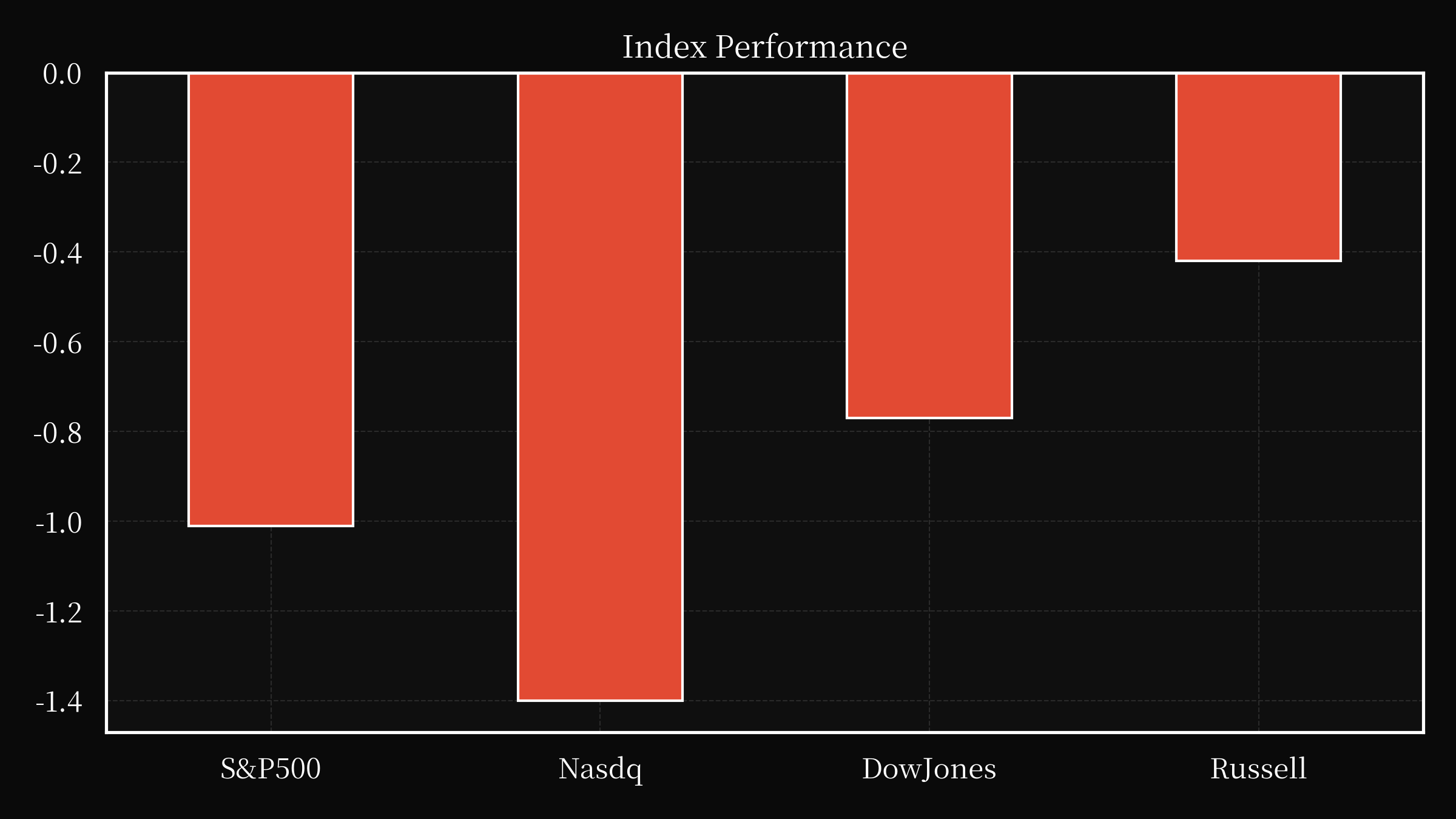
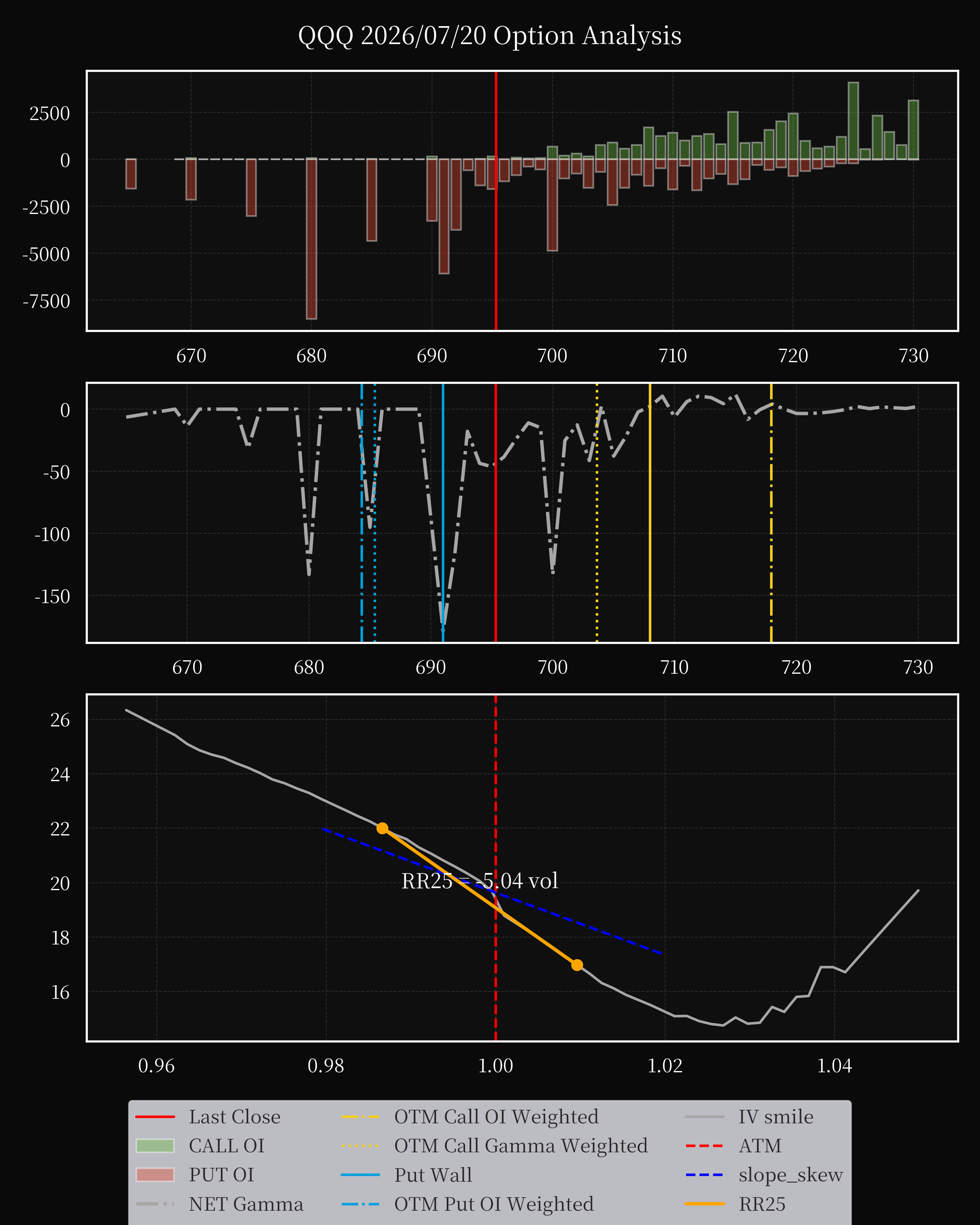
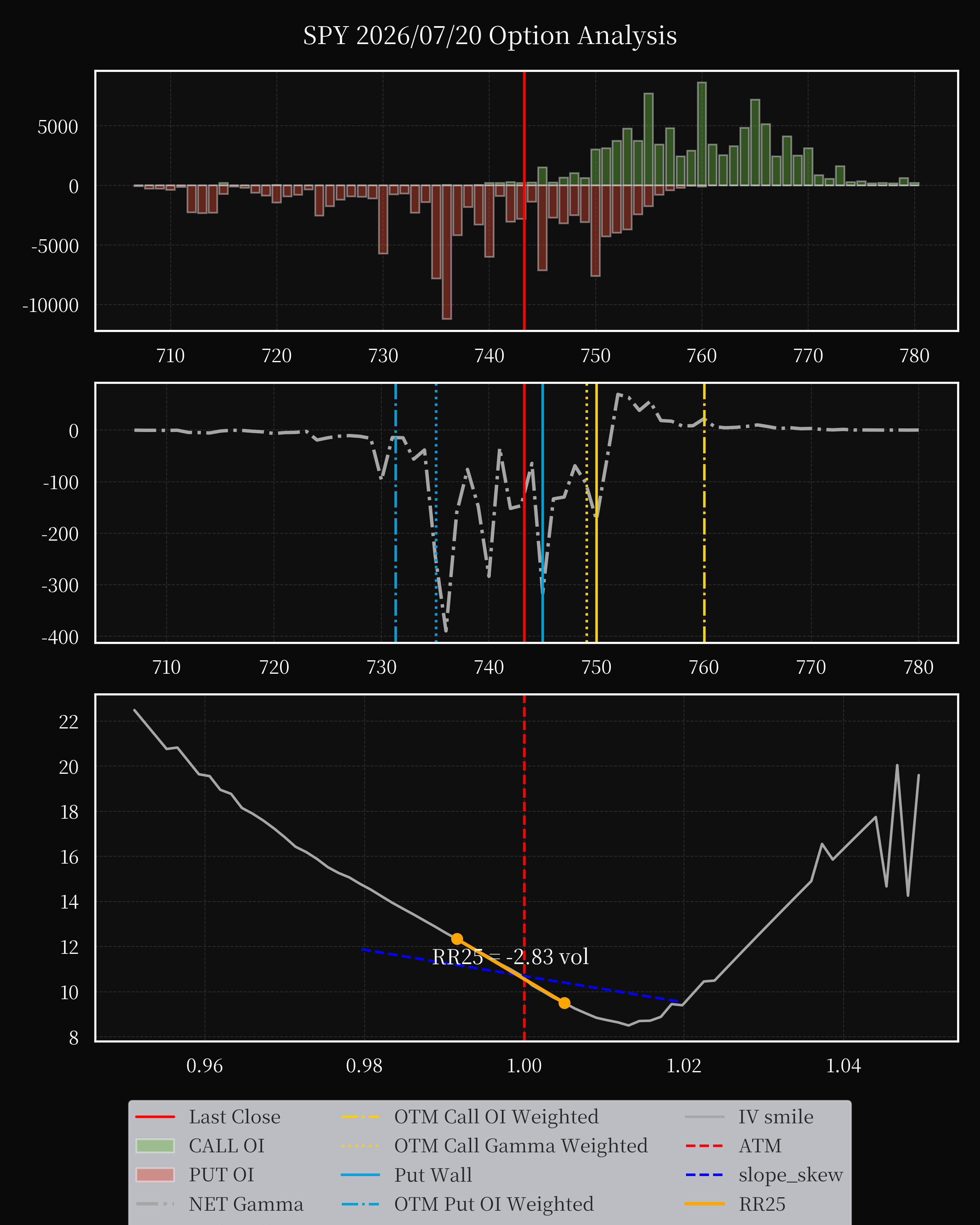
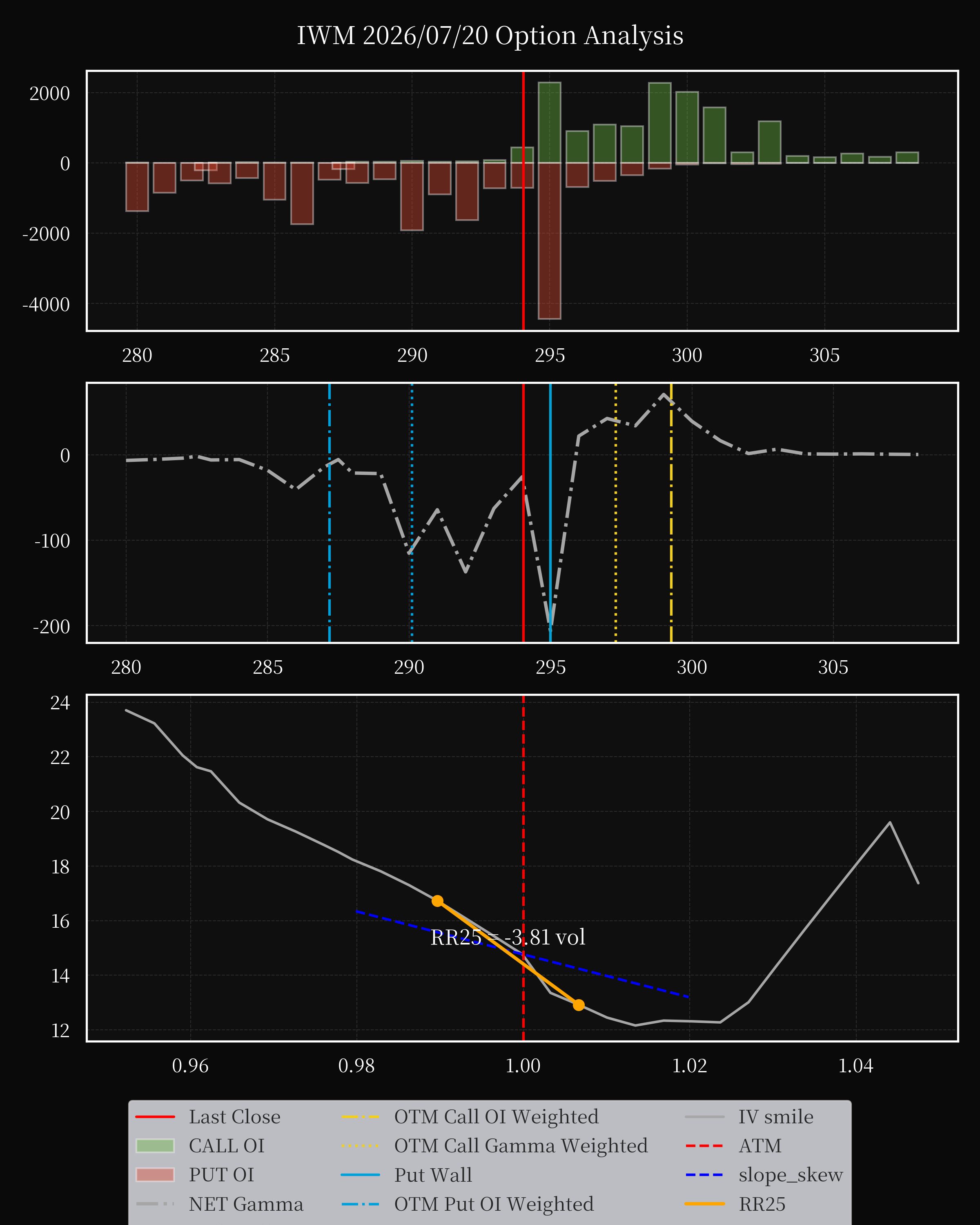
The U.S. equity market experienced a pronounced downturn on Friday, with broad-based declines reflecting multifaceted pressures across sectors and macroeconomic conditions. The Nasdaq Composite led the losses, falling 1.4% as investor sentiment soured amid concerns over the sustainability of elevated capital expenditures tied to artificial intelligence initiatives. This sentiment was exacerbated by developments in the technology sector, particularly the emergence of China’s Moonshot AI, which unveiled a 2.8-trillion-parameter model purportedly capable of surpassing U.S.-based systems. The announcement intensified fears of an escalating global competition in AI, prompting sell-offs in semiconductor stocks and broader tech equities. Intel, Applied Materials, Corning, and AMD all witnessed declines as investors reassessed growth trajectories and competitive positioning within the AI-driven capital allocation cycle.
The ripple effects extended beyond semiconductor manufacturers, influencing major consumer and industrial names. Netflix’s stock, already under pressure from weak viewer engagement metrics and a projected third-quarter revenue increase marking its smallest year-on-year growth since late 2023, closed 7.3% lower. The company’s decision to reduce the frequency of its viewership disclosures further fueled skepticism among analysts, who viewed the move as an attempt to obscure deteriorating performance trends. This decline underscored broader anxieties about the viability of streaming platforms in an environment where content costs continue to outpace revenue growth, particularly as competition from global streaming services intensifies.
Energy markets reacted sharply to geopolitical developments, with Brent crude oil prices surging past $88 per barrel following renewed hostilities between the U.S. and Iran. The escalation, which included Iranian strikes on U.S. military assets in multiple regions, drove crude to its highest levels since April amid fears of supply disruptions. This spike in oil prices not only weighed on equity valuations but also amplified inflationary pressures, complicating Federal Reserve policy decisions and influencing sector-specific dynamics. The interplay between energy costs and equity performance highlighted the fragility of market stability in the face of exogenous shocks, particularly when combined with weak domestic demand indicators.
Corporate earnings reports further compounded market uncertainty. UnitedHealthcare and HCA Holdings, two healthcare giants, delivered results that signaled persistent challenges in the sector, including margin compression and regulatory headwinds. These outcomes contributed to a broader reassessment of healthcare’s growth prospects, with investors questioning the sustainability of earnings multiples amid rising operational costs and reimbursement pressures. Meanwhile, Apple’s ongoing antitrust litigation with the U.S. Department of Justice, now under a Trump administration that has shifted toward settlement-driven resolutions, introduced additional volatility. The case, which alleges anti-competitive practices, could have material implications for Apple’s ecosystem and third-party developer relationships, though recent signals suggest a potential compromise may emerge.
The broader economic backdrop, characterized by slowing GDP growth and persistent inflation, amplified concerns about long-term financial stability. The Social Security Trust Fund’s projected depletion by 2032, coupled with rising national debt levels exceeding $40 trillion, underscored systemic risks to fiscal policy and public sector solvency. These factors collectively influenced investor behavior, driving capital toward defensive sectors while increasing scrutiny of growth-oriented equities. Additionally, weaker consumer confidence metrics, though showing marginal improvement due to easing gasoline prices, failed to offset broader pessimism about employment trends and wage growth, further dampening risk appetite.
Market participants also grappled with the implications of corporate restructuring and strategic pivots. Alphabet’s AI-related anxieties, driven by competitive threats from Chinese firms like Moonshot, highlighted vulnerabilities in the tech sector’s innovation pipeline. The company’s cautious approach to AI investments, juxtaposed with aggressive spending by rivals, raised questions about long-term market leadership. Similarly, Nvidia’s narrow victory over Apple in valuation contests signaled the challenges faced by firms attempting to balance short-term profitability with long-term R&D commitments.
The convergence of geopolitical tensions, corporate earnings disappointments, and macroeconomic headwinds created a volatile environment where sector rotations became pronounced. Investors increasingly prioritized companies with resilient cash flows, defensible market positions, and clear pathways to margin expansion. The emphasis on operational efficiency was evident across industries, from semiconductor manufacturers streamlining production costs to retailers optimizing supply chains amid inflationary constraints. Meanwhile, the resurgence of SpaceX’s stock, despite recent technical setbacks, illustrated the market’s capacity to reward long-term strategic bets even in the face of near-term execution risks.
As the week progressed, the interplay between earnings cycles, policy developments, and global events underscored the complexity of navigating modern equity markets. Analysts emphasized the importance of granular analysis, particularly in distinguishing between temporary disruptions and structural shifts. For instance, while the immediate selloff in chip stocks reflected overreactions to AI hype cycles, the sustained weakness in streaming platforms highlighted deeper structural challenges in content monetization. Similarly, the energy sector’s volatility served as a reminder of the economy’s sensitivity to external shocks, reinforcing the need for diversified portfolios capable of withstanding idiosyncratic risks.
In conclusion, Friday’s market performance illustrated the interdependence of global markets, corporate fundamentals, and policy environments. The confluence of AI-driven competition, geopolitical instability, and macroeconomic uncertainty necessitated a recalibration of investment strategies, with a growing focus on quality assets and risk mitigation. Investors were advised to remain vigilant regarding earnings trends, regulatory developments, and geopolitical flashpoints, as these factors would continue to shape market trajectories in the near term. The ability to discern cyclical from structural trends, coupled with disciplined portfolio management, emerged as critical imperatives for navigating the evolving landscape.
Watch List
FRAF
Franklin Financial Services Corporation announced a consistent quarterly cash dividend of $0.34 per share for the third quarter of 2026, mirroring the dividend paid in the second quarter of 2026. This represents a notable increase of 3.0% compared to the same period in 2025, reflecting the company’s continued commitment to shareholder returns. The dividend will be distributed on August 26, 2026, to shareholders who were recorded as owners at the close of business on August 7, 2026. This filing, submitted on July 17, 2026, includes the standard XBRL formatted cover page as an exhibit. The company’s decision to maintain this regular dividend demonstrates stability and confidence in its ongoing financial performance.
FITB
Fifth Third Bancorp reported a strong second quarter of 2026, demonstrating continued momentum following the integration of Comerica. Net income available to common shareholders reached $763 million, or $0.83 per diluted share, a significant increase from prior periods. The bank’s core business showed growth across fee businesses, including wealth and asset management, commercial payments, and capital markets, driven by organic momentum and the full-quarter contribution from Comerica. The balance sheet remains robust, supporting a net interest margin expansion to 3.36% and improved credit performance. Key highlights included a 14% sequential increase in net interest income, largely due to the Comerica integration and fixed-rate asset repricing, alongside a 13% rise in noninterest income excluding certain items. Consumer deposits grew by $4.6 billion, driven by the successful Comerica Southwest market campaigns, and commercial loan growth was broad-based. The company is on track to finalize the Comerica systems conversion by Labor Day weekend, unlocking expected cost synergies. Fifth Third maintains a strong capital position, with a CET1 capital ratio at 9.93%. Looking ahead, the bank remains focused on stability, profitability, and growth, solidifying its position as a Category III institution and building a more resilient financial future.
INTR
Please provide the 6-K or 8-K content from the SEC Filing that you would like me to summarize. I need the text of the filing to be able to fulfill your request. Once you paste the content here, I will generate a fluent paragraph summarizing it within the 300-word limit.
ESRT
Okay, here’s a breakdown of the provided text, categorized for clarity and highlighting key aspects: 1. Core Agreement – The Amended and Restated Credit Agreement: * Parties: Empire State Realty Trust, Inc., Empire State Realty OP, L.P., Wells Fargo Bank, National Association (as Administrative Agent). * Purpose: This document outlines the terms of a credit facility (likely a loan) for a real estate project. * Key Provisions: * Recourse: Crucially, the agreement states that the Administrative Agent and Lenders have *no recourse* against the Borrower (Empire State Realty Trust, Inc.) if the Borrower defaults, except for the amounts actually owed. This is a significant protection for the lenders. * Defined Terms: The agreement uses specific defined terms (e.g., “Administrative Agent,” “Lenders,” “Defaulting Lender”) to avoid ambiguity. * Governing Law: The agreement is governed by the laws of the State of New York. 2. Assignment and Assumption – The “Assignment and Assumption” Document: * Purpose: This document governs the transfer of the loan from the original lenders to a new lender (or group of lenders). * Key Elements: * Transfer of Rights & Obligations: The original lenders (Exiting Lenders) transfer their rights and obligations under the Credit Agreement to the new lender(s) (Assignee). * No Recourse to Assignor: The Assignor (original lender) is explicitly released from any liability related to the loan. * Waiver of Defaults: The Assignee waives certain rights that would normally trigger a default under the Credit Agreement. * Consent Requirements: The Administrative Agent and Borrower must consent to the assignment. * “Qualified Financial Contract” (QFC) Clause: This section addresses the potential for the loan to be structured as a QFC, which has specific regulatory implications (particularly related to resolution authorities). It includes provisions for how a defaulting lender’s obligations would be handled if the loan were classified as a QFC. * Confirmation of Lender Status: The Assignee confirms that it meets the requirements to be a lender under the Credit Agreement. * Acknowledgement of Sophistication: The Assignee acknowledges that it has made its own credit analysis
GIPR
Generation Income Properties, Inc. recently finalized two amendments to its Limited Partnership Agreement, known as the Eighth and Ninth Amendments, aimed at achieving compliance with Nasdaq’s Equity Requirement and ultimately delisting from the exchange. These amendments, executed with LMB Owenton I LLC (holding Series B-1 Preferred Units) and Lloyd M. Bernstein (holding Series B-2 Preferred Units), were designed to classify the Series B-1 and B-2 Preferred Units as permanent equity for financial reporting, a key step in addressing prior concerns raised by Nasdaq. Following an initial delist notice and subsequent appeal, the Nasdaq Hearings Panel granted an extension until August 4, 2026, to meet the Equity Requirement, which currently stands at $2.5 million. As of the filing date, the Company asserts that stockholders’ equity has surpassed this threshold, though it intends to seek formal confirmation from the Panel. The Company also announced the amendments through a press release distributed on July 17, 2026. Nasdaq will continue to monitor Generation Income Properties’ compliance, and further delisting remains a possibility if the Equity Requirement isn’t met in its next reporting cycle.
CTGO
Contango Silver & Gold Inc. recently presented a company overview alongside non-GAAP financial measures, as detailed in Exhibit 99.1, which was filed as an 8-K report. These non-GAAP metrics, primarily prepared by Kinross Gold Corporation regarding their joint venture, Peak Gold, LLC, utilize International Financial Reporting Standards (IFRS) rather than United States Generally Accepted Accounting Principles (GAAP). Due to the complexities of reconciling these IFRS figures to GAAP and the limited access Contango currently has to the detailed information required for such calculations, reconciliations are not included in the presentation. The company acknowledges the inherent challenges in quantifying certain amounts necessary for a direct GAAP comparison. Furthermore, the filing includes a standard cautionary note regarding forward-looking statements, highlighting the potential uncertainties associated with the company’s operations and financial projections. Investors should carefully review the full presentation for a comprehensive understanding of the company’s financial performance and the methodologies employed.
THAR
Canton Strategic Holdings, Inc., held its 2026 annual meeting of stockholders on July 13, 2026, with a record date of June 16, 2026, and saw 77,122,584 shares represented, resulting in a quorum for voting. All seven nominees for the Board of Directors were successfully elected to serve until the 2027 annual meeting, reflecting strong shareholder support. Furthermore, the appointment of Rosenberg Rich Baker Berman P.A. as the company’s independent registered public accounting firm for the fiscal year ending December 31, 2026, was overwhelmingly approved by the stockholders. During a special meeting held on July 15, 2026, the Board of Directors also elected members to its various committees, solidifying the company’s governance structure following the annual meeting’s proceedings. These results demonstrate a clear direction and confidence among shareholders in Canton Strategic Holdings’ leadership and financial oversight.
EYPT
EyePoint, Inc. has reached a settlement agreement with the United States Department of Justice, the Office of Inspector General of the Department of Health and Human Services, the Defense Health Agency, and a relator regarding potential False Claims Act violations related to the sales and marketing practices of its DEXYCU product. The settlement, totaling $4,678,981.86 plus accrued interest, resolves claims stemming from sampling practices and other promotional activities. As part of the agreement, EyePoint will pay $4,657,463.18 to the U.S. government and $21,518.68 to participating states, with an additional $166,500 allocated to attorneys’ fees and costs. Upon full payment of the settlement, the DOJ, OIG-HHS, DHA, and the relator will release EyePoint and its subsidiaries from any civil or administrative monetary liability associated with the alleged conduct, and the related civil action will be dismissed. The company intends to cover these payments using existing cash reserves. Full terms of the Settlement Agreement and a Corporate Integrity Agreement are attached as exhibits to the filing and have been incorporated by reference.
NBY
This Indemnification Agreement establishes a contractual relationship between Stablecoin Development Corporation and a director/officer (referred to as “Indemnitee”) to secure their service in that role. The core of the agreement is the Company’s obligation to indemnify the Indemnitee against losses, expenses, and liabilities arising from various proceedings, including those unrelated to the Company itself. Crucially, the Company’s indemnification is secondary to any insurance coverage provided by affiliated indemnitors. The agreement stipulates that the Company’s willingness to indemnify is contingent on the Indemnitee’s service as a director/officer. If the Indemnitee is successful in a proceeding not directly involving the Company, the Company must fully indemnify them for related expenses. Conversely, if the Company is successful in a proceeding against the Indemnitee, the Indemnitee is also indemnified for their expenses. To facilitate this, the Company agrees to advance expenses to the Indemnitee on a current basis, regardless of whether the Indemnitee ultimately receives indemnification. The Indemnitee is obligated to notify the Company promptly of any legal proceedings and to control the defense of related claims. The agreement also includes provisions for settlement, ensuring the Indemnitee is fully compensated even if a settlement is reached without the Company’s prior consent, provided it aligns with the terms outlined. Finally, the agreement establishes a presumption of entitlement to indemnification and outlines procedures for determining this entitlement, including the potential use of independent counsel.
ATLO
Ames National Corporation reported net income of $18.7 million for the six months ended June 30, 2026, a significant increase compared to $12.3 million in the prior year, primarily driven by a rise in net interest income due to higher yields and average balances on investments coupled with lower funding costs. Loan interest income rose to $88.7 million, bolstered by reinvestments at higher rates, while interest income from time deposits decreased slightly. The company’s net interest margin improved to 3.3% on a tax-equivalent basis, reflecting these favorable trends. Credit loss expense remained relatively stable at $0.7 million, primarily stemming from commercial loan portfolio charge-offs. Noninterest income increased to $66.4 million, largely due to growth in wealth management assets and estate/trust fees, alongside higher professional fees associated with contract negotiations. The efficiency ratio continued to improve, indicating operational efficiency gains. Total assets stood at $13.6 billion, with approximately $102 million in investments maturing within a year. The company’s balance sheet showed a focus on reducing borrowings and maintaining a strong capital position. While the company experienced a slight increase in substandard loans due to specific relationships, it maintained a healthy loan portfolio and a robust allowance for credit losses. Furthermore, the company announced a quarterly cash dividend of $0.24 per share.
IanFV (www.ianfv.com) is the world's first pure-blood, neutral research institution built on LLM (Large Language Models) specifically for individual investors. Founded by a top-tier team with backgrounds from Tsinghua, Harvard, Morgan Stanley, and UBS, we are committed to breaking down high-priced information barriers and providing institutional-grade investment research at affordable prices. Unlike traditional institutions, IanFV does not serve big-money sponsors or inflate market bubbles. Leveraging a proprietary knowledge graph and a fully localized deployment architecture, we achieve a differentiated competitive advantage through light assets and high efficiency. Our research reports refuse to "sell dreams": valuation reports are based on point-in-time intervals rather than reverse-engineered numbers; industry reports focus relentlessly on real trends over the next six to twelve months; and in-depth reports penetrate market bubbles to strike at the core of corporate survival moats—all to ensure investors hold the most authentic research cards in the secondary market.