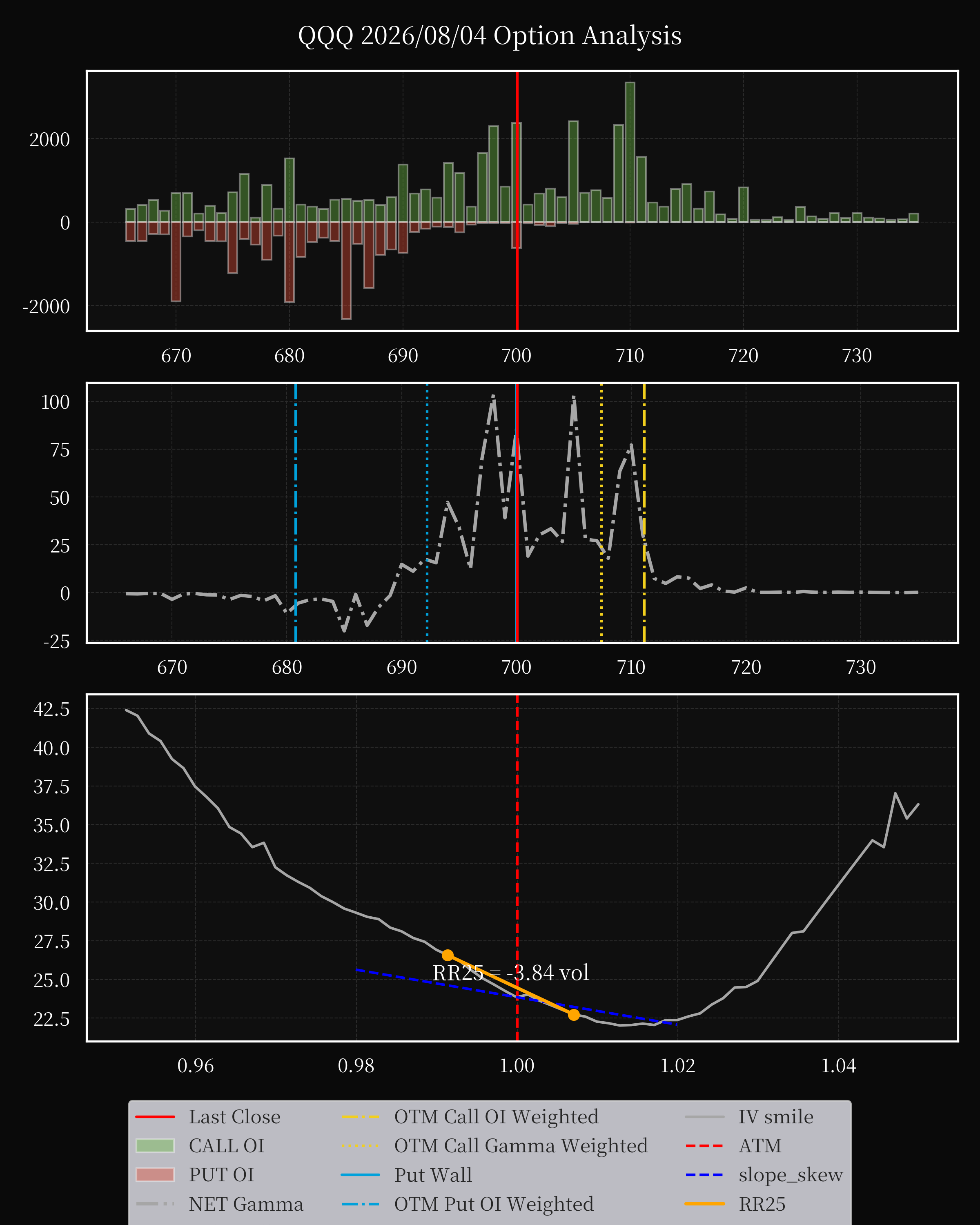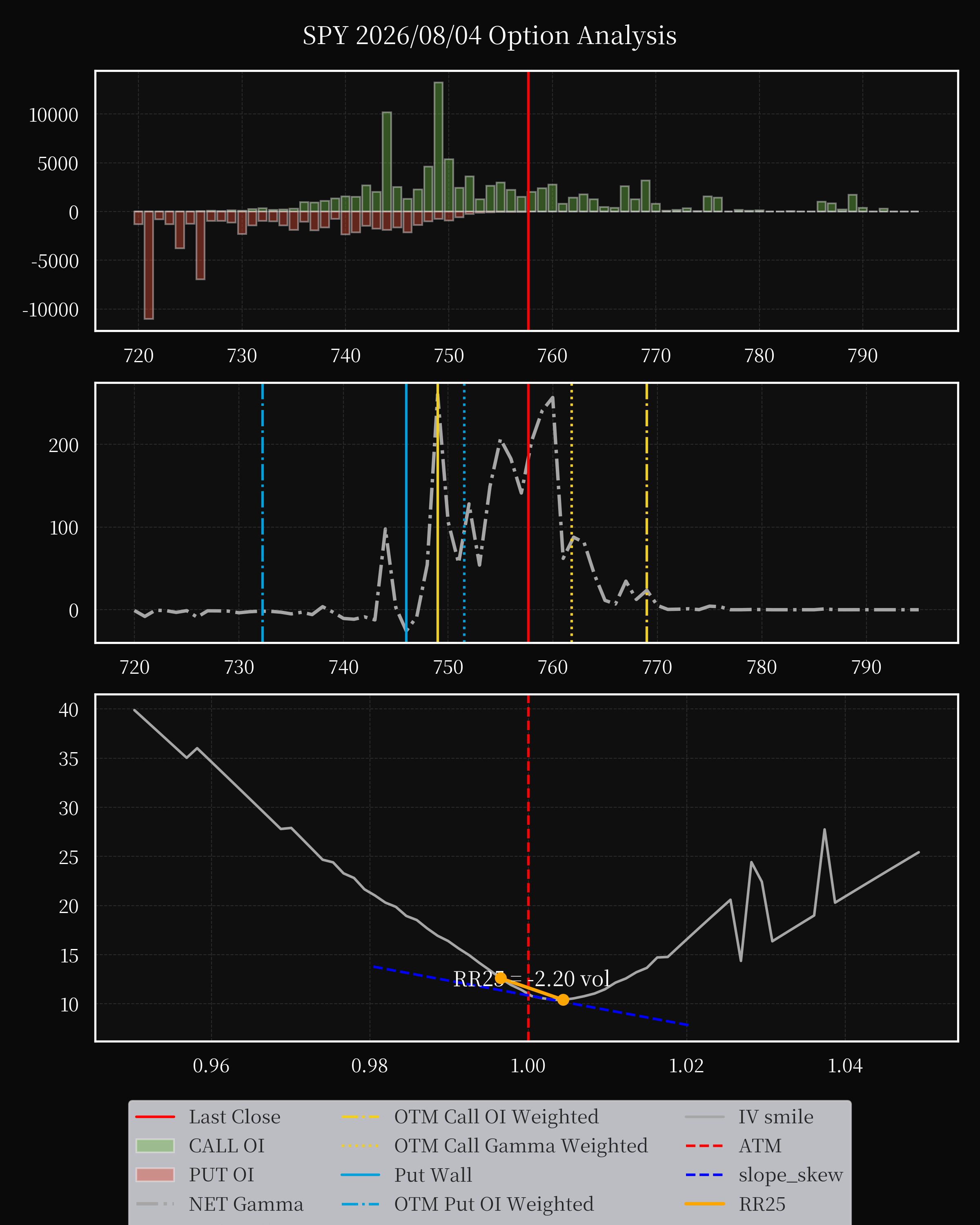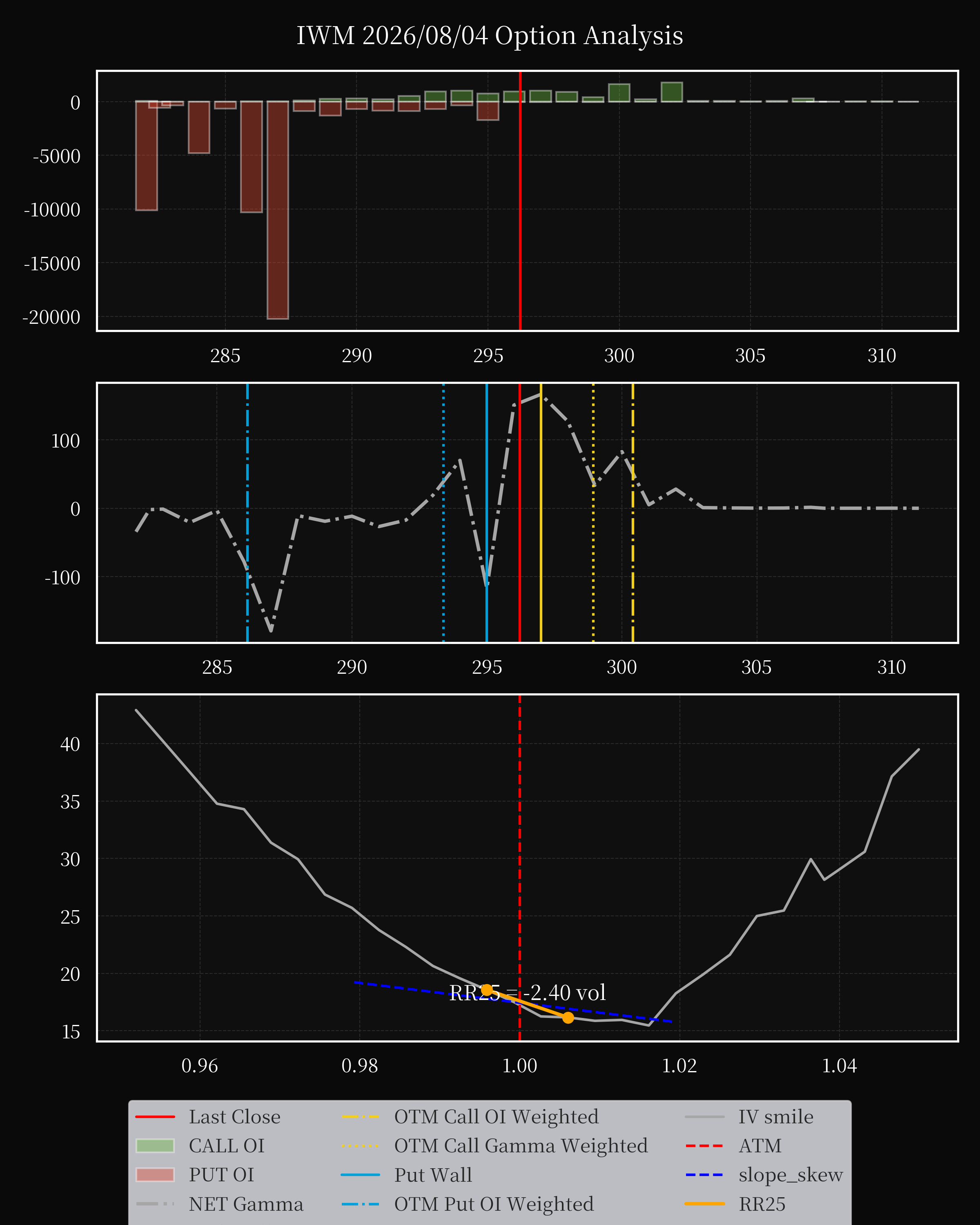
Overall
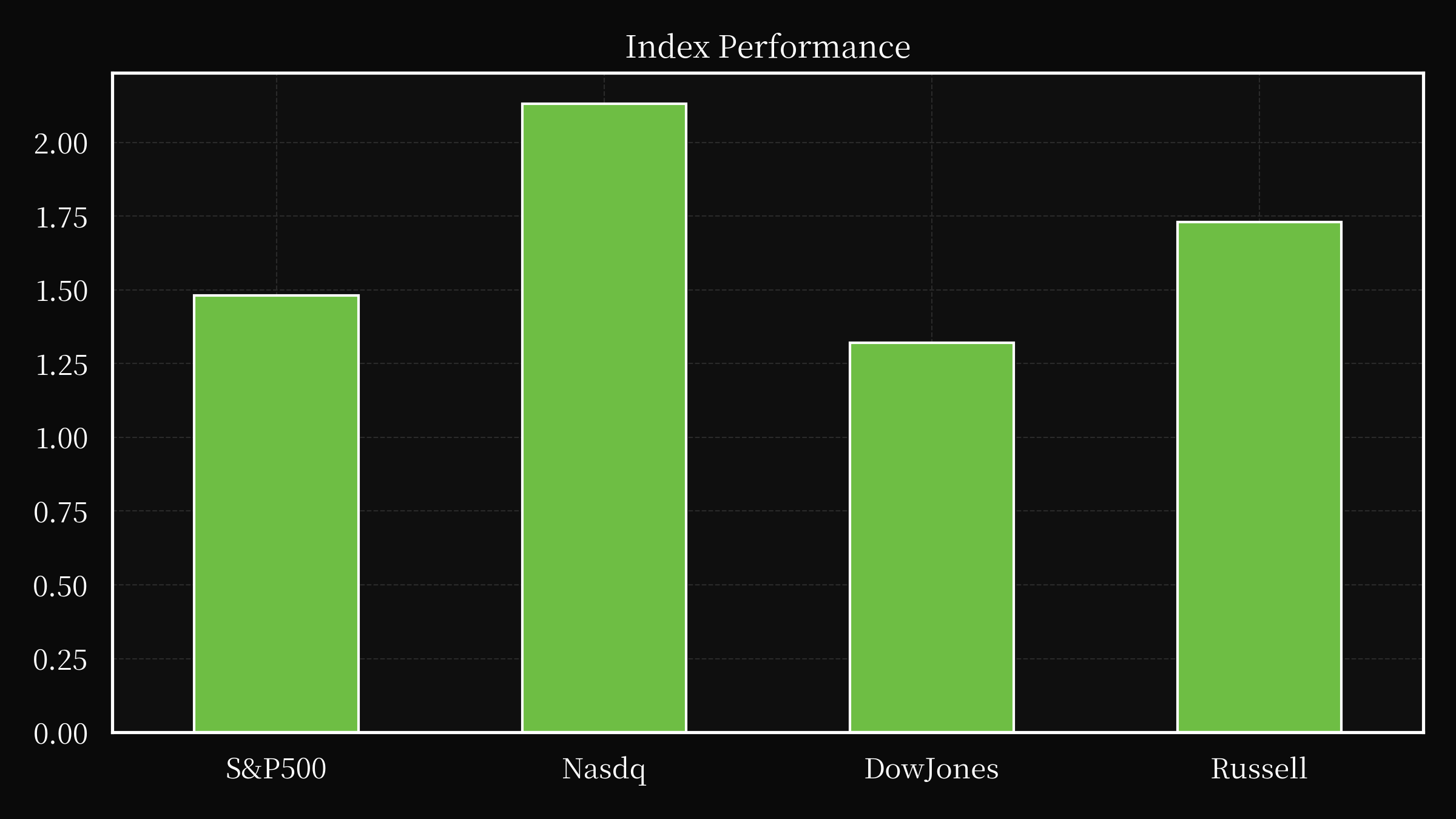
The U.S. equity markets opened Monday with pronounced optimism, driven by a confluence of geopolitical developments, corporate earnings, and macroeconomic indicators that collectively reshaped investor sentiment across asset classes. The Dow Jones Industrial Average surged 1.3% to close near record highs, while the S&P 500 and Nasdaq Composite posted gains of 1.5% and 2.1%, respectively, reflecting broad-based strength anchored by the Magnificent Seven and high-growth technology names. This rally unfolded despite a near 5% decline in crude oil prices, which, though tempered by Iran’s denial of peace talks, allowed markets to focus on the relative resilience of equities amid ongoing tensions in the Middle East. The interplay between oil volatility and equity performance underscores the nuanced relationship between commodity markets and broader economic expectations, particularly as energy prices remain sensitive to geopolitical flashpoints.
The manufacturing sector emerged as a critical driver of optimism, with the Institute for Supply Management’s July Purchasing Managers’ Index (PMI) signaling sustained expansion at its highest level since May 2022. A reading of 55.6, up from 53.3 in June, highlighted robust production growth, rising new orders, and improving employment metrics, all of which contributed to a 7-day streak of manufacturing growth. This trajectory reflects the sector’s adaptation to post-pandemic demand dynamics, accelerated adoption of artificial intelligence in production processes, and the lingering effects of supply chain normalization. However, persistent inflationary pressures, as evidenced by input cost trends, continue to temper enthusiasm, illustrating the delicate balance between cyclical recovery and structural cost challenges.
Corporate earnings reports further bolstered market confidence, with Amazon’s stock surpassing the $3 trillion market capitalization threshold following a second-quarter earnings beat that exceeded expectations. The company’s performance, alongside strong results from SpaceX and other high-profile tech firms, underscored the enduring influence of the Magnificent Seven in shaping market direction. Conversely, sector-specific headwinds emerged, notably in hospitality and pharmaceuticals, where Marriott’s 7% decline and Bristol-Myers Squibb’s 9% drop highlighted vulnerabilities in traditional industries facing structural headwinds. These divergent outcomes emphasize the importance of granular analysis in assessing earnings sustainability, particularly as macroeconomic uncertainty persists.
Geopolitical risks remained a focal point, with the Iran-related tensions and the U.S. administration’s evolving trade policies creating both opportunities and challenges. The filing of lawsuits by multiple states challenging the legality of new tariffs under Section 301 of the Trade Act of 1974 introduced regulatory ambiguity, complicating corporate planning and trade strategy. Simultaneously, the resolution of tariffs imposed in April 2025—following a Supreme Court ruling deeming them illegal—prompted a wave of refund claims, illustrating the legal and fiscal ramifications of protectionist measures. These developments underscore the interplay between political decisions and market stability, particularly for firms reliant on global supply chains.
Looking ahead, the convergence of earnings momentum, manufacturing resilience, and geopolitical volatility sets the stage for continued market fluctuations. Investors must weigh the implications of AI-driven productivity gains against inflationary inertia, while monitoring the trajectory of trade policy litigation and sector-specific earnings trends. The interdependencies between equity performance, commodity markets, and macroeconomic data suggest that adaptability will be paramount, as markets navigate the dual forces of technological disruption and geopolitical recalibration. The coming weeks will likely test the durability of current trends, with outcomes hinging on both corporate execution and the resolution of broader policy disputes.
Watch List
MED
Medifast reported a challenging second quarter of 2026, with revenue declining 27.6% to $76.4 million, primarily due to a significant decrease in the number of active earning coaches – falling 48.7% to 11,700. Despite a 41.0% increase in revenue per coach, this was insufficient to offset the decline in overall sales volume, impacted by broader market pressures including the rise of GLP-1 medications. The company’s net loss totaled $3.1 million, or $0.28 per diluted share. Medifast is implementing a “3.0” strategy centered around its Trilivy metabolic health system, new Reset Fuelings, and the Medifast Metabolic Health Institute, alongside the launch of the Catalyst program aimed at cost savings. While the company anticipates returning to profitability by the fourth quarter, ongoing challenges remain with declining coach numbers. SG&A expenses increased due to lower revenue and fixed cost leverage. Looking ahead, Medifast projects revenue between $60 million and $80 million for the third quarter and anticipates full-year revenue of $270 million to $300 million, alongside a loss per share ranging from $0.25 to $1.75. The company continues to focus on its science-backed approach to metabolic health through Trilivy and its integrated system of coaching and behavioral support.
ITGR
Integer Holdings Corporation announced its second-quarter 2026 results, reporting a 2.6% decrease in sales to $464 million, with organic sales down 1.5%. GAAP operating income fell by 42% to $35 million, and overall GAAP income decreased by 10% to $73 million. Non-GAAP adjusted net income was $55 million, a slight decrease of 0.1%. Diluted EPS decreased by 34% to $0.69, while the non-GAAP adjusted EPS increased by 3% to $1.60. Adjusted EBITDA decreased by 4% to $95 million. The company’s total debt increased to $1.238 billion, and its leverage ratio remained at 3.2 times adjusted EBITDA. Notably, Integer Holdings Corporation has entered into a definitive agreement with KKR for the acquisition of all outstanding shares at $127 per share, valuing the transaction at $5.7 billion. Consequently, Integer is withdrawing its previous financial outlook and canceling the scheduled earnings conference call. Sales in Cardio & Vascular decreased 2% due to new Electrophysiology products, while Cardiac Rhythm Management & Neuromodulation sales increased 1% partially offset by a new Neuromodulation product. Other Markets sales declined significantly due to the exit of the Portable Medical business. The company’s financial metrics, presented as non-GAAP measures, reflect adjustments for items such as amortization, legal expenses, restructuring charges, and ERP implementation costs, providing a more comprehensive view of its underlying performance.
TDW
Tidewater Inc. reported a strong second quarter of 2026, exceeding expectations with revenue of $342.3 million and $668.5 million for the three and six months ended June 30th, respectively, up from $341.4 million and $674.9 million in the prior year. The company’s net income also increased to $27.8 million ($0.56 per share) compared to $115.6 million ($2.27 per share) in 2025. Driven by improved day rates – up $655 sequentially, the largest increase since 2024 – and lower operating expenses, particularly due to adjustments related to the ongoing conflict in the Middle East, Tidewater achieved a gross margin of 46.9%. While acknowledging elevated costs stemming from the conflict, the company implemented wage structure adjustments and secured modest reimbursements on related invoices. The anticipated closing of the WSUT acquisition is now expected around September 1st, 2026, with a swift integration planned. Despite ongoing global energy market volatility, Tidewater remains confident in the long-term outlook for offshore activity, citing increased tendering and anticipated future projects. Consequently, Tidewater has modestly revised its 2026 revenue guidance to $1.42 billion to $1.47 billion and its gross margin guidance to 49% to 50%, reflecting the WSUT transaction delay and continued conflict-related costs, estimated at $13.1 million.
ABR
Arbor National Mortgage, now Arbor Realty Trust (ABR), boasts a 40+ year history specializing in multifamily lending, evolving from its 1983 founding to a prominent player in the commercial real estate sector. The company has grown significantly, employing over 1,200 people across eight states and successfully navigated economic downturns, including the 2008 recession, by managing securitization vehicles without losses. Arbor’s expertise includes originating and servicing GSE loans, particularly in the multifamily and Single-Family Rental markets, alongside a structured business focused on CLOs. Key to Arbor’s success is a deeply experienced and aligned management team, including individuals with extensive backgrounds in real estate finance, capital markets, and securitization. The company operates with a capital-light business model, generating significant revenue from prepayment-protected servicing fees. Arbor has consistently demonstrated strong financial performance, highlighted by a robust portfolio, high book value appreciation, and a track record of outperforming peers. Recent accomplishments include launching a new construction financing product (Arbor Private Construction), streamlining operations through the resolution of non-performing assets, and securing favorable ratings for its debt offerings. As of June 30, 2026, Arbor manages a substantial agency servicing portfolio of approximately $36.7 billion, underpinned by a scalable origination and servicing platform and a dedicated focus on the resilient multifamily market.
CVGI
CVG (NASDAQ: CVGI) announced its second-quarter 2026 financial results, reporting revenues of $195.2 million, up 13.5% compared to the prior year, driven by increased demand across its three business segments. The company achieved gross margin expansion of 140 basis points versus Q2 2025 and 120 basis points sequentially, reflecting increased revenues and operational efficiencies. Operating income rose to $1.6 million, an increase of $0.8 million compared to the prior year, with adjusted operating income at $2.6 million. Despite a lower Class 8 build rate, the Trim Systems & Components segment experienced year-over-year growth due to new business wins, while Global Seating and Global Electrical Systems continued to benefit from international market demand and new business ramps, including the Zoox robotaxi program. As a result of these positive results, CVG is raising its full-year 2026 guidance, anticipating continued revenue growth and EBITDA expansion. The company’s liquidity stands at $127.2 million. Net loss from continuing operations was $8.7 million, or $(0.25) per diluted share, with an adjusted net loss of $4.6 million, or $(0.13) per diluted share. The company utilized proceeds from an equity issuance program to reduce its debt. Management highlighted a focus on disciplined execution, margin improvement, and free cash generation, expecting to capitalize on improving market conditions and a projected increase in North American Class 8 truck production. The company also announced a revised outlook reflecting current industry forecasts and anticipates continued growth in the construction end market.
MBRX
This agreement, dated July 31, 2026, outlines a sale of up to $6,548,710.67 of Moleculin Biotech, Inc.’s shares and warrants to various purchasers. The core of the agreement involves the Company selling shares and warrants to these purchasers, subject to specific conditions and restrictions. Key terms include a $0.75 per share purchase price (adjusted for stock splits), a lock-up period for the directors, officers, and major shareholders, and a timeframe of 45-180 days post-closing for the Company to issue additional shares. The agreement defines numerous terms, such as “Trading Day,” “Material Adverse Effect,” and various entities like ArentFox Schiff LLP and Roth Capital Partners, LLC, who provide legal and placement services. Specifically, the purchasers have the option to buy shares or Prefunded Warrants, with the purchase price adjusted to maintain a consistent total investment. The Company is obligated to deliver shares, warrants, and related documentation within specified timeframes, contingent on a non-Trading Day or a specific time of day. Furthermore, the agreement includes provisions for compliance with data privacy laws, restrictions on share issuance post-closing, and a waiver of jury trials in any legal proceedings. The entire transaction is governed by a lock-up agreement and subject to various representations and warranties from both the Company and the Purchasers, ensuring the accuracy of financial statements and compliance with regulations.
DORM
Dorman Products, Inc., a leading supplier in the motor vehicle aftermarket, announced strong second-quarter 2026 results, reporting net sales of $544.6 million, up 0.7% year-over-year. Diluted earnings per share (EPS) surged to $2.93, a 53% increase, and adjusted diluted EPS rose by 50% to $3.08. The company’s performance was driven by record earnings and strong cash flow, partially fueled by the recovery of IEEPA tariff costs. Dorman generated $152.6 million in operating cash flow and repurchased $47 million of its shares. Based on these results, Dorman has updated its full-year 2026 guidance, projecting net sales growth of 3% to 5%, with diluted EPS expected to range from $7.93 to $8.23 and adjusted diluted EPS from $8.50 to $8.80. The company attributes its success to a strengthened balance sheet, strategic pricing actions, and its diversified supplier network. Dorman’s Chairman, Kevin Olsen, highlighted the company’s confidence in continued growth and value creation for shareholders. The company’s financial results include non-GAAP measures, which provide additional insights into its performance. Dorman Products continues to focus on providing solutions for professionals, enthusiasts, and owners in the motor vehicle industry, leveraging its long-standing history and global reach.
OKE
OKENIC announced stronger-than-expected second-quarter 2026 results, reporting a 13% increase in net income to $967 million and a 7% rise in adjusted EBITDA to $2.12 billion. The company’s performance was bolstered by robust refined products and NGL raw feed throughput volumes, with an 8% increase in shipped volumes and a 7% rise in Gulf Coast/Permian region feed throughput. ONEOK also completed the expansion of its Greater Denver refined products pipeline early in August 2026. Reflecting these positive results, the company has increased its 2026 financial guidance, projecting net income in a range of $3.41 billion to $3.79 billion and adjusted EBITDA in a range of $8.2 billion to $8.5 billion. This increase is driven by continued strong business segment performance and strategic opportunities. The company’s refined products segment saw a 2% increase in natural gas volumes processed, while the natural gas pipelines segment experienced a 2% increase in contracted transportation capacity. Operating costs increased due to higher outside services and employee-related expenses, but these were partially offset by higher crude marketing earnings. Looking ahead, ONEOK anticipates continued strong performance and remains focused on strategic growth opportunities.
ASST
Strive, Inc. announced on August 3, 2026, that during the period of July 27th to July 31st, 2026, the company purchased 20 bitcoins at an average price of approximately $63,191 each, including associated fees and expenses. Alongside this cryptocurrency acquisition, Strive also provided updates to its financial holdings, specifically detailing adjustments to its cash reserves, bitcoin holdings, and investments in Strategy Inc.’s Variable Rate Series A Perpetual Stretch Preferred Stock (STRC Stock) and Variable Rate Series A Perpetual Preferred Stock (SATA Stock). The company’s announcement included a standard cautionary statement, highlighting potential risks that could impact its future performance, including legal proceedings, management distraction, dilution from share issuances, adverse client reactions, and unforeseen circumstances. Strive emphasized that these forward-looking statements are based on current assumptions and carry no guarantee of actual results, advising investors to consult the company’s 10-K report for a more comprehensive understanding of these risks and uncertainties. The company’s stock performance could be significantly affected by these factors, and investors are urged to exercise caution when evaluating Strive’s prospects.
AVA
Avista Corporation is responding to a significant and rapidly evolving situation following multiple wildfires that erupted in the Spokane, Washington area on August 1, 2026. Driven by dry and windy conditions, these fires have quickly spread, impacting over 8,000 acres and resulting in the destruction of over 600 structures. Consequently, Avista Corp. has experienced widespread customer outages and evacuations, with substantial damage occurring to the Company’s transmission and distribution facilities primarily serving West Spokane. Importantly, Avista Corp. confirms that its facilities were not involved in initiating the fires. Management is currently prioritizing customer service and supporting recovery efforts within the affected communities, closely monitoring developments through reports from government agencies and external news sources. Detailed information regarding the fires and their impact on Avista Corp.’s operations is available in the press release filed as Exhibit 99.1, which is incorporated into this filing.
IAN Financial Vision is an AI-native financial research platform combining proprietary knowledge graphs, quantitative valuation models, and large language models to generate point-in-time investment research. All reports are produced using a structured research workflow with human review prior to publication..