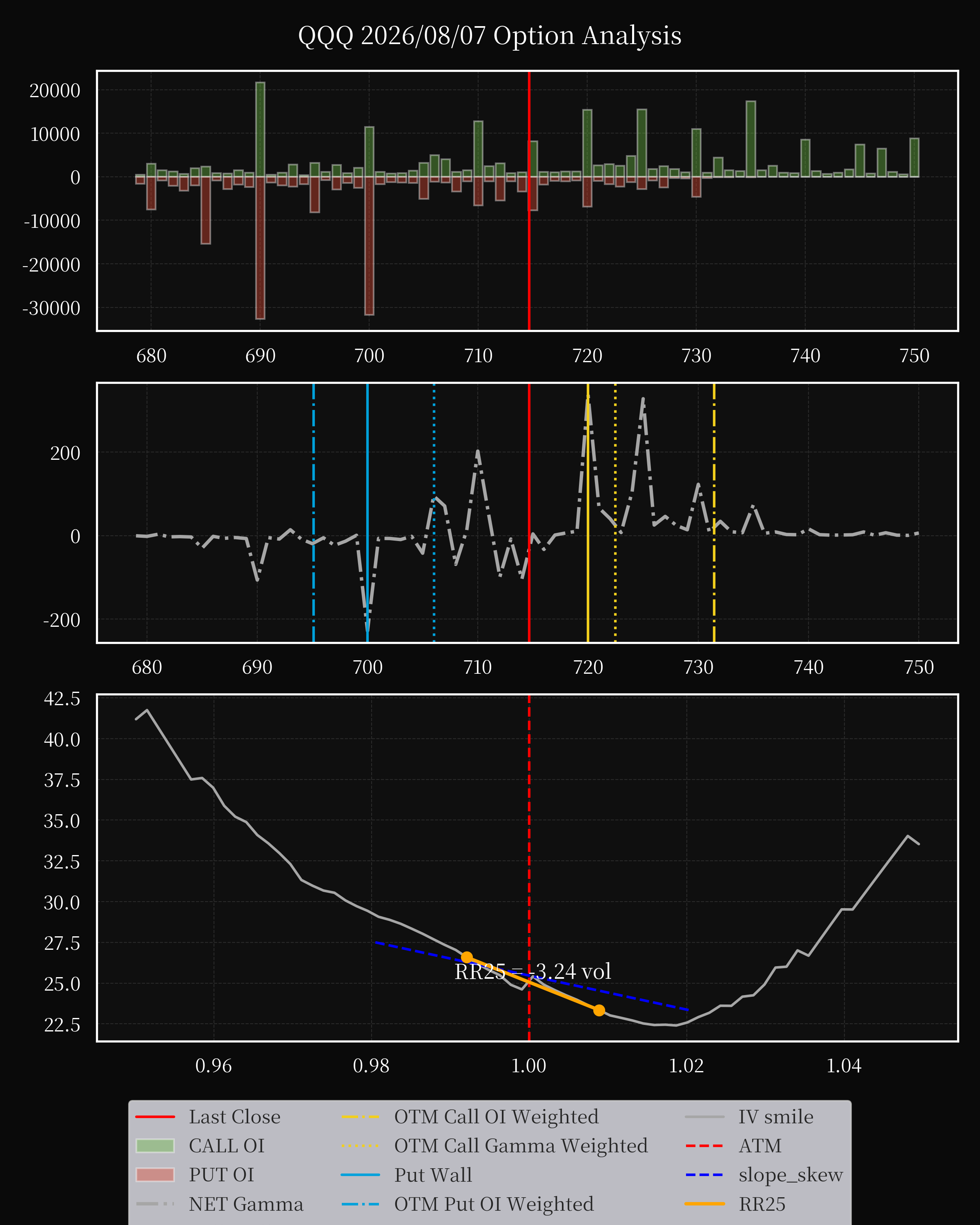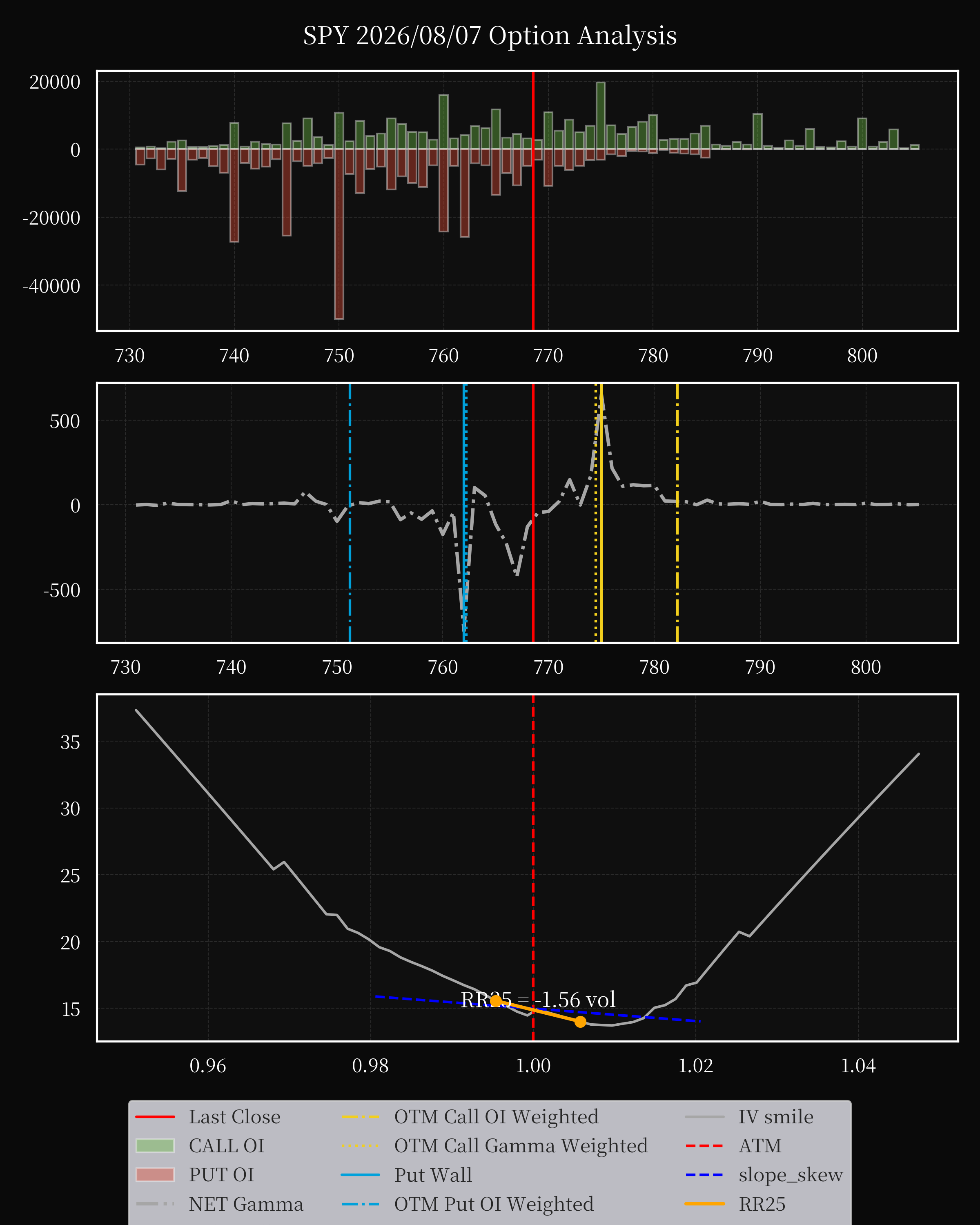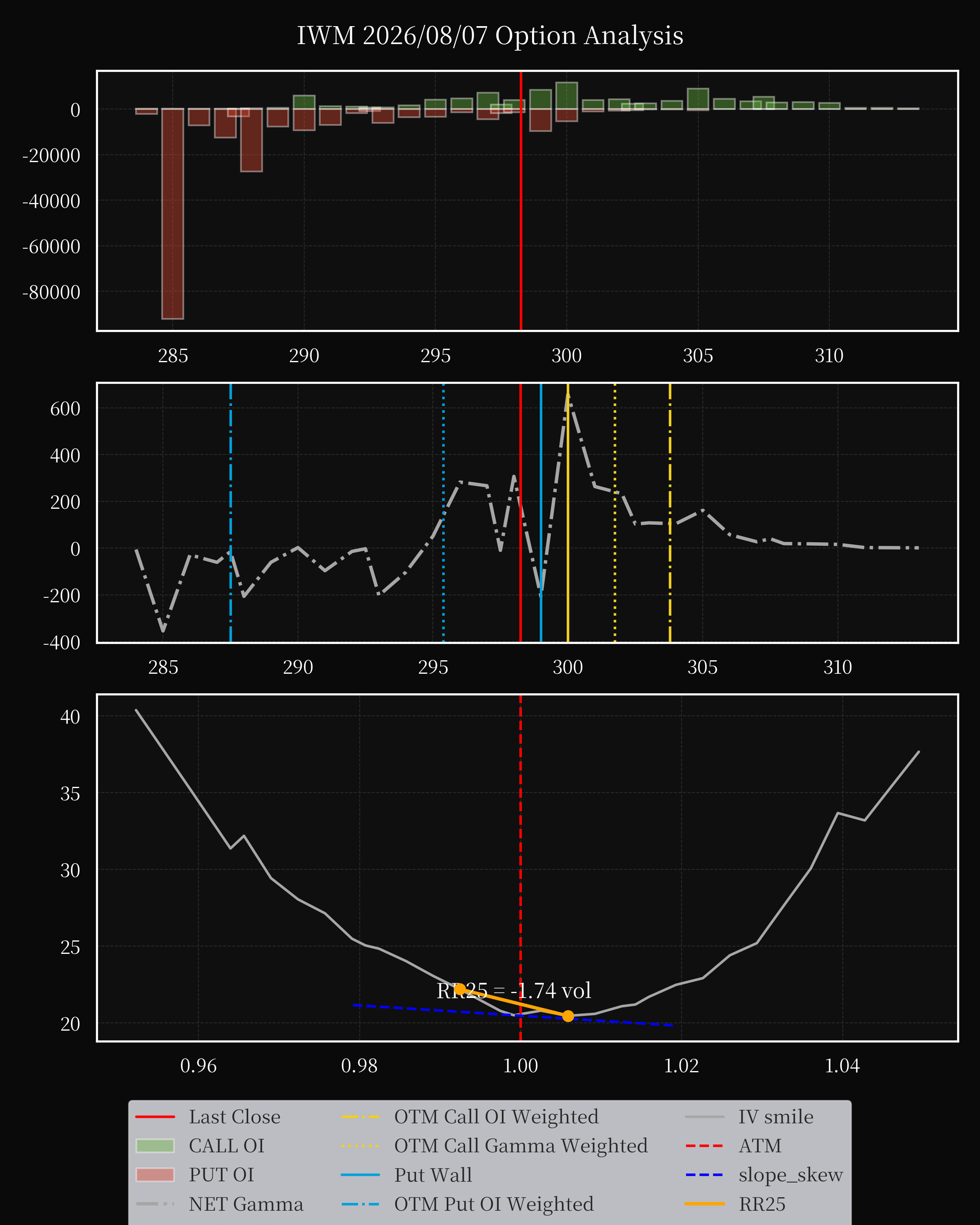
Overall
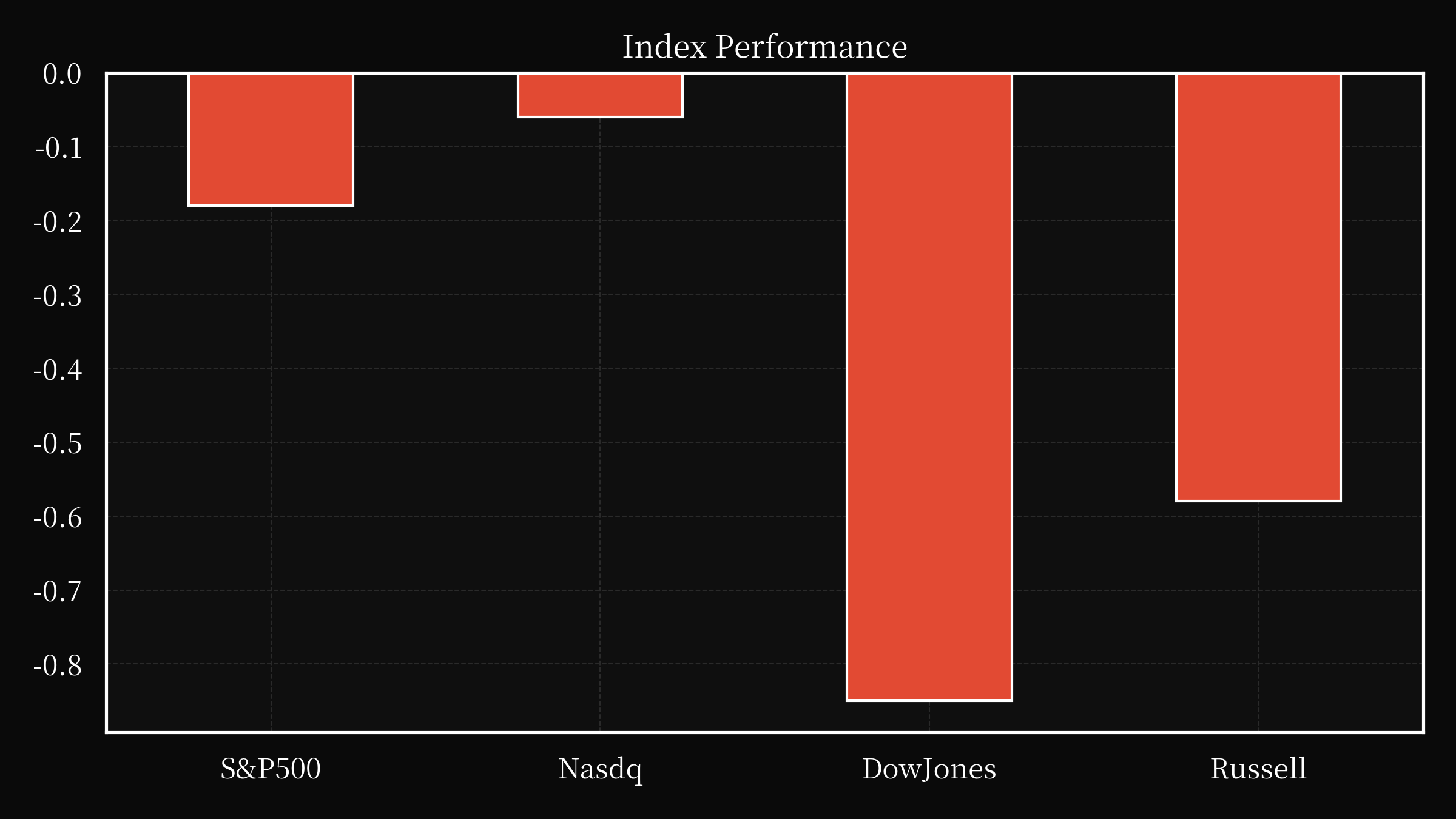
The U.S. equity market experienced a mixed session on Thursday, August 6, with divergent performance across sectors driven by earnings reports, geopolitical developments, and macroeconomic expectations. The Dow Jones Industrial Average ended a five-session winning streak, closing down 0.9 percent, while the S&P 500 slipped 0.2 percent and the Nasdaq declined 0.1 percent, reflecting cautious sentiment amid ongoing uncertainty. This underperformance was amplified by a sharp decline in industrial stocks, which weighed on the Dow’s broader index, and by the broader market’s sensitivity to potential disruptions in global energy flows.
Energy markets saw significant volatility, with Brent crude oil prices rising nearly 4 percent following reports that Iran had agreed with Oman on a shipping route through the Strait of Hormuz. The narrowing of this critical waterway, a vital artery for global oil exports, raised concerns about supply constraints and geopolitical tensions. Analysts noted that while the immediate risk of a full-scale conflict remained low, the potential for prolonged disruptions could exacerbate energy price swings, particularly given the recent volatility in oil markets. The interplay between geopolitical risks and energy pricing underscored the market’s reliance on stable international relations to maintain investor confidence.
The technology sector exhibited stark contrasts, with some firms outperforming amid positive earnings and strategic shifts, while others faced pressure from operational challenges and shifting demand dynamics. Western Digital, a key player in data storage solutions, saw its stock decline 13 percent after reporting results that fell slightly short of analyst expectations, despite its forward guidance aligning with forecasts. Conversely, Alphabet’s issuance of $25 billion in investment-grade bonds highlighted renewed investor appetite for AI-related debt, signaling a potential recovery in tech sector financing. The disparity in performance reflected broader industry trends, including the impact of AI adoption on capital allocation, supply chain constraints, and the evolving cost structures of high-growth tech firms.
Earnings reports from several companies further shaped market expectations, with mixed results influencing sector-specific valuations. Honeywell Aerospace’s first standalone quarterly results, which included a cut to its annual outlook due to supply chain pressures, led to a 23 percent drop in its stock, highlighting the vulnerability of industrial and aerospace firms to macroeconomic headwinds. Meanwhile, companies like Joby Aviation and DraftKings demonstrated resilience in niche markets, with Joby’s stock rising on air-taxi sales growth and DraftKings reporting a surprise loss tied to operational challenges in its sports betting division. These outcomes underscored the sectoral divergence within equities, as investors recalibrated their assessments of growth potential and risk exposure.
The broader economic backdrop, including upcoming U.S. employment data and Federal Reserve commentary, added layers of complexity to market positioning. The Federal Reserve’s role in shaping monetary policy remained a focal point, with speculation about potential rate adjustments influencing investor behavior. Additionally, the interplay between inflationary pressures, wage growth, and consumer spending patterns continued to inform expectations for corporate earnings and sectoral performance. As markets navigated these multifaceted challenges, the emphasis on fundamental analysis and risk management became increasingly critical for navigating the evolving landscape.
In parallel, the financial services sector faced scrutiny over regulatory developments and competitive pressures. The collapse of a crypto-related investment firm and the subsequent liquidity crisis in certain digital asset platforms raised questions about the stability of emerging markets. Meanwhile, traditional financial institutions, including banks and insurance companies, grappled with shifting regulatory environments and the need to adapt to technological disruptions. These dynamics highlighted the interconnectedness of financial markets and the importance of monitoring both macroeconomic indicators and micro-level developments.
The convergence of geopolitical risks, energy market fluctuations, and sector-specific earnings outcomes created a complex environment for investors. While some segments, such as AI-driven technology and energy infrastructure, showed signs of resilience, others, including industrial manufacturing and aerospace, faced headwinds from supply chain disruptions and demand uncertainty. The market’s response to these factors reflected a nuanced balance between optimism about innovation and caution regarding systemic risks, reinforcing the need for a disciplined approach to portfolio management in an era of heightened volatility.
Watch List
TXG
10x Genomics reported a strong second quarter of 2026, driven largely by exceptional customer demand for its Atera platform and bolstered by strategic acquisitions and collaborations. The company’s gross margin increased to 74%, primarily due to reduced manufacturing costs and tariff refunds, though this was partially offset by a decline in non-recurring revenue. Despite a 39% increase in operating expenses – largely due to the absence of a prior year settlement gain – 10x Genomics achieved a net loss of $17.9 million, a significant contrast to the $34.5 million net income recorded in the prior year. The company highlighted its expanding research partnerships with institutions like Cleveland Clinic and Lausanne University Hospital, focusing on diagnostic applications of its single cell and spatial technologies within cancer care. CEO Serge Saxonov expressed optimism regarding the company’s future, citing a strong operating foundation and positioning 10x Genomics to capitalize on emerging opportunities within the rapidly evolving field of multiomics. The acquisition of Proteintech Genomics further strengthens the company’s capabilities in protein detection, complementing its existing single-cell and spatial platforms. 10x Genomics continues to focus on its integrated research solutions, including instruments, consumables, and software, supporting breakthroughs in areas like oncology and immunology.
DJT
Trump Media & Technology Group Corp. has addressed a recent article published by the Financial Times on August 5, 2026, titled “Kevin McGurn, the executive turning Trump’s post into a media empire.” The article features quotes from the Company’s Interim Chief Executive Officer, Kevin McGurn, obtained during an interview. Importantly, Trump Media & Technology Group Corp. explicitly states that it does not endorse or adopt any other statements, characterizations, or conclusions presented within the article, clarifying that these represent solely the views of the Financial Times and its author. The company has provided a copy of the article as Exhibit 99.1 to this Form 8-K filing. Furthermore, the filing confirms that no offer or solicitation is being made in connection with this matter.
FRD
Friedman Industries, Incorporated reported a strong first quarter for fiscal 2027, demonstrating significant growth and improved financial performance. Sales volume reached approximately 206,000 tons, a 28% increase compared to the previous year, driven by organic growth at existing facilities and the successful integration of Century Metals following its acquisition in August 2025. Net earnings rose to $12.8 million, fueled by higher throughput, improved margins, and increased average selling prices. The company’s diversified operating platform, bolstered by the expanded capacity utilization and customer relationships, proved particularly effective. EBITDA also increased substantially to $19.3 million. The company’s flat-roll segment saw sales jump to $221.8 million, while the tubular segment increased sales to $18.2 million. Looking ahead, Friedman anticipates continued strong performance with comparable sales volumes and sequential margin improvements in the second quarter. The company’s robust balance sheet, combined with its disciplined commercial approach, positions it well to capitalize on growth opportunities and deliver value to its shareholders.
KGS
Kodiak Gas Services, Inc. (KGS) announced strong second-quarter 2026 financial results, exceeding expectations and raising its full-year 2026 adjusted EBITDA and discretionary cash flow guidance. The company reported segment revenues of $315.1 million, driven by a 7.4% increase in Compression Infrastructure revenue compared to the second quarter of 2025. Notably, the company achieved a 98.2% fleet utilization rate for Compression Infrastructure and 89.6% for Power Infrastructure, benefiting from the recent acquisition of Distributed Power Solutions, LLC (DPS). Net income attributable to common shareholders rose to $52.0 million, or $0.53 per diluted share, and adjusted net income reached $54.3 million, or $0.55 per adjusted diluted share. KGS also demonstrated robust cash flow, with record discretionary cash flow of $163.3 million, a 40.2% increase from the prior year, and $99.5 million in net cash provided by operating activities. The company increased its adjusted EBITDA guidance to a range of $830 million to $860 million and discretionary cash flow guidance to $570 million to $600 million. Furthermore, Kodiak secured a multi-year gas turbine order for 1 gigawatt of capacity and continues to advance commercial opportunities in its Power Infrastructure segment. Following the DPS acquisition, Kodiak reorganized its reportable segments to include Compression Infrastructure, Power Infrastructure, and Other Services. The company’s total debt outstanding was $2.8 billion, with significant liquidity. KGS also completed an underwritten public offering of 10.6 million shares, raising approximately $836.1 million. The company remains optimistic about the long-term outlook for its contract compression business and is focused on expanding its Power Infrastructure platform to meet growing energy demand.
KOP
Koppers Holdings Inc. reported a challenging second quarter in 2026, marked by a significant net loss of $(147.5) million, largely due to $215.8 million in impairment, restructuring, and plant closure costs. Despite this, the company achieved record year-to-date operating and free cash flow, totaling $96.3 million and $72.6 million respectively, allowing for $47.4 million in shareholder returns. Sales increased to $520.1 million, up from $504.8 million in the prior year, driven by volume gains in competitive markets and acquisitions, particularly in utility poles. However, operating cash flow decreased slightly to $71.0 million compared to $77.1 million previously, influenced by pension funding and working capital adjustments. The company’s Railroad and Utility Products and Services (RUPS) segment experienced decreased sales due to maintenance-of-way activity and price decreases, partially offset by increased utility pole volumes. Management highlighted ongoing efforts to optimize the RUPS network and accelerate the closure of the Stickney, Illinois, Carbon Materials and Chemicals (CMC) plant. Looking ahead, Koppers anticipates a persistent challenging margin environment and expects profitability to remain at the lower end of previous guidance, with headwinds from input costs and freight expenses. Despite these challenges, the company remains confident in its strategy and transformation initiatives, prioritizing debt reduction and shareholder returns while continuing to focus on disciplined value creation.
HASI
HA Sustainable Infrastructure Capital, Inc. (HASI) announced strong second-quarter 2026 results, reporting 24% year-over-year adjusted earnings per share (EPS) growth through the first half of the year and exceeding 15% adjusted return on equity (ROE). GAAP EPS reached $0.92, up from $0.74 in Q2 2025, while adjusted EPS climbed to $0.75, compared to $0.60 in the prior year. Key financial highlights include $9.9 million in GAAP-based net investment income and $107 million in adjusted recurring net investment income, representing a 26% year-over-year increase. Managed assets grew by 20% to $17.6 billion, driven by $1.4 billion in balance sheet/CCH1 transactions with portfolio investments yielding over 11%, and the issuance of $1 billion in unsecured notes at a 5.6% effective cost. HASI increased its revolving credit facility capacity by $425 million to $2.25 billion. Notably, the company raised its guidance for 2028 adjusted EPS to a range of $3.55 to $3.65, up from $3.50 to $3.60, and maintained its guidance for adjusted ROE at least 17.0%. President and CEO Jeffrey A. stated that heightened demand for electric generation and programmatic partnerships fueled investment activity. CFO Chuck Melko highlighted improved debt spreads and minimal ATM share issuances, supporting continued growth in adjusted ROE. GAAP net income was $129 million, compared to $98 million in Q2 2025, driven by $121 million in revenue and $179 million in income from equity method investments. Adjusted earnings reached $99 million, reflecting a $22 million increase in adjusted recurring net investment income and an $8 million increase in gain on sale of assets. The company’s portfolio continues to demonstrate strong performance with a 9.2% portfolio yield and a CarbonCount score of 0.23 metric tons per $1,000 invested.
AMRZ
Amrize reported a strong second quarter of 2026, demonstrating robust revenue growth of 8.6% fueled by increased demand for mega-projects in data centers, energy, and manufacturing. Organic growth reached 6.7% driven by strategic market positioning and strong pricing. Net income rose by 14.4% to $476 million, alongside a 5.8% increase in Adjusted EBITDA to $986 million, reflecting continued customer demand and operational efficiencies. Diluted earnings per share and adjusted diluted earnings per share also increased by 14.7% and 8.6% respectively. The company returned $502 million to shareholders through a combination of share repurchases and dividends, highlighting its commitment to value creation. Amrize increased its full-year revenue guidance due to sustained demand, while acknowledging headwinds from rising oil prices impacting costs. Strategic investments in capital expenditure, totaling $241 million, focused on expanding production and improving customer service, including acquisitions of PB Materials and Rapid Redi-Mix. With a net debt of $5.275 billion and a net leverage ratio of 1.7x, Amrize remains well-positioned for long-term growth, leveraging its operational strengths and strategic acquisitions to capitalize on growing market opportunities.
CGON
CG Oncology, Inc. recently released its financial results for the quarter ended June 30, 2026, as announced in a press release attached as Exhibit 99.1. This filing, primarily focused on reporting financial outcomes, is presented alongside the company’s prospectus and Amendment No. 1 to the prospectus, both of which provide crucial context and detail regarding the company’s financial standing. Legal opinion from Cooley LLP concerning the validity of additional shares is also included as Exhibit 5.1. It’s important to note that this filing is considered incomplete without the simultaneous delivery and utilization of the full prospectus, Amendment No. 1, and any subsequent amendments or supplements to those documents. Investors are advised to review these accompanying documents for a comprehensive understanding of CG Oncology’s financial performance and the details surrounding the issuance of additional shares.
CON
Concentra Group Holdings Parent, Inc. (CON), the nation’s largest provider of occupational health services, announced strong second-quarter 2026 results, reporting revenue growth of 10.0%, net income attributable to the company growth of 46.5%, and Adjusted EBITDA growth of 22.5%. The company also raised its full-year 2026 guidance, now projecting revenue between $2.325 billion and $2.375 billion, Adjusted EBITDA between $485 million and $495 million, a net leverage ratio below 3.0x, and Free Cash Flow between $220 million and $240 million. A key element of this transition involves the appointment of Matt DiCanio as president and CEO, effective November 1, 2026, with Keith Newton transitioning to executive chairman. Robert Ortenzio will remain on the Board as well. The company highlighted its momentum driven by strategic priorities and a committed team, reflecting a strong performance and a focus on delivering high-quality care and creating value. Concentra’s second-quarter 2026 performance showcased significant growth, including a 2.6% increase in patient visits, a 4.6% rise in revenue per visit, and a substantial increase in cash flow from operations. The company’s balance sheet reflects a healthy position with $158.0 million in cash and a net leverage ratio of 2.99x. Looking ahead, Concentra is confident in its ability to continue its growth trajectory and achieve its financial targets for 2026, underpinned by its experienced leadership team and a steadfast commitment to its mission.
IAN Financial Vision is an AI-native financial research platform combining proprietary knowledge graphs, quantitative valuation models, and large language models to generate point-in-time investment research. All reports are produced using a structured research workflow with human review prior to publication..