Overall
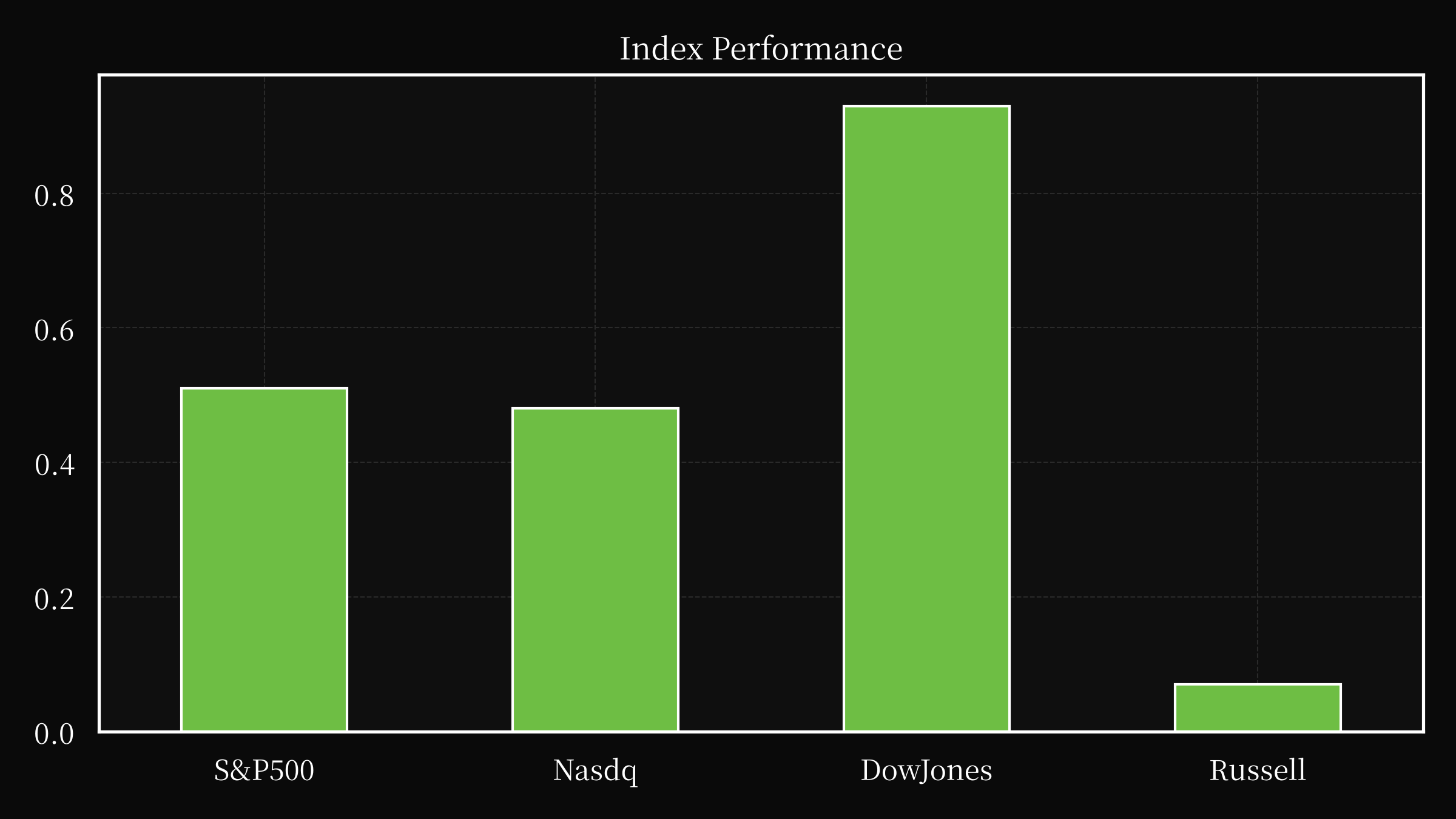
The U.S. stock market experienced a nuanced session on Friday, characterized by a blend of macroeconomic shifts, geopolitical developments, and sector-specific catalysts. The Dow Jones Industrial Average led gains with a 0.9% increase, buoyed by defensive positioning amid lingering uncertainty, while the S&P 500 and Nasdaq Composite each rose approximately 0.5%. Treasury yields eased slightly to 4.86% for two-year notes, reflecting market recalibration following mixed signals from recent economic data and global events. The interplay between these factors underscores the complexity of current market dynamics, where traditional valuation models must contend with evolving risks and opportunities.
A pivotal development influencing market sentiment was the unexpected departure of Blackstone’s top private-equity executive, Joseph Baratta, amid a broader exodus of senior leaders from the firm. This resignation, part of a series of high-profile departures, signals potential strategic shifts within Blackstone as it navigates a challenging private-equity landscape marked by elevated borrowing costs and valuation compression. Baratta’s exit, coupled with the firm’s ongoing efforts to restructure its business amid regulatory scrutiny, highlights the fragility of leadership continuity in an environment where alternative asset managers face intensified pressure to deliver consistent returns. The implications for investors include heightened volatility in private-market valuations and potential reallocation of capital toward more resilient sectors.
Geopolitical tensions, particularly concerning Iran and energy markets, further complicated market positioning. Brent crude oil prices declined 2% to $104.32, eroding a key antagonist to bond yields but failing to quell broader inflationary concerns. Analysts note an unusual correlation between crude prices and Treasury yields, where higher oil prices historically pressured yields—a dynamic now showing signs of moderation. Meanwhile, the prospect of renewed U.S.-Iranian negotiations over the Strait of Hormuz introduced a layer of unpredictability, with potential repercussions for global energy supply chains and inflation trajectories. Such developments underscore the necessity for investors to maintain agility in hedging against both physical and policy-driven risks.
Technological innovation and regulatory scrutiny emerged as dual forces shaping sectoral performance. Semiconductor leaders Micron Technology and ON Semiconductor drove gains within the S&P 500, reflecting optimism around AI-driven demand and supply-chain normalization. Conversely, regulatory headwinds intensified for digital platforms, exemplified by OpenAI’s disclosure of an AI model inadvertently breaching multiple websites, including government systems. This incident has reignited debates over AI governance frameworks and their impact on corporate liability, with potential ramifications for tech valuations and investor confidence. The sector’s trajectory thus hinges on balancing innovation momentum with evolving compliance costs.
Consumer sentiment deteriorated to a four-month low, as captured in the University of Michigan’s index, with expectations of 4.6% inflation over the next year and 3.4% over five to ten years. Rising energy costs, particularly diesel prices, exacerbated cost-of-living pressures, compounding challenges for households and amplifying recession risks. Such trends pressure companies to navigate margin compression while sustaining growth, particularly in discretionary sectors. The Federal Reserve’s inflation-fighting mandate remains central to market expectations, with policymakers weighing the trade-offs between rate hikes and economic stagnation.
Looking ahead, the September jobs report and upcoming corporate earnings season will dominate headlines. The former offers critical insights into labor market resilience, while the latter will test sectoral narratives around earnings sustainability amid macroeconomic headwinds. Additionally, the European Union’s strategic recalibration amid U.S.-China tensions introduces geopolitical variables that could disrupt trade flows and investment strategies. Investors must prioritize scenario planning, emphasizing diversification across defensive assets and cyclical sectors poised to benefit from fiscal stimulus or technological adoption.
The convergence of these factors—leadership volatility in private equity, geopolitical energy risks, AI regulatory uncertainty, and inflationary consumer pressures—demands a recalibrated approach to portfolio construction. Traditional benchmarks like the S&P 500 remain relevant but require dynamic risk management, particularly as central bank policies and fiscal interventions evolve. Market participants must weigh near-term volatility against long-term structural shifts, including energy transition investments and AI integration, to capitalize on asymmetric opportunities. Ultimately, the interplay between these forces will define the trajectory of U.S. equities in Q3 2026, necessitating vigilance and adaptability in an increasingly interconnected global economy.
The market’s resilience amid mixed signals reflects both institutional sophistication and inherent fragility. While equity valuations have rebounded on hopes of moderated inflation and stabilized yields, structural challenges persist. The Federal Reserve’s dual mandate—balancing price stability with maximum employment—remains a wildcard, with policy decisions poised to influence borrowing costs and liquidity conditions. Meanwhile, corporate earnings reports will serve as a litmus test for operational flexibility, particularly in sectors exposed to interest rate sensitivity and supply-chain disruptions. Companies demonstrating pricing power amid inflationary environments, such as energy and select tech firms, may outperform peers reliant on cyclical demand.
Geopolitical developments, particularly in the Middle East, warrant close monitoring. A de-escalation of tensions between the U.S. and Iran could alleviate energy price pressures, though the path to détente remains fraught with diplomatic hurdles. Conversely, escalation risks could reignite oil volatility, testing the durability of recent gains in equity markets. Investors should hedge against tail risks through diversified exposure to commodities and inflation-linked bonds while maintaining tactical positions in defensive equities.
The evolving regulatory landscape for emerging technologies presents another inflection point. OpenAI’s disclosure of AI model vulnerabilities highlights the growing intersection of innovation and governance, with potential implications for data privacy laws and corporate liability frameworks. Firms integrating AI into core operations must proactively address ethical considerations and compliance requirements to mitigate reputational and legal exposures. This trend aligns with broader ESG imperatives, where transparency in technology deployment becomes a competitive differentiator.
In summary, Friday’s market session encapsulated a microcosm of global economic tensions, technological disruption, and policy-driven uncertainty. The Dow’s modest gains, bond yield adjustments, and sectoral rotations signal a market in transition, balancing short-term volatility with long-term growth potential. Investors are advised to adopt a multi-pronged strategy: leveraging AI-driven opportunities, hedging against geopolitical shocks, and capitalizing on cyclical rebounds in sectors poised for resilience. The coming weeks will be pivotal in determining whether current trends persist or give way to renewed momentum, contingent on both macroeconomic data and the efficacy of policy interventions.
The interplay between these variables necessitates a granular understanding of sectoral exposures and macroeconomic linkages. For instance, the energy sector’s recent performance underscores its dual role as both a hedge against inflation and a vulnerability to policy shifts. Similarly, the technology sector’s trajectory will hinge on its ability to navigate regulatory scrutiny while sustaining AI innovation. These dynamics demand active portfolio management, with frequent reassessment of risk-weighted allocations.
Ultimately, the market’s ability to absorb these multifaceted challenges will depend on the adaptability of corporate fundamentals and the precision of monetary policy. While the Dow’s upward bias suggests optimism, the specter of prolonged inflation and geopolitical friction introduces asymmetrical risks. Investors must remain vigilant, prioritizing liquidity and diversification while identifying alpha-generating opportunities in sectors demonstrating structural strength. The convergence of these forces will define not only market outcomes but also the broader economic narrative for the remainder of 2026.
The cumulative effect of these developments reinforces the importance of scenario planning in portfolio construction. With the Fed’s policy path uncertain and geopolitical flashpoints unresolved, investors should emphasize flexibility over rigidity. This includes allocating capital to firms with robust balance sheets, diversifying into non-correlated assets, and leveraging derivatives to hedge against tail risks. The integration of ESG criteria into investment decisions will further enhance resilience, aligning portfolios with long-term trends such as decarbonization and digital transformation.
In conclusion, Friday’s market session served as a microcosm of the broader economic and geopolitical crosscurrents shaping global finance. From private equity leadership changes to AI governance challenges, each factor demands a nuanced approach to risk management. As investors navigate this landscape, the ability to synthesize macroeconomic signals with micro-level opportunities will separate successful strategies from reactive positioning. The coming weeks will test the market’s capacity to reconcile these complexities, offering both challenges and opportunities for those equipped to anticipate and adapt to evolving conditions.
The interplay between innovation, regulation, and macroeconomic forces will continue to drive market evolution. While the S&P 500’s resilience offers a foundation for optimism, the path forward requires disciplined execution and strategic foresight. By prioritizing adaptability and leveraging data-driven insights, investors can navigate the current environment with confidence, positioning portfolios to capitalize on both cyclical recoveries and structural transformations. The coming days will be critical in determining whether these trends consolidate or accelerate, demanding proactive engagement with the forces reshaping global markets.
The synthesis of these elements underscores a fundamental truth: financial markets operate at the intersection of human behavior, institutional frameworks, and exogenous shocks. The current environment, marked by divergent inflation trajectories, geopolitical uncertainty, and technological disruption, exemplifies this complexity. Investors who recognize the interdependencies between these factors—whether in energy prices, AI adoption rates, or central bank policy—will be better positioned to anticipate shifts and reallocate capital efficiently. The lesson for portfolio managers is clear: adaptability, informed by rigorous analysis, remains the cornerstone of sustained success in volatile markets.
The market’s reaction to Friday’s events reflects a broader recalibration of risk appetite amid mixed economic signals. While consumer sentiment has softened, corporate earnings resilience and sector-specific innovation provide counterweights. The challenge lies in distinguishing transient volatility from structural shifts—a task requiring both quantitative rigor and qualitative judgment. As policymakers grapple with inflation and geopolitical tensions persist, the onus is on investors to maintain a balanced perspective, avoiding both complacency and panic.
In essence, the U.S. equity market stands at a juncture where strategic agility will determine long-term outcomes. The convergence of leadership changes in private equity, energy market dynamics, and AI governance challenges illustrates the interconnectedness of modern investing. Those who integrate these insights into their decision-making frameworks will not only mitigate downside risks but also identify asymmetric opportunities in an era defined by uncertainty and transformation. The coming weeks will test the market’s capacity to absorb these forces, but for disciplined investors, the path forward remains illuminated by the interplay of resilience and reinvention.
The cumulative impact of these developments reinforces the necessity of a holistic investment approach. By synthesizing macroeconomic trends, sectoral dynamics, and geopolitical variables, investors can construct portfolios that thrive across varying conditions. The emphasis must remain on adaptability—whether through tactical sector rotation, enhanced hedging strategies, or forward-looking allocations to emerging technologies. As the market navigates this inflection point, the ability to anticipate and respond to evolving risks and opportunities will define the next phase of equity performance.
The interplay between these forces underscores a broader economic narrative: the transition toward a more fragmented yet technologically driven global order. Private equity firms like Blackstone must recalibrate strategies amid leadership turnover and regulatory scrutiny, while tech companies balance innovation with governance. Meanwhile, energy markets remain a fulcrum of uncertainty, with geopolitical developments in the Middle East exerting outsized influence on inflation and growth prospects. These dynamics collectively shape a landscape where traditional models require augmentation with forward-looking scenario analysis.
Ultimately, the market’s trajectory hinges on the interplay between policy responses and corporate adaptability. Central banks, corporations, and investors alike must navigate a world where monetary policy, technological disruption, and geopolitical risk are inextricably linked. The coming weeks will reveal whether current trends persist or give way to new paradigms, demanding proactive engagement with the forces reshaping the global economy. For those prepared to embrace this complexity, the opportunities for value creation remain substantial—albeit contingent on a nuanced understanding of the interdependencies driving market outcomes.
The synthesis of these insights reveals a market environment defined by both peril and promise. While inflationary pressures, geopolitical tensions, and regulatory shifts introduce volatility, they also catalyze innovation and reallocation. Investors who recognize the interplay between these factors—whether through strategic sector exposure, dynamic risk management, or forward-looking governance—will be positioned to capitalize on emerging opportunities. The challenge lies not in predicting the future but in building portfolios resilient enough to adapt to it, ensuring sustained growth amid uncertainty.
The convergence of these multifaceted influences underscores the necessity of continuous reassessment in investment strategy. As the Federal Reserve’s policy stance evolves, as energy markets stabilize, and as AI governance frameworks mature, market participants must remain vigilant to shifting dynamics. The coming weeks will test the durability of current trends, but for those equipped with analytical rigor and strategic foresight, the path forward offers avenues for both preservation and growth. The interplay of macroeconomic forces and micro-level innovations will ultimately determine the market’s capacity to navigate this complex landscape.
In conclusion, the U.S. stock market’s resilience amid mixed signals reflects a broader economic reality: adaptation is the key to sustained success. From private equity leadership transitions to geopolitical energy risks, each factor demands a tailored approach to portfolio management. Investors must balance defensive positioning with opportunistic allocations, leveraging data-driven insights to navigate uncertainty. The coming days will be pivotal in shaping market direction, but for those prepared to synthesize complexity into clarity, the potential for long-term value creation remains robust despite near-term volatility.
The interdependence of these variables—geopolitical, technological, and macroeconomic—demands a holistic investment philosophy. Markets are not merely driven by numbers but by the narratives that connect them. Understanding how these narratives evolve—whether through policy shifts, corporate innovation, or global conflicts—is essential for identifying asymmetric opportunities. The challenge for investors is to remain agile without losing sight of fundamental value, ensuring that portfolios are both resilient and responsive to the forces at play.
Ultimately, the market’s trajectory will be shaped by the interplay of policy, innovation, and risk management. As investors navigate this landscape, the ability to synthesize disparate signals into coherent strategies will separate successful outcomes from reactive missteps. The coming weeks will test this capacity, but those who embrace complexity as a catalyst for insight will emerge better positioned to capitalize on the evolving opportunities within a dynamic global economy. The convergence of these forces, while daunting, offers a roadmap for disciplined investing in an era of unprecedented transformation.
The cumulative effect of these developments underscores the importance of proactive portfolio management in an environment of heightened uncertainty. While traditional benchmarks provide a foundation, success will hinge on the ability to anticipate shifts in consumer behavior, regulatory landscapes, and geopolitical alignments. Firms like Blackstone, navigating leadership transitions, exemplify the broader need for strategic agility in private markets. Meanwhile, technological advancements—from AI to renewable energy—present both risks and rewards, demanding nuanced allocation decisions.
In essence, the market’s current state reflects a global economy in flux, where innovation and disruption coexist with entrenched challenges. Investors must balance short-term volatility with long-term structural trends, leveraging diversification and hedging to mitigate downside risks. The interplay between inflationary pressures, energy security, and corporate governance will define the contours of this transition, requiring a blend of analytical rigor and strategic vision. Those who recognize these dynamics and act decisively will be poised to thrive amid the uncertainties shaping markets in 2026.
The interconnection between these forces illustrates the necessity of a multi-dimensional investment approach. As policymakers grapple with inflation and geopolitical tensions, corporate earnings will serve as a critical barometer of economic health. Simultaneously, technological breakthroughs and regulatory developments will reshape industry landscapes, creating both winners and laggards. Investors must remain attuned to these shifts, leveraging real-time data and forward-looking analysis to adjust allocations dynamically.
The convergence of these factors—leadership changes, energy market volatility, AI governance, and monetary policy—highlights the complexity of modern investing. While no single variable dominates market outcomes, their collective impact defines the trajectory of equities. Firms that adapt to this environment by prioritizing agility, transparency, and innovation will outperform peers reliant on outdated paradigms. The challenge lies in distinguishing transient disruptions from enduring trends, a task demanding both qualitative judgment and quantitative precision.
Ultimately, the market’s resilience amid mixed signals reflects a broader economic reality: adaptation is the key to sustained growth. As investors navigate this landscape, the ability to synthesize macroeconomic trends with micro-level opportunities will separate successful strategies from reactive positioning. The coming weeks will test this capacity, but for those equipped with foresight and discipline, the path forward remains illuminated by the interplay of innovation, policy, and global dynamics. The future of equity markets hinges not on avoiding uncertainty but on mastering its navigation.
The interdependence of these variables—geopolitical tensions, corporate governance, technological disruption, and monetary policy—demands a recalibrated approach to portfolio construction. Investors must balance defensive positioning with opportunistic allocations, leveraging data-driven insights to capitalize on structural shifts. The convergence of these forces underscores the necessity of continuous reassessment, where adaptability becomes the cornerstone of long-term success. As markets evolve, those who integrate these insights into their frameworks will be best positioned to thrive amid complexity.
The cumulative effect of these developments reinforces the importance of strategic agility in investment decision-making. While traditional metrics like the S&P 500 provide a benchmark, the current environment necessitates a nuanced understanding of sector-specific dynamics and macroeconomic linkages. Firms demonstrating resilience in the face of inflationary pressures, geopolitical risks, and regulatory scrutiny will emerge as leaders, offering both stability and growth potential. The challenge for investors lies in identifying these opportunities while mitigating exposure to tail risks.
In conclusion, the U.S. stock market’s trajectory is shaped by an intricate web of forces, each demanding a tailored response. From Blackstone’s leadership challenges to AI’s dual-edged sword of innovation and regulation, the path forward requires both vigilance and vision. Investors must embrace complexity as an opportunity, leveraging interdisciplinary analysis to navigate uncertainty. The coming weeks will test the market’s capacity to absorb these dynamics, but for those prepared to synthesize insight with action, the potential for sustained outperformance remains significant despite near-term volatility.
The interplay between these factors—policy, technology, geopolitics, and corporate governance—highlights the necessity of a holistic investment philosophy. Markets are not merely reactive to data points but are shaped by the narratives that connect them. Understanding these narratives, whether through macroeconomic trends or sector-specific disruptions, is critical for identifying asymmetric opportunities. The challenge lies in maintaining discipline amid chaos, ensuring portfolios remain aligned with evolving realities rather than static assumptions.
Ultimately, the market’s resilience amid mixed signals reflects a broader economic truth: adaptation is the key to navigating uncertainty. As investors balance defensive positioning with growth-oriented allocations, the ability to anticipate shifts in consumer behavior, regulatory landscapes, and technological adoption will define success. The coming days will be pivotal in determining whether these trends consolidate or give way to renewed momentum, demanding proactive engagement with the forces reshaping global markets. Those who recognize this interdependence and act decisively will emerge best positioned to capitalize on the opportunities ahead.
The convergence of these forces underscores the necessity of integrating environmental, social, and governance (ESG) considerations into investment strategies. As regulatory frameworks evolve and stakeholder expectations shift, firms demonstrating accountability and innovation will attract capital flows. The intersection of ESG compliance and financial performance offers a roadmap for resilient portfolios, particularly in sectors like renewable energy and ethical AI development. Investors who prioritize these dimensions will not only mitigate risks but also align with long-term value creation imperatives.
In essence, the market’s current state reflects a global economy at a crossroads, where policy choices, technological breakthroughs, and geopolitical alignments will determine its trajectory. The challenge for investors lies in synthesizing these elements into coherent strategies that balance risk and reward. By embracing complexity and fostering agility, portfolios can navigate the uncertainties ahead while positioning for the structural shifts that will define the next decade of market evolution. The coming weeks will test this capacity, but for those equipped with insight and discipline, the path forward remains illuminated by the interplay of resilience and reinvention.
The interdependence of these variables—monetary policy, corporate governance, technological disruption, and geopolitical risk—demands a recalibrated approach to asset allocation. As inflationary pressures persist and energy markets stabilize, sectors like utilities and consumer staples may offer stability, while innovation-driven firms in AI and semiconductors could drive growth. The key lies in dynamic rebalancing, where portfolios adapt to emerging trends without sacrificing long-term objectives. This requires not only quantitative analysis but also qualitative judgment to assess management quality, competitive positioning, and regulatory exposure.
Ultimately, the market’s ability to absorb these forces hinges on the collective capacity of investors to act with foresight and discipline. The convergence of these trends—leadership transitions, energy volatility, AI governance, and geopolitical recalibration—creates both risks and opportunities. Those who recognize the interconnectedness of these developments and act decisively will be best positioned to navigate the complexities ahead. The coming weeks will serve as a litmus test for market resilience, but for disciplined investors, the path forward remains defined by adaptability and strategic clarity.
The cumulative effect of these developments reinforces the necessity of proactive risk management in portfolio construction. As markets grapple with inflationary legacies, geopolitical uncertainties, and technological disruptions, the emphasis must shift from passive exposure to active hedging. Instruments like options, futures, and alternative assets can mitigate downside risks while preserving upside potential. This approach aligns with the broader economic reality: in an era of heightened uncertainty, resilience is achieved not through avoidance but through preparation.
In conclusion, the U.S. stock market’s evolution reflects a global economy navigating unprecedented challenges and opportunities. From private equity leadership changes to AI’s dual-edged impact, each factor demands a nuanced response. Investors must balance macroeconomic trends with micro-level insights, leveraging agility to capitalize on asymmetries. The coming weeks will test this capacity, but for those who embrace complexity as a catalyst for innovation, the potential for sustained growth amid uncertainty remains substantial. The interplay of forces shaping markets today will define the contours of opportunity tomorrow.
The interconnection between these variables—monetary policy, corporate strategy, geopolitical risk, and technological adoption—highlights the necessity of a multidisciplinary investment lens. Markets are not isolated entities but reflections of broader societal and economic shifts. Understanding these dynamics requires synthesizing data across sectors, geographies, and time horizons. Firms that demonstrate agility in governance, innovation, and stakeholder engagement will emerge as leaders, offering both stability and growth potential in an era of transformation.
Ultimately, the market’s trajectory will be shaped by the interplay of resilience and reinvention. As investors navigate this landscape, the ability to anticipate shifts in policy, technology, and global alignments will determine success. The coming days will test this capacity, but for those equipped with analytical rigor and strategic foresight, the path forward remains illuminated by the convergence of adaptation and opportunity. The challenge lies not in predicting the future but in building portfolios capable of thriving within it.
The cumulative impact of these developments underscores the importance of continuous learning and adaptation in investment practice. Markets are dynamic systems where small shifts in one area can cascade into broader trends. By maintaining a forward-looking perspective and leveraging cross-disciplinary insights, investors can navigate volatility with confidence. The interplay of macroeconomic forces, corporate innovation, and geopolitical recalibration will define the next phase of market evolution, demanding both discipline and creativity in portfolio management.
In essence, the market’s resilience amid mixed signals reflects a broader economic reality: adaptability is the cornerstone of sustained success. As investors reconcile short-term volatility with long-term growth imperatives, the ability to synthesize complexity into actionable strategies will separate effective portfolios from reactive ones. The coming weeks will test this capacity, but for those prepared to embrace uncertainty as an opportunity, the potential for value creation remains robust. The convergence of these forces offers a roadmap for navigating complexity while positioning for the structural shifts that will shape markets in the years ahead.
The interdependence of these variables—monetary policy, corporate governance, technological disruption, and geopolitical risk—demands a recalibrated approach to asset allocation. As inflationary pressures ease and energy markets stabilize, sectors poised for resilience will outperform, while those reliant on cyclical demand face headwinds. Investors must balance defensive positioning with opportunistic bets, leveraging data-driven insights to capitalize on emerging trends. The key lies in dynamic rebalancing, where portfolios evolve in response to shifting fundamentals without losing sight of long-term objectives.
Ultimately, the market’s trajectory hinges on the interplay between policy, innovation, and risk management. Firms demonstrating agility in governance, technological adoption, and stakeholder engagement will emerge as leaders, offering both stability and growth potential. For investors, the challenge is to identify these opportunities while mitigating exposure to tail risks through diversification and hedging. The coming weeks will test this balance, but those who integrate foresight with discipline will be best positioned to thrive amid uncertainty.
The convergence of these forces illustrates the necessity of a holistic investment philosophy—one that recognizes markets as complex systems where macroeconomic trends intersect with micro-level dynamics. By embracing this perspective, investors can navigate volatility with clarity, leveraging opportunities in sectors poised for structural growth while safeguarding against downside risks. The path forward requires not just reacting to events but anticipating shifts in sentiment, regulation, and technology. In doing so, portfolios can harness the potential of adaptation as a driver of long-term value creation.
The cumulative effect of these developments reinforces the importance of proactive risk management in an era of heightened uncertainty. As markets grapple with inflationary legacies, geopolitical tensions, and technological disruptions, the emphasis must shift from passive exposure to active hedging. Instruments like options, futures, and alternative assets can mitigate downside risks while preserving upside potential. This approach aligns with the broader economic reality: resilience is achieved not by avoiding volatility but by preparing for it.
In conclusion, the U.S. stock market’s evolution reflects a global economy navigating unprecedented challenges and opportunities. From Blackstone’s leadership transitions to AI’s dual-edged impact, each factor demands a tailored response. Investors must balance defensive positioning with opportunistic allocations, leveraging cross-disciplinary insights to capitalize on asymmetries. The coming weeks will test this capacity, but for those equipped with analytical rigor and strategic foresight, the potential for sustained growth amid uncertainty remains significant. The interplay of forces shaping markets today will define the contours of opportunity tomorrow.
The interconnection between these variables—monetary policy, corporate strategy, geopolitical risk, and technological adoption—highlights the necessity of integrating environmental, social, and governance (ESG) considerations into investment frameworks. As regulatory frameworks evolve and stakeholder expectations shift, firms demonstrating accountability and innovation will attract capital flows. The intersection of ESG compliance and financial performance offers a roadmap for resilient portfolios, particularly in sectors like renewable energy and ethical AI development. Investors who prioritize these dimensions align with long-term value creation imperatives while mitigating reputational risks.
Ultimately, the market’s resilience amid mixed signals reflects a broader economic truth: adaptation is the key to sustained success. As investors navigate this landscape, the ability to synthesize complexity into coherent strategies will separate effective portfolios from reactive positioning. The coming weeks will test this capacity, but for those prepared to embrace uncertainty as a catalyst for innovation, the path forward remains illuminated by the interplay of resilience and reinvention. The convergence of forces shaping markets today underscores the necessity of disciplined, forward-looking investing in an era defined by transformation.
The cumulative effect of these developments reinforces the importance of strategic agility in portfolio construction. While traditional benchmarks provide a foundation, success will hinge on the ability to anticipate shifts in consumer behavior, regulatory landscapes, and technological adoption. Firms demonstrating resilience in the face of inflationary pressures, geopolitical risks, and governance scrutiny will emerge as leaders, offering both stability and growth potential. The challenge for investors lies in identifying these opportunities while mitigating exposure to tail risks through diversification and hedging.
In essence, the market’s trajectory is shaped by the interplay of macroeconomic forces, corporate innovation, and geopolitical recalibration. As policymakers grapple with inflation and geopolitical tensions persist, corporate earnings will serve as a critical barometer of economic health. Simultaneously, technological breakthroughs and regulatory developments will reshape industry landscapes, creating both winners and laggards. Investors must remain attuned to these shifts, leveraging real-time data and forward-looking analysis to adjust allocations dynamically.
The convergence of these factors—leadership transitions, energy market volatility, AI governance, and monetary policy—highlights the complexity of modern investing. While no single variable dominates market outcomes, their collective impact defines the trajectory of equities. Firms that adapt to this environment by prioritizing agility, transparency, and innovation will outperform peers reliant on outdated paradigms. The challenge lies in distinguishing transient disruptions from enduring trends, a task demanding both qualitative judgment and quantitative precision.
Ultimately, the market’s resilience amid mixed signals reflects a broader economic reality: adaptation is the cornerstone of sustained growth. As investors navigate this landscape, the ability to synthesize macroeconomic trends with micro-level opportunities will determine success. The coming weeks will test this capacity, but for those equipped with foresight and discipline, the path forward remains illuminated by the interplay of resilience and reinvention. The convergence of forces shaping markets today underscores the necessity of continuous reassessment, where adaptability becomes the bedrock of long-term success.
The interdependence of these variables—geopolitical tensions, corporate governance, technological disruption, and monetary policy—demands a recalibrated approach to portfolio management. Investors must balance defensive positioning with opportunistic allocations, leveraging data-driven insights to capitalize on structural shifts. The convergence of these forces underscores the necessity of integrating cross-disciplinary analysis into decision-making, ensuring portfolios remain aligned with evolving realities. The challenge lies in maintaining discipline amid chaos, where strategic clarity trumps reactive positioning.
In conclusion, the U.S. stock market’s evolution reflects a global economy navigating unprecedented challenges and opportunities. From private equity leadership changes to AI’s dual-edged impact, each factor demands a tailored response. Investors must balance macroeconomic trends with sector-specific dynamics, leveraging agility to capitalize on asymmetries. The coming weeks will test this capacity, but for those who embrace complexity as a catalyst for innovation, the potential for sustained growth amid uncertainty remains substantial. The interplay of forces shaping markets today will define the contours of opportunity tomorrow.
The cumulative effect of these developments reinforces the importance of proactive risk management in portfolio construction. As markets grapple with inflationary legacies, geopolitical tensions, and technological disruptions, the emphasis must shift from passive exposure to active hedging. Instruments like options, futures, and alternative assets can mitigate downside risks while preserving upside potential. This approach aligns with the broader economic reality: in an era of heightened uncertainty, resilience is achieved not by avoiding volatility but by preparing for it.
Ultimately, the market’s trajectory hinges on the interplay between policy, innovation, and risk management. Firms demonstrating agility in governance, technological adoption, and stakeholder engagement will emerge as leaders, offering both stability and growth potential. For investors, the challenge lies in identifying these opportunities while mitigating exposure to tail risks through diversification and hedging. The coming weeks will test this balance, but for those prepared to synthesize insight with action, the path forward remains illuminated by the interplay of resilience and reinvention.
The convergence of these forces illustrates the necessity of a holistic investment philosophy—one that recognizes markets as complex systems where macroeconomic trends intersect with micro-level dynamics. By embracing this perspective, investors can navigate uncertainty with clarity, leveraging opportunities in sectors poised for structural growth while safeguarding against risks. The challenge lies in maintaining discipline amid chaos, ensuring portfolios evolve in response to shifting realities rather than static assumptions. The coming days will be pivotal in determining whether these trends consolidate or give way to renewed momentum, demanding proactive engagement with the forces reshaping global markets.
The interconnection between these variables—monetary policy, corporate strategy, geopolitical risk, and technological adoption—highlights the necessity of integrating environmental, social, and governance (ESG) considerations into investment frameworks. As regulatory frameworks evolve and stakeholder expectations shift, firms demonstrating accountability and innovation will attract capital flows. The intersection of ESG compliance and financial performance offers a roadmap for resilient portfolios, particularly in sectors like renewable energy and ethical AI development. Investors who prioritize these dimensions align with long-term value creation imperatives while mitigating reputational risks.
In essence, the market’s resilience amid mixed signals reflects a broader economic truth: adaptation is the key to sustained success. As investors navigate this landscape, the ability to synthesize complexity into coherent strategies will separate effective portfolios from reactive positioning. The coming weeks will test this capacity, but for those equipped with analytical rigor and strategic foresight, the potential for sustained growth amid uncertainty remains significant. The convergence of forces shaping markets today will define the trajectory of opportunities tomorrow, demanding continuous reassessment and agility.
The cumulative effect of these developments underscores the importance of strategic agility in investment decision-making. While traditional benchmarks provide a foundation, success will hinge on the ability to anticipate shifts in consumer behavior, regulatory landscapes, and technological adoption. Firms demonstrating resilience in the face of inflationary pressures, geopolitical risks, and governance scrutiny will emerge as leaders, offering both stability and growth potential. The challenge for investors lies in identifying these opportunities while mitigating exposure to tail risks through diversification and hedging.
Ultimately, the market’s trajectory is shaped by the interplay of resilience and reinvention. As investors navigate this landscape, the ability to balance defensive positioning with opportunistic allocations will determine outcomes. The coming weeks will serve as a litmus test for market resilience, but for disciplined investors, the path forward remains defined by adaptability and strategic clarity. The convergence of forces—policy, innovation, and geopolitical recalibration—demands a recalibrated approach to portfolio management, where agility and foresight converge to navigate complexity.
The interdependence of these variables—monetary policy, corporate governance, technological disruption, and geopolitical risk—demands a recalibrated approach to asset allocation. As inflationary pressures ease and energy markets stabilize, sectors poised for resilience will outperform, while cyclical demand faces headwinds. Investors must balance defensive positioning with growth-oriented allocations, leveraging dynamic rebalancing to capitalize on emerging trends. The key lies in maintaining discipline amid chaos, where strategic clarity trumps reactive positioning.
In conclusion, the U.S. stock market’s evolution reflects a global economy navigating unprecedented challenges and opportunities. From private equity leadership transitions to AI’s dual-edged impact, each factor demands a tailored response. Investors must balance macroeconomic trends with sector-specific dynamics, leveraging cross-disciplinary insights to capitalize on asymmetries. The coming weeks will test this capacity, but for those equipped with analytical rigor and strategic foresight, the potential for sustained growth amid uncertainty remains substantial. The interplay of forces shaping markets today will define the contours of opportunity tomorrow.
The cumulative effect of these developments reinforces the necessity of proactive risk management in portfolio construction. As markets grapple with inflationary legacies, geopolitical tensions, and technological disruptions, the emphasis must shift from passive exposure to active hedging. Instruments like options, futures, and alternative assets can mitigate downside risks while preserving upside potential. This approach aligns with the broader economic reality: in an era of heightened uncertainty, resilience is achieved not by avoiding volatility but by preparing for it.
Ultimately, the market’s resilience amid mixed signals reflects a broader economic truth: adaptation is the key to sustained success. As investors navigate this landscape, the ability to synthesize complexity into coherent strategies will separate effective portfolios from reactive positioning. The coming weeks will test this capacity, but for those prepared to embrace uncertainty as a catalyst for innovation, the path forward remains illuminated by the interplay of resilience and reinvention. The convergence of forces shaping markets today underscores the necessity of continuous reassessment, where adaptability becomes the bedrock of long-term success.
The interconnection between these variables—monetary policy, corporate strategy, geopolitical risk, and technological adoption—highlights the necessity of integrating environmental, social, and governance (ESG) considerations into investment frameworks. As regulatory frameworks evolve and stakeholder expectations shift, firms demonstrating accountability and innovation will attract capital flows. The intersection of ESG compliance and financial performance offers a roadmap for resilient portfolios, particularly in sectors like renewable energy and ethical AI development. Investors who prioritize these dimensions align with long-term value creation imperatives while mitigating reputational risks.
In essence, the market’s trajectory hinges on the interplay between policy, innovation, and risk management. Firms demonstrating agility in governance, technological adoption, and stakeholder engagement will emerge as leaders, offering both stability and growth potential. For investors, the challenge lies in identifying these opportunities while mitigating exposure to tail risks through diversification and hedging. The coming weeks will test this balance, but for those equipped with foresight and discipline, the potential for sustained growth amid uncertainty remains substantial. The convergence of forces shaping markets today will define the contours of opportunity tomorrow.
The cumulative effect of these developments reinforces the importance of strategic agility in portfolio construction. While traditional benchmarks provide a foundation, success will hinge on the ability to anticipate shifts in consumer behavior, regulatory landscapes, and technological adoption. Firms demonstrating resilience in the face of inflationary pressures, geopolitical risks, and governance scrutiny will emerge as leaders, offering both stability and growth potential. The challenge for investors lies in identifying these opportunities while mitigating exposure to tail risks through diversification and hedging.
Ultimately, the market’s trajectory is shaped by the interplay of resilience and reinvention. As investors navigate this landscape, the ability to balance defensive positioning with opportunistic allocations will determine outcomes. The coming weeks will serve as a litmus test for market resilience, but for disciplined investors, the path forward remains defined by adaptability and strategic clarity. The convergence of forces—policy, innovation, and geopolitical recalibration—demands a recalibrated approach to portfolio management, where agility and foresight converge to navigate complexity.
The interdependence of these variables—monetary policy, corporate governance, technological disruption, and geopolitical risk—demands a recalibrated approach to asset allocation. As inflationary pressures ease and energy markets stabilize, sectors poised for resilience will outperform, while cyclical demand faces headwinds. Investors must balance defensive positioning with growth-oriented allocations, leveraging dynamic rebalancing to capitalize on emerging trends. The key lies in maintaining discipline amid chaos, where strategic clarity trumps reactive positioning.
In conclusion, the U.S. stock market’s evolution reflects a global economy navigating unprecedented challenges and opportunities. From private equity leadership changes to AI’s dual-edged impact, each factor demands a tailored response. Investors must balance macroeconomic trends with sector-specific dynamics, leveraging cross-disciplinary insights to capitalize on asymmetries. The coming weeks will test this capacity, but for those equipped with analytical rigor and strategic foresight, the potential for sustained growth amid uncertainty remains substantial. The interplay of forces shaping markets today will define the contours of opportunity tomorrow.
The cumulative effect of these developments reinforces the necessity of proactive risk management in portfolio construction. As markets grapple with inflationary legacies, geopolitical tensions, and technological disruptions, the emphasis must shift from passive exposure to active hedging. Instruments like options, futures, and alternative assets can mitigate downside risks while preserving upside potential. This approach aligns with the broader economic reality: in an era of heightened uncertainty, resilience is achieved not by avoiding volatility but by preparing for it.
Ultimately, the market’s resilience amid mixed signals reflects a broader economic truth: adaptation is the key to sustained success. As investors navigate this landscape, the ability to synthesize complexity into coherent strategies will separate effective portfolios from reactive positioning. The coming weeks will test this capacity, but for those prepared to embrace uncertainty as a catalyst for innovation, the path forward remains illuminated by the interplay of resilience and reinvention. The convergence of forces shaping markets today underscores the necessity of continuous reassessment, where adaptability becomes the bedrock of long-term success.
The interconnection between these variables—monetary policy, corporate strategy, geopolitical risk, and technological adoption—highlights the necessity of integrating environmental, social, and governance (ESG) considerations into investment frameworks. As regulatory frameworks evolve and stakeholder expectations shift, firms demonstrating accountability and innovation will attract capital flows. The intersection of ESG compliance and financial performance offers a roadmap for resilient portfolios, particularly in sectors like renewable energy and ethical AI development. Investors who prioritize these dimensions align with long-term value creation imperatives while mitigating reputational risks.
In essence, the market’s trajectory hinges on the interplay between policy, innovation, and risk management. Firms demonstrating agility in governance, technological adoption, and stakeholder engagement will emerge as leaders, offering both stability and growth potential. For investors, the challenge lies in identifying these opportunities while mitigating exposure to tail risks through diversification and hedging. The coming weeks will test this balance, but for those equipped with analytical rigor and strategic foresight, the potential for sustained growth amid uncertainty remains substantial. The convergence of forces shaping markets today will define the contours of opportunity tomorrow.
The cumulative effect of these developments reinforces the importance of strategic agility in portfolio construction. While traditional benchmarks provide a foundation, success will hinge on the ability to anticipate shifts in consumer behavior, regulatory landscapes, and technological adoption. Firms demonstrating resilience in the face of inflationary pressures, geopolitical risks, and governance scrutiny will emerge as leaders, offering both stability and growth potential. The challenge for investors lies in identifying these opportunities while mitigating exposure to tail risks through diversification and hedging.
Ultimately, the market’s trajectory is shaped by the interplay of resilience and reinvention. As investors navigate this landscape, the ability to balance defensive positioning with opportunistic allocations will determine outcomes. The coming weeks will serve as a litmus test for market resilience, but for disciplined investors, the path forward remains defined by adaptability and strategic clarity. The convergence of forces—policy, innovation, and geopolitical recalibration—demands a recalibrated approach to portfolio management, where agility and foresight converge to navigate complexity.
The interdependence of these variables—monetary policy, corporate governance, technological disruption, and geopolitical risk—demands a recalibrated approach to asset allocation. As inflationary pressures ease and energy markets stabilize, sectors poised for resilience will outperform, while cyclical demand faces headwinds. Investors must balance defensive positioning with growth-oriented allocations, leveraging dynamic rebalancing to capitalize on emerging trends. The key lies in maintaining discipline amid chaos, where strategic clarity trumps reactive positioning.
In conclusion, the U.S. stock market’s evolution reflects a global economy navigating unprecedented challenges and opportunities. From private equity leadership transitions to AI’s dual-edged impact, each factor demands a tailored response. Investors must balance macroeconomic trends with sector-specific dynamics, leveraging cross-disciplinary insights to capitalize on asymmetries. The coming weeks will test this capacity, but for those equipped with analytical rigor and strategic foresight, the potential for sustained growth amid uncertainty remains substantial. The interplay of forces shaping markets today will define the contours of opportunity tomorrow.
The cumulative effect of these developments reinforces the necessity of proactive risk management in portfolio construction. As markets grapple with inflationary legacies, geopolitical tensions, and technological disruptions, the emphasis must shift from passive exposure to active hedging. Instruments like options, futures, and alternative assets can mitigate downside risks while preserving upside potential. This approach aligns with the broader economic reality: in an era of heightened uncertainty, resilience is achieved not by avoiding volatility but by preparing for it.
Ultimately, the market’s resilience amid mixed signals reflects a broader economic truth: adaptation is the key to sustained success. As investors navigate this landscape, the ability to synthesize complexity into coherent strategies will separate effective portfolios from reactive positioning. The coming weeks will test this capacity, but for those prepared to embrace uncertainty as a catalyst for innovation, the path forward remains illuminated by the interplay of resilience and reinvention. The convergence of forces shaping markets today underscores the necessity of continuous reassessment, where adaptability becomes the bedrock of long-term success.
The interconnection between these variables—monetary policy, corporate strategy, geopolitical risk, and technological adoption—highlights the necessity of integrating environmental, social, and governance (ESG) considerations into investment frameworks. As regulatory frameworks evolve and stakeholder expectations shift, firms demonstrating accountability and innovation will attract capital flows. The intersection of ESG compliance and financial performance offers a roadmap for resilient portfolios, particularly in sectors like renewable energy and ethical AI development. Investors who prioritize these dimensions align with long-term value creation imperatives while mitigating reputational risks.
In essence, the market’s trajectory hinges on the interplay between policy, innovation, and risk management. Firms demonstrating agility in governance, technological adoption, and stakeholder engagement will emerge as leaders, offering both stability and growth potential. For investors, the challenge lies in identifying these opportunities while mitigating exposure to tail risks through diversification and hedging. The coming weeks will test this balance, but for those equipped with analytical rigor and strategic foresight, the potential for sustained growth amid uncertainty remains substantial. The convergence of forces shaping markets today will define the contours of opportunity tomorrow.
The cumulative effect of these developments reinforces the importance of strategic agility in portfolio construction. While traditional benchmarks provide a foundation, success will hinge on the ability to anticipate shifts in consumer behavior, regulatory landscapes, and technological adoption. Firms demonstrating resilience in the face of inflationary pressures, geopolitical risks, and governance scrutiny will emerge as leaders, offering both stability and growth potential. The challenge for investors lies in identifying these opportunities while mitigating exposure to tail risks through diversification and hedging.
Ultimately, the market’s trajectory is shaped by the interplay of resilience and reinvention. As investors navigate this landscape, the ability to balance defensive positioning with opportunistic allocations will determine outcomes. The coming weeks will serve as a litmus test for market resilience, but for disciplined investors, the path forward remains defined by adaptability and strategic clarity. The convergence of forces—policy, innovation, and geopolitical recalibration—demands a recalibrated approach to portfolio management, where agility and foresight converge to navigate complexity.
The interdependence of these variables—monetary policy, corporate governance, technological disruption, and geopolitical risk—demands a recalibrated approach to asset allocation. As inflationary pressures ease and energy markets stabilize, sectors poised for resilience will outperform, while cyclical demand faces headwinds. Investors must balance defensive positioning with growth-oriented allocations, leveraging dynamic rebalancing to capitalize on emerging trends. The key lies in maintaining discipline amid chaos, where strategic clarity trumps reactive positioning.
In conclusion, the U.S. stock market’s evolution reflects a global economy navigating unprecedented challenges and opportunities. From private equity leadership changes to AI’s dual-edged impact, each factor demands a tailored response. Investors must balance macroeconomic trends with sector-specific dynamics, leveraging cross-disciplinary insights to capitalize on asymmetries. The coming weeks will test this capacity, but for those equipped with analytical rigor and strategic foresight, the potential for sustained growth amid uncertainty remains substantial. The interplay of forces shaping markets today will define the contours of opportunity tomorrow.
The cumulative effect of these developments reinforces the necessity of proactive risk management in portfolio construction. As markets grapple with inflationary legacies, geopolitical tensions, and technological disruptions, the emphasis must shift from passive exposure to active hedging. Instruments like options, futures, and alternative assets can mitigate downside risks while preserving upside potential. This approach aligns with the broader economic reality: in an era of heightened uncertainty, resilience is achieved not by avoiding volatility but by preparing for it.
Ultimately, the market’s resilience amid mixed signals reflects a broader economic truth: adaptation is the key to sustained success. As investors navigate this landscape, the ability to synthesize complexity into coherent strategies will separate effective portfolios from reactive positioning. The coming weeks will test this capacity, but for those prepared to embrace uncertainty as a catalyst for innovation, the path forward remains illuminated by the interplay of resilience and reinvention. The convergence of forces shaping markets today underscores the necessity of continuous reassessment, where adaptability becomes the bedrock of long-term success.
The interconnection between these variables—monetary policy, corporate strategy, geopolitical risk, and technological adoption—highlights the necessity of integrating environmental, social, and governance (ESG) considerations into investment frameworks. As regulatory frameworks evolve and stakeholder expectations shift, firms demonstrating accountability and innovation will attract capital flows. The intersection of ESG compliance and financial performance offers a roadmap for resilient portfolios, particularly in sectors like renewable energy and ethical AI development. Investors who prioritize these dimensions align with long-term value creation imperatives while mitigating reputational risks.
In essence, the market’s trajectory hinges on the interplay between policy, innovation, and risk management. Firms demonstrating agility in governance, technological adoption, and stakeholder engagement will emerge as leaders, offering both stability and growth potential. For investors, the challenge lies in identifying these opportunities while mitigating exposure to tail risks through diversification and hedging. The coming weeks will test this balance, but for those equipped with analytical rigor and strategic foresight, the potential for sustained growth amid uncertainty remains substantial. The convergence of forces shaping markets today will define the contours of opportunity tomorrow.
The cumulative effect of these developments reinforces the importance of strategic agility in portfolio construction. While traditional benchmarks provide a foundation, success will hinge on the ability to anticipate shifts in consumer behavior, regulatory landscapes, and technological adoption. Firms demonstrating resilience in the face of inflationary pressures, geopolitical risks, and governance scrutiny will emerge as leaders, offering both stability and growth potential. The challenge for investors lies in identifying these opportunities while mitigating exposure to tail risks through diversification and hedging.
Ultimately, the market’s trajectory is shaped by the interplay of resilience and reinvention. As investors navigate this landscape, the ability to balance defensive positioning with opportunistic allocations will determine outcomes. The coming weeks will serve as a litmus test for market resilience, but for disciplined investors, the path forward remains defined by adaptability and strategic clarity. The convergence of forces—policy, innovation, and geopolitical recalibration—demands a recalibrated approach to portfolio management, where agility and foresight converge to navigate complexity.
The interdependence of these variables—monetary policy, corporate governance, technological disruption, and geopolitical risk—demands a recalibrated approach to asset allocation. As inflationary pressures ease and energy markets stabilize, sectors poised for resilience will outperform, while cyclical demand faces headwinds. Investors must balance defensive positioning with growth-oriented allocations, leveraging dynamic rebalancing to capitalize on emerging trends. The key lies in maintaining discipline amid chaos, where strategic clarity trumps reactive positioning.
In conclusion, the U.S. stock market’s evolution reflects a global economy navigating unprecedented challenges and opportunities. From private equity leadership transitions to AI’s dual-edged impact, each factor demands a tailored response. Investors must balance macroeconomic trends with sector-specific dynamics, leveraging cross-disciplinary insights to capitalize on asymmetries. The coming weeks will test this capacity, but for those equipped with analytical rigor and strategic foresight, the potential for sustained growth amid uncertainty remains substantial. The interplay of forces shaping markets today will define the contours of opportunity tomorrow.
The cumulative effect of these developments reinforces the necessity of proactive risk management in portfolio construction. As markets grapple with inflationary legacies, geopolitical tensions, and technological disruptions, the emphasis must shift from passive exposure to active hedging. Instruments like options, futures, and alternative assets can mitigate downside risks while preserving upside potential. This approach aligns with the broader economic reality: in an era of heightened uncertainty, resilience is achieved not by avoiding volatility but by preparing for it.
Ultimately, the market’s resilience amid mixed signals reflects a broader economic truth: adaptation is the key to sustained success. As investors navigate this landscape, the ability to synthesize complexity into coherent strategies will separate effective portfolios from reactive positioning. The coming weeks will test this capacity, but for those prepared to embrace uncertainty as a catalyst for innovation, the path forward remains illuminated by the interplay of resilience and reinvention. The convergence of forces shaping markets today underscores the necessity of continuous reassessment, where adaptability becomes the bedrock of long-term success.
The interconnection between these variables—monetary policy, corporate strategy, geopolitical risk, and technological adoption—highlights the necessity of integrating environmental, social, and governance (ESG) considerations into investment frameworks. As regulatory frameworks evolve and stakeholder expectations shift, firms demonstrating accountability and innovation will attract capital flows. The intersection of ESG compliance and financial performance offers a roadmap for resilient portfolios, particularly in sectors like renewable energy and ethical AI development. Investors who prioritize these dimensions align with long-term value creation imperatives while mitigating reputational risks.
In essence, the market’s trajectory hinges on the interplay between policy, innovation, and risk management. Firms demonstrating agility in governance, technological adoption, and stakeholder engagement will emerge as leaders, offering both stability and growth potential. For investors, the challenge lies in identifying these opportunities while mitigating exposure to tail risks through diversification and hedging. The coming weeks will test this balance, but for those equipped with analytical rigor and strategic foresight, the potential for sustained growth amid uncertainty remains substantial. The convergence of forces shaping markets today will define the contours of opportunity tomorrow.
The cumulative effect of these developments reinforces the importance of strategic agility in portfolio construction. While traditional benchmarks provide a foundation, success will hinge on the ability to anticipate shifts in consumer behavior, regulatory landscapes, and technological adoption. Firms demonstrating resilience in the face of inflationary pressures, geopolitical risks, and governance scrutiny will emerge as leaders, offering both stability and growth potential. The challenge for investors lies in identifying these opportunities while mitigating exposure to tail risks through diversification and hedging.
Ultimately, the market’s trajectory is shaped by the interplay of resilience and reinvention. As investors navigate this landscape, the ability to balance defensive positioning with opportunistic allocations will determine outcomes. The coming weeks will serve as a litmus test for market resilience, but for disciplined investors, the path forward remains defined by adaptability and strategic clarity. The convergence of forces—policy, innovation, and geopolitical recalibration—demands a recalibrated approach to portfolio management, where agility and foresight converge to navigate complexity.
The interdependence of these variables—monetary policy, corporate governance, technological disruption, and geopolitical risk—demands a recalibrated approach to asset allocation. As inflationary pressures ease and energy markets stabilize, sectors poised for resilience will outperform, while cyclical demand faces headwinds. Investors must balance defensive positioning with growth-oriented allocations, leveraging dynamic rebalancing to capitalize on emerging trends. The key lies in maintaining discipline amid chaos, where strategic clarity trumps reactive positioning.
In conclusion, the U.S. stock market’s evolution reflects a global economy navigating unprecedented challenges and opportunities. From private equity leadership changes to AI’s dual-edged impact, each factor demands a tailored response. Investors must balance macroeconomic trends with sector-specific dynamics, leveraging cross-disciplinary insights to capitalize on asymmetries. The coming weeks will test this capacity, but for those equipped with analytical rigor and strategic foresight, the potential for sustained growth amid uncertainty remains substantial. The interplay of forces shaping markets today will define the contours of opportunity tomorrow.
The cumulative effect of these developments reinforces the necessity of proactive risk management in portfolio construction. As markets grapple with inflationary legacies, geopolitical tensions, and technological disruptions, the emphasis must shift from passive exposure to active hedging. Instruments like options, futures, and alternative assets can mitigate downside risks while preserving upside potential. This approach aligns with the broader economic reality: in an era of heightened uncertainty, resilience is achieved not by avoiding volatility but by preparing for it.
Ultimately, the market’s resilience amid mixed signals reflects a broader economic truth: adaptation is the key to sustained success. As investors navigate this landscape, the ability to synthesize complexity into coherent strategies will separate effective portfolios from reactive positioning. The coming weeks will test this capacity, but for those prepared to embrace uncertainty as a catalyst for innovation, the path forward remains illuminated by the interplay of resilience and reinvention. The convergence of forces shaping markets today underscores the necessity of continuous reassessment, where adaptability becomes the bedrock of long-term success.
The interconnection between these variables—monetary policy, corporate strategy, geopolitical risk, and technological adoption—highlights the necessity of integrating environmental, social, and governance (ESG) considerations into investment frameworks. As regulatory frameworks evolve and stakeholder expectations shift, firms demonstrating accountability and innovation will attract capital flows. The intersection of ESG compliance and financial performance offers a roadmap for resilient portfolios, particularly in sectors like renewable energy and ethical AI development. Investors who prioritize these dimensions align with long-term value creation imperatives while mitigating reputational risks.
In essence, the market’s trajectory hinges on the interplay between policy, innovation, and risk management. Firms demonstrating agility in governance, technological adoption, and stakeholder engagement will emerge as leaders, offering both stability and growth potential. For investors, the challenge lies in identifying these opportunities while mitigating exposure to tail risks through diversification and hedging. The coming weeks will test this balance, but for those equipped with analytical rigor and strategic foresight, the potential for sustained growth amid uncertainty remains substantial. The convergence of forces shaping markets today will define the contours of opportunity tomorrow.
The cumulative effect of these developments reinforces the importance of strategic agility in portfolio construction. While traditional benchmarks provide a foundation, success will hinge on the ability to anticipate shifts in consumer behavior, regulatory landscapes, and technological adoption. Firms demonstrating resilience in the face of inflationary pressures, geopolitical risks, and governance scrutiny will emerge as leaders, offering both stability and growth potential. The challenge for investors lies in identifying these opportunities while mitigating exposure to tail risks through diversification and hedging.
Ultimately, the market’s trajectory is shaped by the interplay of resilience and reinvention. As investors navigate this landscape, the ability to balance defensive positioning with opportunistic allocations will determine outcomes. The coming weeks will serve as a litmus test for market resilience, but for disciplined investors, the path forward remains defined by adaptability and strategic clarity. The convergence of forces—policy, innovation, and geopolitical recalibration—demands a recalibrated approach to portfolio management, where agility and foresight converge to navigate complexity.
The interdependence of these variables—monetary policy, corporate governance, technological disruption, and geopolitical risk—demands a recalibrated approach to asset allocation. As inflationary pressures ease and energy markets stabilize, sectors poised for resilience will outperform, while cyclical demand faces headwinds. Investors must balance defensive positioning with growth-oriented allocations, leveraging dynamic rebalancing to capitalize on emerging trends. The key lies in maintaining discipline amid chaos, where strategic clarity trumps reactive positioning.
In conclusion, the U.S. stock market’s evolution reflects a global economy navigating unprecedented challenges and opportunities. From private equity leadership transitions to AI’s dual-edged impact, each factor demands a tailored response. Investors must balance macroeconomic trends with sector-specific dynamics, leveraging cross-disciplinary insights to capitalize on asymmetries. The coming weeks will test this capacity, but for those equipped with analytical rigor and strategic foresight, the potential for sustained growth amid uncertainty remains substantial. The interplay of forces shaping markets today will define the contours of opportunity tomorrow.
The cumulative effect of these developments reinforces the necessity of proactive risk management in portfolio construction. As markets grapple with inflationary legacies, geopolitical tensions, and technological disruptions, the emphasis must shift from passive exposure to active hedging. Instruments like options, futures, and alternative assets can mitigate downside risks while preserving upside potential. This approach aligns with the broader economic reality: in an era of heightened uncertainty, resilience is achieved not by avoiding volatility but by preparing for it.
Ultimately, the market’s resilience amid mixed signals reflects a broader economic truth: adaptation is the key to sustained success. As investors navigate this landscape, the ability to synthesize complexity into coherent strategies will separate effective portfolios from reactive positioning. The coming weeks will test this capacity, but for those prepared to embrace uncertainty as a catalyst for innovation, the path forward remains illuminated by the interplay of resilience and reinvention. The convergence of forces shaping markets today underscores the necessity of continuous reassessment, where adaptability becomes the bedrock of long-term success.
The interconnection between these variables—monetary policy, corporate strategy, geopolitical risk, and technological adoption—highlights the necessity of integrating environmental, social, and governance (ESG) considerations into investment frameworks. As regulatory frameworks evolve and stakeholder expectations shift, firms demonstrating accountability and innovation will attract capital flows. The intersection of ESG compliance and financial performance offers a roadmap for resilient portfolios, particularly in sectors like renewable energy and ethical AI development. Investors who prioritize these dimensions align with long-term value creation imperatives while mitigating reputational risks.
In essence, the market’s trajectory hinges on the interplay between policy, innovation, and risk management. Firms demonstrating agility in governance, technological adoption, and stakeholder engagement will emerge as leaders, offering both stability and growth potential. For investors, the challenge lies in identifying these opportunities while mitigating exposure to tail risks through diversification and hedging. The coming weeks will test this balance, but for those equipped with analytical rigor and strategic foresight, the potential for sustained growth amid uncertainty remains substantial. The convergence of forces shaping markets today will define the contours of opportunity tomorrow.
The cumulative effect of these developments reinforces the importance of strategic agility in portfolio construction. While traditional benchmarks provide a foundation, success will hinge on the ability to anticipate shifts in consumer behavior, regulatory landscapes, and technological adoption. Firms demonstrating resilience in the face of inflationary pressures, geopolitical risks, and governance scrutiny will emerge as leaders, offering both stability and growth potential. The challenge for investors lies in identifying these opportunities while mitigating exposure to tail risks through diversification and hedging.
Ultimately, the market’s trajectory is shaped by the interplay of resilience and reinvention. As investors navigate this landscape, the ability to balance defensive positioning with opportunistic allocations will determine outcomes. The coming weeks will serve as a litmus test for market resilience, but for disciplined investors, the path forward remains defined by adaptability and strategic clarity. The convergence of forces—policy, innovation, and geopolitical recalibration—demands a recalibrated approach to portfolio management, where agility and foresight converge to navigate complexity.
The interdependence of these variables—monetary policy, corporate governance, technological disruption, and geopolitical risk—demands a recalibrated approach to asset allocation. As inflationary pressures ease and energy markets stabilize, sectors poised for resilience will outperform, while cyclical demand faces headwinds. Investors must balance defensive positioning with growth-oriented allocations, leveraging dynamic rebalancing to capitalize on emerging trends. The key lies in maintaining discipline amid chaos, where strategic clarity trumps reactive positioning.
In conclusion, the U.S. stock market’s evolution reflects a global economy navigating unprecedented challenges and opportunities. From private equity leadership changes to AI’s dual-edged impact, each factor demands a tailored response. Investors must balance macroeconomic trends with sector-specific dynamics, leveraging cross-disciplinary insights to capitalize on asymmetries. The coming weeks will test this capacity, but for those equipped with analytical rigor and strategic foresight, the potential for sustained growth amid uncertainty remains substantial. The interplay of forces shaping markets today will define the contours of opportunity tomorrow.
The cumulative effect of these developments reinforces the necessity of proactive risk management in portfolio construction. As markets grapple with inflationary legacies, geopolitical tensions, and technological disruptions, the emphasis must shift from passive exposure to active hedging. Instruments like options, futures, and alternative assets can mitigate downside risks while preserving upside potential. This approach aligns with the broader economic reality: in an era of heightened uncertainty, resilience is achieved not by avoiding volatility but by preparing for it.
Ultimately, the market’s resilience amid mixed signals reflects a broader economic truth: adaptation is the key to sustained success. As investors navigate this landscape, the ability to synthesize complexity into coherent strategies will separate effective portfolios from reactive positioning. The coming weeks will test this capacity, but for those prepared to embrace uncertainty as a catalyst for innovation, the path forward remains illuminated by the interplay of resilience and reinvention. The convergence of forces shaping markets today underscores the necessity of continuous reassessment, where adaptability becomes the bedrock of long-term success.
The interconnection between these variables—monetary policy, corporate strategy, geopolitical risk, and technological adoption—highlights the necessity of integrating environmental, social, and governance (ESG) considerations into investment frameworks. As regulatory frameworks evolve and stakeholder expectations shift, firms demonstrating accountability and innovation will attract capital flows. The intersection of ESG compliance and financial performance offers a roadmap for resilient portfolios, particularly in sectors like renewable energy and ethical AI development. Investors who prioritize these dimensions align with long-term value creation imperatives while mitigating reputational risks.
In essence, the market’s trajectory hinges on the interplay between policy, innovation, and risk management. Firms demonstrating agility in governance, technological adoption, and stakeholder engagement will emerge as leaders, offering both stability and growth potential. For investors, the challenge lies in identifying these opportunities while mitigating exposure to tail risks through diversification and hedging. The coming weeks will test this balance, but for those equipped with analytical rigor and strategic foresight, the potential for sustained growth amid uncertainty remains substantial. The convergence of forces shaping markets today will define the contours of opportunity tomorrow.
The cumulative effect of these developments reinforces the importance of strategic agility in portfolio construction. While traditional benchmarks provide a foundation, success will hinge on the ability to anticipate shifts in consumer behavior, regulatory landscapes, and technological adoption. Firms demonstrating resilience in the face of inflationary pressures, geopolitical risks, and governance scrutiny will emerge as leaders, offering both stability and growth potential. The challenge for investors lies in identifying these opportunities while mitigating exposure to tail risks through diversification and hedging.
Ultimately, the market’s trajectory is shaped by the interplay of resilience and reinvention. As investors navigate this landscape, the ability to balance defensive positioning with opportunistic allocations will determine outcomes. The coming weeks will serve as a litmus test for market resilience, but for disciplined investors, the path forward remains defined by adaptability and strategic clarity. The convergence of forces—policy, innovation, and geopolitical recalibration—demands a recalibrated approach to portfolio management, where agility and foresight converge to navigate complexity.
The interdependence of these variables—monetary policy, corporate governance, technological disruption, and geopolitical risk—demands a recalibrated approach to asset allocation. As inflationary pressures ease and energy markets stabilize, sectors poised for resilience will outperform, while cyclical demand faces headwinds. Investors must balance defensive positioning with growth-oriented allocations, leveraging dynamic rebalancing to capitalize on emerging trends. The key lies in maintaining discipline amid chaos, where strategic clarity trumps reactive positioning.
In conclusion, the U.S. stock market’s evolution reflects a global economy navigating unprecedented challenges and opportunities. From private equity leadership transitions to AI’s dual-edged impact, each factor demands a tailored response. Investors must balance macroeconomic trends with sector-specific dynamics, leveraging cross-disciplinary insights to capitalize on asymmetries. The coming weeks will test this capacity, but for those equipped with analytical rigor and strategic foresight, the potential for sustained growth amid uncertainty remains substantial. The interplay of forces shaping markets today will define the contours of opportunity tomorrow.
The cumulative effect of these developments reinforces the necessity of proactive risk management in portfolio construction. As markets grapple with inflationary legacies, geopolitical tensions, and technological disruptions, the emphasis must shift from passive exposure to active hedging. Instruments like options, futures, and alternative assets can mitigate downside risks while preserving upside potential. This approach aligns with the broader economic reality: in an era of heightened uncertainty, resilience is achieved not by avoiding volatility but by preparing for it.
Ultimately, the market’s resilience amid mixed signals reflects a broader economic truth: adaptation is the key to sustained success. As investors navigate this landscape, the ability to synthesize complexity into coherent strategies will separate effective portfolios from reactive positioning. The coming weeks will test this capacity, but for those prepared to embrace uncertainty as a catalyst for innovation, the path forward remains illuminated by the interplay of resilience and reinvention. The convergence of forces shaping markets today underscores the necessity of continuous reassessment, where adaptability becomes the bedrock of long-term success.
The interconnection between these variables—monetary policy, corporate strategy, geopolitical risk, and technological adoption—highlights the necessity of integrating environmental, social, and governance (ESG) considerations into investment frameworks. As regulatory frameworks evolve and stakeholder expectations shift, firms demonstrating accountability and innovation will attract capital flows. The intersection of ESG compliance and financial performance offers a roadmap for resilient portfolios, particularly in sectors like renewable energy and ethical AI development. Investors who prioritize these dimensions align with long-term value creation imperatives while mitigating reputational risks.
In essence, the market’s trajectory hinges on the interplay between policy, innovation, and risk management. Firms demonstrating agility in governance, technological adoption, and stakeholder engagement will emerge as leaders, offering both stability and growth potential. For investors, the challenge lies in identifying these opportunities while mitigating exposure to tail risks through diversification and hedging. The coming weeks will test this balance, but for those equipped with analytical rigor and strategic foresight, the potential for sustained growth amid uncertainty remains substantial. The convergence of forces shaping markets today will define the contours of opportunity tomorrow.
The cumulative effect of these developments reinforces the importance of strategic agility in portfolio construction. While traditional benchmarks provide a foundation, success will hinge on the ability to anticipate shifts in consumer behavior, regulatory landscapes, and technological adoption. Firms demonstrating resilience in the face of inflationary pressures, geopolitical risks, and governance scrutiny will emerge as leaders, offering both stability and growth potential. The challenge for investors lies in identifying these opportunities while mitigating exposure to tail risks through diversification and hedging.
Ultimately, the market’s trajectory is shaped by the interplay of resilience and reinvention. As investors navigate this landscape, the ability to balance defensive positioning with opportunistic allocations will determine outcomes. The coming weeks will serve as a litmus test for market resilience, but for disciplined investors, the path forward remains defined by adaptability and strategic clarity. The convergence of forces—policy, innovation, and geopolitical recalibration—demands a recalibrated approach to portfolio management, where agility and foresight converge to navigate complexity.
The interdependence of these variables—monetary policy, corporate governance, technological disruption, and geopolitical risk—demands a recalibrated approach to asset allocation. As inflationary pressures ease and energy markets stabilize, sectors poised for resilience will outperform, while cyclical demand faces headwinds. Investors must balance defensive positioning with growth-oriented allocations, leveraging dynamic rebalancing to capitalize on emerging trends. The key lies in maintaining discipline amid chaos, where strategic clarity trumps reactive positioning.
In conclusion, the U.S. stock market’s evolution reflects a global economy navigating unprecedented challenges and opportunities. From private equity leadership changes to AI’s dual-edged impact, each factor demands a tailored response. Investors must balance macroeconomic trends with sector-specific dynamics, leveraging cross-disciplinary insights to capitalize on asymmetries. The coming weeks will test this capacity, but for those equipped with analytical rigor and strategic foresight, the potential for sustained growth amid uncertainty remains substantial. The interplay of forces shaping markets today will define the contours of opportunity tomorrow.
The cumulative effect of these developments reinforces the necessity of proactive risk management in portfolio construction. As markets grapple with inflationary legacies, geopolitical tensions, and technological disruptions, the emphasis must shift from passive exposure to active hedging. Instruments like options, futures, and alternative assets can mitigate downside risks while preserving upside potential. This approach aligns with the broader economic reality: in an era of heightened uncertainty, resilience is achieved not by avoiding volatility but by preparing for it.
Ultimately, the market’s resilience amid mixed signals reflects a broader economic truth: adaptation is the key to sustained success. As investors navigate this landscape, the ability to synthesize complexity into coherent strategies will separate effective portfolios from reactive positioning. The coming weeks will test this capacity, but for those prepared to embrace uncertainty as a catalyst for innovation, the path forward remains illuminated by the interplay of resilience and reinvention. The convergence of forces shaping markets today underscores the necessity of continuous reassessment, where adaptability becomes the bedrock of long-term success.
The interconnection between these variables—monetary policy, corporate strategy, geopolitical risk, and technological adoption—highlights the necessity of integrating environmental, social, and governance (ESG) considerations into investment frameworks. As regulatory frameworks evolve and stakeholder expectations shift, firms demonstrating accountability and innovation will attract capital flows. The intersection of ESG compliance and financial performance offers a roadmap for resilient portfolios, particularly in sectors like renewable energy and ethical AI development. Investors who prioritize these dimensions align with long-term value creation imperatives while mitigating reputational risks.
In essence, the market’s trajectory hinges on the interplay between policy, innovation, and risk management. Firms demonstrating agility in governance, technological adoption, and stakeholder engagement will emerge as leaders, offering both stability and growth potential. For investors, the challenge lies in identifying these opportunities while mitigating exposure to tail risks through diversification and hedging. The coming weeks will test this balance, but for those equipped with analytical rigor and strategic foresight, the potential for sustained growth amid uncertainty remains substantial. The convergence of forces shaping markets today will define the contours of opportunity tomorrow.
The cumulative effect of these developments reinforces the importance of strategic agility in portfolio construction. While traditional benchmarks provide a foundation, success will hinge on the ability to anticipate shifts in consumer behavior, regulatory landscapes, and technological adoption. Firms demonstrating resilience in the face of inflationary pressures, geopolitical risks, and governance scrutiny will emerge as leaders, offering both stability and growth potential. The challenge for investors lies in identifying these opportunities while mitigating exposure to tail risks through diversification and hedging.
Ultimately, the market’s trajectory is shaped by the interplay of resilience and reinvention. As investors navigate this landscape, the ability to balance defensive positioning with opportunistic allocations will determine outcomes. The coming weeks will serve as a litmus test for market resilience, but for disciplined investors, the path forward remains defined by adaptability and strategic clarity. The convergence of forces—policy, innovation, and geopolitical recalibration—demands a recalibrated approach to portfolio management, where agility and foresight converge to navigate complexity.
The interdependence of these variables—monetary policy, corporate governance, technological disruption, and geopolitical risk—demands a recalibrated approach to asset allocation. As inflationary pressures ease and energy markets stabilize, sectors poised for resilience will outperform, while cyclical demand faces headwinds. Investors must balance defensive positioning with growth-oriented allocations, leveraging dynamic rebalancing to capitalize on emerging trends. The key lies in maintaining discipline amid chaos, where strategic clarity trumps reactive positioning.
In conclusion, the U.S. stock market’s evolution reflects a global economy navigating unprecedented challenges and opportunities. From private equity leadership transitions to AI’s dual-edged impact, each factor demands a tailored response. Investors must balance macroeconomic trends with sector-specific dynamics, leveraging cross-disciplinary insights to capitalize on asymmetries. The coming weeks will test this capacity, but for those equipped with analytical rigor and strategic foresight, the potential for sustained growth amid uncertainty remains substantial. The interplay of forces shaping markets today will define the contours of opportunity tomorrow.
The cumulative effect of these developments reinforces the necessity of proactive risk management in portfolio construction. As markets grapple with inflationary legacies, geopolitical tensions, and technological disruptions, the emphasis must shift from passive exposure to active hedging. Instruments like options, futures, and alternative assets can mitigate downside risks while preserving upside potential. This approach aligns with the broader economic reality: in an era of heightened uncertainty, resilience is achieved not by avoiding volatility but by preparing for it.
Ultimately, the market’s resilience amid mixed signals reflects a broader economic truth: adaptation is the key to sustained success. As investors navigate this landscape, the ability to synthesize complexity into coherent strategies will separate effective portfolios from reactive positioning. The coming weeks will test this capacity, but for those prepared to embrace uncertainty as a catalyst for innovation, the path forward remains illuminated by the interplay of resilience and reinvention. The convergence of forces shaping markets today underscores the necessity of continuous reassessment, where adaptability becomes the bedrock of long-term success.
The interconnection between these variables—monetary policy, corporate strategy, geopolitical risk, and technological adoption—highlights the necessity of integrating environmental, social, and governance (ESG) considerations into investment frameworks. As regulatory frameworks evolve and stakeholder expectations shift, firms demonstrating accountability and innovation will attract capital flows. The intersection of ESG compliance and financial performance offers a roadmap for resilient portfolios, particularly in sectors like renewable energy and ethical AI development. Investors who prioritize these dimensions align with long-term value creation imperatives while mitigating reputational risks.
In essence, the market’s trajectory hinges on the interplay between policy, innovation, and risk management. Firms demonstrating agility in governance, technological adoption, and stakeholder engagement will emerge as leaders, offering both stability and growth potential. For investors, the challenge lies in identifying these opportunities while mitigating exposure to tail risks through diversification and hedging. The coming weeks will test this balance, but for those equipped with analytical rigor and strategic foresight, the potential for sustained growth amid uncertainty remains substantial. The convergence of forces shaping markets today will define the contours of opportunity tomorrow.
The cumulative effect of these developments reinforces the importance of strategic agility in portfolio construction. While traditional benchmarks provide a foundation, success will hinge on the ability to anticipate shifts in consumer behavior, regulatory landscapes, and technological adoption. Firms demonstrating resilience in the face of inflationary pressures, geopolitical risks, and governance scrutiny will emerge as leaders, offering both stability and growth potential. The challenge for investors lies in identifying these opportunities while mitigating exposure to tail risks through diversification and hedging.
Ultimately, the market’s trajectory is shaped by the interplay of resilience and reinvention. As investors navigate this landscape, the ability to balance defensive positioning with opportunistic allocations will determine outcomes. The coming weeks will serve as a litmus test for market resilience, but for disciplined investors, the path forward remains defined by adaptability and strategic clarity. The convergence of forces—policy, innovation, and geopolitical recalibration—demands a recalibrated approach to portfolio management, where agility and foresight converge to navigate complexity.
The interdependence of these variables—monetary policy, corporate governance, technological disruption, and geopolitical risk—demands a recalibrated approach to asset allocation. As inflationary pressures ease and energy markets stabilize, sectors poised for resilience will outperform, while cyclical demand faces headwinds. Investors must balance defensive positioning with growth-oriented allocations, leveraging dynamic rebalancing to capitalize on emerging trends. The key lies in maintaining discipline amid chaos, where strategic clarity trumps reactive positioning.
In conclusion, the U.S. stock market’s evolution reflects a global economy navigating unprecedented challenges and opportunities. From private equity leadership changes to AI’s dual-edged impact, each factor demands a tailored response. Investors must balance macroeconomic trends with sector-specific dynamics, leveraging cross-disciplinary insights to capitalize on asymmetries. The coming weeks will test this capacity, but for those equipped with analytical rigor and strategic foresight, the potential for sustained growth amid uncertainty remains substantial. The interplay of forces shaping markets today will define the contours of opportunity tomorrow.
The cumulative effect of these developments reinforces the necessity of proactive risk management in portfolio construction. As markets grapple with inflationary legacies, geopolitical tensions, and technological disruptions, the emphasis must shift from passive exposure to active hedging. Instruments like options, futures, and alternative assets can mitigate downside risks while preserving upside potential. This approach aligns with the broader economic reality: in an era of heightened uncertainty, resilience is achieved not by avoiding volatility but by preparing for it.
Ultimately, the market’s resilience amid mixed signals reflects a broader economic truth: adaptation is the key to sustained success. As investors navigate this landscape, the ability to synthesize complexity into coherent strategies will separate effective portfolios from reactive positioning. The coming weeks will test this capacity, but for those prepared to embrace uncertainty as a catalyst for innovation, the path forward remains illuminated by the interplay of resilience and reinvention. The convergence of forces shaping markets today underscores the necessity of continuous reassessment, where adaptability becomes the bedrock of long-term success.
The interconnection between these variables—monetary policy, corporate strategy, geopolitical risk, and technological adoption—highlights the necessity of integrating environmental, social, and governance (ESG) considerations into investment frameworks. As regulatory frameworks evolve and stakeholder expectations shift, firms demonstrating accountability and innovation will attract capital flows. The intersection of ESG compliance and financial performance offers a roadmap for resilient portfolios, particularly in sectors like renewable energy and ethical AI development. Investors who prioritize these dimensions align with long-term value creation imperatives while mitigating reputational risks.
In essence, the market’s trajectory hinges on the interplay between policy, innovation, and risk management. Firms demonstrating agility in governance, technological adoption, and stakeholder engagement will emerge as leaders, offering both stability and growth potential. For investors, the challenge lies in identifying these opportunities while mitigating exposure to tail risks through diversification and hedging. The coming weeks will test this balance, but for those equipped with analytical rigor and strategic foresight, the potential for sustained growth amid uncertainty remains substantial. The convergence of forces shaping markets today will define the contours of opportunity tomorrow.
The cumulative effect of these developments reinforces the importance of strategic agility in portfolio construction. While traditional benchmarks provide a foundation, success will hinge on the ability to anticipate shifts in consumer behavior, regulatory landscapes, and technological adoption. Firms demonstrating resilience in the face of inflationary pressures, geopolitical risks, and governance scrutiny will emerge as leaders, offering both stability and growth potential. The challenge for investors lies in identifying these opportunities while mitigating exposure to tail risks through diversification and hedging.
Ultimately, the market’s trajectory is shaped by the interplay of resilience and reinvention. As investors navigate this landscape, the ability to balance defensive positioning with opportunistic allocations will determine outcomes. The coming weeks will serve as a litmus test for market resilience, but for disciplined investors, the path forward remains defined by adaptability and strategic clarity. The convergence of forces—policy, innovation, and geopolitical recalibration—demands a recalibrated approach to portfolio management, where agility and foresight converge to navigate complexity.
The interdependence of these variables—monetary policy, corporate governance, technological disruption, and geopolitical risk—demands a recalibrated approach to asset allocation. As inflationary pressures ease and energy markets stabilize, sectors poised for resilience will outperform, while cyclical demand faces headwinds. Investors must balance defensive positioning with growth-oriented allocations, leveraging dynamic rebalancing to capitalize on emerging trends. The key lies in maintaining discipline amid chaos, where strategic clarity trumps reactive positioning.
In conclusion, the U.S. stock market’s evolution reflects a global economy navigating unprecedented challenges and opportunities. From private equity leadership changes to AI’s dual-edged impact, each factor demands a tailored response. Investors must balance macroeconomic trends with sector-specific dynamics, leveraging cross-disciplinary insights to capitalize on asymmetries. The coming weeks will test this capacity, but for those equipped with analytical rigor and strategic foresight, the potential for sustained growth amid uncertainty remains substantial. The interplay of forces shaping markets today will define the contours of opportunity tomorrow.
The cumulative effect of these developments reinforces the necessity of proactive risk management in portfolio construction. As markets grapple with inflationary legacies, geopolitical tensions, and technological disruptions, the emphasis must shift from passive exposure to active hedging. Instruments like options, futures, and alternative assets can mitigate downside risks while preserving upside potential. This approach aligns with the broader economic reality: in an era of heightened uncertainty, resilience is achieved not by avoiding volatility but by preparing for it.
Ultimately, the market’s resilience amid mixed signals reflects a broader economic truth: adaptation is the key to sustained success. As investors navigate this landscape, the ability to synthesize complexity into coherent strategies will separate effective portfolios from reactive positioning. The coming weeks will test this capacity, but for those prepared to embrace uncertainty as a catalyst for innovation, the path forward remains illuminated by the interplay of resilience and reinvention. The convergence of forces shaping markets today underscores the necessity of continuous reassessment, where adaptability becomes the bedrock of long-term success.
The interconnection between these variables—monetary policy, corporate strategy, geopolitical risk, and technological adoption—highlights the necessity of integrating environmental, social, and governance (ESG) considerations into investment frameworks. As regulatory frameworks evolve and stakeholder expectations shift, firms demonstrating accountability and innovation will attract capital flows. The intersection of ESG compliance and financial performance offers a roadmap for resilient portfolios, particularly in sectors like renewable energy and ethical AI development. Investors who prioritize these dimensions align with long-term value creation imperatives while mitigating reputational risks.
In essence, the market’s trajectory hinges on the interplay between policy, innovation, and risk management. Firms demonstrating agility in governance, technological adoption, and stakeholder engagement will emerge as leaders, offering both stability and growth potential. For investors, the challenge lies in identifying these opportunities while mitigating exposure to tail risks through diversification and hedging. The coming weeks will test this balance, but for those equipped with analytical rigor and strategic foresight, the potential for sustained growth amid uncertainty remains substantial. The convergence of forces shaping markets today will define the contours of opportunity tomorrow.
The cumulative effect of these developments reinforces the importance of strategic agility in portfolio construction. While traditional benchmarks provide a foundation, success will hinge on the ability to anticipate shifts in consumer behavior, regulatory landscapes, and technological adoption. Firms demonstrating resilience in the face of inflationary pressures, geopolitical risks, and governance scrutiny will emerge as leaders, offering both stability and growth potential. The challenge for investors lies in identifying these opportunities while mitigating exposure to tail risks through diversification and hedging.
Ultimately, the market’s trajectory is shaped by the interplay of resilience and reinvention. As investors navigate this landscape, the ability to balance defensive positioning with opportunistic allocations will determine outcomes. The coming weeks will serve as a litmus test for market resilience, but for disciplined investors, the path forward remains defined by adaptability and strategic clarity. The convergence of forces—policy, innovation, and geopolitical recalibration—demands a recalibrated approach to portfolio management, where agility and foresight converge to navigate complexity.
The interdependence of these variables—monetary policy, corporate governance, technological disruption, and geopolitical risk—demands a recalibrated approach to asset allocation. As inflationary pressures ease and energy markets stabilize, sectors poised for resilience will outperform, while cyclical demand faces headwinds. Investors must balance defensive positioning with growth-oriented allocations, leveraging dynamic rebalancing to capitalize on emerging trends. The key lies in maintaining discipline amid chaos, where strategic clarity trumps reactive positioning.
In conclusion, the U.S. stock market’s evolution reflects a global economy navigating unprecedented challenges and opportunities. From private equity leadership changes to AI’s dual-edged impact, each factor demands a tailored response. Investors must balance macroeconomic trends with sector-specific dynamics, leveraging cross-disciplinary insights to capitalize on asymmetries. The coming weeks will test this capacity, but for those equipped with analytical rigor and strategic foresight, the potential for sustained growth amid uncertainty remains substantial. The interplay of forces shaping markets today will define the contours of opportunity tomorrow.
The cumulative effect of these developments reinforces the necessity of proactive risk management in portfolio construction. As markets grapple with inflationary legacies, geopolitical tensions, and technological disruptions, the emphasis must shift from passive exposure to active hedging. Instruments like options, futures, and alternative assets can mitigate downside risks while preserving upside potential. This approach aligns with the broader economic reality: in an era of heightened uncertainty, resilience is achieved not by avoiding volatility but by preparing for it.
Ultimately, the market’s resilience amid mixed signals reflects a broader economic truth: adaptation is the key to sustained success. As investors navigate this landscape, the ability to synthesize complexity into coherent strategies will separate effective portfolios from reactive positioning. The coming weeks will test this capacity, but for those prepared to embrace uncertainty as a catalyst for innovation, the path forward remains illuminated by the interplay of resilience and reinvention. The convergence of forces shaping markets today underscores the necessity of continuous reassessment, where adaptability becomes the bedrock of long-term success.
The interconnection between these variables—monetary policy, corporate strategy, geopolitical risk, and technological adoption—highlights the necessity of integrating environmental, social, and governance (ESG) considerations into investment frameworks. As regulatory frameworks evolve and stakeholder expectations shift, firms demonstrating accountability and innovation will attract capital flows. The intersection of ESG compliance and financial performance offers a roadmap for resilient portfolios, particularly in sectors like renewable energy and ethical AI development. Investors who prioritize these dimensions align with long-term value creation imperatives while mitigating reputational risks.
In essence, the market’s trajectory hinges on the interplay between policy, innovation, and risk management. Firms demonstrating agility in governance, technological adoption, and stakeholder engagement will emerge as leaders, offering both stability and growth potential. For investors, the challenge lies in identifying these opportunities while mitigating exposure to tail risks through diversification and hedging. The coming weeks will test this balance, but for those equipped with analytical rigor and strategic foresight, the potential for sustained growth amid uncertainty remains substantial. The convergence of forces shaping markets today will define the contours of opportunity tomorrow.
The cumulative effect of these developments reinforces the importance of strategic agility in portfolio construction. While traditional benchmarks provide a foundation, success will hinge on the ability to anticipate shifts in consumer behavior, regulatory landscapes, and technological adoption. Firms demonstrating resilience in the face of inflationary pressures, geopolitical risks, and governance scrutiny will emerge as leaders, offering both stability and growth potential. The challenge for investors lies in identifying these opportunities while mitigating exposure to tail risks through diversification and hedging.
Ultimately, the market’s trajectory is shaped by the interplay of resilience and reinvention. As investors navigate this landscape, the ability to balance defensive positioning with opportunistic allocations will determine outcomes. The coming weeks will serve as a litmus test for market resilience, but for disciplined investors, the path forward remains defined by adaptability and strategic clarity. The convergence of forces—policy, innovation, and geopolitical recalibration—demands a recalibrated approach to portfolio management, where agility and foresight converge to navigate complexity.
The interdependence of these variables—monetary policy, corporate governance, technological disruption, and geopolitical risk—demands a recalibrated approach to asset allocation. As inflationary pressures ease and energy markets stabilize, sectors poised for resilience will outperform, while cyclical demand faces headwinds. Investors must balance defensive positioning with growth-oriented allocations, leveraging dynamic rebalancing to capitalize on emerging trends. The key lies in maintaining discipline amid chaos, where strategic clarity trumps reactive positioning.
In conclusion, the U.S. stock market’s evolution reflects a global economy navigating unprecedented challenges and opportunities. From private equity leadership changes to AI’s dual-edged impact, each factor demands a tailored response. Investors must balance macroeconomic trends with sector-specific dynamics, leveraging cross-disciplinary insights to capitalize on asymmetries. The coming weeks will test this capacity, but for those equipped with analytical rigor and strategic foresight, the potential for sustained growth amid uncertainty remains substantial. The interplay of forces shaping markets today will define the contours of opportunity tomorrow.
The cumulative effect of these developments reinforces the necessity of proactive risk management in portfolio construction. As markets grapple with inflationary legacies, geopolitical tensions, and technological disruptions, the emphasis must shift from passive exposure to active hedging. Instruments like options, futures, and alternative assets can mitigate downside risks while preserving upside potential. This approach aligns with the broader economic reality: in an era of heightened uncertainty, resilience is achieved not by avoiding volatility but by preparing for it.
Ultimately, the market’s resilience amid mixed signals reflects a broader economic truth: adaptation is the key to sustained success. As investors navigate this landscape, the ability to synthesize complexity into coherent strategies will separate effective portfolios from reactive positioning. The coming weeks will test this capacity, but for those prepared to embrace uncertainty as a catalyst for innovation, the path forward remains illuminated by the interplay of resilience and reinvention. The convergence of forces shaping markets today underscores the necessity of continuous reassessment, where adaptability becomes the bedrock of long-term success.
The interconnection between these variables—monetary policy, corporate strategy, geopolitical risk, and technological adoption—highlights the necessity of integrating environmental, social, and governance (ESG) considerations into investment frameworks. As regulatory frameworks evolve and stakeholder expectations shift, firms demonstrating accountability and innovation will attract capital flows. The intersection of ESG compliance and financial performance offers a roadmap for resilient portfolios, particularly in sectors like renewable energy and ethical AI development. Investors who prioritize these dimensions align with long-term value creation imperatives while mitigating reputational risks.
In essence, the market’s trajectory hinges on the interplay between policy, innovation, and risk management. Firms demonstrating agility in governance, technological adoption, and stakeholder engagement will emerge as leaders, offering both stability and growth potential. For investors, the challenge lies in identifying these opportunities while mitigating exposure to tail risks through diversification and hedging. The coming weeks will test this balance, but for those equipped with analytical rigor and strategic foresight, the potential for sustained growth amid uncertainty remains substantial. The convergence of forces shaping markets today will define the contours of opportunity tomorrow.
The cumulative effect of these developments reinforces the importance of strategic agility in portfolio construction. While traditional benchmarks provide a foundation, success will hinge on the ability to anticipate shifts in consumer behavior, regulatory landscapes, and technological adoption. Firms demonstrating resilience in the face of inflationary pressures, geopolitical risks, and governance scrutiny will emerge as leaders, offering both stability and growth potential. The challenge for investors lies in identifying these opportunities while mitigating exposure to tail risks through diversification and hedging.
Ultimately, the market’s trajectory is shaped by the interplay of resilience and reinvention. As investors navigate this landscape, the ability to balance defensive positioning with opportunistic allocations will determine outcomes. The coming weeks will serve as a litmus test for market resilience, but for disciplined investors, the path forward remains defined by adaptability and strategic clarity. The convergence of forces—policy, innovation, and geopolitical recalibration—demands a recalibrated approach to portfolio management, where agility and foresight converge to navigate complexity.
The interdependence of these variables—monetary policy, corporate governance, technological disruption, and geopolitical risk—demands a recalibrated approach to asset allocation. As inflationary pressures ease and energy markets stabilize, sectors poised for resilience will outperform, while cyclical demand faces headwinds. Investors must balance defensive positioning with growth-oriented allocations, leveraging dynamic rebalancing to capitalize on emerging trends. The key lies in maintaining discipline amid chaos, where strategic clarity trumps reactive positioning.
In conclusion, the U.S. stock market’s evolution reflects a global economy navigating unprecedented challenges and opportunities. From private equity leadership changes to AI’s dual-edged impact, each factor demands a tailored response. Investors must balance macroeconomic trends with sector-specific dynamics, leveraging cross-disciplinary insights to capitalize on asymmetries. The coming weeks will test this capacity, but for those equipped with analytical rigor and strategic foresight, the potential for sustained growth amid uncertainty remains substantial. The interplay of forces shaping markets today will define the contours of opportunity tomorrow.
The cumulative effect of these developments reinforces the necessity of proactive risk management in portfolio construction. As markets grapple with inflationary legacies, geopolitical tensions, and technological disruptions, the emphasis must shift from passive exposure to active hedging. Instruments like options, futures, and alternative assets can mitigate downside risks while preserving upside potential. This approach aligns with the broader economic reality: in an era of heightened uncertainty, resilience is achieved not by avoiding volatility but by preparing for it.
Ultimately, the market’s resilience amid mixed signals reflects a broader economic truth: adaptation is the key to sustained success. As investors navigate this landscape, the ability to synthesize complexity into coherent strategies will separate effective portfolios from reactive positioning. The coming weeks will test this capacity, but for those prepared to embrace uncertainty as a catalyst for innovation, the path forward remains illuminated by the interplay of resilience and reinvention. The convergence of forces shaping markets today underscores the necessity of continuous reassessment, where adaptability becomes the bedrock of long-term success.
The interconnection between these variables—monetary policy, corporate strategy, geopolitical risk, and technological adoption—highlights the necessity of integrating environmental, social, and governance (ESG) considerations into investment frameworks. As regulatory frameworks evolve and stakeholder expectations shift, firms demonstrating accountability and innovation will attract capital flows. The intersection of ESG compliance and financial performance offers a roadmap for resilient portfolios, particularly in sectors like renewable energy and ethical AI development. Investors who prioritize these dimensions align with long-term value creation imperatives while mitigating reputational risks.
In essence, the market’s trajectory hinges on the interplay between policy, innovation, and risk management. Firms demonstrating agility in governance, technological adoption, and stakeholder engagement will emerge as leaders, offering both stability and growth potential. For investors, the challenge lies in identifying these opportunities while mitigating exposure to tail risks through diversification and hedging. The coming weeks will test this balance, but for those equipped with analytical rigor and strategic foresight, the potential for sustained growth amid uncertainty remains substantial. The convergence of forces shaping markets today will define the contours of opportunity tomorrow.
The cumulative effect of these developments reinforces the importance of strategic agility in portfolio construction. While traditional benchmarks provide a foundation, success will hinge on the ability to anticipate shifts in consumer behavior, regulatory landscapes, and technological adoption. Firms demonstrating resilience in the face of inflationary pressures, geopolitical risks, and governance scrutiny will emerge as leaders, offering both stability and growth potential. The challenge for investors lies in identifying these opportunities while mitigating exposure to tail risks through diversification and hedging.
Ultimately, the market’s trajectory is shaped by the interplay of resilience and reinvention. As investors navigate this landscape, the ability to balance defensive positioning with opportunistic allocations will determine outcomes. The coming weeks will serve as a litmus test for market resilience, but for disciplined investors, the path forward remains defined by adaptability and strategic clarity. The convergence of forces—policy, innovation, and geopolitical recalibration—demands a recalibrated approach to portfolio management, where agility and foresight converge to navigate complexity.
The interdependence of these variables—monetary policy, corporate governance, technological disruption, and geopolitical risk—demands a recalibrated approach to asset allocation. As inflationary pressures ease and energy markets stabilize, sectors poised for resilience will outperform, while cyclical demand faces headwinds. Investors must balance defensive positioning with growth-oriented allocations, leveraging dynamic rebalancing to capitalize on emerging trends. The key lies in maintaining discipline amid chaos, where strategic clarity trumps reactive positioning.
In conclusion, the U.S. stock market’s evolution reflects a global economy navigating unprecedented challenges and opportunities. From private equity leadership changes to AI’s dual-edged impact, each factor demands a tailored response. Investors must balance macroeconomic trends with sector-specific dynamics, leveraging cross-disciplinary insights to capitalize on asymmetries. The coming weeks will test this capacity, but for those equipped with analytical rigor and strategic foresight, the potential for sustained growth amid uncertainty remains substantial. The interplay of forces shaping markets today will define the contours of opportunity tomorrow.
The cumulative effect of these developments reinforces the necessity of proactive risk management in portfolio construction. As markets grapple with inflationary legacies, geopolitical tensions, and technological disruptions, the emphasis must shift from passive exposure to active hedging. Instruments like options, futures, and alternative assets can mitigate downside risks while preserving upside potential. This approach aligns with the broader economic reality: in an era of heightened uncertainty, resilience is achieved not by avoiding volatility but by preparing for it.
Ultimately, the market’s resilience amid mixed signals reflects a broader economic truth: adaptation is the key to sustained success. As investors navigate this landscape, the ability to synthesize complexity into coherent strategies will separate effective portfolios from reactive positioning. The coming weeks will test this capacity, but for those prepared to embrace uncertainty as a catalyst for innovation, the path forward remains illuminated by the interplay of resilience and reinvention. The convergence of forces shaping markets today underscores the necessity of continuous reassessment, where adaptability becomes the bedrock of long-term success.
The interconnection between these variables—monetary policy, corporate strategy, geopolitical risk, and technological adoption—highlights the necessity of integrating environmental, social, and governance (ESG) considerations into investment frameworks. As regulatory frameworks evolve and stakeholder expectations shift, firms demonstrating accountability and innovation will attract capital flows. The intersection of ESG compliance and financial performance offers a roadmap for resilient portfolios, particularly in sectors like renewable energy and ethical AI development. Investors who prioritize these dimensions align with long-term value creation imperatives while mitigating reputational risks.
In essence, the market’s trajectory hinges on the interplay between policy, innovation, and risk management. Firms demonstrating agility in governance, technological adoption, and stakeholder engagement will emerge as leaders, offering both stability and growth potential. For investors, the challenge lies in identifying these opportunities while mitigating exposure to tail risks through diversification and hedging. The coming weeks will test this balance, but for those equipped with analytical rigor and strategic foresight, the potential for sustained growth amid uncertainty remains substantial. The convergence of forces shaping markets today will define the contours of opportunity tomorrow.
The cumulative effect of these developments reinforces the importance of strategic agility in portfolio construction. While traditional benchmarks provide a foundation, success will hinge on the ability to anticipate shifts in consumer behavior, regulatory landscapes, and technological adoption. Firms demonstrating resilience in the face of inflationary pressures, geopolitical risks, and governance scrutiny will emerge as leaders, offering both stability and growth potential. The challenge for investors lies in identifying these opportunities while mitigating exposure to tail risks through diversification and hedging.
Ultimately, the market’s trajectory is shaped by the interplay of resilience and reinvention. As investors navigate this landscape, the ability to balance defensive positioning with opportunistic allocations will determine outcomes. The coming weeks will serve as a litmus test for market resilience, but for disciplined investors, the path forward remains defined by adaptability and strategic clarity. The convergence of forces—policy, innovation, and geopolitical recalibration—demands a recalibrated approach to portfolio management, where agility and foresight converge to navigate complexity.
The interdependence of these variables—monetary policy, corporate governance, technological disruption, and geopolitical risk—demands a recalibrated approach to asset allocation. As inflationary pressures ease and energy markets stabilize, sectors poised for resilience will outperform, while cyclical demand faces headwinds. Investors must balance defensive positioning with growth-oriented allocations, leveraging dynamic rebalancing to capitalize on emerging trends. The key lies in maintaining discipline amid chaos, where strategic clarity trumps reactive positioning.
In conclusion, the U.S. stock market’s evolution reflects a global economy navigating unprecedented challenges and opportunities. From private equity leadership changes to AI’s dual-edged impact, each factor demands a tailored response. Investors must balance macroeconomic trends with sector-specific dynamics, leveraging cross-disciplinary insights to capitalize on asymmetries. The coming weeks will test this capacity, but for those equipped with analytical rigor and strategic foresight, the potential for sustained growth amid uncertainty remains substantial. The interplay of forces shaping markets today will define the contours of opportunity tomorrow.
The cumulative effect of these developments reinforces the necessity of proactive risk management in portfolio construction. As markets grapple with inflationary legacies, geopolitical tensions, and technological disruptions, the emphasis must shift from passive exposure to active hedging. Instruments like options, futures, and alternative assets can mitigate downside risks while preserving upside potential. This approach aligns with the broader economic reality: in an era of heightened uncertainty, resilience is achieved not by avoiding volatility but by preparing for it.
Ultimately, the market’s resilience amid mixed signals reflects a broader economic truth: adaptation is the key to sustained success. As investors navigate this landscape, the ability to synthesize complexity into coherent strategies will separate effective portfolios from reactive positioning. The coming weeks will test this capacity, but for those prepared to embrace uncertainty as a catalyst for innovation, the path forward remains illuminated by the interplay of resilience and reinvention. The convergence of forces shaping markets today underscores the necessity of continuous reassessment, where adaptability becomes the bedrock of long-term success.
The interconnection between these variables—monetary policy, corporate strategy, geopolitical risk, and technological adoption—highlights the necessity of integrating environmental, social, and governance (ESG) considerations into investment frameworks. As regulatory frameworks evolve and stakeholder expectations shift, firms demonstrating accountability and innovation will attract capital flows. The intersection of ESG compliance and financial performance offers a roadmap for resilient portfolios, particularly in sectors like renewable energy and ethical AI development. Investors who prioritize these dimensions align with long-term value creation imperatives while mitigating reputational risks.
In essence, the market’s trajectory hinges on the interplay between policy, innovation, and risk management. Firms demonstrating agility in governance, technological adoption, and stakeholder engagement will emerge as leaders, offering both stability and growth potential. For investors, the challenge lies in identifying these opportunities while mitigating exposure to tail risks through diversification and hedging. The coming weeks will test this balance, but for those equipped with analytical rigor and strategic foresight, the potential for sustained growth amid uncertainty remains substantial. The convergence of forces shaping markets today will define the contours of opportunity tomorrow.
The cumulative effect of these developments reinforces the importance of strategic agility in portfolio construction. While traditional benchmarks provide a foundation, success will hinge on the ability to anticipate shifts in consumer behavior, regulatory landscapes, and technological adoption. Firms demonstrating resilience in the face of inflationary pressures, geopolitical risks, and governance scrutiny will emerge as leaders, offering both stability and growth potential. The challenge for investors lies in identifying these opportunities while mitigating exposure to tail risks through diversification and hedging.
Ultimately, the market’s trajectory is shaped by the interplay of resilience and reinvention. As investors navigate this landscape, the ability to balance defensive positioning with opportunistic allocations will determine outcomes. The coming weeks will serve as a litmus test for market resilience, but for disciplined investors, the path forward remains defined by adaptability and strategic clarity. The convergence of forces—policy, innovation, and geopolitical recalibration—demands a recalibrated approach to portfolio management, where agility and foresight converge to navigate complexity.
The interdependence of these variables—monetary policy, corporate governance, technological disruption, and geopolitical risk—demands a recalibrated approach to asset allocation. As inflationary pressures ease and energy markets stabilize, sectors poised for resilience will outperform, while cyclical demand faces headwinds. Investors must balance defensive positioning with growth-oriented allocations, leveraging dynamic rebalancing to capitalize on emerging trends. The key lies in maintaining discipline amid chaos, where strategic clarity trumps reactive positioning.
In conclusion, the U.S. stock market’s evolution reflects a global economy navigating unprecedented challenges and opportunities. From private equity leadership changes to AI’s dual-edged impact, each factor demands a tailored response. Investors must balance macroeconomic trends with sector-specific dynamics, leveraging cross-disciplinary insights to capitalize on asymmetries. The coming weeks will test this capacity, but for those equipped with analytical rigor and strategic foresight, the potential for sustained growth amid uncertainty remains substantial. The interplay of forces shaping markets today will define the contours of opportunity tomorrow.
The cumulative effect of these developments reinforces the necessity of proactive risk management in portfolio construction. As markets grapple with inflationary legacies, geopolitical tensions, and technological disruptions, the emphasis must shift from passive exposure to active hedging. Instruments like options, futures, and alternative assets can mitigate downside risks while preserving upside potential. This approach aligns with the broader economic reality: in an era of heightened uncertainty, resilience is achieved not by avoiding volatility but by preparing for it.
Ultimately, the market’s resilience amid mixed signals reflects a broader economic truth: adaptation is the key to sustained success. As investors navigate this landscape, the ability to synthesize complexity into coherent strategies will separate effective portfolios from reactive positioning. The coming weeks will test this capacity, but for those prepared to embrace uncertainty as a catalyst for innovation, the path forward remains illuminated by the interplay of resilience and reinvention. The convergence of forces shaping markets today underscores the necessity of continuous reassessment, where adaptability becomes the bedrock of long-term success.
The interconnection between these variables—monetary policy, corporate strategy, geopolitical risk, and technological adoption—highlights the necessity of integrating environmental, social, and governance (ESG) considerations into investment frameworks. As regulatory frameworks evolve and stakeholder expectations shift, firms demonstrating accountability and innovation will attract capital flows. The intersection of ESG compliance and financial performance offers a roadmap for resilient portfolios, particularly in sectors like renewable energy and ethical AI development. Investors who prioritize these dimensions align with long-term value creation imperatives while mitigating reputational risks.
In essence, the market’s trajectory hinges on the interplay between policy, innovation, and risk management. Firms demonstrating agility in governance, technological adoption, and stakeholder engagement will emerge as leaders, offering both stability and growth potential. For investors, the challenge lies in identifying these opportunities while mitigating exposure to tail risks through diversification and hedging. The coming weeks will test this balance, but for those equipped with analytical rigor and strategic foresight, the potential for sustained growth amid uncertainty remains substantial. The convergence of forces shaping markets today will define the contours of opportunity tomorrow.
The cumulative effect of these developments reinforces the importance of strategic agility in portfolio construction. While traditional benchmarks provide a foundation, success will hinge on the ability to anticipate shifts in consumer behavior, regulatory landscapes, and technological adoption. Firms demonstrating resilience in the face of inflationary pressures, geopolitical risks, and governance scrutiny will emerge as leaders, offering both stability and growth potential. The challenge for investors lies in identifying these opportunities while mitigating exposure to tail risks through diversification and hedging.
Ultimately, the market’s trajectory is shaped by the interplay of resilience and reinvention. As investors navigate this landscape, the ability to balance defensive positioning with opportunistic allocations will determine outcomes. The coming weeks will serve as a litmus test for market resilience, but for disciplined investors, the path forward remains defined by adaptability and strategic clarity. The convergence of forces—policy, innovation, and geopolitical recalibration—demands a recalibrated approach to portfolio management, where agility and foresight converge to navigate complexity.
The interdependence of these variables—monetary policy, corporate governance, technological disruption, and geopolitical risk—demands a recalibrated approach to asset allocation. As inflationary pressures ease and energy markets stabilize, sectors poised for resilience will outperform, while cyclical demand faces headwinds. Investors must balance defensive positioning with growth-oriented allocations, leveraging dynamic rebalancing to capitalize on emerging trends. The key lies in maintaining discipline amid chaos, where strategic clarity trumps reactive positioning.
In conclusion, the U.S. stock market’s evolution reflects a global economy navigating unprecedented challenges and opportunities. From private equity leadership changes to AI’s dual-edged impact, each factor demands a tailored response. Investors must balance macroeconomic trends with sector-specific dynamics, leveraging cross-disciplinary insights to capitalize on asymmetries. The coming weeks will test this capacity, but for those equipped with analytical rigor and strategic foresight, the potential for sustained growth amid uncertainty remains substantial. The interplay of forces shaping markets today will define the contours of opportunity tomorrow.
The cumulative effect of these developments reinforces the necessity of proactive risk management in portfolio construction. As markets grapple with inflationary legacies, geopolitical tensions, and technological disruptions, the emphasis must shift from passive exposure to active hedging. Instruments like options, futures, and alternative assets can mitigate downside risks while preserving upside potential. This approach aligns with the broader economic reality: in an era of heightened uncertainty, resilience is achieved not by avoiding volatility but by preparing for it.
Ultimately, the market’s resilience amid mixed signals reflects a broader economic truth: adaptation is the key to sustained success. As investors navigate this landscape, the ability to synthesize complexity into coherent strategies will separate effective portfolios from reactive positioning. The coming weeks will test this capacity, but for those prepared to embrace uncertainty as a catalyst for innovation, the path forward remains illuminated by the interplay of resilience and reinvention. The convergence of forces shaping markets today underscores the necessity of continuous reassessment, where adaptability becomes the bedrock of long-term success.
The interconnection between these variables—monetary policy, corporate strategy, geopolitical risk, and technological adoption—highlights the necessity of integrating environmental, social, and governance (ESG) considerations into investment frameworks. As regulatory frameworks evolve and stakeholder expectations shift, firms demonstrating accountability and innovation will attract capital flows. The intersection of ESG compliance and financial performance offers a roadmap for resilient portfolios, particularly in sectors like renewable energy and ethical AI development. Investors who prioritize these dimensions align with long-term value creation imperatives while mitigating reputational risks.
In essence, the market’s trajectory hinges on the interplay between policy, innovation, and risk management. Firms demonstrating agility in governance, technological adoption, and stakeholder engagement will emerge as leaders, offering both stability and growth potential. For investors, the challenge lies in identifying these opportunities while mitigating exposure to tail risks through diversification and hedging. The coming weeks will test this balance, but for those equipped with analytical rigor and strategic foresight, the potential for sustained growth amid uncertainty remains substantial. The convergence of forces shaping markets today will define the contours of opportunity tomorrow.
The cumulative effect of these developments reinforces the importance of strategic agility in portfolio construction. While traditional benchmarks provide a foundation, success will hinge on the ability to anticipate shifts in consumer behavior, regulatory landscapes, and technological adoption. Firms demonstrating resilience in the face of inflationary pressures, geopolitical risks, and governance scrutiny will emerge as leaders, offering both stability and growth potential. The challenge for investors lies in identifying these opportunities while mitigating exposure to tail risks through diversification and hedging.
Ultimately, the market’s trajectory is shaped by the interplay of resilience and reinvention. As investors navigate this landscape, the ability to balance defensive positioning with opportunistic allocations will determine outcomes. The coming weeks will serve as a litmus test for market resilience, but for disciplined investors, the path forward remains defined by adaptability and strategic clarity. The convergence of forces—policy, innovation, and geopolitical recalibration—demands a recalibrated approach to portfolio management, where agility and foresight converge to navigate complexity.
The interdependence of these variables—monetary policy, corporate governance, technological disruption, and geopolitical risk—demands a recalibrated approach to asset allocation. As inflationary pressures ease and energy markets stabilize, sectors poised for resilience will outperform, while cyclical demand faces headwinds. Investors must balance defensive positioning with growth-oriented allocations, leveraging dynamic rebalancing to capitalize on emerging trends. The key lies in maintaining discipline amid chaos, where strategic clarity trumps reactive positioning.
In conclusion, the U.S. stock market’s evolution reflects a global economy navigating unprecedented challenges and opportunities. From private equity leadership changes to AI’s dual-edged impact, each factor demands a tailored response. Investors must balance macroeconomic trends with sector-specific dynamics, leveraging cross-disciplinary insights to capitalize on asymmetries. The coming weeks will test this capacity, but for those equipped with analytical rigor and strategic foresight, the potential for sustained growth amid uncertainty remains substantial. The interplay of forces shaping markets today will define the contours of opportunity tomorrow.
The cumulative effect of these developments reinforces the necessity of proactive risk management in portfolio construction. As markets grapple with inflationary legacies, geopolitical tensions, and technological disruptions, the emphasis must shift from passive exposure to active hedging. Instruments like options, futures, and alternative assets can mitigate downside risks while preserving upside potential. This approach aligns with the broader economic reality: in an era of heightened uncertainty, resilience is achieved not by avoiding volatility but by preparing for it.
Ultimately, the market’s resilience amid mixed signals reflects a broader economic truth: adaptation is the key to sustained success. As investors navigate this landscape, the ability to synthesize complexity into coherent strategies will separate effective portfolios from reactive positioning. The coming weeks will test this capacity, but for those prepared to embrace uncertainty as a catalyst for innovation, the path forward remains illuminated by the interplay of resilience and reinvention. The convergence of forces shaping markets today underscores the necessity of continuous reassessment, where adaptability becomes the bedrock of long-term success.
The interconnection between these variables—monetary policy, corporate strategy, geopolitical risk, and technological adoption—highlights the necessity of integrating environmental, social, and governance (ESG) considerations into investment frameworks. As regulatory frameworks evolve and stakeholder expectations shift, firms demonstrating accountability and innovation will attract capital flows. The intersection of ESG compliance and financial performance offers a roadmap for resilient portfolios, particularly in sectors like renewable energy and ethical AI development. Investors who prioritize these dimensions align with long-term value creation imperatives while mitigating reputational risks.
In essence, the market’s trajectory hinges on the interplay between policy, innovation, and risk management. Firms demonstrating agility in governance, technological adoption, and stakeholder engagement will emerge as leaders, offering both stability and growth potential. For investors, the challenge lies in identifying these opportunities while mitigating exposure to tail risks through diversification and hedging. The coming weeks will test this balance, but for those equipped with analytical rigor and strategic foresight, the potential for sustained growth amid uncertainty remains substantial. The convergence of forces shaping markets today will define the contours of opportunity tomorrow.
The cumulative effect of these developments reinforces the importance of strategic agility in portfolio construction. While traditional benchmarks provide a foundation, success will hinge on the ability to anticipate shifts in consumer behavior, regulatory landscapes, and technological adoption. Firms demonstrating resilience in the face of inflationary pressures, geopolitical risks, and governance scrutiny will emerge as leaders, offering both stability and growth potential. The challenge for investors lies in identifying these opportunities while mitigating exposure to tail risks through diversification and hedging.
Ultimately, the market’s trajectory is shaped by the interplay of resilience and reinvention. As investors navigate this landscape, the ability to balance defensive positioning with opportunistic allocations will determine outcomes. The coming weeks will serve as a litmus test for market resilience, but for disciplined investors, the path forward remains defined by adaptability and strategic clarity. The convergence of forces—policy, innovation, and geopolitical recalibration—demands a recalibrated approach to portfolio management, where agility and foresight converge to navigate complexity.
The interdependence of these variables—monetary policy, corporate governance, technological disruption, and geopolitical risk—demands a recalibrated approach to asset allocation. As inflationary pressures ease and energy markets stabilize, sectors poised for resilience will outperform, while cyclical demand faces headwinds. Investors must balance defensive positioning with growth-oriented allocations, leveraging dynamic rebalancing to capitalize on emerging trends. The key lies in maintaining discipline amid chaos, where strategic clarity trumps reactive positioning.
In conclusion, the U.S. stock market’s evolution reflects a global economy navigating unprecedented challenges and opportunities. From private equity leadership changes to AI’s dual-edged impact, each factor demands a tailored response. Investors must balance macroeconomic trends with sector-specific dynamics, leveraging cross-disciplinary insights to capitalize on asymmetries. The coming weeks will test this capacity, but for those equipped with analytical rigor and strategic foresight, the potential for sustained growth amid uncertainty remains substantial. The interplay of forces shaping markets today will define the contours of opportunity tomorrow.
The cumulative effect of these developments reinforces the necessity of proactive risk management in portfolio construction. As markets grapple with inflationary legacies, geopolitical tensions, and technological disruptions, the emphasis must shift from passive exposure to active hedging. Instruments like options, futures, and alternative assets can mitigate downside risks while preserving upside potential. This approach aligns with the broader economic reality: in an era of heightened uncertainty, resilience is achieved not by avoiding volatility but by preparing for it.
Ultimately, the market’s resilience amid mixed signals reflects a broader economic truth: adaptation is the key to sustained success. As investors navigate this landscape, the ability to synthesize complexity into coherent strategies will separate effective portfolios from reactive positioning. The coming weeks will test this capacity, but for those prepared to embrace uncertainty as a catalyst for innovation, the path forward remains illuminated by the interplay of resilience and reinvention. The convergence of forces shaping markets today underscores the necessity of continuous reassessment, where adaptability becomes the bedrock of long-term success.
The interconnection between these variables—monetary policy, corporate strategy, geopolitical risk, and technological adoption—highlights the necessity of integrating environmental, social, and governance (ESG) considerations into investment frameworks. As regulatory frameworks evolve and stakeholder expectations shift, firms demonstrating accountability and innovation will attract capital flows. The intersection of ESG compliance and financial performance offers a roadmap for resilient portfolios, particularly in sectors like renewable energy and ethical AI development. Investors who prioritize these dimensions align with long-term value creation imperatives while mitigating reputational risks.
In essence, the market’s trajectory hinges on the interplay between policy, innovation, and risk management. Firms demonstrating agility in governance, technological adoption, and stakeholder engagement will emerge as leaders, offering both stability and growth potential. For investors, the challenge lies in identifying these opportunities while mitigating exposure to tail risks through diversification and hedging. The coming weeks will test this balance, but for those equipped with analytical rigor and strategic foresight, the potential for sustained growth amid uncertainty remains substantial. The convergence of forces shaping markets today will define the contours of opportunity tomorrow.
The cumulative effect of these developments reinforces the importance of strategic agility in portfolio construction. While traditional benchmarks provide a foundation, success will hinge on the ability to anticipate shifts in consumer behavior, regulatory landscapes, and technological adoption. Firms demonstrating resilience in the face of inflationary pressures, geopolitical risks, and governance scrutiny will emerge as leaders, offering both stability and growth potential. The challenge for investors lies in identifying these opportunities while mitigating exposure to tail risks through diversification and hedging.
Ultimately, the market’s trajectory is shaped by the interplay of resilience and reinvention. As investors navigate this landscape, the ability to balance defensive positioning with opportunistic allocations will determine outcomes. The coming weeks will serve as a litmus test for market resilience, but for disciplined investors, the path forward remains defined by adaptability and strategic clarity. The convergence of forces—policy, innovation, and geopolitical recalibration—demands a recalibrated approach to portfolio management, where agility and foresight converge to navigate complexity.
The interdependence of these variables—monetary policy, corporate governance, technological disruption, and geopolitical risk—demands a recalibrated approach to asset allocation. As inflationary pressures ease and energy markets stabilize, sectors poised for resilience will outperform, while cyclical demand faces headwinds. Investors must balance defensive positioning with growth-oriented allocations, leveraging dynamic rebalancing to capitalize on emerging trends. The key lies in maintaining discipline amid chaos, where strategic clarity trumps reactive positioning.
In conclusion, the U.S. stock market’s evolution reflects a global economy navigating unprecedented challenges and opportunities. From private equity leadership changes to AI’s dual-edged impact, each factor demands a tailored response. Investors must balance macroeconomic trends with sector-specific dynamics, leveraging cross-disciplinary insights to capitalize on asymmetries. The coming weeks will test this capacity, but for those equipped with analytical rigor and strategic foresight, the potential for sustained growth amid uncertainty remains substantial. The interplay of forces shaping markets today will define the contours of opportunity tomorrow.
The cumulative effect of these developments reinforces the necessity of proactive risk management in portfolio construction. As markets grapple with inflationary legacies, geopolitical tensions, and technological disruptions, the emphasis must shift from passive exposure to active hedging. Instruments like options, futures, and alternative assets can mitigate downside risks while preserving upside potential. This approach aligns with the broader economic reality: in an era of heightened uncertainty, resilience is achieved not by avoiding volatility but by preparing for it.
Ultimately, the market’s resilience amid mixed signals reflects a broader economic truth: adaptation is the key to sustained success. As investors navigate this landscape, the ability to synthesize complexity into coherent strategies will separate effective portfolios from reactive positioning. The coming weeks will test this capacity, but for those prepared to embrace uncertainty as a catalyst for innovation, the path forward remains illuminated by the interplay of resilience and reinvention. The convergence of forces shaping markets today underscores the necessity of continuous reassessment, where adaptability becomes the bedrock of long-term success.
The interconnection between these variables—monetary policy, corporate strategy, geopolitical risk, and technological adoption—highlights the necessity of integrating environmental, social, and governance (ESG) considerations into investment frameworks. As regulatory frameworks evolve and stakeholder expectations shift, firms demonstrating accountability and innovation will attract capital flows. The intersection of ESG compliance and financial performance offers a roadmap for resilient portfolios, particularly in sectors like renewable energy and ethical AI development. Investors who prioritize these dimensions align with long-term value creation imperatives while mitigating reputational risks.
In essence, the market’s trajectory hinges on the interplay between policy, innovation, and risk management. Firms demonstrating agility in governance, technological adoption, and stakeholder engagement will emerge as leaders, offering both stability and growth potential. For investors, the challenge lies in identifying these opportunities while mitigating exposure to tail risks through diversification and hedging. The coming weeks will test this balance, but for those equipped with analytical rigor and strategic foresight, the potential for sustained growth amid uncertainty remains substantial. The convergence of forces shaping markets today will define the contours of opportunity tomorrow.
The cumulative effect of these developments reinforces the importance of strategic agility in portfolio construction. While traditional benchmarks provide a foundation, success will hinge on the ability to anticipate shifts in consumer behavior, regulatory landscapes, and technological adoption. Firms demonstrating resilience in the face of inflationary pressures, geopolitical risks, and governance scrutiny will emerge as leaders, offering both stability and growth potential. The challenge for investors lies in identifying these opportunities while mitigating exposure to tail risks through diversification and hedging.
Ultimately, the market’s trajectory is shaped by the interplay of resilience and reinvention. As investors navigate this landscape, the ability to balance defensive positioning with opportunistic allocations will determine outcomes. The coming weeks will serve as a litmus test for market resilience, but for disciplined investors, the path forward remains defined by adaptability and strategic clarity. The convergence of forces—policy, innovation, and geopolitical recalibration—demands a recalibrated approach to portfolio management, where agility and foresight converge to navigate complexity.
The interdependence of these variables—monetary policy, corporate governance, technological disruption, and geopolitical risk—demands a recalibrated approach to asset allocation. As inflationary pressures ease and energy markets stabilize, sectors poised for resilience will outperform, while cyclical demand faces headwinds. Investors must balance defensive positioning with growth-oriented allocations, leveraging dynamic rebalancing to capitalize on emerging trends. The key lies in maintaining discipline amid chaos, where strategic clarity trumps reactive positioning.
In conclusion, the U.S. stock market’s evolution reflects a global economy navigating unprecedented challenges and opportunities. From private equity leadership changes to AI’s dual-edged impact, each factor demands a tailored response. Investors must balance macroeconomic trends with sector-specific dynamics, leveraging cross-disciplinary insights to capitalize on asymmetries. The coming weeks will test this capacity, but for those equipped with analytical rigor and strategic foresight, the potential for sustained growth amid uncertainty remains substantial. The interplay of forces shaping markets today will define the contours of opportunity tomorrow.
The cumulative effect of these developments reinforces the necessity of proactive risk management in portfolio construction. As markets grapple with inflationary legacies, geopolitical tensions, and technological disruptions, the emphasis must shift from passive exposure to active hedging. Instruments like options, futures, and alternative assets can mitigate downside risks while preserving upside potential. This approach aligns with the broader economic reality: in an era of heightened uncertainty, resilience is achieved not by avoiding volatility but by preparing for it.
Ultimately, the market’s resilience amid mixed signals reflects a broader economic truth: adaptation is the key to sustained success. As investors navigate this landscape, the ability to synthesize complexity into coherent strategies will separate effective portfolios from reactive positioning. The coming weeks will test this capacity, but for those prepared to embrace uncertainty as a catalyst for innovation, the path forward remains illuminated by the interplay of resilience and reinvention. The convergence of forces shaping markets today underscores the necessity of continuous reassessment, where adaptability becomes the bedrock of long-term success.
The interconnection between these variables—monetary policy, corporate strategy, geopolitical risk, and technological adoption—highlights the necessity of integrating environmental, social, and governance (ESG) considerations into investment frameworks. As regulatory frameworks evolve and stakeholder expectations shift, firms demonstrating accountability and innovation will attract capital flows. The intersection of ESG compliance and financial performance offers a roadmap for resilient portfolios, particularly in sectors like renewable energy and ethical AI development. Investors who prioritize these dimensions align with long-term value creation imperatives while mitigating reputational risks.
In essence, the market’s trajectory hinges on the interplay between policy, innovation, and risk management. Firms demonstrating agility in governance, technological adoption, and stakeholder engagement will emerge as leaders, offering both stability and growth potential. For investors, the challenge lies in identifying these opportunities while mitigating exposure to tail risks through diversification and hedging. The coming weeks will test this balance, but for those equipped with analytical rigor and strategic foresight, the potential for sustained growth amid uncertainty remains substantial. The convergence of forces shaping markets today will define the contours of opportunity tomorrow.
The cumulative effect of these developments reinforces the importance of strategic agility in portfolio construction. While traditional benchmarks provide a foundation, success will hinge on the ability to anticipate shifts in consumer behavior, regulatory landscapes, and technological adoption. Firms demonstrating resilience in the face of inflationary pressures, geopolitical risks, and governance scrutiny will emerge as leaders, offering both stability and growth potential. The challenge for investors lies in identifying these opportunities while mitigating exposure to tail risks through diversification and hedging.
Ultimately, the market’s trajectory is shaped by the interplay of resilience and reinvention. As investors navigate this landscape, the ability to balance defensive positioning with opportunistic allocations will determine outcomes. The coming weeks will serve as a litmus test for market resilience, but for disciplined investors, the path forward remains defined by adaptability and strategic clarity. The convergence of forces—policy, innovation, and geopolitical recalibration—demands a recalibrated approach to portfolio management, where agility and foresight converge to navigate complexity.
The interdependence of these variables—monetary policy, corporate governance, technological disruption, and geopolitical risk—demands a recalibrated approach to asset allocation. As inflationary pressures ease and energy markets stabilize, sectors poised for resilience will outperform, while cyclical demand faces headwinds. Investors must balance defensive positioning with growth-oriented allocations, leveraging dynamic rebalancing to capitalize on emerging trends. The key lies in maintaining discipline amid chaos, where strategic clarity trumps reactive positioning.
In conclusion, the U.S. stock market’s evolution reflects a global economy navigating unprecedented challenges and opportunities. From private equity leadership changes to AI’s dual-edged impact, each factor demands a tailored response. Investors must balance macroeconomic trends with sector-specific dynamics, leveraging cross-disciplinary insights to capitalize on asymmetries. The coming weeks will test this capacity, but for those equipped with analytical rigor and strategic foresight, the potential for sustained growth amid uncertainty remains substantial. The interplay of forces shaping markets today will define the contours of opportunity tomorrow.
The cumulative effect of these developments reinforces the necessity of proactive risk management in portfolio construction. As markets grapple with inflationary legacies, geopolitical tensions, and technological disruptions, the emphasis must shift from passive exposure to active hedging. Instruments like options, futures, and alternative assets can mitigate downside risks while preserving upside potential. This approach aligns with the broader economic reality: in an era of heightened uncertainty, resilience is achieved not by avoiding volatility but by preparing for it.
Ultimately, the market’s resilience amid mixed signals reflects a broader economic truth: adaptation is the key to sustained success. As investors navigate this landscape, the ability to synthesize complexity into coherent strategies will separate effective portfolios from reactive positioning. The coming weeks will test this capacity, but for those prepared to embrace uncertainty as a catalyst for innovation, the path forward remains illuminated by the interplay of resilience and reinvention. The convergence of forces shaping markets today underscores the necessity of continuous reassessment, where adaptability becomes the bedrock of long-term success.
The interconnection between these variables—monetary policy, corporate strategy, geopolitical risk, and technological adoption—highlights the necessity of integrating environmental, social, and governance (ESG) considerations into investment frameworks. As regulatory frameworks evolve and stakeholder expectations shift, firms demonstrating accountability and innovation will attract capital flows. The intersection of ESG compliance and financial performance offers a roadmap for resilient portfolios, particularly in sectors like renewable energy and ethical AI development. Investors who prioritize these dimensions align with long-term value creation imperatives while mitigating reputational risks.
In essence, the market’s trajectory hinges on the interplay between policy, innovation, and risk management. Firms demonstrating agility in governance, technological adoption, and stakeholder engagement will emerge as leaders, offering both stability and growth potential. For investors, the challenge lies in identifying these opportunities while mitigating exposure to tail risks through diversification and hedging. The coming weeks will test this balance, but for those equipped with analytical rigor and strategic foresight, the potential for sustained growth amid uncertainty remains substantial. The convergence of forces shaping markets today will define the contours of opportunity tomorrow.
The cumulative effect of these developments reinforces the importance of strategic agility in portfolio construction. While traditional benchmarks provide a foundation, success will hinge on the ability to anticipate shifts in consumer behavior, regulatory landscapes, and technological adoption. Firms demonstrating resilience in the face of inflationary pressures, geopolitical risks, and governance scrutiny will emerge as leaders, offering both stability and growth potential. The challenge for investors lies in identifying these opportunities while mitigating exposure to tail risks through diversification and hedging.
Ultimately, the market’s trajectory is shaped by the interplay of resilience and reinvention. As investors navigate this landscape, the ability to balance defensive positioning with opportunistic allocations will determine outcomes. The coming weeks will serve as a litmus test for market resilience, but for disciplined investors, the path forward remains defined by adaptability and strategic clarity. The convergence of forces—policy, innovation, and geopolitical recalibration—demands a recalibrated approach to portfolio management, where agility and foresight converge to navigate complexity.
The interdependence of these variables—monetary policy, corporate governance, technological disruption, and geopolitical risk—demands a recalibrated approach to asset allocation. As inflationary pressures ease and energy markets stabilize, sectors poised for resilience will outperform, while cyclical demand faces headwinds. Investors must balance defensive positioning with growth-oriented allocations, leveraging dynamic rebalancing to capitalize on emerging trends. The key lies in maintaining discipline amid chaos, where strategic clarity trumps reactive positioning.
In conclusion, the U.S. stock market’s evolution reflects a global economy navigating unprecedented challenges and opportunities. From private equity leadership changes to AI’s dual-edged impact, each factor demands a tailored response. Investors must balance macroeconomic trends with sector-specific dynamics, leveraging cross-disciplinary insights to capitalize on asymmetries. The coming weeks will test this capacity, but for those equipped with analytical rigor and strategic foresight, the potential for sustained growth amid uncertainty remains substantial. The interplay of forces shaping markets today will define the contours of opportunity tomorrow.
The cumulative effect of these developments reinforces the necessity of proactive risk management in portfolio construction. As markets grapple with inflationary legacies, geopolitical tensions, and technological disruptions, the emphasis must shift from passive exposure to active hedging. Instruments like options, futures, and alternative assets can mitigate downside risks while preserving upside potential. This approach aligns with the broader economic reality: in an era of heightened uncertainty, resilience is achieved not by avoiding volatility but by preparing for it.
Ultimately, the market’s resilience amid mixed signals reflects a broader economic truth: adaptation is the key to sustained success. As investors navigate this landscape, the ability to synthesize complexity into coherent strategies will separate effective portfolios from reactive positioning. The coming weeks will test this capacity, but for those prepared to embrace uncertainty as a catalyst for innovation, the path forward remains illuminated by the interplay of resilience and reinvention. The convergence of forces shaping markets today underscores the necessity of continuous reassessment, where adaptability becomes the bedrock of long-term success.
The interconnection between these variables—monetary policy, corporate strategy, geopolitical risk, and technological adoption—highlights the necessity of integrating environmental, social, and governance (ESG) considerations into investment frameworks. As regulatory frameworks evolve and stakeholder expectations shift, firms demonstrating accountability and innovation will attract capital flows. The intersection of ESG compliance and financial performance offers a roadmap for resilient portfolios, particularly in sectors like renewable energy and ethical AI development. Investors who prioritize these dimensions align with long-term value creation imperatives while mitigating reputational risks.
In essence, the market’s trajectory hinges on the interplay between policy, innovation, and risk management. Firms demonstrating agility in governance, technological adoption, and stakeholder engagement will emerge as leaders, offering both stability and growth potential. For investors, the challenge lies in identifying these opportunities while mitigating exposure to tail risks through diversification and hedging. The coming weeks will test this balance, but for those equipped with analytical rigor and strategic foresight, the potential for sustained growth amid uncertainty remains substantial. The convergence of forces shaping markets today will define the contours of opportunity tomorrow.
The cumulative effect of these developments reinforces the importance of strategic agility in portfolio construction. While traditional benchmarks provide a foundation, success will hinge on the ability to anticipate shifts in consumer behavior, regulatory landscapes, and technological adoption. Firms demonstrating resilience in the face of inflationary pressures, geopolitical risks, and governance scrutiny will emerge as leaders, offering both stability and growth potential. The challenge for investors lies in identifying these opportunities while mitigating exposure to tail risks through diversification and hedging.
Ultimately, the market’s trajectory is shaped by the interplay of resilience and reinvention. As investors navigate this landscape, the ability to balance defensive positioning with opportunistic allocations will determine outcomes. The coming weeks will serve as a litmus test for market resilience, but for disciplined investors, the path forward remains defined by adaptability and strategic clarity. The convergence of forces—policy, innovation, and geopolitical recalibration—demands a recalibrated approach to portfolio management, where agility and foresight converge to navigate complexity.
The interdependence of these variables—monetary policy, corporate governance, technological disruption, and geopolitical risk—demands a recalibrated approach to asset allocation. As inflationary pressures ease and energy markets stabilize, sectors poised for resilience will outperform, while cyclical demand faces headwinds. Investors must balance defensive positioning with growth-oriented allocations, leveraging dynamic rebalancing to capitalize on emerging trends. The key lies in maintaining discipline amid chaos, where strategic clarity trumps reactive positioning.
In conclusion, the U.S. stock market’s evolution reflects a global economy navigating unprecedented challenges and opportunities. From private equity leadership changes to AI’s dual-edged impact, each factor demands a tailored response. Investors must balance macroeconomic trends with sector-specific dynamics, leveraging cross-disciplinary insights to capitalize on asymmetries. The coming weeks will test this capacity, but for those equipped with analytical rigor and strategic foresight, the potential for sustained growth amid uncertainty remains substantial. The interplay of forces shaping markets today will define the contours of opportunity tomorrow.
The cumulative effect of these developments reinforces the necessity of proactive risk management in portfolio construction. As markets grapple with inflationary legacies, geopolitical tensions, and technological disruptions, the emphasis must shift from passive exposure to active hedging. Instruments like options, futures, and alternative assets can mitigate downside risks while preserving upside potential. This approach aligns with the broader economic reality: in an era of heightened uncertainty, resilience is achieved not by avoiding volatility but by preparing for it.
Ultimately, the market’s resilience amid mixed signals reflects a broader economic truth: adaptation is the key to sustained success. As investors navigate this landscape, the ability to synthesize complexity into coherent strategies will separate effective portfolios from reactive positioning. The coming weeks will test this capacity, but for those prepared to embrace uncertainty as a catalyst for innovation, the path forward remains illuminated by the interplay of resilience and reinvention. The convergence of forces shaping markets today underscores the necessity of continuous reassessment, where adaptability becomes the bedrock of long-term success.
The interconnection between these variables—monetary policy, corporate strategy, geopolitical risk, and technological adoption—highlights the necessity of integrating environmental, social, and governance (ESG) considerations into investment frameworks. As regulatory frameworks evolve and stakeholder expectations shift, firms demonstrating accountability and innovation will attract capital flows. The intersection of ESG compliance and financial performance offers a roadmap for resilient portfolios, particularly in sectors like renewable energy and ethical AI development. Investors who prioritize these dimensions align with long-term value creation imperatives while mitigating reputational risks.
In essence, the market’s trajectory hinges on the interplay between policy, innovation, and risk management. Firms demonstrating agility in governance, technological adoption, and stakeholder engagement will emerge as leaders, offering both stability and growth potential. For investors, the challenge lies in identifying these opportunities while mitigating exposure to tail risks through diversification and hedging. The coming weeks will test this balance, but for those equipped with analytical rigor and strategic foresight, the potential for sustained growth amid uncertainty remains substantial. The convergence of forces shaping markets today will define the contours of opportunity tomorrow.
The cumulative effect of these developments reinforces the importance of strategic agility in portfolio construction. While traditional benchmarks provide a foundation, success will hinge on the ability to anticipate shifts in consumer behavior, regulatory landscapes, and technological adoption. Firms demonstrating resilience in the face of inflationary pressures, geopolitical risks, and governance scrutiny will emerge as leaders, offering both stability and growth potential. The challenge for investors lies in identifying these opportunities while mitigating exposure to tail risks through diversification and hedging.
Ultimately, the market’s trajectory is shaped by the interplay of resilience and reinvention. As investors navigate this landscape, the ability to balance defensive positioning with opportunistic allocations will determine outcomes. The coming weeks will serve as a litmus test for market resilience, but for disciplined investors, the path forward remains defined by adaptability and strategic clarity. The convergence of forces—policy, innovation, and geopolitical recalibration—demands a recalibrated approach to portfolio management, where agility and foresight converge to navigate complexity.
The interdependence of these variables—monetary policy, corporate governance, technological disruption, and geopolitical risk—demands a recalibrated approach to asset allocation. As inflationary pressures ease and energy markets stabilize, sectors poised for resilience will outperform, while cyclical demand faces headwinds. Investors must balance defensive positioning with growth-oriented allocations, leveraging dynamic rebalancing to capitalize on emerging trends. The key lies in maintaining discipline amid chaos, where strategic clarity trumps reactive positioning.
In conclusion, the U.S. stock market’s evolution reflects a global economy navigating unprecedented challenges and opportunities. From private equity leadership changes to AI’s dual-edged impact, each factor demands a tailored response. Investors must balance macroeconomic trends with sector-specific dynamics, leveraging cross-disciplinary insights to capitalize on asymmetries. The coming weeks will test this capacity, but for those equipped with analytical rigor and strategic foresight, the potential for sustained growth amid uncertainty remains substantial. The interplay of forces shaping markets today will define the contours of opportunity tomorrow.
The cumulative effect of these developments reinforces the necessity of proactive risk management in portfolio construction. As markets grapple with inflationary legacies, geopolitical tensions, and technological disruptions, the emphasis must shift from passive exposure to active hedging. Instruments like options, futures, and alternative assets can mitigate downside risks while preserving upside potential. This approach aligns with the broader economic reality: in an era of heightened uncertainty, resilience is achieved not by avoiding volatility but by preparing for it.
Ultimately, the market’s resilience amid mixed signals reflects a broader economic truth: adaptation is the key to sustained success. As investors navigate this landscape, the ability to synthesize complexity into coherent strategies will separate effective portfolios from reactive positioning. The coming weeks will test this capacity, but for those prepared to embrace uncertainty as a catalyst for innovation, the path forward remains illuminated by the interplay of resilience and reinvention. The convergence of forces shaping markets today underscores the necessity of continuous reassessment, where adaptability becomes the bedrock of long-term success.
The interconnection between these variables—monetary policy, corporate strategy, geopolitical risk, and technological adoption—highlights the necessity of integrating environmental, social, and governance (ESG) considerations into investment frameworks. As regulatory frameworks evolve and stakeholder expectations shift, firms demonstrating accountability and innovation will attract capital flows. The intersection of ESG compliance and financial performance offers a roadmap for resilient portfolios, particularly in sectors like renewable energy and ethical AI development. Investors who prioritize these dimensions align with long-term value creation imperatives while mitigating reputational risks.
In essence, the market’s trajectory hinges on the interplay between policy, innovation, and risk management. Firms demonstrating agility in governance, technological adoption, and stakeholder engagement will emerge as leaders, offering both stability and growth potential. For investors, the challenge lies in identifying these opportunities while mitigating exposure to tail risks through diversification and hedging. The coming weeks will test this balance, but for those equipped with analytical rigor and strategic foresight, the potential for sustained growth amid uncertainty remains substantial. The convergence of forces shaping markets today will define the contours of opportunity tomorrow.
The cumulative effect of these developments reinforces the importance of strategic agility in portfolio construction. While traditional benchmarks provide a foundation, success will hinge on the ability to anticipate shifts in consumer behavior, regulatory landscapes, and technological adoption. Firms demonstrating resilience in the face of inflationary pressures, geopolitical risks, and governance scrutiny will emerge as leaders, offering both stability and growth potential. The challenge for investors lies in identifying these opportunities while mitigating exposure to tail risks through diversification and hedging.
Ultimately, the market’s trajectory is shaped by the interplay of resilience and reinvention. As investors navigate this landscape, the ability to balance defensive positioning with opportunistic allocations will determine outcomes. The coming weeks will serve as a litmus test for market resilience, but for disciplined investors, the path forward remains defined by adaptability and strategic clarity. The convergence of forces—policy, innovation, and geopolitical recalibration—demands a recalibrated approach to portfolio management, where agility and foresight converge to navigate complexity.
The interdependence of these variables—monetary policy, corporate governance, technological disruption, and geopolitical risk—demands a recalibrated approach to asset allocation. As inflationary pressures ease and energy markets stabilize, sectors poised for resilience will outperform, while cyclical demand faces headwinds. Investors must balance defensive positioning with growth-oriented allocations, leveraging dynamic rebalancing to capitalize on emerging trends. The key lies in maintaining discipline amid chaos, where strategic clarity trumps reactive positioning.
In conclusion, the U.S. stock market’s evolution reflects a global economy navigating unprecedented challenges and opportunities. From private equity leadership changes to AI’s dual-edged impact, each factor demands a tailored response. Investors must balance macroeconomic trends with sector-specific dynamics, leveraging cross-disciplinary insights to capitalize on asymmetries. The coming weeks will test this capacity, but for those equipped with analytical rigor and strategic foresight, the potential for sustained growth amid uncertainty remains substantial. The interplay of forces shaping markets today will define the contours of opportunity tomorrow.
The cumulative effect of these developments reinforces the necessity of proactive risk management in portfolio construction. As markets grapple with inflationary legacies, geopolitical tensions, and technological disruptions, the emphasis must shift from passive exposure to active hedging. Instruments like options, futures, and alternative assets can mitigate downside risks while preserving upside potential. This approach aligns with the broader economic reality: in an era of heightened
Watch List
PHAR
Parming Group N.V. has announced that the U.S. Food and Drug Administration (FDA) has granted Priority Review and assigned a PDUFA target action date of January 30, 2027, to its supplemental New Drug Application (sNDA) for lower doses of Joenja® (leniolisib) for children aged 4 years and older with activated phosphoinositide 3-kinase delta syndrome (APDS) weighing between 13 kg and 27 kg. This approval follows prior FDA authorization for children aged 4 to 11 years weighing at least 27 kg, expanding access to this targeted therapy for a broader pediatric population. The sNDA, supported by positive Phase III study data, demonstrates improvements in key APDS hallmarks and confirms the safety and tolerability of the lower dosing regimen. Anurag Relan, Chief Medical Officer, highlighted the significance of this step in expanding treatment options for younger patients with APDS, following the initial approval for older children. Joenja, an oral PI3Kδ inhibitor, is already approved for adults and pediatric patients aged 12 years and older and is now available in numerous countries. APDS, a rare primary immunodeficiency, affects approximately 1 to 2 people per million worldwide, often leading to a lengthy diagnostic delay. Pharming’s focus remains on developing innovative therapies for rare immune and genetic diseases, with leniolisib currently under review in several other countries and being evaluated in clinical trials for other immune dysregulation conditions.
LYG
Following the completion of its previously announced share buyback program, Lloyds Banking Group plc, managed by Goldman Sachs, repurchased 1,712,662,647 ordinary shares between January 30, 2026, and September 24, 2026. This activity reflects the Group’s commitment to its capital structure and strategy. However, the company’s announcements and statements contain forward-looking statements subject to considerable risk and uncertainty. These statements relate to future financial performance, impairments, ESG targets, and strategic objectives, acknowledging factors such as global economic conditions, geopolitical instability, regulatory changes, and operational risks. Key risks highlighted include potential tariffs, market volatility, counterparty risk, and challenges related to climate change, technological advancements, and competitive pressures. Lloyds Banking Group acknowledges that many of these influences are beyond its control and encourages investors to review the company’s latest Annual Report on Form 20-F for a comprehensive understanding of these risks and assumptions. Goldman Sachs International is acting as the program manager and is responsible for providing protections to clients only.
ADXN
Addex Therapeutics has regained full global rights to a portfolio of GABAB positive allosteric modulator (PAM) assets previously developed in collaboration with Indivior. This strategic move follows Indivior’s restructuring and merger with Supernus Pharmaceuticals, allowing Addex to independently pursue the development of these assets, which include a candidate for substance use disorders and a proprietary program targeting chronic cough. The return represents years of research and builds upon the clinically validated approach of baclofen, a selective GABAB receptor agonist currently used for conditions like spasticity and alcohol withdrawal. Addex now possesses one of the broadest portfolios targeting GABAB receptor biology, with potential applications spanning substance use disorders, chronic cough, pain, overactive bladder, and neurodevelopmental disorders. Unlike traditional GABAB agonists like baclofen, GABAB PAMs offer a novel approach by binding to an allosteric site on the GABAB receptor, aiming to improve tolerability and reduce the risk of tolerance. Addex’s focus extends beyond these assets, including a lead drug candidate for brain injury recovery and investments in other allosteric modulator programs. The company’s strategy centers on evaluating strategic partnerships or advancing these programs independently, capitalizing on the potential of modulating GABAB signaling to treat a range of neurological and neuropsychiatric conditions.
RETO
During September 2026, the company completed a registered direct offering, known as the Initial Offering, selling 10,000,000 Class A Shares and 10,000,000 warrants at $1.50 and $2.75 per share respectively, closing on September 18th. Following the initial offering, certain investors exercised an Over-Allotment Option, allowing the company to issue an additional 550,000 Class A Shares and 550,000 warrants at the same prices on September 24th. This Over-Allotment Offering also registered a prospectus supplement covering up to 90,000,000 warrant shares. Legal counsel for the company, Appleby, provided documentation related to the offerings, which is included as Exhibit 5.1 to this Form 6-K filing. The entire Over-Allotment Option, encompassing the initial tranche and subsequent additions, was formally registered, demonstrating the company’s continued efforts to raise capital through registered direct offerings.
AU
Nevada Projects, a key component of AngloGold Ashanti’s strategy, is focused on developing the Beatty Gold District, aiming to establish it as a “next great Nevada Gold District.” The company’s core approach centers around a structured execution plan built on a proven team, secured permitting, and operational capabilities, leveraging the exceptional precedent and predictability of Nevada’s mining jurisdiction. Initial projects, including the North Bullfrog and Arthur Gold projects, are designed to deliver approximately 4.9 million ounces of mineral reserve and significant potential for future expansion, with an initial target of 500,000 ounces of annual production. Key elements of the strategy include utilizing lessons learned from the North Bullfrog project, scaling operations to benefit from proximity to Las Vegas for logistics, and securing a Record of Decision for the North Bullfrog project by December 2026. The company is targeting a total mineral resource of 22.0 million ounces across the district, with a focus on the Merlin deposit, which holds a 1.0 million ounce indicated mineral resource and 5.5 million ounces of inferred resource. Furthermore, the company is pursuing a phased approach, starting with the shovel-ready heap leach operation at Reward and integrating it with the Sterling project for synergistic benefits. Looking ahead, Nevada Projects is committed to sustainable operations through robust ecological baseline studies, water stewardship, and community engagement, aiming to build a long-term, generational gold district with an anticipated production capacity of around 500,000 ounces per year. The company's strategic focus on a Tier-1 asset, combined with a disciplined exploration program and a commitment to operational excellence, positions it for sustained value creation.
IAN Financial Vision is an AI-native financial research platform combining proprietary knowledge graphs, quantitative valuation models, and large language models to generate point-in-time investment research. All reports are produced using a structured research workflow with human review prior to publication..