Overall
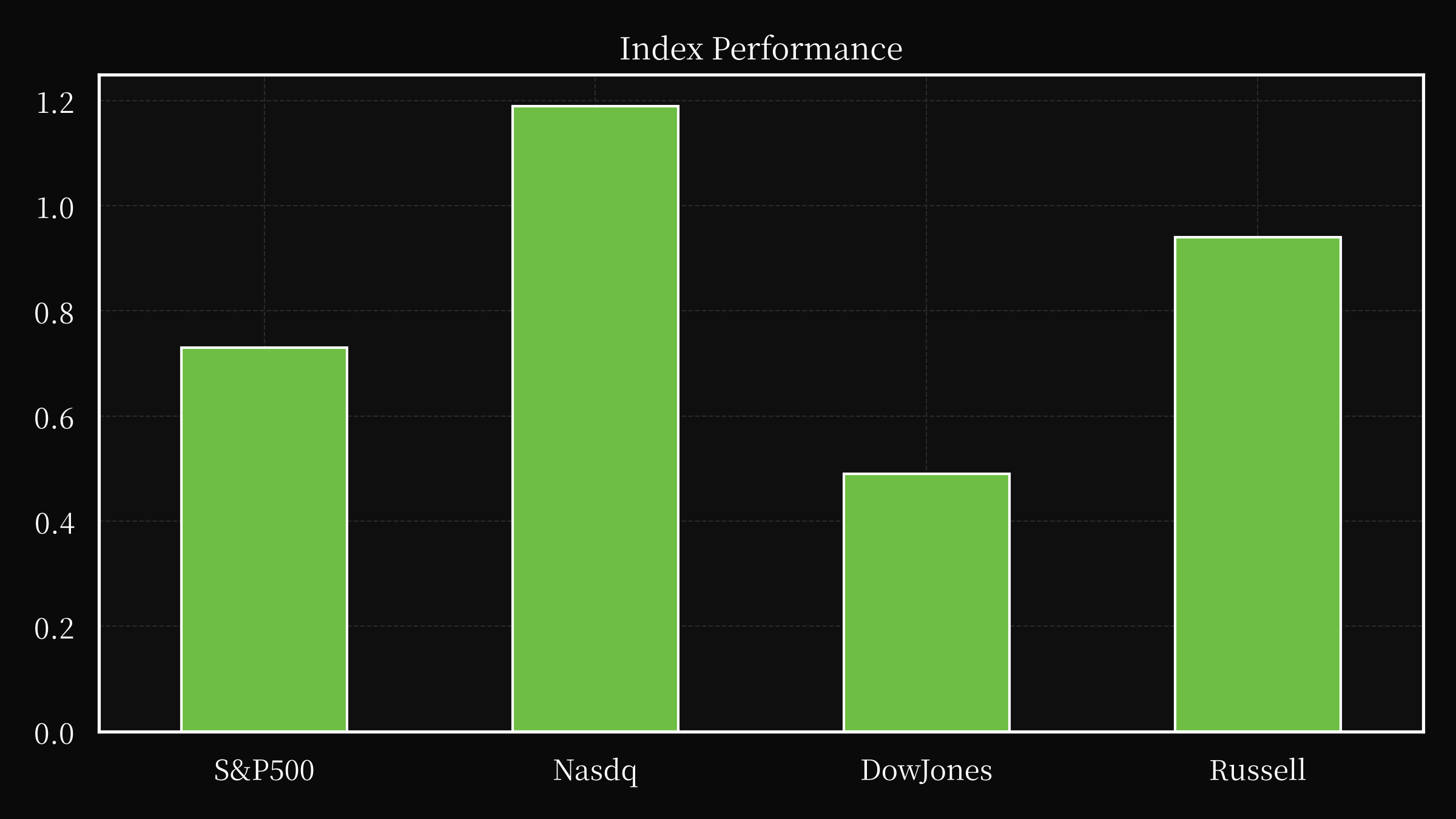
The market’s recent resilience amid mixed economic signals underscores the nuanced interplay between macroeconomic data, geopolitical developments, and sector-specific dynamics. A weaker-than-expected jobs report, showing 29,000 new positions added and a slight uptick in the unemployment rate to 4.2%, tempered expectations of aggressive Federal Reserve tightening while reinforcing the labor market’s structural stability. This outcome, though falling short of robust hiring benchmarks, provided reprieve to equities by reducing pressure on policymakers to accelerate rate hikes, thereby supporting equity valuations despite lingering inflationary concerns. The divergence between labor market strength and slowing job creation highlights a potential inflection point for corporate earnings, particularly in sectors sensitive to interest rates and consumer spending.
Simultaneously, the G7’s coordinated decision to release 100 million barrels of emergency crude oil and diesel reserves introduced a critical variable into energy markets. By alleviating supply constraints exacerbated by geopolitical tensions in the Middle East and Ukraine, the move directly impacted commodity pricing, with European diesel and Brent crude futures declining. While this intervention mitigated immediate price spikes that threatened to destabilize global trade, it also diminished the likelihood of a U.S. diesel export ban—a policy that had previously strained transatlantic relations and disrupted supply chains. The subsequent volatility in energy markets, juxtaposed with the broader macroeconomic backdrop, illustrates the fragility of commodity-dependent sectors amid shifting geopolitical alliances and policy recalibrations.
Equity markets demonstrated resilience across major indices, with the Dow Jones Industrial Average, S&P 500, and Nasdaq Composite all posting gains. The technology sector, a primary driver of recent outperformance, benefited from sustained investor confidence in AI-driven growth narratives, even as earnings reports from companies like Blue Owl Capital revealed challenges in maintaining liquidity amid redemption pressures. Meanwhile, firms such as Citadel Securities expanding into research-driven trading partnerships and Paramount Global’s restructuring under its new Skydance moniker signaled strategic pivots to navigate cyclical headwinds. These developments reflect broader trends in capital reallocation, where firms increasingly prioritize agility and technological integration to offset macroeconomic uncertainties.
The interplay between these factors—labor market dynamics, energy policy adjustments, and sector-specific innovation—paints a complex picture of market fundamentals. While headline-driven optimism persists, underlying vulnerabilities remain, particularly in industries exposed to commodity price swings or regulatory shifts. Investors must weigh these variables against evolving central bank policies, earnings trajectories, and geopolitical developments to discern sustainable trends from transient market noise. The convergence of these forces underscores the necessity of a diversified, risk-aware approach to portfolio management in an era defined by both technological disruption and systemic fragility.
The implications for equity valuations are multifaceted. Defensive positioning in sectors like energy and utilities may gain traction as a hedge against inflationary pressures, while growth-oriented tech stocks remain contingent on AI adoption rates and earnings consistency. Meanwhile, the bond market’s volatility, driven by divergent inflation expectations and central bank rhetoric, reinforces the importance of duration management in fixed-income allocations. Institutional investors, in particular, must balance exposure to high-growth equities with tactical allocations to inflation-linked assets and alternative investments to mitigate downside risks.
Ultimately, the market’s ability to absorb mixed data—strong labor metrics alongside slowing job creation, and geopolitical interventions tempering energy volatility—suggests a capacity for adaptation rather than collapse. However, the absence of a clear macroconomic consensus necessitates a granular analysis of sectoral performance, corporate fundamentals, and policy trajectories. As earnings season approaches and central bank meetings loom, the emphasis will shift toward identifying companies with resilient business models and pricing power, capable of thriving amid both cyclical and structural transitions. This environment demands not just reactive adjustments but proactive repositioning to capitalize on emerging opportunities while safeguarding against unforeseen disruptions.
The convergence of these elements—macroeconomic data, geopolitical interventions, sectoral innovation, and policy recalibrations—creates a landscape where traditional valuation models must be supplemented with scenario analysis and dynamic risk assessment. Investors who integrate these dimensions into their decision-making frameworks will be better positioned to navigate the inherent volatility of modern markets, leveraging dislocations for strategic advantage rather than succumbing to short-term noise. The path forward requires a synthesis of quantitative rigor and qualitative insight, ensuring that portfolios remain resilient in the face of both anticipated and unexpected developments.
In conclusion, the market’s recent performance reflects a delicate equilibrium between competing forces: labor market stability amid slowing hiring, energy policy interventions tempering commodity shocks, and technological innovation driving equity outperformance. While this equilibrium may persist, its fragility demands vigilance. Institutional investors must remain attuned to shifts in monetary policy, geopolitical developments, and corporate earnings trends, adjusting allocations dynamically to preserve capital and compound returns. The interplay of these factors will define not just near-term market direction but the broader trajectory of global capital flows in an increasingly interconnected and volatile economic order.
Watch List
WFF
WF Holding Limited has submitted a Form 6-K report to furnish unaudited consolidated financial statements for the six months ended June 30, 2026 and 2025. These statements are being incorporated by reference into the Company’s registration statement. The report contains forward-looking statements reflecting management’s current expectations and assumptions regarding the Company’s performance and industry outlook. These statements, which include words like “may,” “will,” and “anticipate,” are inherently subject to risks and uncertainties, as detailed in the Company’s “Key Information - Risk Factors” section and elsewhere within its Annual Report, filed on April 30, 2026. Readers are advised that actual results could differ materially from these projections due to potential risks and uncertainties outlined in the Annual Report.
EKSO
ChronoScale Holdings Corporation finalized the sale of its wholly-owned subsidiary, Ekso Bionics, Inc. (Ekso), on September 30, 2026, coinciding with the termination of Jason C. Jones’s role as Chief Operating Officer of Ekso, effective at the same date. As part of the transaction, Jones received a severance package totaling $243,750, comprised of a nine-month base salary payment and continued COBRA premiums for up to nine months, contingent upon his continued eligibility. This severance agreement, outlined in detail in Exhibit 3.1, also includes a general release of claims and compliance with restrictive covenants. Notably, the severance agreement superseded a prior Change in Control and Severance Agreement with ChronoScale Intermediate LLC. Furthermore, ChronoScale Holdings Corporation completed the withdrawal of a designation for 5,852 shares of Series B Convertible Preferred Stock, eliminating related provisions from its Articles of Incorporation, as detailed in Exhibit 3.1. Finally, the company announced the sale of Ekso and a new AI agreement through a press release distributed on October 1, 2026 (Exhibit 99.1), marking a significant shift in the company’s operations.
UGI
UGI Corporation has entered into a note purchase agreement to issue $25 million in Series H and Series I notes to Mountaineer Holding Company. The agreement includes standard events of default, such as failure to pay principal or interest, breaches of financial covenants, and bankruptcy. Notably, noteholders retain the right to demand immediate repayment of the principal, along with accrued interest, if UGI ceases to be majority-owned by the company, or if certain credit rating downgrades occur – specifically, if Fitch, Moody’s, or Standard & Poor’s no longer provide a debt rating for Mountaineer or if the rating falls below BBB- within 60 days. The notes are callable by Mountaineer at specific dates, allowing the company to repurchase the debt at 100% of the principal plus accrued interest, but without the “make-whole” payment. This transaction is detailed in Exhibit 4.1, which is incorporated into this Form 8-K filing for completeness.
VRRM
Verra Mobility Corporation has appointed Jon Newhard as its President and Chief Executive Officer, effective November 1, 2026, alongside a seven-member expansion of its Board of Directors. Mr. Newhard brings a wealth of experience from leadership roles at Yunex Traffic, Clinc, Inc., and Advanced Traffic Solutions Inc., previously known as Trafficware, and has a background in engineering and business administration from the U.S. Military Academy and Harvard Business School. The appointment is contingent upon a standard background check and is supported by a five-year employment agreement outlining a base salary of $725,000, potential discretionary bonuses up to 100% of his salary, and participation in the company’s retirement and welfare benefit plans. Furthermore, the company will provide relocation assistance to Mr. Newhard, including temporary living expenses and reimbursement for permanent relocation costs. To safeguard the company, an indemnity agreement will be established. Prior to the appointment, Interim President and CEO Jon Keyser will transition to an advisory role through December 31, 2026, with ongoing negotiations regarding a severance agreement. The company released a press release announcing the appointment, which is included as an exhibit.
F
Ford Motor Company has noted a short-term supply issue impacting F-150 truck production at the end of September, unrelated to aluminum shortages, but anticipates a manageable impact on its full-year 2026 adjusted EBIT guidance of $10.0 billion to $11.0 billion. The company acknowledges ongoing risks stemming from its complex global supply chain, including potential disruptions from labor issues, geopolitical events, and fluctuating raw material costs. Ford’s long-term success hinges on the successful execution of its Ford+ plan, while also navigating challenges related to product quality, recalls, cybersecurity threats, and evolving regulatory landscapes. Furthermore, the company faces competitive pressures in the automotive and digital services sectors, potential headwinds from economic downturns, and uncertainties surrounding government incentives and financing markets. Ford’s financial performance is particularly sensitive to sales of high-margin vehicles, especially in the U.S., and the company’s pension and post-retirement liabilities represent a significant ongoing risk. Ford emphasizes that these forward-looking statements are subject to change and that actual results may differ materially from projections.
SATS
EchoStar Corporation has successfully completed its prepackaged Chapter 11 bankruptcy proceedings for its subsidiary, DISH DBS Corporation, alongside related entities. On October 1, 2026, the Prepackaged Chapter 11 Plan was confirmed by the Bankruptcy Court, marking the emergence of DISH DBS from bankruptcy following a bifurcated plan for its divisions. This restructuring significantly deleverages the DISH DBS entities, reducing aggregate outstanding debt by approximately $4.35 billion through debt restructuring, the full repayment of existing notes, and partial early repayment of other secured debt. As part of the process, supplemental indentures were established to modify existing debt agreements. Notably, DISH DBS deconsolidated from EchoStar’s financials as of June 30, 2026, and will be reconsolidated effective October 1, 2026, reflecting the company’s emergence from bankruptcy. The company anticipates filing detailed financial statements related to DISH DBS’s emergence within 71 days.
NNDM
Nano Dimension Ltd. recently underwent a change in its external audit firm, transitioning from KPMG LLP to PwC Israel. KPMG served as the Company’s independent registered public accounting firm from August 19, 2025, until September 28, 2026, during which time there were no disagreements regarding accounting practices or audit scope. However, KPMG’s 2025 year-end audit included an adverse opinion regarding the Company’s internal control over financial reporting due to a material weakness related to inadequate resources and controls over acquisitions, specifically concerning the valuation of intangible assets. This weakness was thoroughly discussed with KPMG and subsequently addressed. Following the dismissal of KPMG, Nano Dimension engaged PwC Israel to conduct the audit for the fiscal year ending December 31, 2026, and to review quarterly financial statements. Notably, the Company had not consulted with PwC Israel prior to this engagement regarding accounting matters or potential audit opinions, demonstrating a deliberate and strategic shift in its audit relationship.
SRZN
Surrozen, Inc. has achieved a significant milestone with the U.S. Food and Drug Administration’s (FDA) clearance of its Investigational New Drug (IND) application for SZN-8141. This antibody, a bifunctional Wnt agonist and vascular endothelial growth factor antagonist, is being developed as an intravitreal injection specifically for treating diabetic macular edema (DME). Following a 30-day review period, the IND went into effect, paving the way for Surrozen to initiate clinical development. The company anticipates launching its DUET Phase 1b/2a clinical study in the fourth quarter of 2026, targeting patients with DME, and anticipates preliminary data in the second half of 2027. Beyond DME, Surrozen intends to explore the potential of SZN-8141 in treating neovascular age-related macular degeneration and is also evaluating its application in other retinal vascular diseases, signaling a broader strategy for the antibody’s development.
ESE
ESCO Technologies Inc. completed the acquisition of Megger Group Limited for approximately $2.3 billion, consisting of $922 million in cash and 5.10 million shares of its common stock, subject to a post-closing adjustment. This transaction, facilitated by a share purchase agreement with TBG AG, effectively terminated the company’s existing $500 million credit agreement, replacing it with a new credit agreement led by JPMorgan Chase. The new credit agreement provides a senior secured revolving credit facility, a senior secured term loan A facility, and a senior secured term loan B facility, totaling $1.5 billion, with maturities in 2031. The company secured approximately $1.0 billion under the new agreement to fund the acquisition and refinance existing debt. The shareholder agreement established certain protections for the seller, including the right to appoint a board member, restrictions on share transfers during a 12-month period, and standstill provisions. Additionally, the agreement included customary resale rights and preemptive rights. The new credit agreement imposes standard financial covenants and restrictions on the company’s debt obligations. Following the acquisition, ESCO’s Board of Directors increased to nine members, with Jeremy P. Abson joining as an independent director serving on the Nominating and Corporate Governance Committee and Executive Committee, and Mr. Khilnani reclassified to a Class I Director.
ACCO
ACCO Brands Corporation has finalized its acquisition of GXT Holding B.V., operating as Trust, a leading European provider of computer and gaming accessories. The acquisition, announced on October 2, 2026, represents a significant expansion for ACCO Brands, bolstering its presence in the pan-European market. Trust’s established customer base and product portfolio within the computer and gaming accessory sector align strategically with ACCO Brands’ existing offerings. This transaction marks a key step in ACCO Brands’ strategy to broaden its reach and capitalize on growth opportunities within the technology and entertainment industries. The details of the acquisition were outlined in a press release, which is attached as Exhibit 99.1 and incorporated into this filing. Furthermore, the filing includes the Cover Page Interactive Data File for enhanced accessibility and data analysis.
IAN Financial Vision is an AI-native financial research platform combining proprietary knowledge graphs, quantitative valuation models, and large language models to generate point-in-time investment research. All reports are produced using a structured research workflow with human review prior to publication..