Market Overview
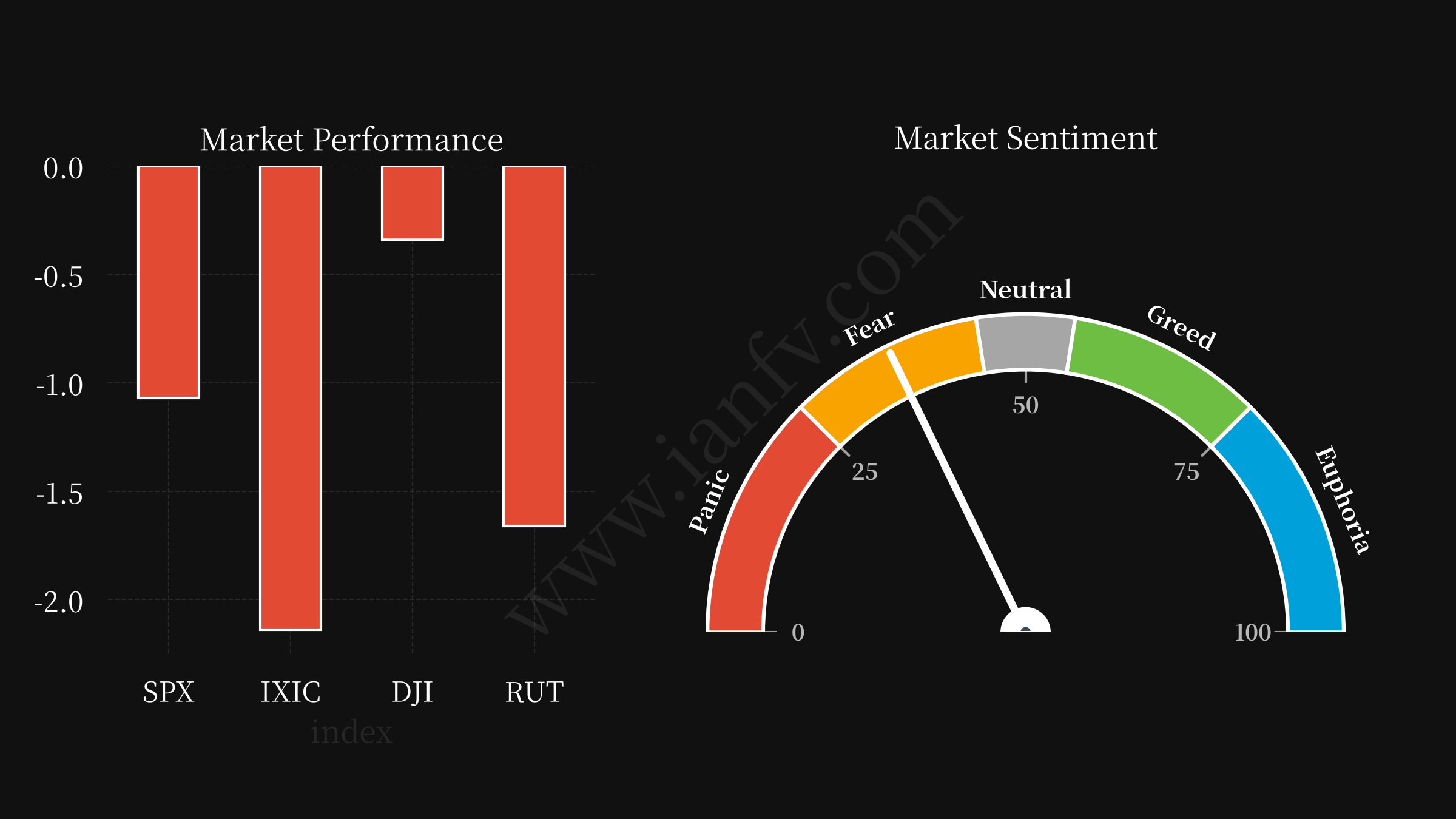
In a day marked by geopolitical tensions and sector-specific volatility, the markets closed with a palpable sense of urgency and uncertainty. The escalation of US-Iran tensions, underscored by Iran-backed Houthi rebels targeting Saudi Arabia, has reignited fears of a broader conflict in the Middle East. This geopolitical instability has sent oil prices soaring, with Brent crude topping $110 a barrel for the first time since May, exacerbating inflationary pressures that are already a significant concern for global economies. The tech sector, particularly semiconductors, faced a tumultuous session as fears surrounding the sustainability of AI investments resurfaced. CoreWeave, a heavily-indebted AI cloud-computing company, saw its stock plummet by 11.9%, contributing to a 2.1% decline in the Nasdaq composite. This downturn reflects broader investor apprehensions about the high valuations and stretched financials within the tech industry, particularly as Treasury yields climbed slightly, signaling a shift towards safer assets amidst the uncertainty. In the energy sector, the surge in oil prices has provided a temporary boost, yet the underlying concerns about inflation and its impact on consumer spending and corporate earnings remain. The Federal Reserve's interest rate decisions will be closely watched in the coming weeks, as they navigate the delicate balance between curbing inflation and supporting economic growth. Corporate developments also played a significant role in today's market dynamics. Tesla's unveiling of the flight-capable Roadster, set to debut in 2028, failed to impress investors, leading to a 2.1% drop in its stock. Meanwhile, the corporate rebellion against the Securities and Exchange Commission’s move to tokenize stocks highlights the growing tensions between traditional financial markets and the burgeoning world of cryptocurrencies. Companies like Broadcom and Verizon are voicing concerns over the potential creation of a shadow stock market, underscoring the regulatory challenges that lie ahead. As investors digest today's developments, the interplay between macroeconomic factors and micro-level corporate outcomes will be critical in shaping market sentiment. The geopolitical landscape, particularly the US-Iran tensions, alongside inflationary pressures and the tech sector's volatility, will be key areas to watch. With the third-quarter earnings season underway, companies like Meta Platforms and Tesla will be under the microscope, offering further insights into the health of the global economy and the resilience of corporate America in the face of these challenges. Heading into tomorrow, investors are left to navigate a complex web of uncertainties, balancing the potential for growth against the risks posed by geopolitical instability, inflation, and sector-specific headwinds. The coming days will be crucial in determining the direction of the markets, as stakeholders seek clarity amidst the volatility.
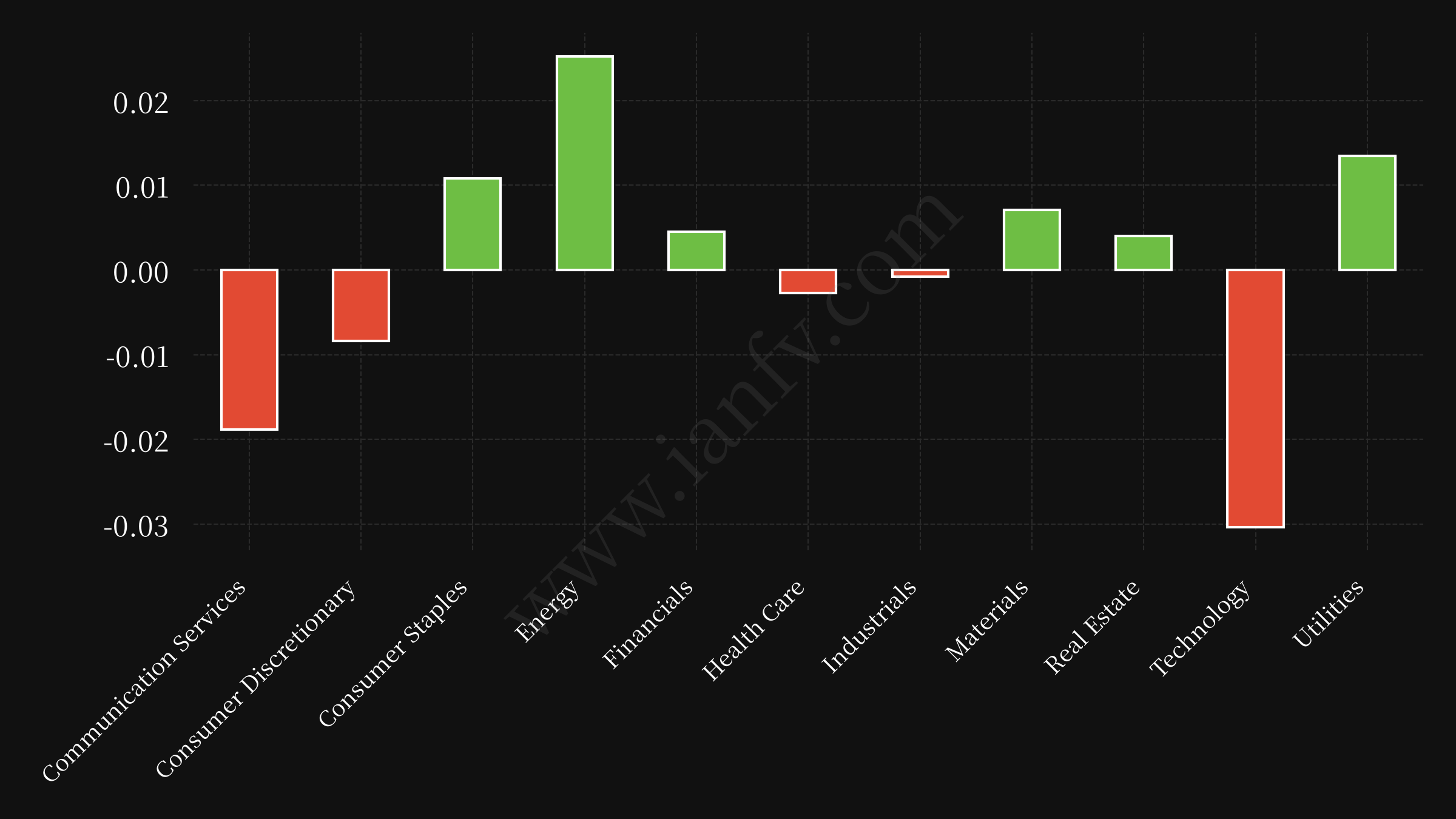
In today's volatile after-hours session, the US stock market was significantly influenced by escalating geopolitical tensions and sector-specific developments. The intensification of US-Iran tensions, marked by attacks from Iran-backed Houthi rebels on Saudi Arabia, has reignited fears of a broader conflict in the Middle East. This geopolitical instability has driven oil prices to new heights, with Brent crude surpassing $110 a barrel, providing a temporary boost to the energy sector ETF (XLE), which saw a 2.54% increase. However, the surge in oil prices also exacerbates inflationary pressures, a concern that looms large over global economies. The tech sector, particularly semiconductors, faced a tumultuous session as fears surrounding the sustainability of AI investments resurfaced. CoreWeave's significant stock drop contributed to a 3.04% decline in the tech-focused XLK ETF, reflecting broader investor apprehensions about high valuations and stretched financials within the industry. This downturn was further compounded by a slight rise in Treasury yields, signaling a shift towards safer assets amidst the uncertainty. In contrast, the consumer staples sector (XLP) experienced a modest gain of 1.08%, likely benefiting from its defensive nature in times of market uncertainty. Meanwhile, financials (XLF) and utilities (XLU) saw modest increases of 0.45% and 1.34%, respectively, as investors sought stability. The broader market sentiment remains cautious, with the Federal Reserve's upcoming interest rate decisions being closely watched. These decisions will be pivotal in balancing inflation control with economic growth support. As the third-quarter earnings season progresses, companies like Meta Platforms and Tesla will be under scrutiny, offering further insights into the global economic landscape. Looking ahead, the interplay between macroeconomic factors and corporate developments will be crucial in shaping market sentiment. Investors will need to navigate a complex web of uncertainties, balancing growth potential against risks posed by geopolitical instability, inflation, and sector-specific headwinds. The coming days will be critical in determining the market's direction as stakeholders seek clarity amidst ongoing volatility.
Market Insights
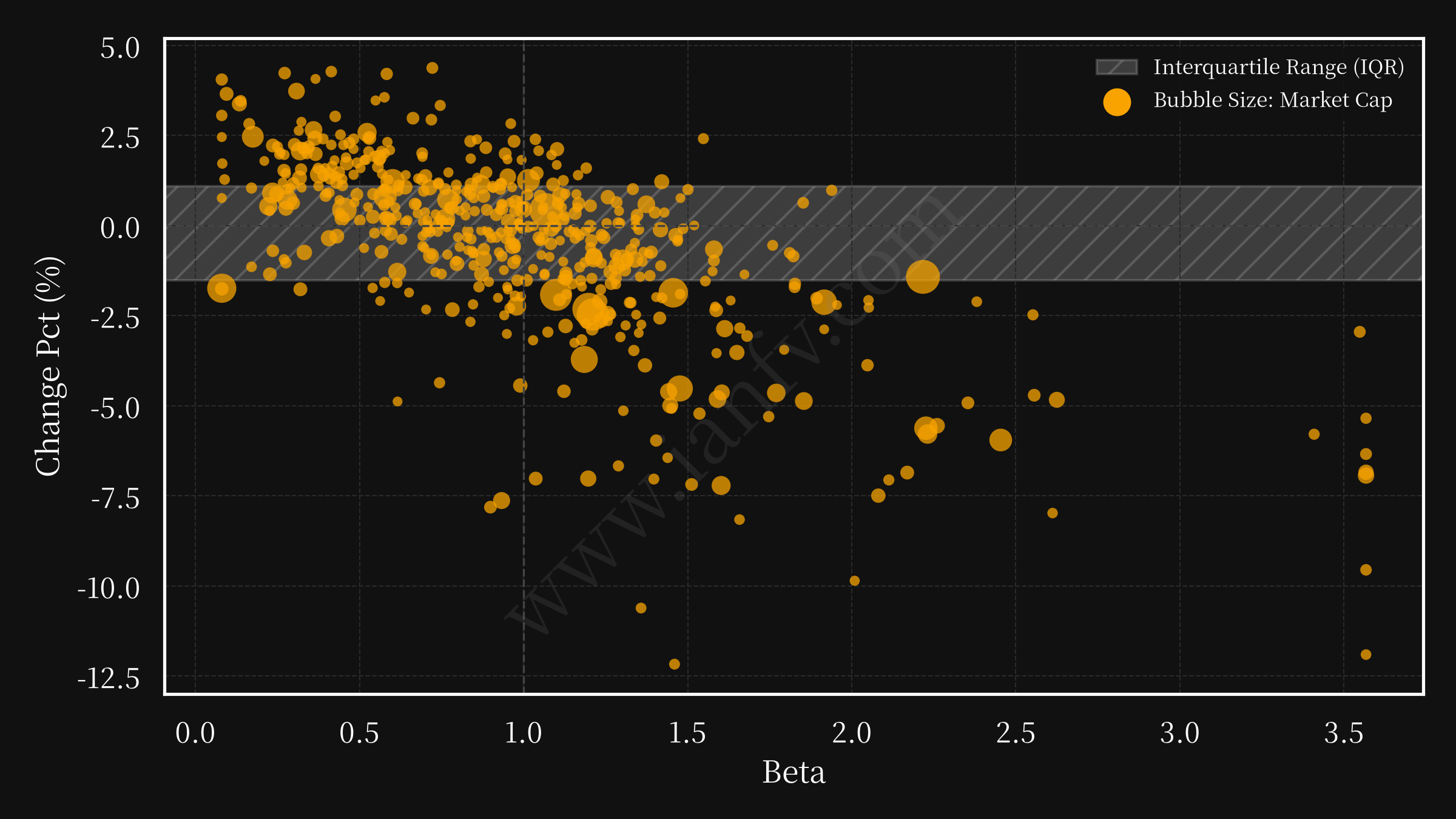
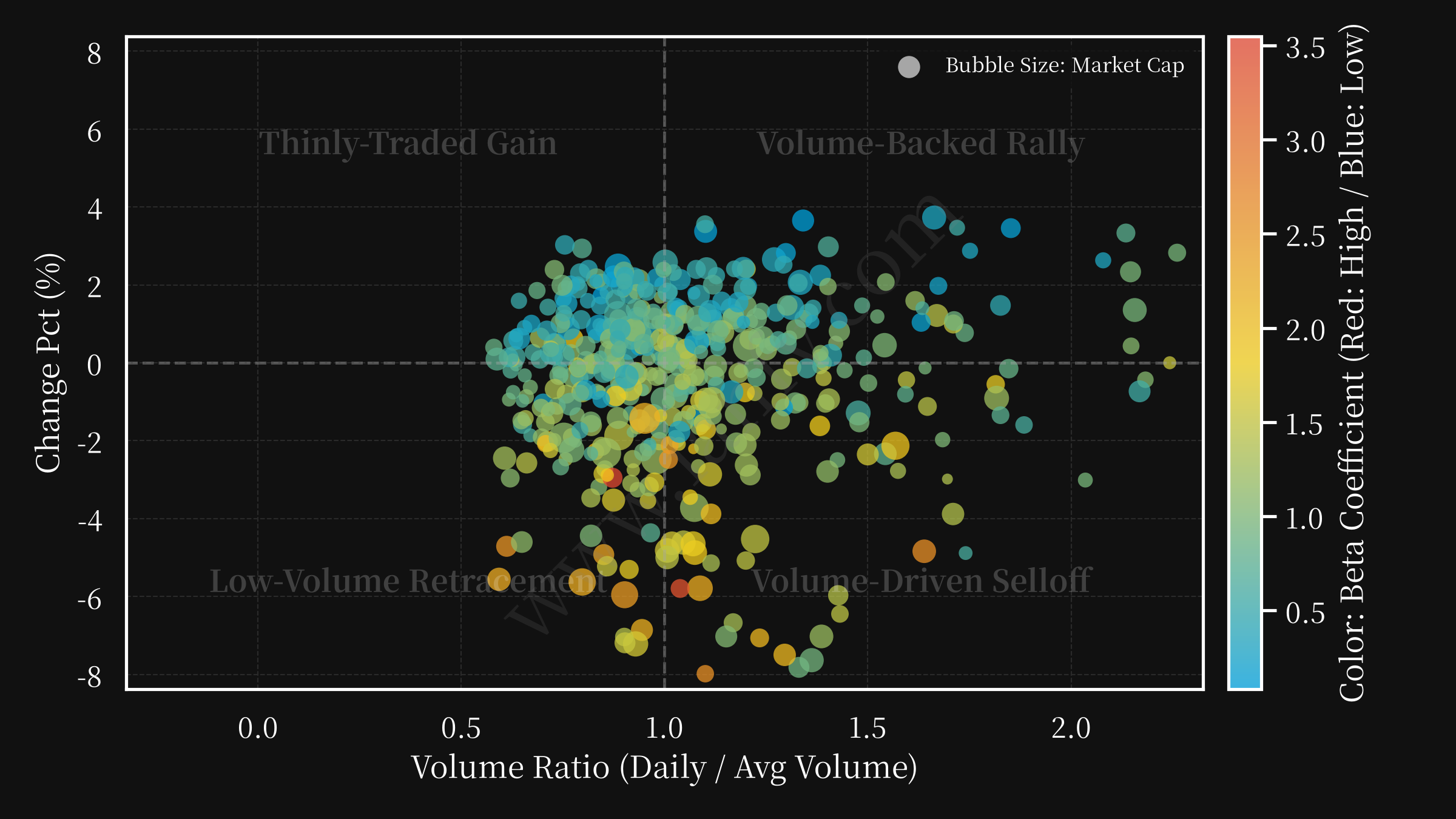
U.S. equities edged higher in subdued trading, with the advance largely driven by tech megacaps, while broader market participation waned. More than two-thirds of gainers advanced on below-average volume, indicating that institutional desks remained largely on the sidelines despite the green tape. Volume divergence was evident as below-average volume gainers (23.5% breadth) showed positive returns (1.14%), while above-average volume decliners (24.1% breadth) exhibited negative returns (-2.20%), suggesting institutional participation was lacking in advancers. This divergence highlights a market that is fragile and potentially vulnerable to sharp reversals if macroeconomic headlines trigger sudden selling. Mega-caps underperformed the broader market with an average return of -1.95% and a higher beta of 1.33, indicating increased volatility compared to the market. Under light volume, market fragility was apparent as high beta stocks (>1.5) experienced the most negative returns (-3.19%), highlighting sensitivity to volume fluctuations. While high-beta bellwethers did the heavy lifting, outperforming defensive cohorts, the median stock managed just modest gains. The absence of volume confirmation leaves the market vulnerable, as breadth superficially favored bulls but lacked the institutional support needed for sustained momentum.
Next Day Option Data
QQQ
SPY
IWM